BattleLebanon and the first intifadaReference entry
The battle of Beaufort (1982)
The story of the night assault on the Crusader castle above the Litani, and of why a battle Israel won became a symbol of doubt.
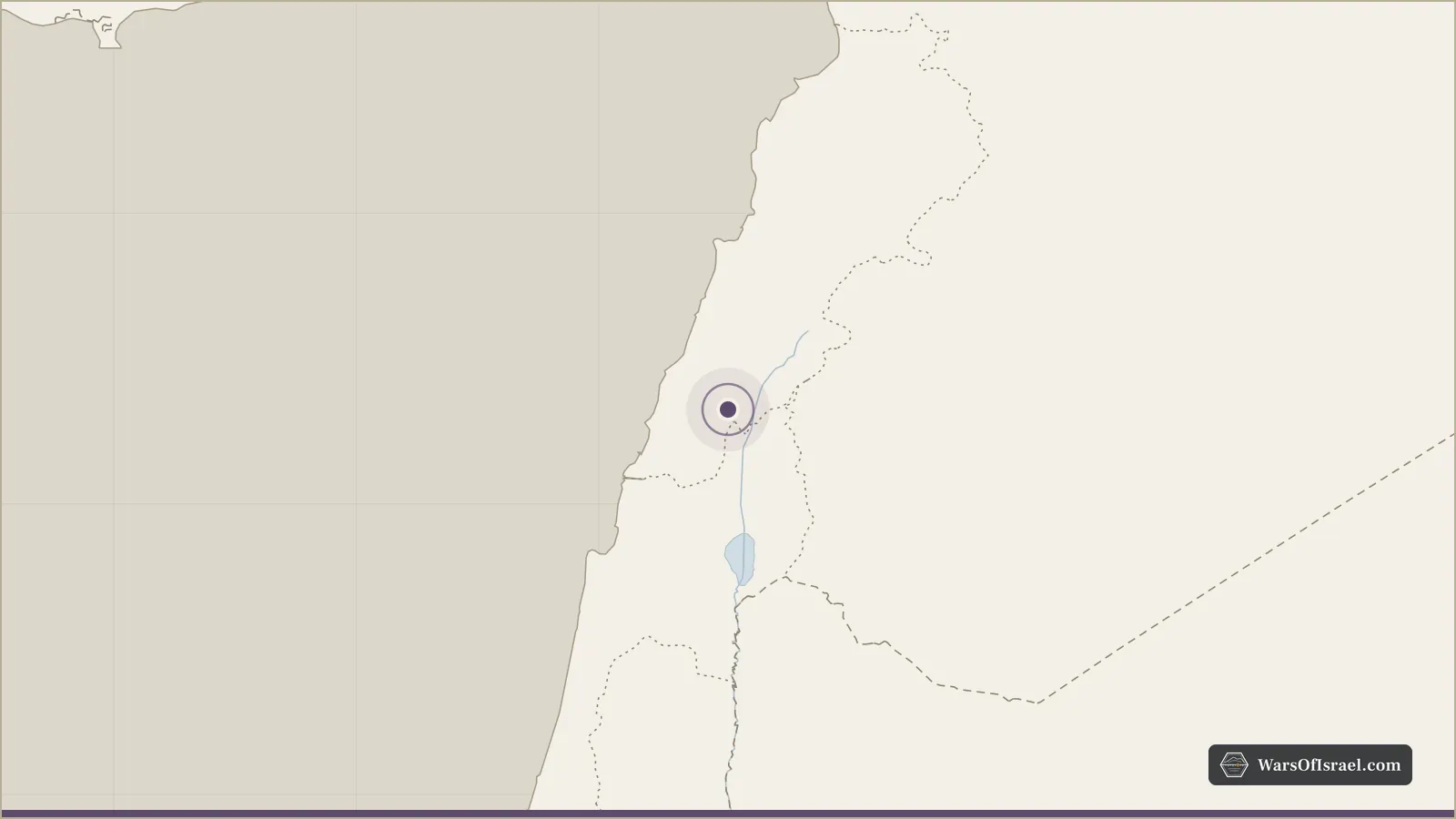
The battle of Beaufort was fought on the night of June 6 to 7, 1982, the first night of the 1982 Lebanon War. Troops of the Golani Brigade, from its engineering company and its reconnaissance unit, stormed the Crusader fortress of Beaufort (Qal'at al-Shaqif), which Palestine Liberation Organization (PLO) fighters had held for years, and secured it by early morning. Six Israeli soldiers were killed. Militarily the fortress fell as planned; in Israeli memory the battle became something else, a symbol of courage at the front and of confusion and overconfidence among those who sent the troops in.
A fortress above the Litani
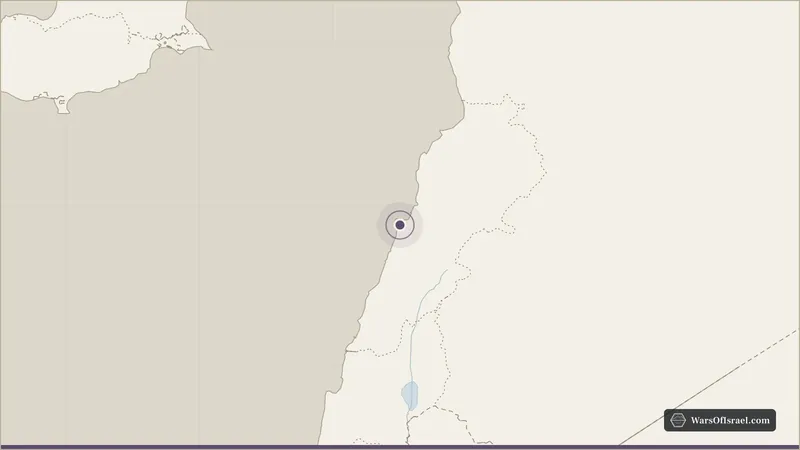
Beaufort stands on a ridge about 700 meters above sea level, over a steep drop to the Litani River, a few kilometers north of the Israeli border town of Metula. Built and rebuilt by Crusaders, Muslim rulers and local lords, it commands a view over the Galilee panhandle and the approaches into southern Lebanon. In the 1970s the PLO turned it into an observation post and a firing position, and Israeli aircraft and artillery had struck it repeatedly without dislodging its defenders. For residents of the northern border, the castle on the ridge was a visible reminder of the threat that the government cited when it launched Operation Peace for Galilee.
The defenders on the night of the battle were Fatah fighters, a force of several dozen men according to most accounts, under a commander named in Palestinian sources as Ya'qoub Sumour. Their position was strong: rock-cut trenches, bunkers and the castle walls themselves.
The night assault
The original plan called for an attack in daylight with tank support. The armor did not arrive in time, the advance along the narrow mountain road was slower than expected, and the assault went in after dark, with the infantry riding in armored personnel carriers. The General Staff ordered the operation postponed, but the order did not reach the attacking force, and a postwar investigation could not establish why.
The engineering company took the southern positions. The main assault on the trenches around the castle fell to the Golani reconnaissance unit, whose commander, Moshe Kaplinsky, had been seriously wounded on the way up. Major Giora (Guni) Harnik, who had commanded the unit until shortly before the war and had been recalled to lead it, took his place and was killed in the trench fighting. His deputy, Lieutenant Mordechai (Moti) Goldman, led the rest of the assault. The IDF and Defense Establishment Archives record that Harnik was cited by the division commander and that Goldman received the Medal of Courage. By early morning on June 7 the fortress was in Israeli hands. Many of the defenders were killed; a few escaped down the cliff.
The morning after and the meaning of Beaufort
Later on June 7, Prime Minister Menachem Begin and Defense Minister Ariel Sharon flew to the castle with journalists. According to widely published accounts, Sharon announced that the fortress had been taken without Israeli casualties, a statement that was untrue, and Begin's questions to the soldiers about the defenders' weapons were broadcast across the country. For many Israelis the scene came to represent a leadership out of touch with what had happened on the ridge. Some commanders later questioned whether the fortress had needed to be stormed at all, since the main Israeli crossing of the Litani took place elsewhere.
Beaufort stayed in Israeli hands for almost eighteen years. After 1985 it became a fortified outpost of the security zone and a frequent target of Hezbollah fire, part of the long South Lebanon security zone conflict. When the IDF withdrew from southern Lebanon in May 2000, the outpost was demolished. The fortress returned to Hebrew culture through Ron Leshem's novel Im Yesh Gan Eden (2005) and Joseph Cedar's film Beaufort (2007), set in the last months before the withdrawal. The two battles, the assault of 1982 and the long defense of the outpost, are now remembered together, as the beginning and the end of Israel's years in Lebanon. The archive's account, the IDF and Defense Establishment Archives exhibition on the Battle of the Beaufort (opens in a new tab), presents testimonies of the fighters themselves.