Military operationBritish MandateReference entry
The Acre Prison break (1947)
The Irgun's raid on the most secure prison in Mandatory Palestine, a success that ended in a running fight on the coastal road and set off one of the darkest episodes of 1947.
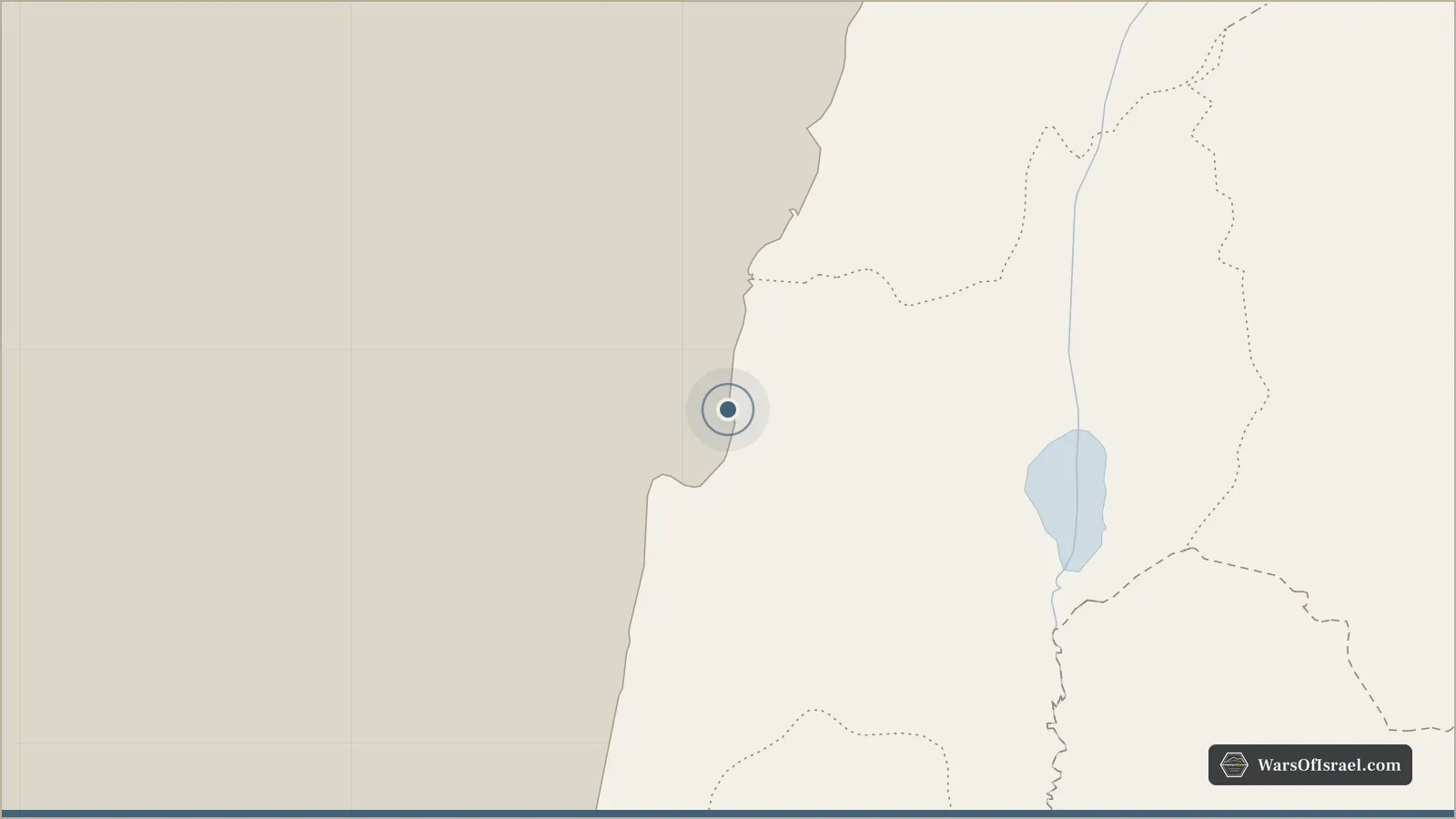
The Acre Prison break was an Irgun operation carried out on the afternoon of Sunday, May 4, 1947. A force disguised in British army uniforms drove to the walls of the Ottoman citadel of Acre, which served as the central prison of Mandatory Palestine, blew a breach in the wall and freed 27 Irgun and Lehi prisoners held inside; 214 Arab prisoners also escaped through the breach. The break succeeded, but the withdrawal did not. Nine of the Jewish fighters and escapees were killed and five attackers were captured, and the death sentences passed on three of them led to the sergeants affair of July 1947. It was one of the last and most famous operations of the Jewish armed struggle against British rule.
Background
Acre Prison, built inside the citadel above the old city, held the most important prisoners of the Mandate, among them dozens of members of the Irgun and Lehi, and it was the place where the British carried out death sentences. On April 16, 1947 Dov Gruner and three other Irgun members, Yehiel Dresner, Mordechai Alkahi and Eliezer Kashani, were hanged there. Escape plans had been discussed for months among the prisoners, who sent detailed information about the building to the Irgun command; the Irgun's operations officer, Eitan Livni, himself a prisoner at Acre, was among those who planned the escape from the inside. The command assigned Dov Cohen, known as "Shimshon", a former soldier of the British army, to lead the attacking force.
The operation of May 4, 1947
The attackers drove up in vehicles made to look like a British army convoy and took up positions around the citadel, while blocking squads mined and guarded the approaches to the town. At about four in the afternoon, sappers blew a hole in the outer wall of the prison, and inside the prisoners used smuggled explosives to break through the gates between them and the breach. The Jewish prisoners who had been selected for the escape came out to the waiting trucks; in the confusion, hundreds of Arab prisoners also left.
The withdrawal went wrong. South of Acre, one of the escape trucks ran into British soldiers who had been bathing at a nearby beach and who opened fire; the truck crashed and its passengers were caught in the fighting. Dov Cohen was killed while covering the retreat. In all, nine Irgun fighters and escapees were killed, and some of the escapees were recaptured. Five men from the blocking squads, Avshalom Haviv, Meir Nakar, Yaakov Weiss, Amnon Michaelov and Nahman Zitterbaum, were taken prisoner.
Aftermath: the trial and the sergeants affair
A British military court sentenced Haviv, Nakar and Weiss to death; Michaelov and Zitterbaum, who were minors, received life sentences. To force the British to commute the sentences, the Irgun abducted two sergeants of the British Field Security, Clifford Martin and Mervyn Paice, in Netanya on the night of July 11 to 12, 1947. The British carried out the executions at Acre on July 29, 1947, and the same day the Irgun killed the two sergeants. Their bodies were found on July 31 in a eucalyptus grove near Netanya, and an explosive device left at the site wounded a British officer. The killing caused outrage in Britain, where anti-Jewish riots broke out in several cities in early August, and it was condemned by the Jewish Agency.
The break came a few weeks after Britain had referred the Palestine question to the United Nations, and while the UN special session was meeting. It did not change British policy, but it seems to have reinforced the impression in London that the country was becoming ungovernable.
In Israel the break is remembered as one of the boldest operations of the underground, an episode later popularized in the 1960 film Exodus. The citadel prison now houses the Museum of the Underground Prisoners, run by the Ministry of Defense, which preserves the cells, the gallows room and the place where the wall was breached. The attack was a precursor, in its scale and its cost, of the battles soon to come in the 1947 to 1949 war.