The Jewish armed struggle against British rule (1944 to 1947)
How three Jewish underground organizations, often at odds with each other, turned the end of the Mandate into a costly campaign that helped push Britain to hand Palestine to the United Nations.
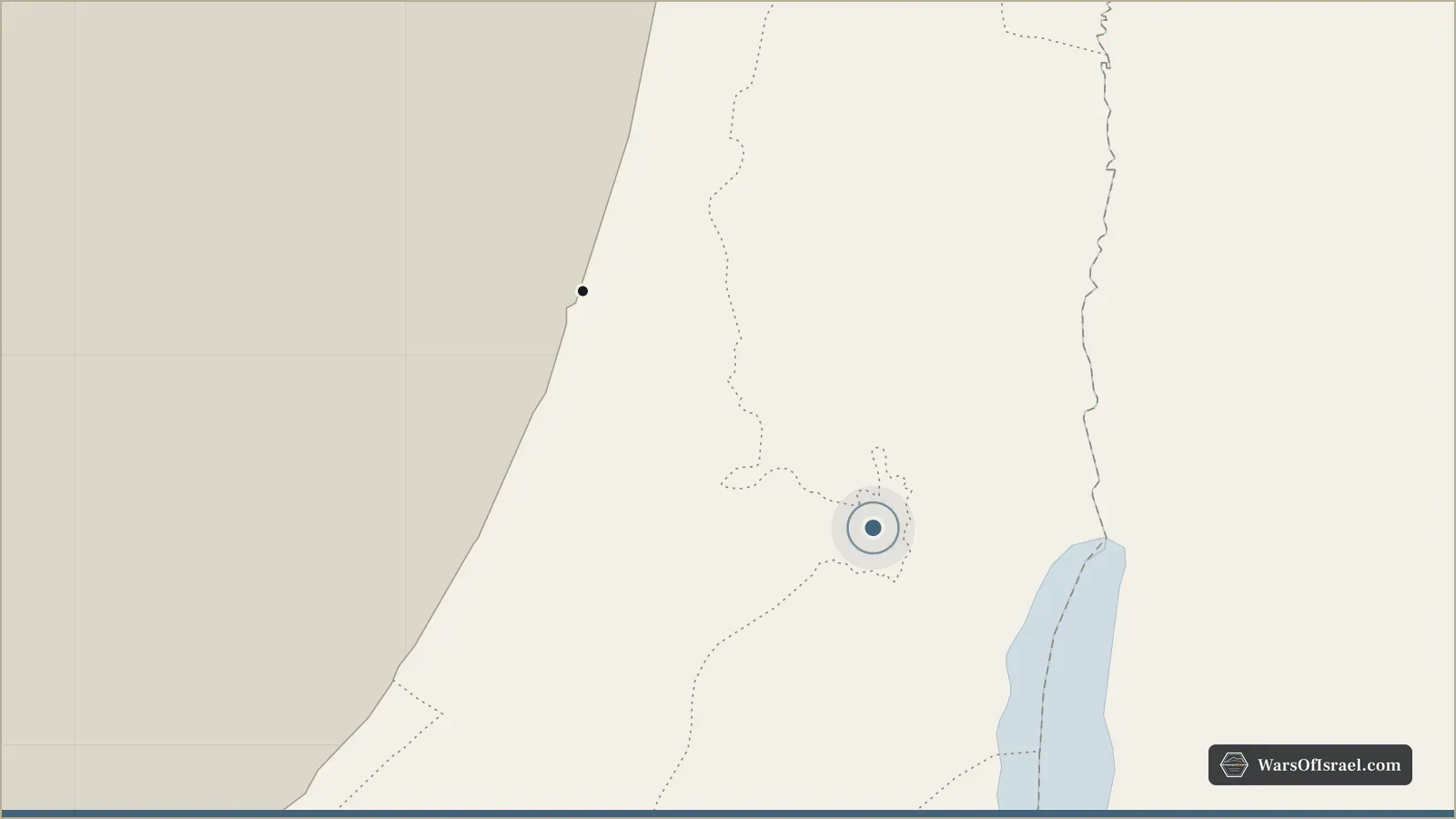
From February 1944 to the end of 1947, Jewish underground organizations in Palestine waged an armed campaign against the British Mandate. The Irgun (Etzel) and Lehi led it and never stopped; the Haganah, the main defense force of the Yishuv, joined them for about a year in the Jewish Resistance Movement and then withdrew. The campaign mixed sabotage of railways and bridges, attacks on police stations and army camps, the bombing of the King David Hotel and a jailbreak at Acre with the mass smuggling of Holocaust survivors into the country. It never defeated the British army, which at its peak kept some 100,000 troops in Palestine, but it raised the price of staying, and in February 1947 Britain handed the future of the country to the United Nations.
Background: the White Paper and the war in Europe
The roots of the campaign lay in the White Paper of May 1939, issued at the end of the Arab revolt of 1936 to 1939. It limited Jewish immigration to 75,000 over five years, after which further immigration would require Arab consent, and it restricted Jewish land purchases. To the Zionist movement this meant closing the gates of the only place willing to take Jews at the moment Europe's Jews needed refuge most.
When the Second World War broke out, David Ben-Gurion set the line of the Jewish Agency: fight the war as if there were no White Paper, and fight the White Paper as if there were no war. Tens of thousands of Jews from Palestine volunteered for the British forces, and in 1944 the Jewish Brigade was formed. Most of the Irgun also suspended its operations against Britain during the war. A breakaway group led by Avraham Stern refused, and continued attacks on the British; Stern was killed by British police in February 1942, and his followers regrouped as Lehi (Lohamei Herut Israel, Fighters for the Freedom of Israel).
The parties
Three organizations, with different leaders, ideologies and methods, took part:
- The Haganah, the underground army of the organized Yishuv, answerable to the Jewish Agency and the labor movement, with its strike force, the Palmach. Its leaders preferred political struggle and illegal immigration, and used force selectively.
- The Irgun (Etzel), the National Military Organization linked to the Revisionist movement, commanded from late 1943 by Menachem Begin.
- Lehi, the smallest group, led after Stern's death by a triumvirate that included Nathan Yellin-Mor and Yitzhak Shamir. It targeted British officials directly and did not shrink from political assassination.
On the other side stood the British army, which became the largest garrison in the empire outside India, and the Palestine Police. The British government, led after July 1945 by Clement Attlee with Ernest Bevin as foreign secretary, was trying to balance its interests in the Arab world, the pressure from the United States to admit Jewish refugees and the cost of holding a territory in turmoil.
The course of the campaign
The revolt declaration and the Saison, 1944 to 1945
On February 1, 1944 the Irgun declared a revolt against British rule, arguing that the British administration had forfeited its legitimacy by barring the door to Jews fleeing destruction. Its early operations were aimed at government buildings: immigration offices, income tax offices and police stations, often attacked at night with warnings given.
On November 6, 1944 two Lehi members, Eliyahu Hakim and Eliyahu Bet-Zuri, shot dead Lord Moyne, the British minister resident in the Middle East, outside his home in Cairo. The killing shocked the Jewish Agency, which feared it would wreck Zionist diplomacy with Winston Churchill. The Haganah launched what became known as the Saison (the "hunting season") against the Irgun: from November 1944 to March 1945 its members kidnapped, interrogated and handed over Irgun members to the British. Begin ordered his men not to retaliate, to avoid civil war. The two Lehi gunmen were tried by an Egyptian military court and hanged in Cairo on March 23, 1945.
The Jewish Resistance Movement, 1945 to 1946
The end of the war in Europe changed the picture. The new Labour government did not lift the White Paper, and the Jewish Agency concluded that diplomacy alone would not open the gates. At the end of October 1945 the Haganah, the Irgun and Lehi signed an agreement creating the Jewish Resistance Movement (Tnuat HaMeri HaIvri). A political body known as Committee X approved operations; the Haganah's Moshe Sneh and Israel Galili, Begin for the Irgun and Yellin-Mor for Lehi sat in its leadership.
In October 1945 the Palmach broke into the detention camp at Atlit and freed some 200 illegal immigrants. On the night of October 31 to November 1, 1945, in what became known as the Night of the Trains, Palmach units cut the railway network in more than 150 places, the Palyam (the Palmach's naval unit) sank British police boats in Haifa and Jaffa, and an Irgun and Lehi force raided the Lydda railway station. Further operations against radar stations, airfields and police posts followed in the winter and spring of 1946.
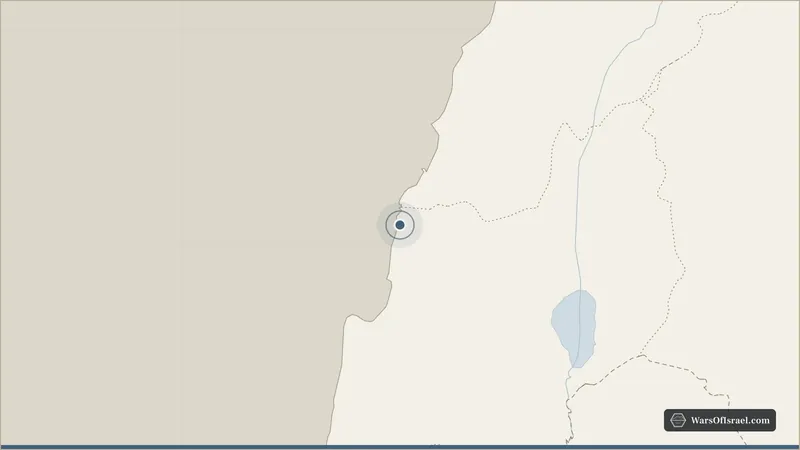
On the night of June 16 to 17, 1946 the Palmach attacked eleven bridges that linked Palestine with its neighbors. In the Night of the Bridges, most of the targets were destroyed, but at the bridges of Nahal Achziv in the north 14 Palmach fighters were killed. Twelve days later Britain struck back with Operation Agatha, known in Hebrew as the Black Sabbath: on June 29, 1946 troops occupied the Jewish Agency, searched dozens of settlements and arrested about 2,700 people, among them members of the Jewish Agency Executive.
The King David Hotel and the end of unity, 1946
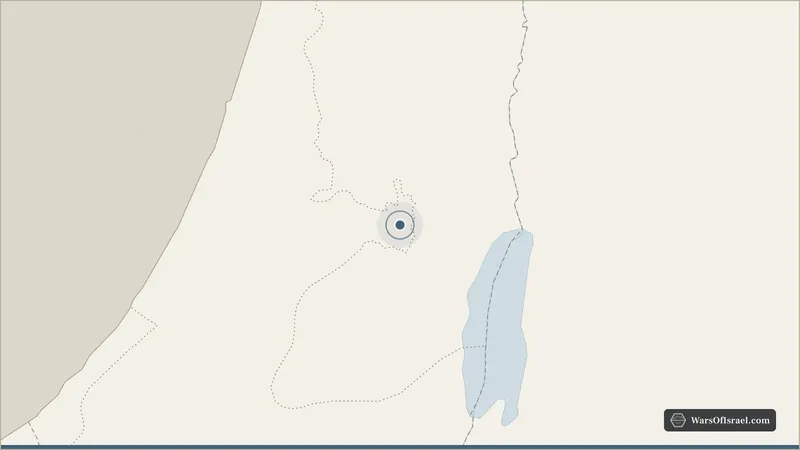
The Irgun's answer was its most lethal operation. On July 22, 1946 explosives placed in the basement of the King David Hotel in Jerusalem, which housed the Mandate government secretariat and the British military headquarters, destroyed the southern wing of the building. The King David Hotel bombing killed 91 people, British, Arab and Jewish, most of them civil servants and civilians. The operation had initially been approved by the Haganah command; whether a warning was given in time, and to whom, remains disputed between the Irgun's account and the British record.
The scale of the killing led the Jewish Agency to denounce the attack, and Chaim Weizmann pressed for a halt to armed action. During the summer of 1946 the Haganah withdrew from the Resistance Movement and returned to concentrating on illegal immigration. The Irgun and Lehi continued alone. The British, for their part, placed the Jewish neighborhoods of Jerusalem under a long curfew and, from July 30 to August 2, 1946, sealed off Tel Aviv in Operation Shark, a house-to-house search for Irgun members in which Begin escaped detection.
The final phase, 1946 to 1947
The last year of the campaign was the most intense. The two remaining groups attacked trains, roads and army installations, and the British responded with curfews, mass searches and martial law in parts of the country in March 1947. A cycle of punishments and reprisals developed: after a British court sentenced Irgun members to flogging, the Irgun flogged British officers on December 29, 1946 in what was called the Night of the Beatings, and the British did not carry out further floggings. On March 1, 1947 the Irgun attacked the Goldsmith Officers' Club in Jerusalem.
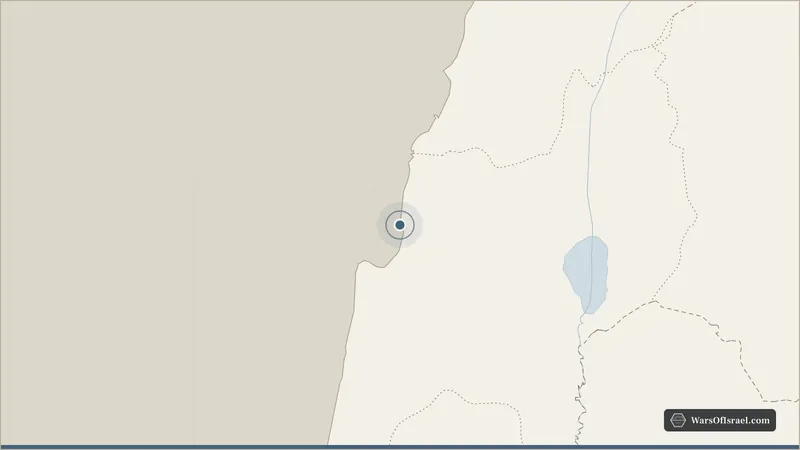
On April 16, 1947 the British hanged Dov Gruner and three other Irgun members at Acre Prison. Less than three weeks later, on May 4, 1947, the Irgun blew a hole in the walls of the fortress prison in the Acre Prison break, freeing 27 Jewish underground prisoners. Three members of the attacking force were captured, sentenced to death and hanged on July 29, 1947. The same day, the Irgun killed two British sergeants it had abducted in Netanya two weeks earlier, Clifford Martin and Mervyn Paice; their bodies were found on July 31. The killing of the sergeants caused outrage in Britain, where anti-Jewish riots broke out in several cities in early August.
Illegal immigration and the diplomatic front
Alongside the violence ran a campaign that probably weighed more in the court of world opinion. The Haganah's Mossad LeAliyah Bet organized ships carrying Holocaust survivors from Europe to Palestine in defiance of the immigration quotas. Most were intercepted by the Royal Navy and their passengers sent to camps in Cyprus. The most famous case was the Exodus 1947, carrying about 4,500 refugees, which was boarded on July 18, 1947 and whose passengers were eventually returned to Germany. The episode took place while a UN committee was in the country.
The Anglo-American Committee of Inquiry reported on April 20, 1946 and recommended the admission of 100,000 Jewish refugees; Britain did not accept the recommendation without the disarmament of the underground organizations. On February 14, 1947 the British government decided to refer the Palestine question to the United Nations, and Bevin explained the decision to the House of Commons on February 18. On April 2, 1947 Britain formally asked for a special session of the General Assembly. The session created the United Nations Special Committee on Palestine (UNSCOP) on May 15, 1947, and its report, delivered on August 31, recommended by majority the partition of the country. According to the UN chronology of the Palestine question (opens in a new tab), the General Assembly adopted the partition plan on November 29, 1947.
Outcome and assessment
The campaign did not end in a military victory, and its authors disagreed for decades about what it achieved. Begin, in his memoir The Revolt, argued that the Irgun's operations had made British rule untenable. Historians of the Haganah and of the labor movement have tended to give more weight to illegal immigration, American pressure and the drain on Britain's postwar economy. Bruce Hoffman, in Anonymous Soldiers, concludes that the underground's violence was one significant factor in Britain's decision to leave, among several.
It is clear that the cost was high. The campaign killed British soldiers, policemen and officials, Jewish fighters and civilians of all communities, and there is no single agreed total of casualties for the period; the figures differ according to the dates and categories each source uses. The worst single incident, the King David Hotel bombing, accounted for 91 deaths.
Legacy and memory
The struggle left two enduring legacies in Israel. One was organizational: the Palmach and Haganah units that fought in 1945 and 1946 became the core of the forces that fought the 1947 to 1949 war, and Irgun and Lehi fighters joined the IDF after the state's establishment. The other was political: the bitterness of the Saison and the disputes over who drove the British out shaped the rivalry between the labor movement and the Revisionist right, a rivalry that came to a head in the Altalena affair of June 1948 and lasted for a generation. Begin became prime minister in 1977, and Shamir in 1983.
In Israel the period is remembered as the struggle (hamaavak) or the days of the underground, with museums of the underground prisoners in the former Acre and Jerusalem prisons. In Britain it is remembered more as a costly retreat, and the King David Hotel bombing in particular remains part of debates on the history of political violence.
Timeline
- February 1, 1944: The Irgun declares a revolt against British rule.
- November 6, 1944: Lehi members assassinate Lord Moyne in Cairo; the Haganah begins the Saison.
- November 1, 1945: The Night of the Trains, the first large operation of the Jewish Resistance Movement.
- June 17, 1946: The Night of the Bridges; 14 Palmach fighters are killed at Achziv.
- June 29, 1946: Britain launches Operation Agatha, the Black Sabbath.
- July 22, 1946: The Irgun bombs the King David Hotel; 91 people are killed.
- February 14, 1947: Britain decides to refer the Palestine question to the United Nations.
- April 16, 1947: Dov Gruner and three other Irgun members are hanged at Acre.
- May 4, 1947: The Irgun breaks into Acre Prison.
- July 29, 1947: Three Irgun members are hanged; the Irgun kills the two abducted British sergeants.
- August 31, 1947: UNSCOP recommends partition.
- November 29, 1947: The UN General Assembly adopts the partition plan.
Battles and operations in this war
- June 16, 1946 to June 17, 1946The Night of the Bridges (1946)Military operation
- June 29, 1946 to July 1, 1946Operation Agatha, the Black Sabbath (1946)Military operation
- July 22, 1946The King David Hotel bombing (1946)Attack
- May 4, 1947The Acre Prison break (1947)Military operation