BattleSix-Day War to Yom Kippur
The battle for Jerusalem in the Six-Day War (1967)
How three days of fighting in June 1967 ended the division of Jerusalem, from the Jordanian shelling of June 5 to the paratroopers at the Western Wall on June 7.
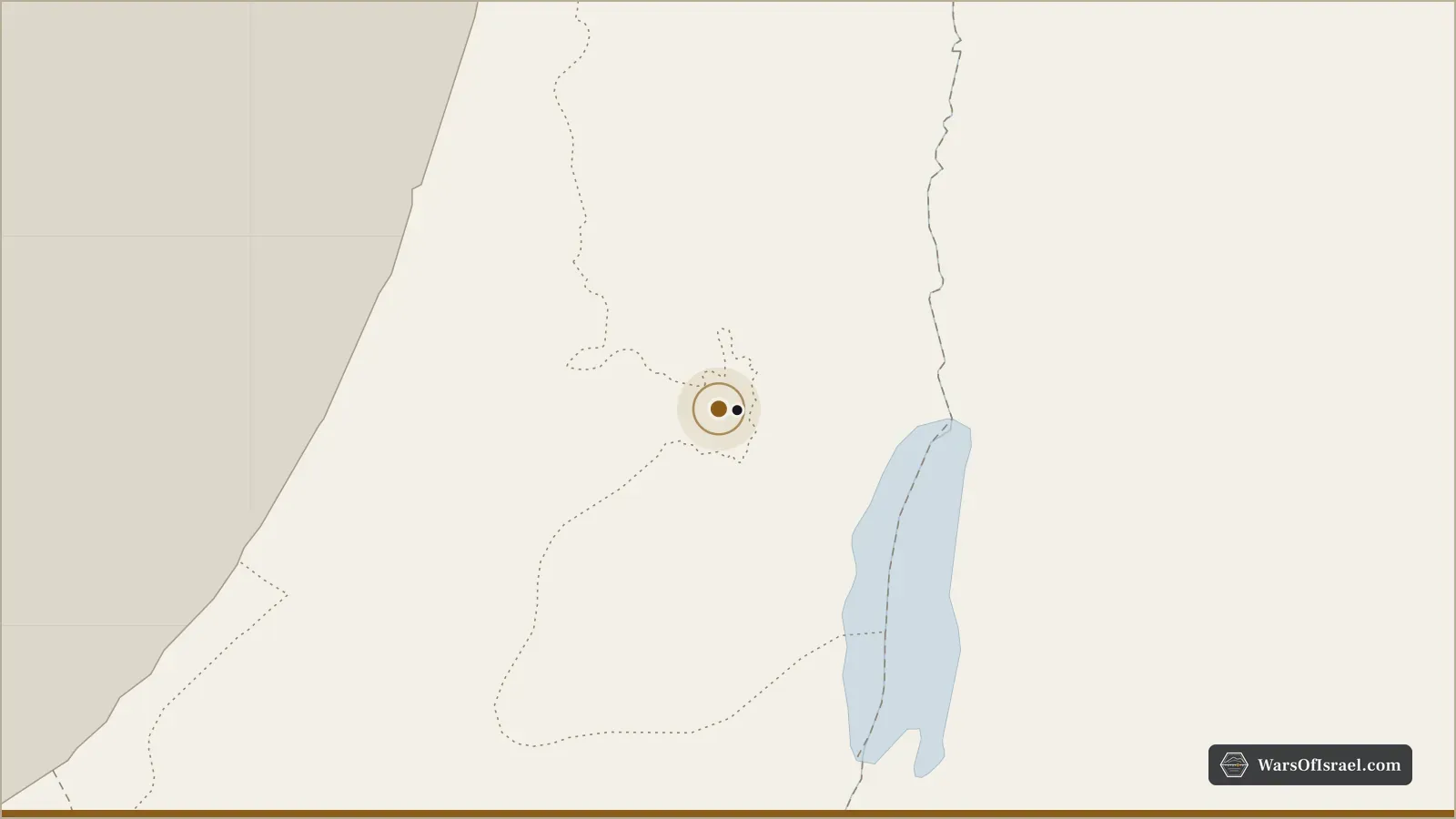
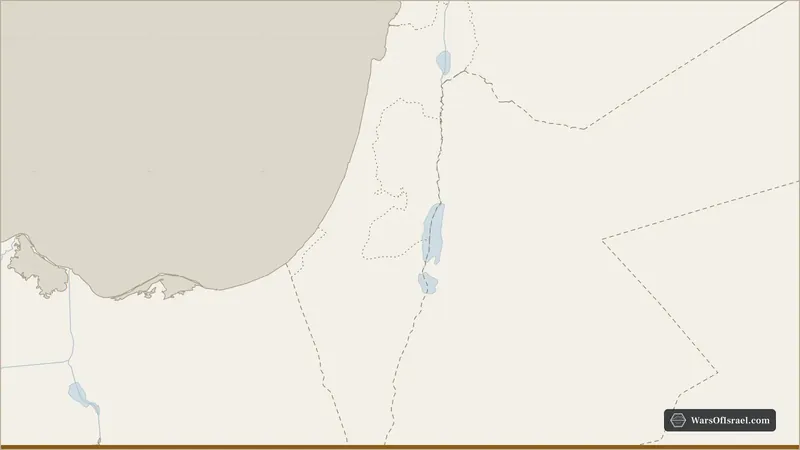
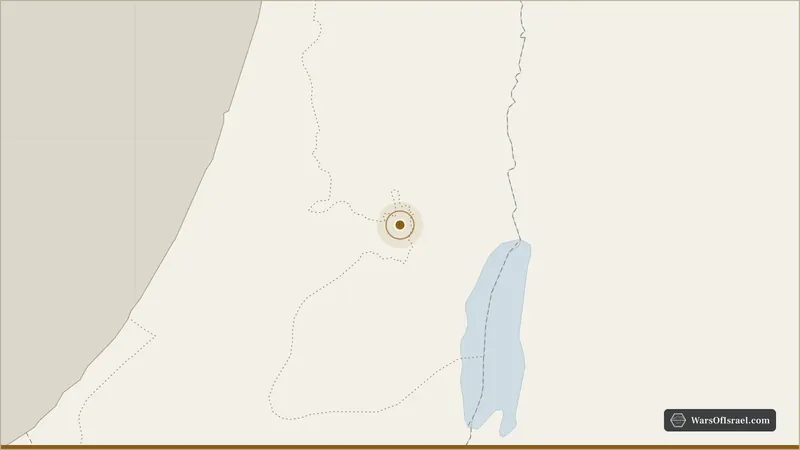
The battle for Jerusalem in the Six-Day War lasted from the morning of June 5 to the morning of June 7, 1967. It began with Jordanian shelling and the seizure of the UN headquarters south of the city, and ended with Israeli paratroopers at the Western Wall. In between, three Israeli brigades broke through the Jordanian defenses, joined the cut-off enclave on Mount Scopus to the rest of Israeli Jerusalem and took the Old City. For the first time since 1948, the whole of Jerusalem was under a single government.
A divided city
Since the end of the fighting of 1948 (see the battle for Jerusalem in 1948), Jerusalem had been split by the armistice line of 1949. Israel held the western city; Jordan held the eastern neighborhoods and the walled Old City with its Jewish Quarter, whose residents had been expelled in 1948, and the holy places of three religions, among them the Western Wall and the Temple Mount (Haram al-Sharif). Concrete walls, barbed wire and minefields ran through the city, and the Mandelbaum Gate was the only crossing point.
Israel also held an enclave on Mount Scopus, the site of the original Hebrew University and Hadassah Hospital, deep inside Jordanian territory. Under the armistice arrangements a small Israeli police garrison stayed there, relieved every two weeks by a UN-escorted convoy. Jews were barred from the Western Wall throughout the nineteen years of Jordanian rule.
The decision to fight in Jerusalem
Israel did not plan to fight in Jerusalem when the war began. On the morning of June 5, through the UN, Prime Minister Levi Eshkol sent King Hussein a message that Israel would not attack Jordan if Jordan stayed out of the war. Hussein had placed his army under the Egyptian general Abdul Munim Riad, and Cairo was reporting great victories. At about 10:00 a.m. Jordanian forces opened fire along the armistice line. Jordanian artillery shelled Israeli Jerusalem heavily that day; according to Michael Oren, about 20 Israeli civilians were killed and more than 1,000 wounded in the shelling.
Around midday, Jordanian troops seized Government House, the former British high commissioner's residence on the ridge south of the city, which served as the headquarters of the UN truce supervisors. The move threatened Israeli neighborhoods in the south of the city and the kibbutz of Ramat Rachel. That afternoon, Israel's Jerusalem Brigade under Col. Eliezer Amitai counterattacked and retook the compound, then pushed on to take Jordanian positions to the south.
The forces
Israel's Central Command, under Maj. Gen. Uzi Narkiss, had three brigades in and around Jerusalem:
- the Jerusalem Brigade (16th), a reserve infantry brigade led by Col. Eliezer Amitai, which held the line inside the city;
- the Harel Brigade (10th), a reserve mechanized brigade under Col. Uri Ben-Ari, which was sent into the hills north of the Jerusalem corridor;
- the 55th Paratroopers Brigade under Col. Mordechai (Motta) Gur, a reserve brigade originally meant to drop into Sinai and transferred to Jerusalem on June 5.
The Jordanian defenders of the city were under Brigadier Ata Ali, and the Jordanian army had additional forces in the hills around Jerusalem and the Jordan Valley. According to the American-born journalist Abdallah Schleifer, who was in the city during the battle, Jordan had about one brigade, fewer than 5,000 men, defending Jerusalem against about three Israeli brigades with armor. The Jordanian positions were well fortified but had little anti-aircraft defense and no air cover once the Jordanian air force was destroyed on June 5.
The course of the battle
The night of June 5 to 6: breaking through in the north
Narkiss's plan was to encircle the Jordanian part of the city from the north before entering it. The Harel Brigade climbed into the hills northwest of Jerusalem that afternoon, fighting its way through Jordanian positions at Radar Hill and Sheikh Abdel Aziz, and by the next morning was moving toward Tel al-Ful and the Jerusalem to Ramallah road, cutting the link between the city and the north.
Inside the city, the paratroopers attacked on the night of June 5 to 6, after an artillery bombardment, across the armistice line between the Mandelbaum Gate and the Police School. Three battalions fought through the neighborhoods of Sheikh Jarrah and the American Colony and the Rockefeller Museum. The hardest fight of the night was the battle of Ammunition Hill, a fortified Jordanian position where the fighting lasted about four hours and cost 36 Israeli and 71 Jordanian lives. By the morning of June 6 the paratroopers had reached the Rockefeller Museum outside the northeast corner of the Old City walls, and the road to Mount Scopus was open.
June 6: the city is surrounded
On June 6 the Israeli forces completed the encirclement. The Harel Brigade cut the roads to the north. The Jerusalem Brigade advanced in the south toward Abu Tor and the area of the Jerusalem to Bethlehem road. Jordanian forces still held the Old City and the Augusta Victoria ridge east of it, overlooking the city from the Mount of Olives. A Jordanian armored relief column moving up from Jericho was attacked from the air.
The government, meanwhile, was divided over whether to enter the Old City at all. Defense Minister Moshe Dayan had at first ordered the forces not to enter it, fearing damage to the holy places and international pressure. As the UN Security Council moved toward a ceasefire, the cabinet decided to act before it took effect. According to Schleifer, Ata Ali withdrew most of his remaining troops from the Old City at about half past midnight on the night of June 6 to 7.
June 7: the Old City
On the morning of June 7, the paratroopers first attacked the Augusta Victoria ridge and met little resistance. Gur then led his brigade through the Lions' Gate on the east side of the Old City. Armor was not used inside the walls, to avoid damaging the holy places. Resistance was light. The paratroopers reached the Temple Mount; Gur's radio report that the Temple Mount was in Israeli hands became one of the most quoted sentences in Israeli history. Soldiers made their way down to the Western Wall, where the chief military rabbi, Shlomo Goren, blew the shofar.
Later the same day Israeli forces took the remaining Jordanian positions south of the city. The fall of Jerusalem was followed within hours by the collapse of Jordanian defenses across the West Bank, and Jordan withdrew its army to the east bank of the Jordan River.
The human cost
According to the IDF and the memorial at Ammunition Hill, 182 Israeli soldiers were killed in the fighting for Jerusalem; 182 olive trees at the site commemorate them. Jordanian losses in the city are less precisely documented and no single reliable figure for Jerusalem alone is available; historians estimate that about 700 Jordanian soldiers were killed on all fronts of the war, a substantial share of them in and around Jerusalem. Civilians on both sides of the city were killed and wounded by artillery and gunfire.
Consequences
On June 27, 1967, the Knesset passed laws that allowed the government to extend Israeli law, jurisdiction and administration to East Jerusalem and an enlarged area around it, a step most of the international community did not recognize. Within days the Moroccan Quarter, the neighborhood that stood in front of the Western Wall, was demolished to create the plaza that exists today; its residents were moved. The Jewish Quarter of the Old City was later rebuilt. On the Temple Mount, Dayan left the administration of the compound to the Muslim religious trust, the Waqf, and Jewish prayer there remained prohibited, an arrangement that forms the basis of the status quo.
The battle for Jerusalem is commemorated on Jerusalem Day, which falls on the Hebrew date of 28 Iyar, and at the Ammunition Hill memorial, which is the site of the national ceremony. For Palestinians, the same days are remembered as the beginning of Israeli rule over the eastern part of the city, a question that has remained at the center of every negotiation since.
Timeline
- June 5, 1967 (about 10:00 a.m.): Jordan opens fire along the armistice line and shells Israeli Jerusalem.
- June 5, 1967 (afternoon): Jordanian troops seize Government House; the Jerusalem Brigade retakes it; the Harel Brigade advances into the hills north of the corridor.
- June 6, 1967 (2:30 to 6:30 a.m.): The paratroopers take Ammunition Hill and the Police School.
- June 6, 1967: The road to Mount Scopus is opened and the Jordanian-held city is surrounded.
- June 7, 1967 (morning): Paratroopers take the Augusta Victoria ridge and enter the Old City through the Lions' Gate.
- June 7, 1967: Israeli soldiers reach the Temple Mount and the Western Wall.
- June 27, 1967: The Knesset passes the laws used to extend Israeli law to East Jerusalem.