ConflictLebanon and the first intifada
The South Lebanon security zone conflict (1985 to 2000)
Why Israel stayed in southern Lebanon after the 1982 war, how a guerrilla conflict with Hezbollah grew around the security zone, and how it ended with a sudden withdrawal in May 2000.
Between 1985 and 2000 Israel held a strip of southern Lebanon along its northern border, which it called the security zone. The idea was simple: keep the fighting inside Lebanon so that the towns of the Galilee would stay quiet. In practice the zone became the arena of a fifteen-year guerrilla war, waged mainly against Hezbollah, a movement that barely existed when Israeli troops first crossed the border in 1982 and that left the conflict as the strongest armed force in Lebanon. The war had no declared beginning, no single decisive battle and, for most of its course, no official name. It ended on May 24, 2000, when the last Israeli soldiers crossed back into Israel and the gates in the border fence were closed behind them.
From the 1982 invasion to a strip along the border
The security zone was a by-product of the 1982 Lebanon War. Israel had invaded to drive the Palestine Liberation Organization away from the border, and by the late summer of 1982 PLO fighters had left Beirut. But the ambitions that came with the invasion, a friendly government in Beirut and a peace treaty with Lebanon, collapsed within a year. The Israeli army found itself occupying a large part of a country in civil war, among communities whose initial relief at the PLO's departure was turning into hostility toward the occupier.
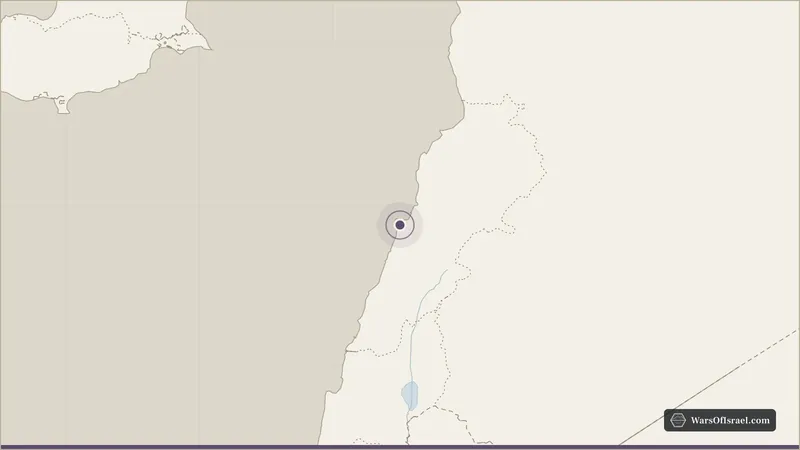
Two bombings of the Israeli headquarters in Tyre, in November 1982 and November 1983, showed what that hostility could do. In September 1983 the army pulled back to the line of the Awali River north of Sidon. In January 1985 the national unity government of Shimon Peres and Yitzhak Shamir, with Yitzhak Rabin as defense minister, decided on a phased withdrawal. Israel left Sidon on February 16, 1985, and Tyre at the end of April. By June 1985 most of the army had gone home.
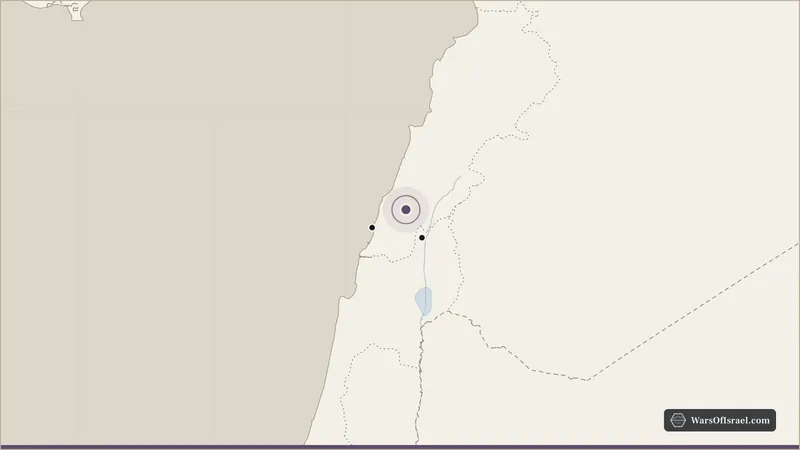
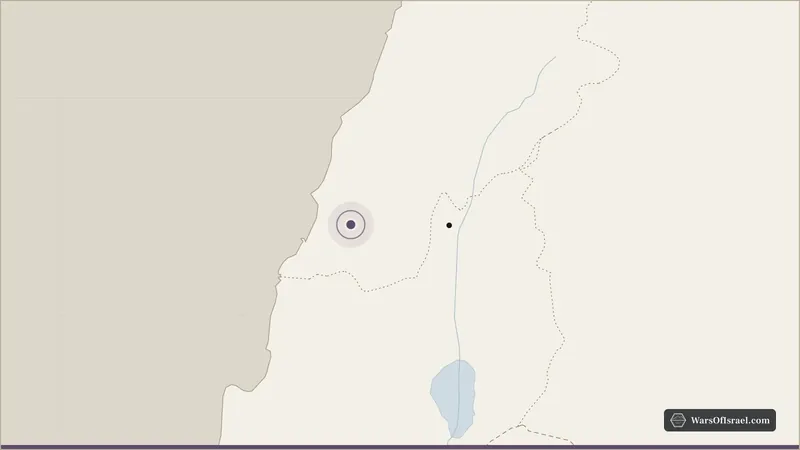
Not all of it. Israel kept a belt of territory inside Lebanon, several kilometers deep in some places and far deeper in others, from the Mediterranean coast to the slopes of Mount Hermon. Inside it stood the Beaufort castle, captured in the battle of Beaufort on the first night of the 1982 war, and dozens of fortified outposts. The government's argument was that a buffer would keep rocket crews and infiltrators away from Israeli communities. Earlier experience seemed to support it: after Operation Litani in 1978, Israel had already relied on a local Lebanese militia to hold a border enclave.
The forces on each side
Israel and the South Lebanon Army
The Israel Defense Forces held the key positions, rotating infantry, armor and artillery units through the zone, and ran a dedicated command for the area together with the Lebanon Liaison Unit, which worked with local forces. Most of the daily holding of territory, however, fell to the South Lebanon Army, a militia founded in the late 1970s by Saad Haddad, a Lebanese army officer, and led after his death in 1984 by Antoine Lahad. The SLA drew on Christian, Druze and Shiite villages of the south. It was paid, armed and trained by Israel, and it ran the Khiam detention facility, where human rights organizations documented the abuse of prisoners. Israel maintained that the SLA alone was responsible for Khiam; Amnesty International and other groups disputed that.
Hezbollah and its rivals
On the other side stood a changing set of opponents. In the mid-1980s the Shiite Amal movement, Palestinian factions and Lebanese leftist groups all attacked Israeli and SLA positions. Over time the field narrowed to Hezbollah. The movement grew out of Shiite circles that rejected Amal's line and were organized, financed and trained with the help of Iran's Revolutionary Guards, who had arrived in the Bekaa Valley in 1982. Syria, which dominated Lebanese politics, allowed Hezbollah to operate. In February 1985 Hezbollah published its founding manifesto, the Open Letter, which named the removal of Israel from Lebanon as an immediate goal and called for the destruction of the State of Israel. When the Lebanese civil war ended with the Taif Agreement of 1989, the militias were disarmed, with one exception: Hezbollah kept its weapons in the name of "resistance" to the Israeli presence.
The course of the conflict
The late 1980s: a low-level war
For the first years the conflict ran at a relatively low intensity. Attacks on outposts and convoys, roadside bombs and occasional raids were met by Israeli artillery fire, air strikes and ground raids beyond the zone. Hezbollah, still competing with Amal, was learning. Its fighters filmed their attacks, and the footage became a weapon in its own right, broadcast on the movement's media and aimed at Israeli public opinion as much as at Lebanese audiences.
The 1990s: escalation and the rules of the game
On February 16, 1992, Israeli helicopters killed Hezbollah's secretary general, Abbas al-Musawi, in an attack on his motorcade in southern Lebanon; his wife and son were among those killed. His successor, Hassan Nasrallah, would lead the movement for more than three decades. Hezbollah answered with rocket fire on northern Israel, and from then on the conflict moved in cycles: attacks on soldiers inside the zone, Israeli strikes that killed Lebanese civilians, Hezbollah Katyusha rockets on Kiryat Shmona and the border towns, and Israeli retaliation.
Twice Israel tried to break the cycle with large air and artillery campaigns. Operation Accountability, in July 1993, lasted seven days and ended with unwritten understandings brokered by the United States: Hezbollah would not fire into Israel, and Israel would not strike civilians in Lebanon. Operation Grapes of Wrath, in April 1996, lasted seventeen days. It was overshadowed by the Israeli shelling of the UN compound at Qana on April 18, in which about a hundred Lebanese civilians who had sought shelter there were killed, and it ended with the written April Understanding and an international monitoring group. Neither operation disarmed Hezbollah. Both, in effect, legitimized attacks on Israeli soldiers inside Lebanon while trying to protect civilians on both sides of the border. Israeli analysts came to call the arrangement "the rules of the game."
Human Rights Watch, which investigated both campaigns, concluded that each side had violated the laws of war by attacking civilians, and described the understandings as inherently unstable: each side kept the right to retaliate for attacks on its own civilians, which left those civilians as the main hostages of the arrangement.
1997: the year of disasters
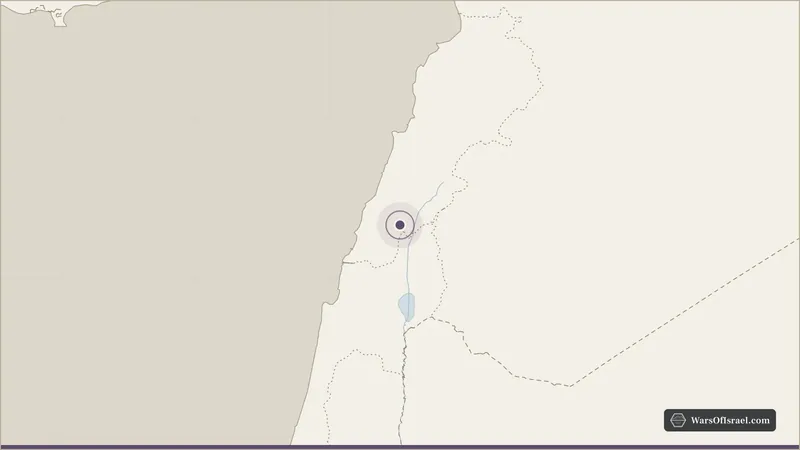
The turning point for Israeli opinion came in 1997. On February 4, two Israeli transport helicopters carrying soldiers into the security zone collided over She'ar Yashuv in northern Israel. All 73 soldiers and crew on board were killed, the worst air disaster in Israeli military history. On the night of September 5, a force of naval commandos from Shayetet 13 was caught in an ambush near Ansariya, on the coast north of the zone; twelve soldiers were killed. Weeks of further losses followed in the outposts.
The disaster gave rise to the Four Mothers movement, founded in 1997 by mothers of soldiers from northern Israel, which demanded a withdrawal from Lebanon. The movement was small at first and widely dismissed. Within two years its argument, that the zone was protecting itself rather than the Galilee, had moved from the margins to the center of Israeli politics.
The last years
Hezbollah's attacks grew more sophisticated: better roadside bombs, anti-tank missiles fired from long range, and raids on hilltop outposts. In 1999 a roadside bomb killed Brigadier General Erez Gerstein, commander of the Lebanon Liaison Unit, the most senior Israeli officer killed in the zone. In January 2000 Hezbollah assassinated Aql Hashem, one of the SLA's senior commanders. The militia's morale was eroding as it became clear that Israel was looking for a way out.
The withdrawal of May 2000
During the 1999 election campaign, Ehud Barak promised to bring the army home from Lebanon within a year of taking office. He won, and in March 2000 his cabinet decided that the army would leave by July 2000, with or without an agreement with Syria. Talks with Damascus failed that spring.
The end came faster than planned. In the third week of May 2000, as the IDF began handing outposts over to the SLA, the militia's central sector collapsed. Crowds of villagers, with Hezbollah fighters among them, walked into villages the SLA had abandoned. The government brought the timetable forward, and on the night of May 23 to 24 the remaining Israeli forces left in a rapid, coordinated withdrawal. According to the Israeli Foreign Ministry, Israel withdrew to the international border on May 24, 2000, in compliance with UN Security Council Resolution 425 of 1978. The Foreign Ministry's account of Israel's withdrawal from southern Lebanon (opens in a new tab) gives the official Israeli view of the line it returned to.
The SLA disintegrated. Thousands of Lebanese, most of them Maronite Christians from the south, crossed into Israel with their families; some later returned to Lebanon to face trial, and others settled in Israel for good. On June 16, 2000, the UN Security Council concluded that Israel had withdrawn from all Lebanese territory, and the UN marked a withdrawal line that became known as the Blue Line. Lebanon and Hezbollah rejected one part of that conclusion: they claimed that the Shebaa Farms, a small area on the slopes of Mount Hermon that the UN regarded as Syrian territory occupied in 1967, was Lebanese.
What it cost and what it left
There is no single agreed casualty count for the security zone years, partly because the conflict had no fixed starting date. According to the Israeli Defense Ministry, as reported by The Times of Israel, 1,216 Israeli soldiers were killed in Lebanon between June 1982 and May 2000, a figure that includes the war of 1982 itself. Figures for Hezbollah, the SLA and Lebanese civilians come from the parties themselves and vary widely; this publication does not combine them into a total.
Strategically, the verdict remains contested. Supporters of the zone argue that it kept attacks on northern Israel far lower than they would have been, and that a withdrawal under fire taught Israel's enemies that persistence pays. Critics argue that the zone itself created Hezbollah's cause, that the soldiers in the outposts were defending mainly themselves, and that leaving earlier would have spared hundreds of lives. A third view, put forward by several Israeli researchers, holds that the withdrawal was correct but incomplete, because it removed the reason for the fighting without removing Hezbollah's arsenal.
Five months after the withdrawal, on October 7, 2000, Hezbollah abducted three Israeli soldiers in a cross-border raid in the Mount Dov area, and in 2006 a further cross-border raid set off the Second Lebanon War. For many Israelis who served in the zone, the period remained a war without a name, fought in outposts whose names, such as Beaufort, Dla'at and Karkom, meant everything to those who served there and almost nothing to anyone else. That gap between private memory and public recognition has shaped how the security zone is remembered: in books, in films and in the long effort of veterans and bereaved families to have the period recognized as a campaign in its own right.
Timeline
- February 16, 1985: Israeli forces leave Sidon in the first stage of the withdrawal from central Lebanon.
- June 1985: Most Israeli troops leave Lebanon; Israel keeps a security zone along the border, held with the South Lebanon Army.
- February 16, 1992: An Israeli helicopter strike kills Hezbollah secretary general Abbas al-Musawi; Hassan Nasrallah succeeds him.
- July 25, 1993: Israel launches Operation Accountability, which ends on July 31 with unwritten US-brokered understandings.
- April 11, 1996: Israel launches Operation Grapes of Wrath, which ends on April 27 with the April Understanding.
- February 4, 1997: Two IDF transport helicopters collide over She'ar Yashuv; 73 soldiers and crew are killed.
- September 5, 1997: Twelve Shayetet 13 commandos are killed in an ambush near Ansariya.
- March 2000: The Barak government decides to withdraw from Lebanon by July 2000.
- May 24, 2000: The last Israeli forces leave southern Lebanon; the South Lebanon Army collapses.
- June 16, 2000: The UN Security Council concludes that Israel has withdrawn from all Lebanese territory.
Battles and operations in this war
- July 25, 1993 to July 31, 1993Operation Accountability (1993)Military operation
- April 11, 1996 to April 27, 1996Operation Grapes of Wrath (1996)Military operation