WarLebanon and the first intifada
The 1982 Lebanon War (Operation Peace for Galilee)
How a limited operation against the PLO in southern Lebanon became Israel's first long war of choice, with consequences that reached into the next two decades.
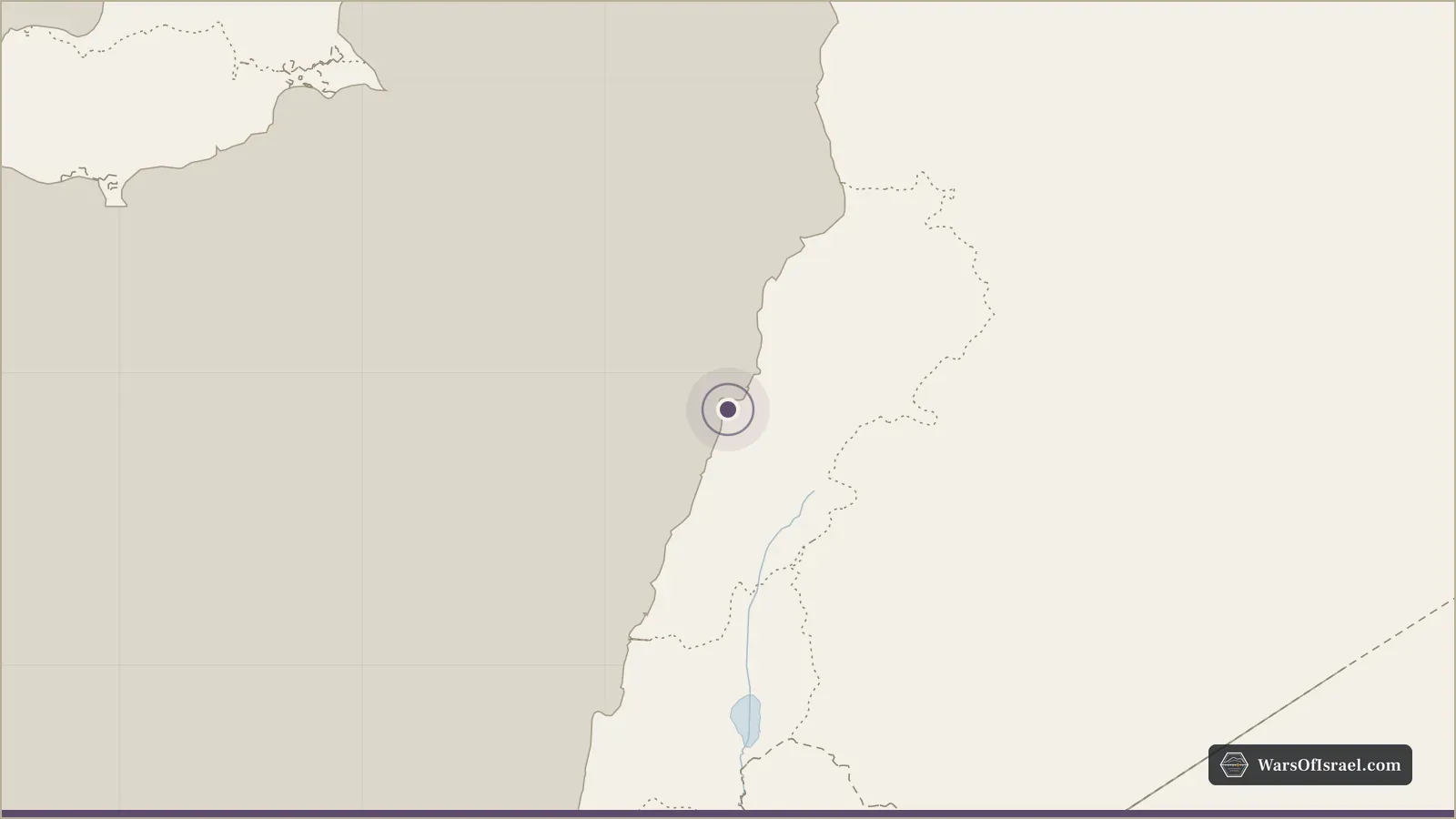
On June 6, 1982, Israeli armored columns crossed into Lebanon in an operation the government called Peace for Galilee (Mivtza Shlom HaGalil). Its declared purpose was narrow: to push the Palestine Liberation Organization (PLO) and its artillery out of range of northern Israel. Within a week, however, Israeli forces had fought the Syrian army in the Beqaa Valley, destroyed Syria's air defenses in Lebanon and reached the outskirts of Beirut. The war expelled the PLO leadership from Lebanon, but it also drew Israel into a long occupation of the south, ended in political crisis after the Sabra and Shatila massacre, and helped give rise to Hezbollah. In Israel it is remembered as the first Lebanon War, and as the first war whose necessity was openly disputed while it was still being fought.
Lebanon before the war: the PLO's state within a state
Lebanon's confessional system was already fragile when the PLO moved its headquarters there after its expulsion from Jordan in 1970 and 1971. Palestinian armed groups built a power base in the refugee camps and in the south, a region Israelis came to call "Fatahland." When the Lebanese civil war broke out in 1975, the PLO fought alongside Lebanese leftist and Muslim militias against Christian militias, and in 1976 Syria sent its army into Lebanon, where it remained.
Northern Israel paid for the PLO's presence across the border. Cross-border raids and attacks on civilians, among them the coastal road massacre of March 1978, led to Operation Litani that year, after which a United Nations force (UNIFIL) deployed in the south. It did not end the fighting. In July 1981 an exchange of Israeli air strikes and PLO rocket and artillery fire on Kiryat Shmona, Nahariya and other Galilee towns ended with a cease-fire mediated by the American envoy Philip Habib. The truce largely held along the border, but the Israeli government regarded the PLO's growing arsenal of artillery and rockets in southern Lebanon as an intolerable threat.
Why Israel went to war in June 1982
The trigger came from London. On June 3, 1982, gunmen shot and gravely wounded Shlomo Argov, Israel's ambassador to the United Kingdom. The attackers belonged to the organization of Abu Nidal, a Palestinian faction that had broken with Yasser Arafat's PLO and was hostile to it. The Israeli government held the PLO responsible for terrorism from Lebanon in general, and on June 4 Israeli aircraft struck PLO targets in Beirut and the south. The PLO answered with artillery and rocket fire on the Galilee, and on June 5 the cabinet approved a ground operation.
The decision, as announced, aimed to place the towns of the Galilee beyond the range of PLO fire, a distance commonly given as about 40 kilometers from the border. Behind the stated goal lay a wider plan associated with Defense Minister Ariel Sharon and Chief of Staff Rafael Eitan. According to the reconstruction by Ze'ev Schiff and Ehud Ya'ari, and to later scholarship, the plan envisioned destroying the PLO's military infrastructure in Lebanon, pushing Syrian forces out of the country and helping Bashir Gemayel, the commander of the Christian Lebanese Forces, become president of a Lebanon that would sign a peace treaty with Israel. Whether Prime Minister Menachem Begin and the cabinet understood and approved these larger aims at the outset has been debated ever since. Critics, including several ministers, later said they had been told of a limited operation and were presented with each expansion after the fact. Sharon and his supporters argued that the steps followed from the military situation and had been authorized.
The forces and the parties
Israel committed a large part of its ground forces, several divisions organized into fronts along the coast, in the central mountains and in the east facing the Syrians, under the overall command of Eitan and Northern Command. The Israeli Air Force, under David Ivry, dominated the skies throughout the war.
On the other side stood forces that were neither united nor of one kind: - the PLO, led by Arafat, with Fatah as its largest faction alongside other Palestinian organizations, organized in semi-regular battalions, with heavy weapons in the south and in Beirut; - the Syrian army in Lebanon, deployed mainly in the Beqaa Valley and along the Beirut to Damascus highway, with surface-to-air missile batteries and armored and commando units; - Lebanese militias allied with the PLO, and the Shiite Amal movement, whose relationship with the PLO was uneasy.
Israel's Lebanese ally was the Lebanese Forces, the Christian militia led by Bashir Gemayel, and in the south the militia of Major Saad Haddad. Their cooperation shaped the war's political goals and, in September, its darkest episode.
The course of the war
The first week: the south and the coast
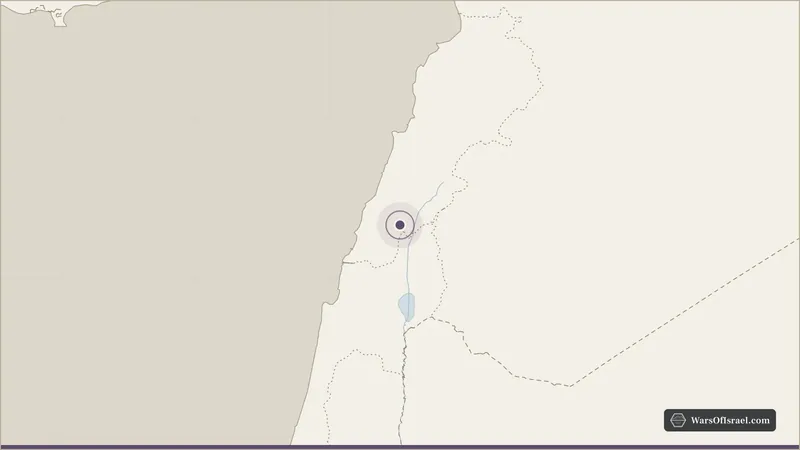
The invasion moved on three main axes. On the coastal road, Israeli forces fought through Tyre and the camps around it toward Sidon, while an amphibious landing north of Sidon, at the mouth of the Awali River, cut the coast behind the PLO. In the center, columns advanced through Nabatieh toward Jezzine and the Shouf mountains. On the first night, Golani Brigade troops stormed the Crusader fortress that overlooked the Litani River, in the battle of Beaufort, a fight that would become a symbol of the war and of the cost of its decisions.
Resistance in the refugee camps around Tyre and Sidon, especially Ain al-Hilweh, was stubborn and slowed the advance. On the coast near Damour, Major General Yekutiel Adam, the deputy chief of staff, was killed on June 10, the most senior Israeli officer to fall in any of Israel's wars.
The clash with Syria
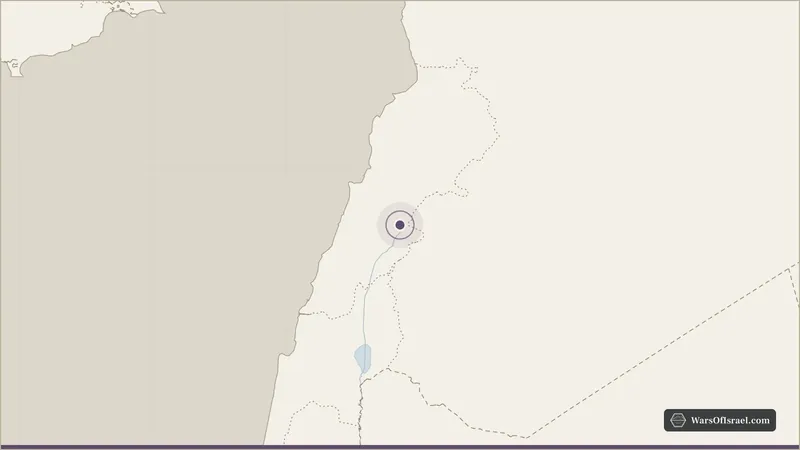
From the third day, the war became also a war with Syria. On June 9 the air force carried out Operation Mole Cricket 19, destroying the Syrian surface-to-air missile batteries in the Beqaa Valley and shooting down large numbers of Syrian fighter aircraft without losing a plane in air combat. On the ground the fighting was harder. Israeli armor pushed north in the Beqaa and in the mountains toward the Beirut to Damascus road, and on the night of June 10 to 11 an Israeli armored force was caught in a Syrian ambush in the battle of Sultan Yacoub, where soldiers were killed and three tank crewmen went missing. A cease-fire between Israel and Syria took effect on June 11, though fighting along the Beirut to Damascus highway continued intermittently in the following weeks.
Beirut
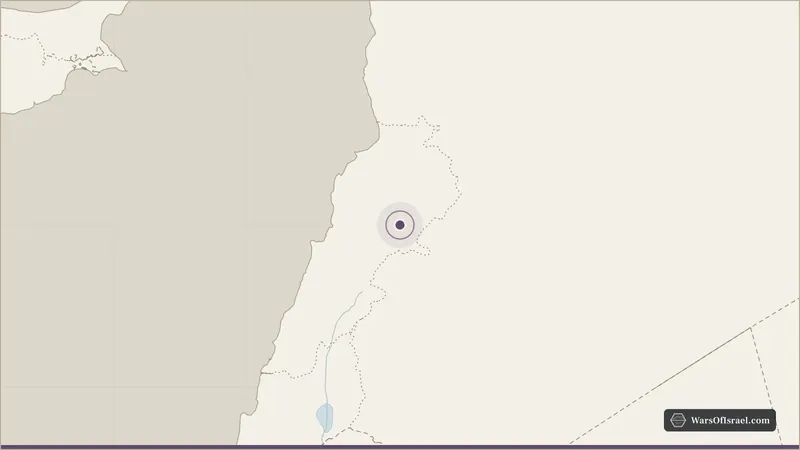
On June 13 Israeli forces linked up with the Lebanese Forces near Baabda, above Beirut, and the PLO leadership and several thousand fighters were encircled in the western half of the capital. What followed was the siege of Beirut, the first time an Israeli army besieged an Arab capital. For roughly ten weeks Israel combined artillery and air bombardment, cuts in supplies of water, power and fuel, and limited ground advances, while Habib negotiated the PLO's departure. A heavy bombardment on August 12 drew an angry protest from President Ronald Reagan, and that evening Begin informed him that a cease-fire had been ordered.
Under the agreement mediated by Habib, an American, French and Italian multinational force arrived on August 21 to supervise the evacuation. Arafat sailed from Beirut on August 30, and by September 1 the PLO's fighters and leaders had left by sea and by land for Tunisia, Syria and other Arab states.
From Gemayel's election to the massacre
On August 23 the Lebanese parliament elected Bashir Gemayel president. On September 14, before taking office, he was killed with more than twenty others when a bomb exploded at the headquarters of his Kataeb (Phalange) party in Beirut's Ashrafieh district. The bomb was planted by Habib Shartouni, a member of the Syrian Social Nationalist Party. The next day Israeli forces entered West Beirut, contrary to the understandings reached with the Americans.
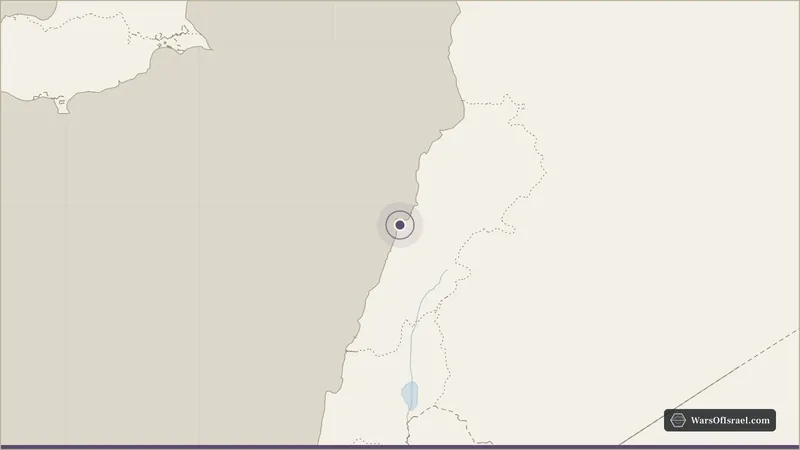
From the evening of September 16 to the morning of September 18, Lebanese Forces militiamen, admitted into the area by the IDF, killed hundreds of Palestinian and Lebanese civilians in the Sabra neighborhood and the Shatila refugee camp. The Sabra and Shatila massacre and the Kahan Commission are covered in a separate entry. Estimates of the dead range from 460, the figure of the Lebanese army prosecutor, to several thousand in Palestinian and other accounts. The Israeli state commission of inquiry headed by Supreme Court President Yitzhak Kahan found that the militia bore direct responsibility, that Israel bore indirect responsibility, and that Sharon bore personal responsibility. The IDF withdrew from West Beirut on September 29, and the multinational force returned to the city.
Casualties and their sources
Figures for the 1982 war depend heavily on who counted and over which period, and they should be read with their dates: - On October 13, 1982, the Jewish Telegraphic Agency reported the Israeli army's figure of 368 soldiers killed and 2,383 wounded from June 6 to October 10, 1982. - The Christian Science Monitor reported in December 1982 an Israeli army figure of 446 soldiers killed between June 4 and November 19, 1982, a period that included the explosion at the Israeli headquarters in Tyre on November 11. - Counts for the whole Israeli presence in Lebanon, from June 1982 to the withdrawal in May 2000, reach 1,216 soldiers killed, according to the Defense Ministry as reported by The Times of Israel. That figure covers the later security-zone years as well and is not a count for the 1982 war alone. - Lebanese police figures reported by The Christian Science Monitor put the dead in Lebanon, Lebanese, Palestinian and Syrian, civilians and fighters together, at 19,085 between June 4 and August 31, 1982, with 30,302 wounded. - Historian Kenneth Pollack estimates Syrian losses at about 1,200 killed.
There is no agreed figure for PLO combatants killed, and the share of civilians among the Lebanese dead remains disputed.
After the siege: a war without an end
The departure of the PLO did not bring the peace treaty that the war's planners had hoped for. Amin Gemayel, Bashir's brother, succeeded him as president, and on May 17, 1983, Israel and Lebanon signed an agreement, negotiated with American participation, that ended the state of war and set terms for an Israeli withdrawal. Syria and its Lebanese allies opposed it, the Lebanese government could not implement it, and Lebanon abrogated it in March 1984.
Israel's forces, meanwhile, became the target of a new kind of war. On November 11, 1982, a building that housed the Israeli military headquarters in Tyre collapsed in an explosion that killed dozens of Israeli soldiers, Border Police officers and Shin Bet personnel. Israel attributed it at the time to a gas leak; a joint investigation published in 2024 concluded that a suicide car bombing was highly probable. A second bombing in Tyre on November 4, 1983 killed 28 Israelis. In the Shiite south, initial relief at the PLO's departure turned to hostility toward the occupation, and Shiite militants backed by Iran organized the movement that became Hezbollah.
In September 1983 the IDF withdrew from the Shouf mountains to the line of the Awali River. In January 1985 the national unity government of Shimon Peres and Yitzhak Shamir decided on a phased withdrawal, which was completed in June 1985. Israel kept a strip along the border, the security zone, held with the South Lebanon Army. The South Lebanon security zone conflict that followed lasted until May 2000.
Politics, protest and memory
No previous Israeli war had divided the home front in the same way. In August 1982 Begin argued publicly that this was a war of choice, and that a nation may choose to fight in order to prevent greater harm. Many Israelis, including reservists returning from the front, rejected that reasoning. After the massacre, the Peace Now movement organized a demonstration in Tel Aviv on September 25, 1982 that its organizers estimated at 400,000 people, and the government agreed to appoint a state commission of inquiry.
The Kahan Commission published its report on February 8, 1983. Two days later, on February 10, a grenade thrown at a Peace Now march in Jerusalem killed the activist Emil Grunzweig. On February 14 Sharon left the defense ministry, remaining in the government as minister without portfolio, and Moshe Arens replaced him. Begin, worn down by the war and by personal loss, announced his intention to resign at the end of August 1983 and withdrew from public life.
The war's name itself became a sign of how it was remembered. The operational name Peace for Galilee gave way in Israeli usage to the first Lebanon War, especially after the 2006 war came to be called the Second Lebanon War. For Israelis, the Beaufort, the missing soldiers of Sultan Yacoub and the long years in the security zone carry the memory. For Palestinians and Lebanese, the memory centers on the siege of Beirut, the dead of the camps and the damage across the south. Historians largely agree that the war achieved the military expulsion of the PLO from Lebanon while failing in its political aims, and that it changed the relationship between Israeli society and the decisions of its leaders about war.
Timeline
- June 3, 1982: Israel's ambassador in London, Shlomo Argov, is shot and gravely wounded by members of the Abu Nidal organization.
- June 6, 1982: The IDF crosses into Lebanon; Operation Peace for Galilee begins.
- June 7, 1982: Golani Brigade troops complete the capture of the Beaufort fortress.
- June 9, 1982: Operation Mole Cricket 19 destroys the Syrian missile batteries in the Beqaa Valley.
- June 11, 1982: A cease-fire between Israel and Syria takes effect after the battle of Sultan Yacoub.
- June 13, 1982: Israeli forces link up with the Lebanese Forces near Beirut; the siege of the western city begins.
- August 21, 1982: The multinational force arrives and the PLO evacuation from Beirut begins.
- September 14, 1982: President-elect Bashir Gemayel is assassinated in Beirut.
- September 16, 1982: Lebanese Forces militiamen enter Sabra and Shatila; the massacre continues until the morning of September 18.
- February 8, 1983: The Kahan Commission publishes its report.
- May 17, 1983: Israel and Lebanon sign an agreement on ending the state of war and on withdrawal.
- June 1985: The IDF completes its withdrawal to the security zone in southern Lebanon.
Battles and operations in this war
- June 6, 1982 to June 7, 1982The battle of Beaufort (1982)Battle
- June 9, 1982Operation Mole Cricket 19 (1982)Military operation
- June 10, 1982 to June 11, 1982The battle of Sultan Yacoub (1982)Battle
- June 13, 1982 to September 1, 1982The siege of Beirut (1982)Battle
- September 16, 1982 to September 18, 1982The Sabra and Shatila massacre and the Kahan Commission (1982)Attack