BattleLebanon and the first intifadaReference entry
The battle of Sultan Yacoub (1982)
What happened in the Syrian ambush in the southern Beqaa, and why the battle stayed open in Israel for more than four decades.
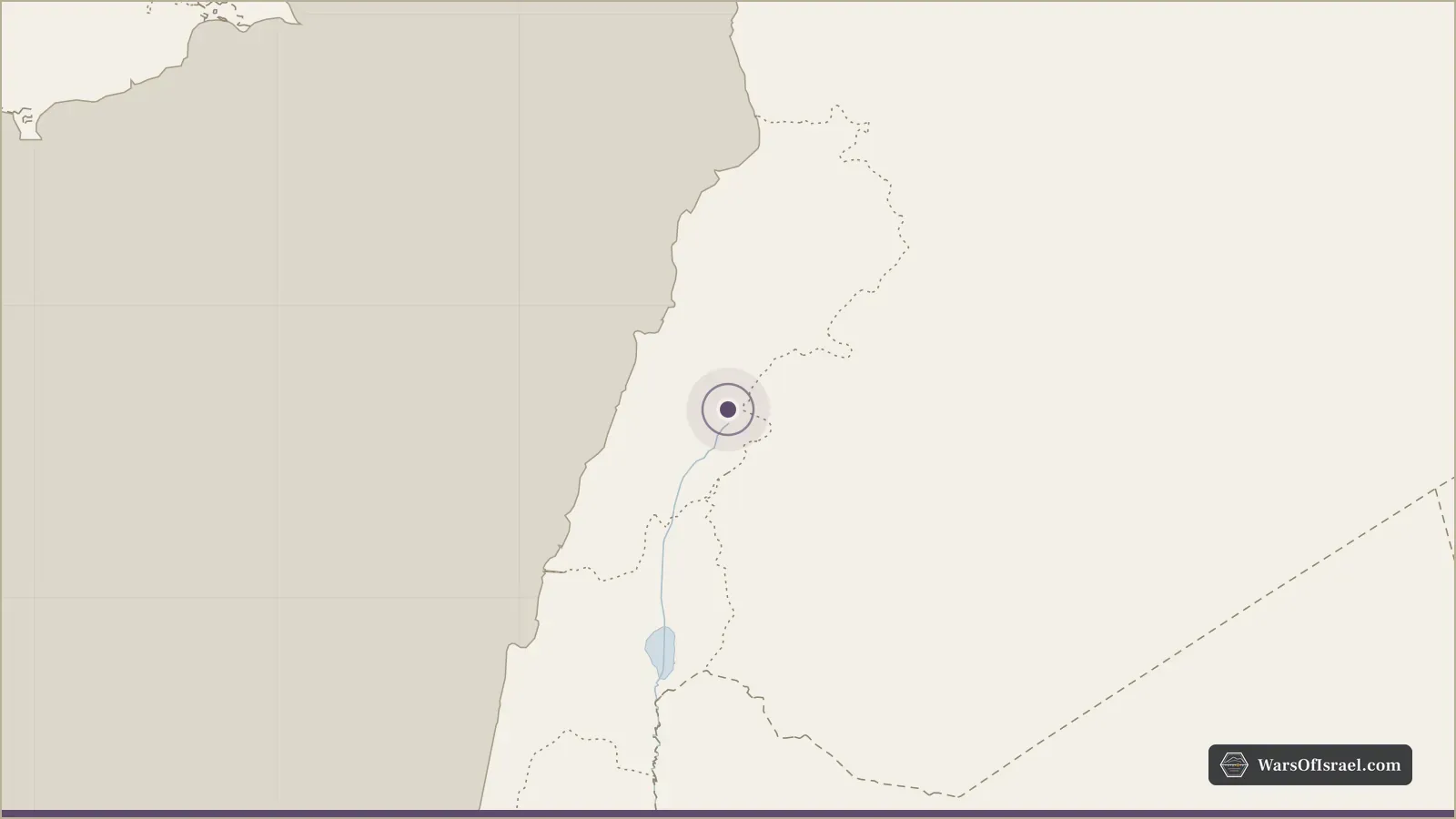
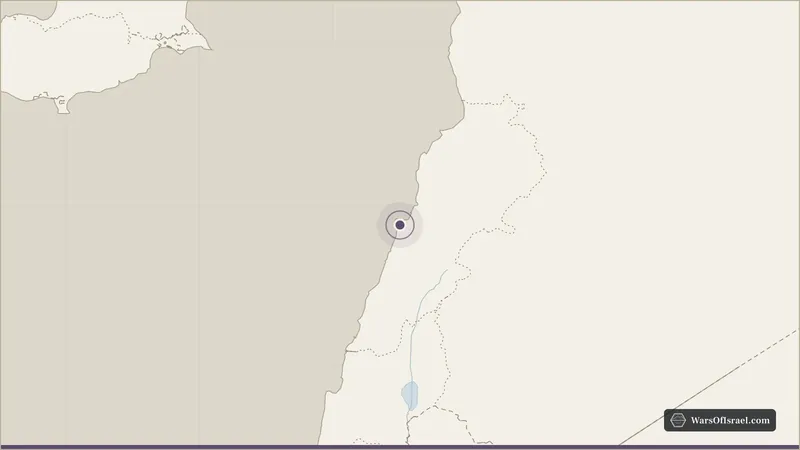
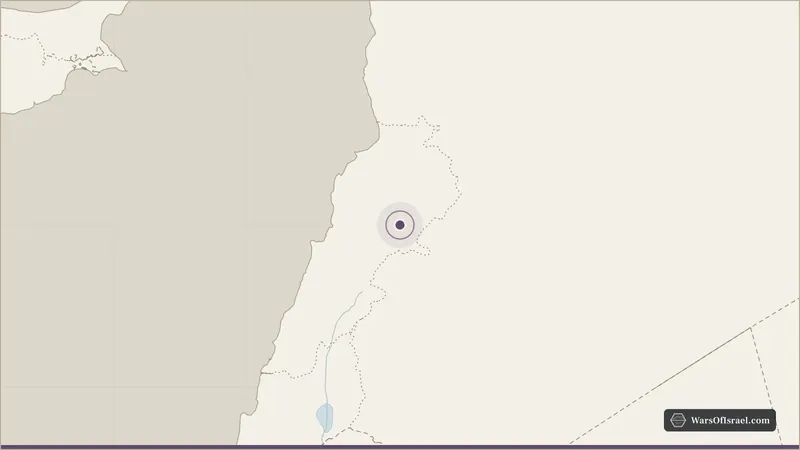
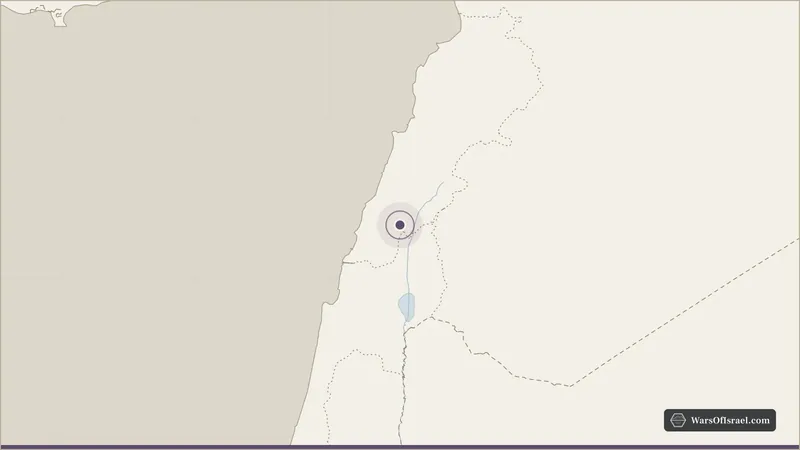
The battle of Sultan Yacoub was fought on the night of June 10 to 11, 1982, in the southern Beqaa Valley, during the 1982 Lebanon War. An Israeli armored force advancing north toward the Beirut to Damascus highway entered an area held by Syrian forces near the village of Sultan Yacoub and was caught under fire from several directions. It fought its way out by morning, leaving tanks behind. Published figures for the Israeli dead range from about 20 to 30; three tank crewmen, Zachary Baumel, Zvi Feldman and Yehuda Katz, were listed as missing. For decades the battle remained an open wound, closed only partly by the return of Baumel's remains in 2019 and Feldman's in 2025.
The advance into the Beqaa
After Operation Mole Cricket 19 destroyed the Syrian missile batteries on June 9, Israeli ground forces in the eastern sector pressed north against the Syrian army in the Beqaa. Their aim was to reach and cut the Beirut to Damascus road before a cease-fire, which American mediators were pressing both sides to accept, could take effect. Syrian forces in the area included armored and commando units and anti-tank teams that knew the ground.
On the evening of June 10, a battalion of Magach (M48) tanks from the force under Brigadier General Giora Lev's division moved forward in the dark along a road that led into Syrian positions near Sultan Yacoub, west of the Syrian border. According to the account by Ze'ev Schiff and Ehud Ya'ari, the force went further than intended and found itself in a valley with Syrian troops on the high ground around it.
The night of the ambush
Through the night the battalion was hit by anti-tank missiles, tank fire and artillery. Several tanks and armored vehicles were knocked out, and the wounded had to be gathered under fire. Israeli artillery fired to cover the force, and toward morning other units opened a way out. The battalion withdrew, but some disabled tanks were left on the field, and the Syrians later took them as trophies.
Figures for the Israeli dead differ between sources. The Times of Israel, reporting on the recovery of Zvi Feldman in 2025, gave 21 servicemen killed and more than 30 wounded; other published accounts give about 30 killed. Beyond the three missing crewmen, two other Israeli soldiers taken prisoner in the battle were held for years and released in prisoner exchanges in 1984 and 1985. Syrian losses in the battle are not reliably documented. The Israel and Syria cease-fire took effect on June 11, and Syria presented the battle as a victory.
The missing and the long search
The fate of Baumel, Feldman and Katz became one of Israel's longest missing-in-action cases. Their families, Israeli governments and organizations abroad pursued every lead for decades. One of the captured tanks was displayed in Syria, and another was taken to a museum near Moscow. In June 2016, after a request from Prime Minister Benjamin Netanyahu, Russia handed that tank over at a ceremony in Moscow on June 8, 2016, and it was flown to Israel, where it was expected to be shown at the Armored Corps museum at Latrun.
In 2019 Israel announced that Zachary Baumel's remains had been recovered from Syria and returned for burial. On May 11, 2025, the IDF and the Mossad announced that the remains of Sergeant First Class Zvi Feldman had been brought back from Syria in a covert operation. Sergeant First Class Yehuda Katz is still listed as missing. Israeli officials have said the effort to return him continues. For many Israelis, the name Sultan Yacoub stands less for a battle than for the principle that the army does not abandon its soldiers.