BattleWar of IndependenceReference entry
The battle of Malkiya (1948)
How a hilltop village on the Lebanese border became the scene of the only clear Lebanese army action of the 1948 war, and why its story is still told differently on each side.
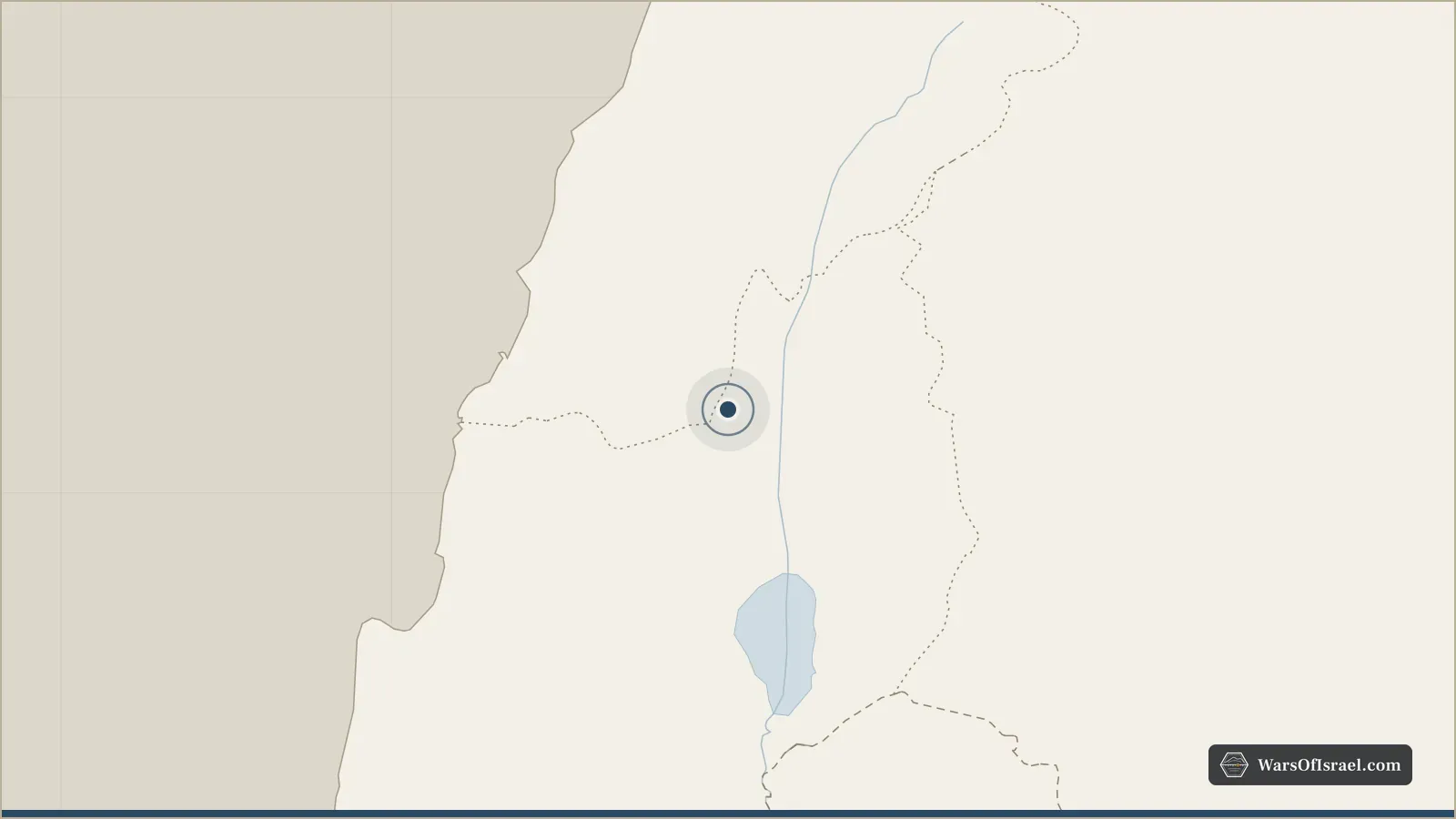
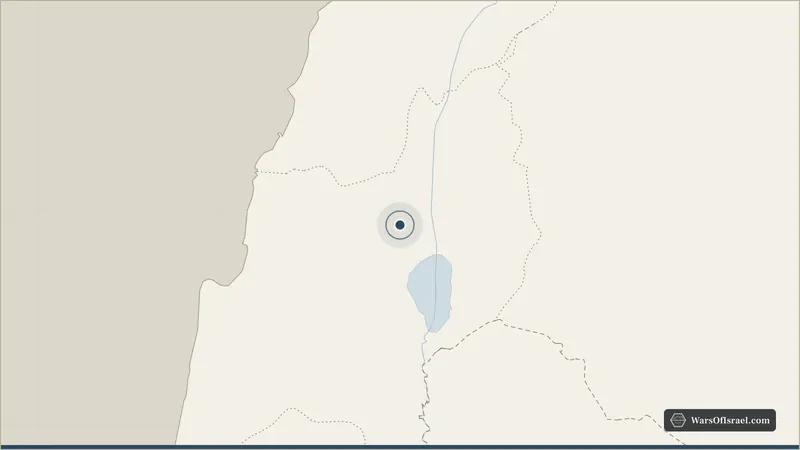
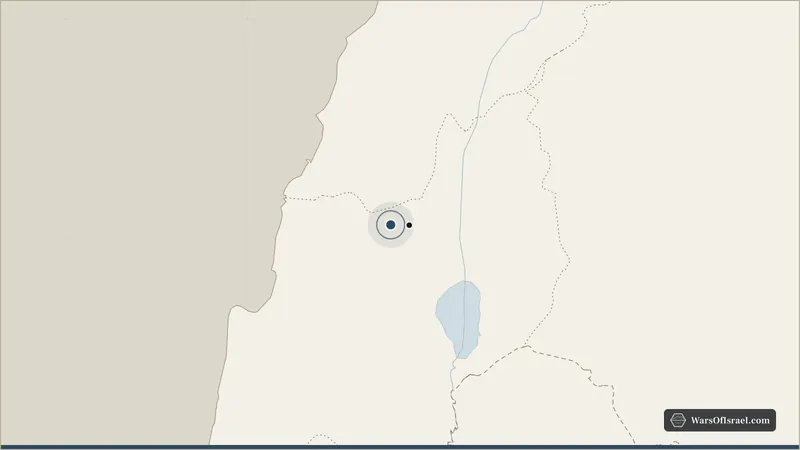
Malkiya was a small village on a ridge above the Lebanese border, and in the spring of 1948 it became one of the most contested points in the Upper Galilee. Between mid-May and early June the village and its neighbor Qadas changed hands three times. The Palmach failed to take it on the night the state was declared, captured it at the end of May, and lost it on June 5 to an Arab force that included regular Lebanese and Syrian troops. It stayed in Arab hands until Israeli forces retook it at the end of October during Operation Hiram. In Lebanon, the battle of June 5 is remembered as the army's one victory of the war; in Israel, it is a little-known chapter of the 1947 to 1949 war.
A road from Lebanon
Al-Malkiyya was a Shiite village of a few hundred people in the hills of the Jabal Amil region. The border drawn between the British and French mandates in the early 1920s left it just inside Palestine, close to the Lebanese village of Aitaroun and to the road that ran from southern Lebanon into the Upper Galilee and down toward the Hula Valley. Haganah planners saw the Malkiya and Qadas area as a gateway for an Arab invasion from the north, and the Palmach's Operation Yiftach aimed to close it.
Three battles in three weeks
May 14 to 15: the first assault
On the night of May 14 to 15, 1948, the 1st Battalion of the Palmach's Yiftach Brigade, under Dan Lanner, attacked Malkiya, the nearby former British camp and Qadas. The village was held by Arab Liberation Army volunteers, many of them Lebanese, with ALA units at Qadas. Recent Israeli research has questioned the older claim that regular Lebanese troops fought in this first battle. The Palmach broke into some positions but withdrew by midday on May 15. According to Israeli figures, it lost 24 killed and many wounded. Six of the dead were left behind at Qadas, and their remains were located only in 2009.
May 28: the Palmach takes the village
On the night of May 28 a Yiftach armored column crossed into Lebanese territory and approached Malkiya from the north as a diversion, while other units made a feint from the Qadas valley. After a clash with reinforcements from Bint Jbeil, the defenders of Malkiya pulled out and the Palmach entered the village with light losses. The village's residents had fled during the fighting.
June 5: the Arab counterattack
On June 1 the Palmach handed the sector to the Oded Brigade. Four days later, on June 5, a force described in Israeli accounts as roughly a brigade, including a regular Lebanese battalion, a regular Syrian battalion with armor and ALA units, supported by Syrian aircraft, attacked Malkiya. The company of Oded's 11th Battalion holding the village was driven out. According to Israeli figures it lost nine killed, six of whom were never found.
Outcome and competing memories
The June 5 battle left Malkiya and Qadas in Arab hands through the summer. On October 31, 1948, during Operation Hiram, the 7th Brigade took Malkiya in a surprise attack from Sasa after an air raid, and the Lebanese front fell silent. In March 1949 six former Palmach soldiers founded Kibbutz Malkia on the village lands, and the border settled where it had been.
The battle has different meanings on each side of the frontier. In Lebanon, the June 5 action became a founding story of the Lebanese army, often presented as the only time it fought directly in the war, though historians such as Yoav Gelber stress how limited Lebanon's commitment was. In Israel, the losses of the first assault, the dead left at Qadas, and the long search for them gave Malkiya a lasting place in the memory of the Palmach.