Military operationWar of IndependenceReference entry
Operation Yiftach and the battle for Safed (1948)
How a Palmach offensive turned a besieged Jewish quarter in Safed into the anchor of Israeli control over the eastern Upper Galilee.
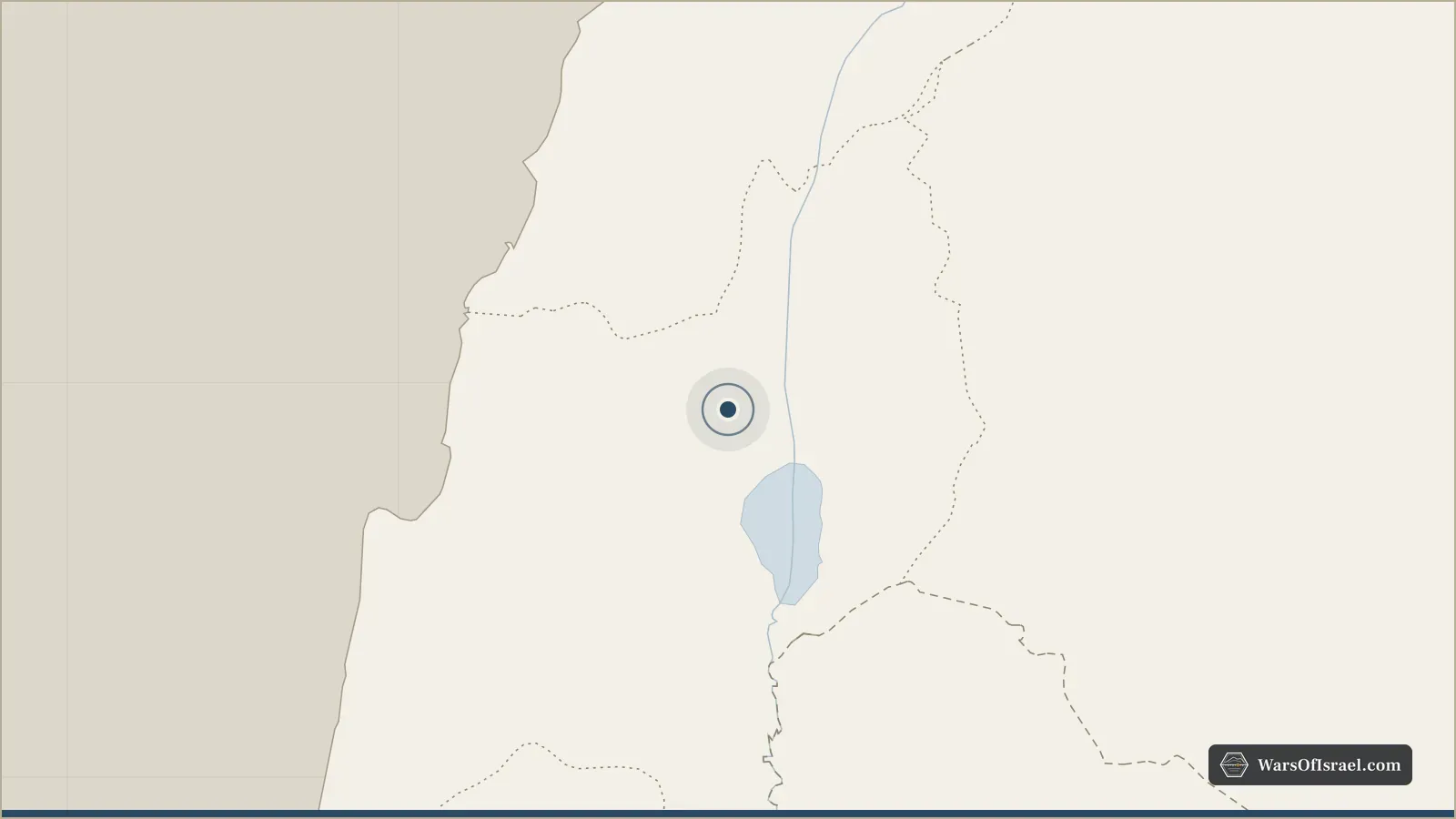
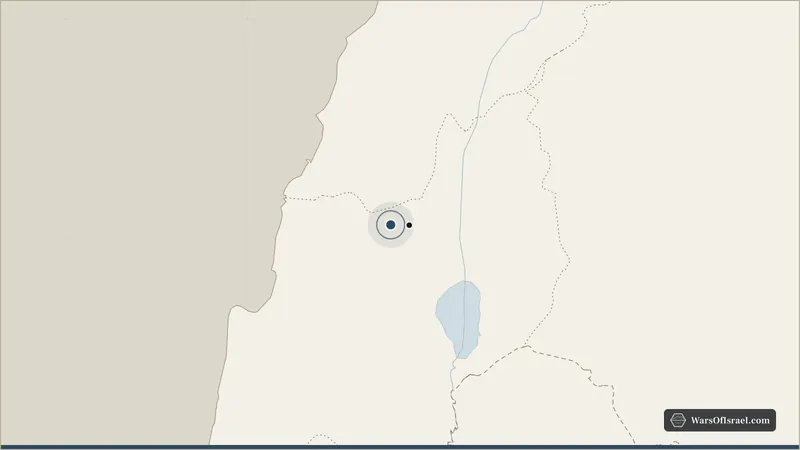
Operation Yiftach was the Palmach's campaign to win the eastern Upper Galilee in the last weeks of British rule, and its decisive moment came in Safed. On the night of May 9 to 10, 1948, after one failed attempt, Palmach troops under Yigal Allon took the key positions of a hill town where perhaps 1,500 Jews had lived among an Arab population of 10,000 to 12,000, according to Benny Morris. By the time the state was declared five days later, the Arab town had emptied and the Galilee panhandle was connected to the rest of the Jewish-held territory. It was one of the major Haganah offensives of the spring of the 1947 to 1949 war.
A town divided and a valley at risk
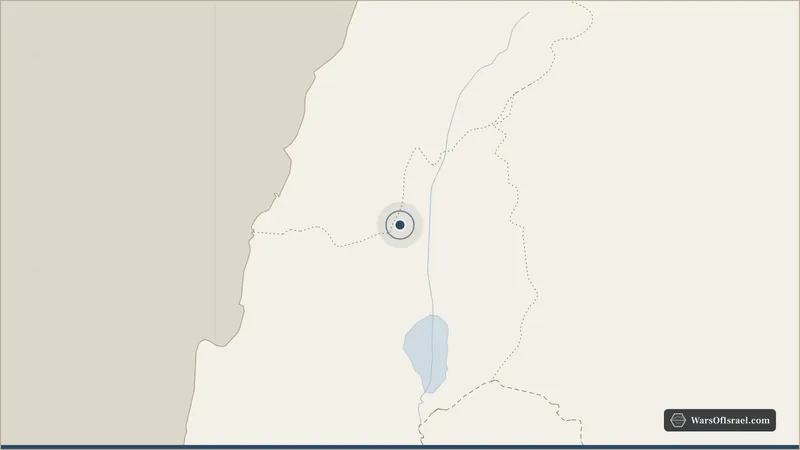
Safed was one of Judaism's four holy cities and had a small, old Jewish quarter, populated largely by religious and elderly residents, on the western slope below the citadel. The Arab quarters held the high ground. Through the winter of 1947 to 1948 the Jewish quarter was cut off and under fire, supplied irregularly and defended by a modest Haganah force reinforced by Palmach fighters who slipped in by night.
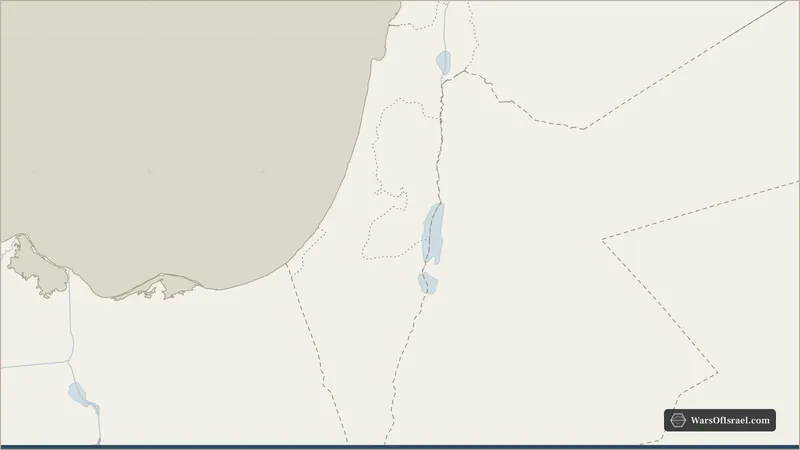
The wider stakes were regional. The Jewish settlements of the Hula Valley and the finger of land running north to Metula depended on a single road through Rosh Pinna, and Arab-held Safed and the villages around it commanded that road. Haganah planners feared that once the British left, the Arab Liberation Army and, later, the Syrian and Lebanese armies could cut the entire region off.
The course of the operation
The British withdrew from Safed in mid-April 1948; sources give April 15 or 16. Local Arab fighters, supported by Arab Liberation Army volunteers, immediately tried to take the Jewish quarter and were driven back. Allon, commander of the Palmach, was given charge of the northern effort, and on April 28 the Haganah took over the police fort and army camp at Rosh Pinna as the British handed them over.
The Palmach then moved against the villages around Safed. On May 1 its 3rd Battalion attacked Ein al-Zeitun, a village just north of the town. Morris records that a number of captured men from the village were killed in the following days, an episode documented in Israeli military records and in Palestinian accounts. On May 4 a separate action, Operation Matateh (Broom), drove Bedouin tribes out of the Jordan Valley south of Rosh Pinna.
The first assault on Safed itself, on May 6, failed against the Arab positions around the citadel. A second attack began on the evening of May 9 with a heavy mortar barrage, including the Davidka, a crude homemade mortar whose noise was far more frightening than its accuracy. Through the night and in heavy rain, Palmach infantry took the citadel, the Beit Shalva building and the police fort. By May 10, as the Jewish Virtual Library's account of the operation, drawn from IDF material, (opens in a new tab) records, the key positions were in Jewish hands, and the town was fully under control by May 11.
Outcome and significance
Almost the entire Arab population of Safed left during and immediately after the battle, fleeing toward Lebanon and Syria. Morris attributes the collapse to the shock of the bombardment, the fall of nearby villages and the departure of the fighters; Palestinian historians describe it as part of a deliberate Haganah policy of driving out the population. Most of the few remaining elderly residents were later moved out by the Israeli authorities.
Militarily, the operation secured the eastern Galilee just before the Arab armies invaded. When Syrian forces crossed into the Jordan Valley days later, they met settlements whose rear was now covered, and the fight moved south to the battle of the Deganias. On the Lebanese border, the Palmach's attempts to take Malkiya in the same weeks showed how much harder the frontier would remain.
In Israeli memory, the battle for Safed is tied to the Davidka, a monument to which stands in the town today, and to the image of a small Jewish quarter rescued at the last moment. In Palestinian memory, Safed is one of the cities of the Nakba, the birthplace of families scattered across Lebanon and Syria.