Military operationWar of IndependenceReference entry
Operation Hiram (1948)
The October 1948 offensive that brought the whole of the Upper Galilee under Israeli control in about 60 hours and carried the fighting into southern Lebanon.
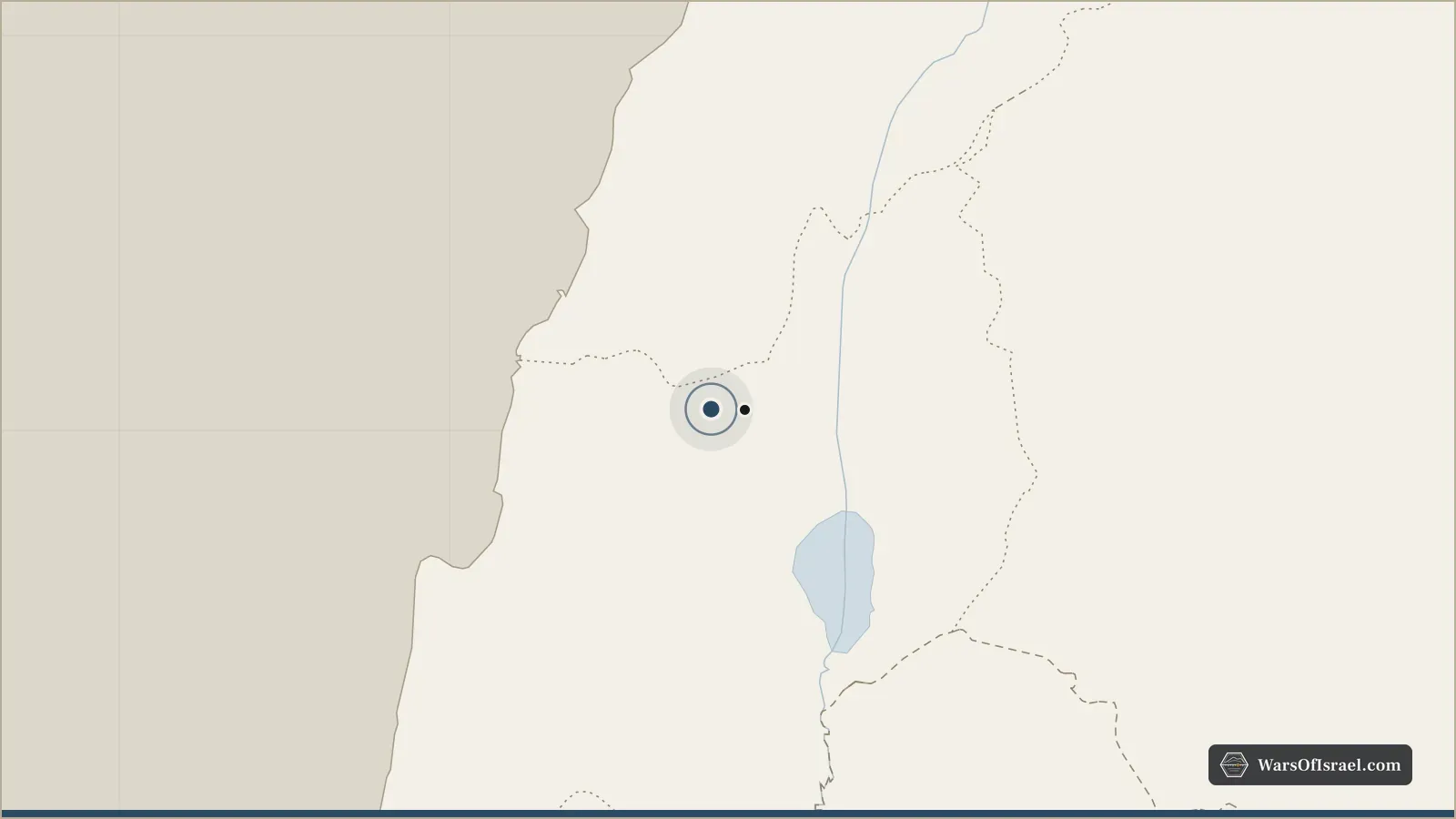
Operation Hiram was the Israeli offensive that ended the war in the Galilee. Launched on the night of October 28 to 29, 1948 and finished before a ceasefire at 11:00 on October 31, it sent four brigades against the Arab Liberation Army (ALA) pocket in the central and Upper Galilee. In about 60 hours the ALA was routed and fled to Lebanon, the whole Galilee came under Israeli control, and Israeli troops occupied a strip of southern Lebanon up to the Litani River. The operation was named after Hiram, the biblical king of Tyre who helped Solomon build the Temple.
The pocket in the Galilee
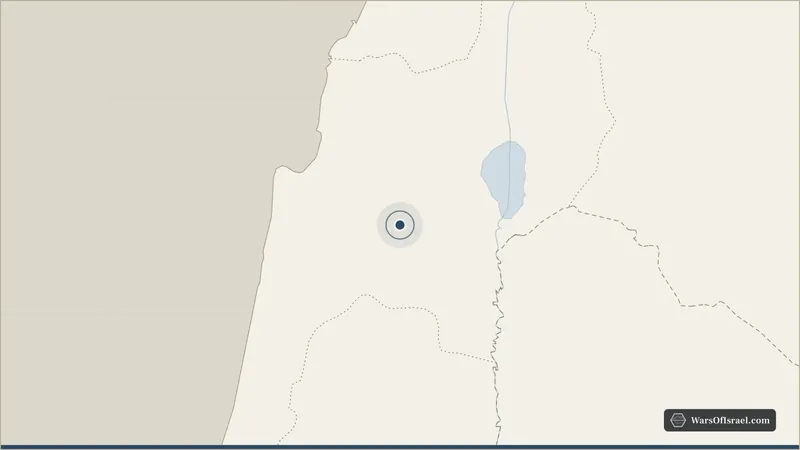
After Operation Dekel in July, Fawzi al-Qawuqji's ALA still held a block of hill country north of Nazareth, from Sakhnin and Eilabun in the south to Sasa, Jish and Tarshiha near the Lebanese border. Israeli estimates put its strength at 2,000 to 4,000 men, with a Syrian battalion and local fighters alongside it. It was this area, around Malkiya and the border, where Lebanese and ALA forces had pushed back Israeli units in June. The UN partition plan of 1947 had allotted most of the western Galilee to the proposed Arab state.
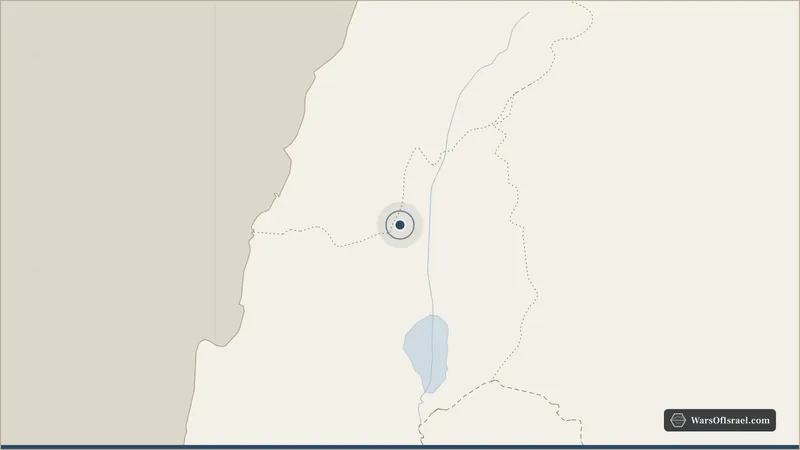
On October 22, the ALA attacked the Israeli outpost at Sheikh Abd, overlooking kibbutz Manara on the border ridge, and threatened to cut the kibbutz off. With the Negev front quiet after Operation Yoav, the Israeli command had both the forces and a reason to finish the northern front.
Sixty hours
Moshe Carmel, commanding the northern front, used a converging attack. The 7th and Oded brigades struck from the east and west toward Sasa and Jish, while the Golani Brigade attacked from the south through Eilabun and the Carmeli Brigade covered the north and the border. Circassian and Druze units fought on the Israeli side. The main events were: - October 29: the 7th Brigade took Safsaf after resistance by an ALA battalion, and Jish, where a Syrian battalion fought. - October 30: Sasa fell to the 7th Brigade, Golani captured Eilabun, and the ALA began to collapse. - October 30 to 31: with Tarshiha already taken by the Oded Brigade, the siege of Manara was lifted and al-Qawuqji's forces fled across the border.
By the ceasefire on October 31 the Carmeli Brigade had crossed into Lebanon and captured about 15 villages, according to Morris (other Israeli accounts say 14), reaching the Litani. Herzog gives Arab losses as about 400 killed and 550 taken prisoner. Israeli losses were light, though no precise total is given in the main accounts.
Killings, flight and inquiry
Hiram is also one of the operations most closely associated with the killing of civilians and prisoners in 1948. Morris, working from Israeli military records, documents several incidents: - At Safsaf and Jish, IDF reports refer to killings of captured men and civilians after the fighting. - At Eilabun, a Christian village, an IDF liaison report refers to 13 men killed after its capture; the residents were expelled, and some were allowed to return in 1949. - At Hula in Lebanon, taken without a fight, between 35 and 58 captured men were shot. The company commander, Shmuel Lahis, was convicted of murder by an Israeli military court and sentenced to seven years in prison, reduced to one year on appeal; he received a presidential amnesty in 1955.
Reports of the killings reached the Israeli cabinet within days, and the Attorney General, Yaakov Shimshon Shapira, was asked to investigate them. Few prosecutions followed, some files remain closed to historians, and the details are still debated.
The operation was followed by a large movement of people. Morris writes that some 50,000 Palestinians fled or were driven out of the Galilee in and after the operation, while many villages, especially Druze and Christian ones, stayed in place.
Outcome and significance
Hiram completed the Israeli conquest of the Galilee and removed the ALA from the war. In the Israeli-Lebanese armistice agreement of March 23, 1949, Israel withdrew from the villages it held in Lebanon, and the armistice line followed the international border of the Mandate era. The Galilee, with its large remaining Arab population, became part of Israel, a fact that shaped the country's demography as much as any battle of the war.