BattleLebanon and the first intifadaReference entry
The siege of Beirut (1982)
The ten weeks in which an Israeli army besieged an Arab capital for the first time, and the agreement that sent the PLO leadership into exile.
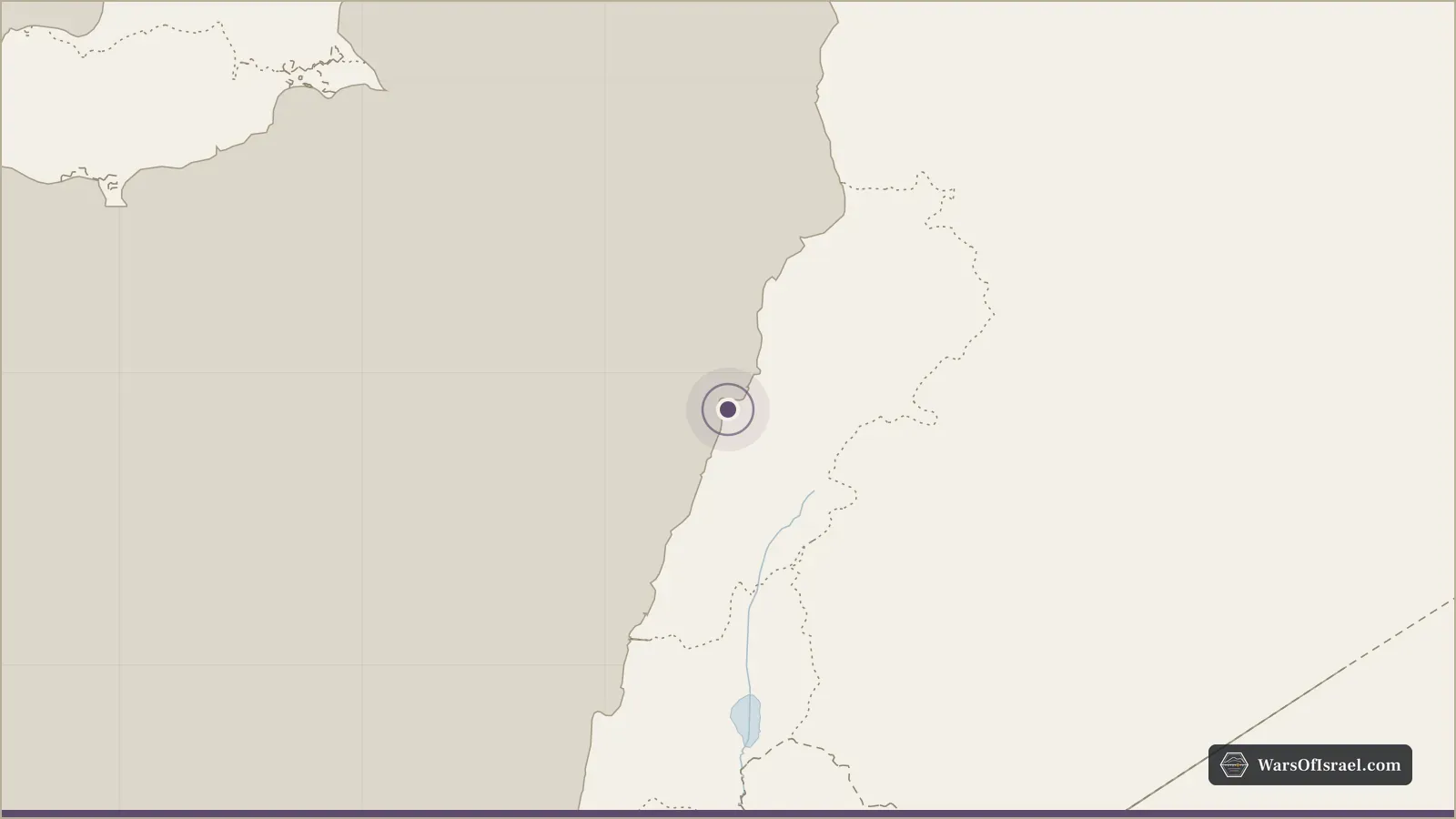
The siege of Beirut was the central episode of the 1982 Lebanon War. From mid-June 1982, Israeli forces held the Palestine Liberation Organization's leadership and several thousand of its fighters, together with Syrian troops and allied Lebanese militias, encircled in the western half of the Lebanese capital, home also to a large civilian population. For about ten weeks Israel combined bombardment, a blockade of supplies and limited ground attacks, while the American envoy Philip Habib negotiated the PLO's departure. The siege ended with the evacuation of the PLO from Beirut between August 21 and September 1, 1982, under the protection of a multinational force.
Reaching the capital
The Israeli advance up the coast and through the mountains brought Israeli forces to the edge of Beirut within a week of the invasion. On June 13 they linked up with the Christian Lebanese Forces militia near Baabda, the seat of the Lebanese presidency in the hills above the city. The PLO's political and military headquarters, its offices, depots and the refugee camps of Sabra, Shatila and Burj al-Barajneh lay inside the encircled western sector. East Beirut was held by the Lebanese Forces, Israel's ally.
Israel's government did not want its army to fight its way into the dense streets of West Beirut, where losses on all sides would have been heavy. Its strategy was to force the PLO to leave by military and political pressure, and it hoped that the Lebanese Forces would take on the urban fighting, which they declined to do.
Pressure and negotiation
The weeks that followed combined military escalation with diplomacy. Israeli artillery, navy and aircraft struck PLO positions in West Beirut, including neighborhoods where the PLO had placed its offices and weapons among residential buildings. At times Israel cut off water, electricity and fuel supplies to the western part of the city. Israeli ground forces seized positions around the airport, the camps and the city's southern edge. PLO leader Yasser Arafat, according to historian Rashid Khalidi's study of PLO decision making during the siege, sought guarantees for the safety of Palestinian civilians who would remain behind and a respectable form of departure.
International pressure grew as civilian casualties mounted. Lebanese police figures reported by The Christian Science Monitor put the dead in Beirut between June 4 and August 31, 1982 at 6,775, of whom, according to that report, 84 percent were civilians. On August 12, after a day of especially heavy bombardment, President Ronald Reagan telephoned Prime Minister Menachem Begin. The White House statement of that day, preserved as the Reagan Library's record of the August 12, 1982 statement on Lebanon (opens in a new tab), says the president expressed his outrage and that Begin later called back to report that a complete cease-fire had been ordered. In Israel, the cabinet that week curbed Defense Minister Ariel Sharon's freedom to order further escalation without its approval.
The evacuation and what followed
Habib's agreement provided for the departure of PLO fighters with their personal weapons, the withdrawal of Syrian forces from the city and the deployment of a multinational force of American, French and Italian troops. French troops landed on August 21, and the first fighters left by sea the same day. Arafat sailed on August 30, and the evacuation was completed by September 1. In all, about 14,000 PLO fighters left Beirut, according to most accounts, for Tunisia, Syria, Jordan, Iraq, the two Yemens, Sudan and Algeria. The PLO's headquarters moved to Tunis.
Its task completed, the multinational force left Beirut soon afterward. On September 14, President-elect Bashir Gemayel was assassinated, and the next day Israeli forces entered West Beirut. Between September 16 and 18, Lebanese Forces militiamen killed hundreds of civilians in the camps, in the Sabra and Shatila massacre. The IDF withdrew from West Beirut on September 29 as the multinational force returned. The siege had achieved its military aim, the removal of the PLO from Lebanon's capital, but its images of a capital under bombardment shaped international opinion of Israel and fed the protest against the war at home.