The battle of Tel Hai (1920)
How a confrontation at a small farmstead in the Upper Galilee became one of the founding stories of Israeli memory, and what the record actually shows.
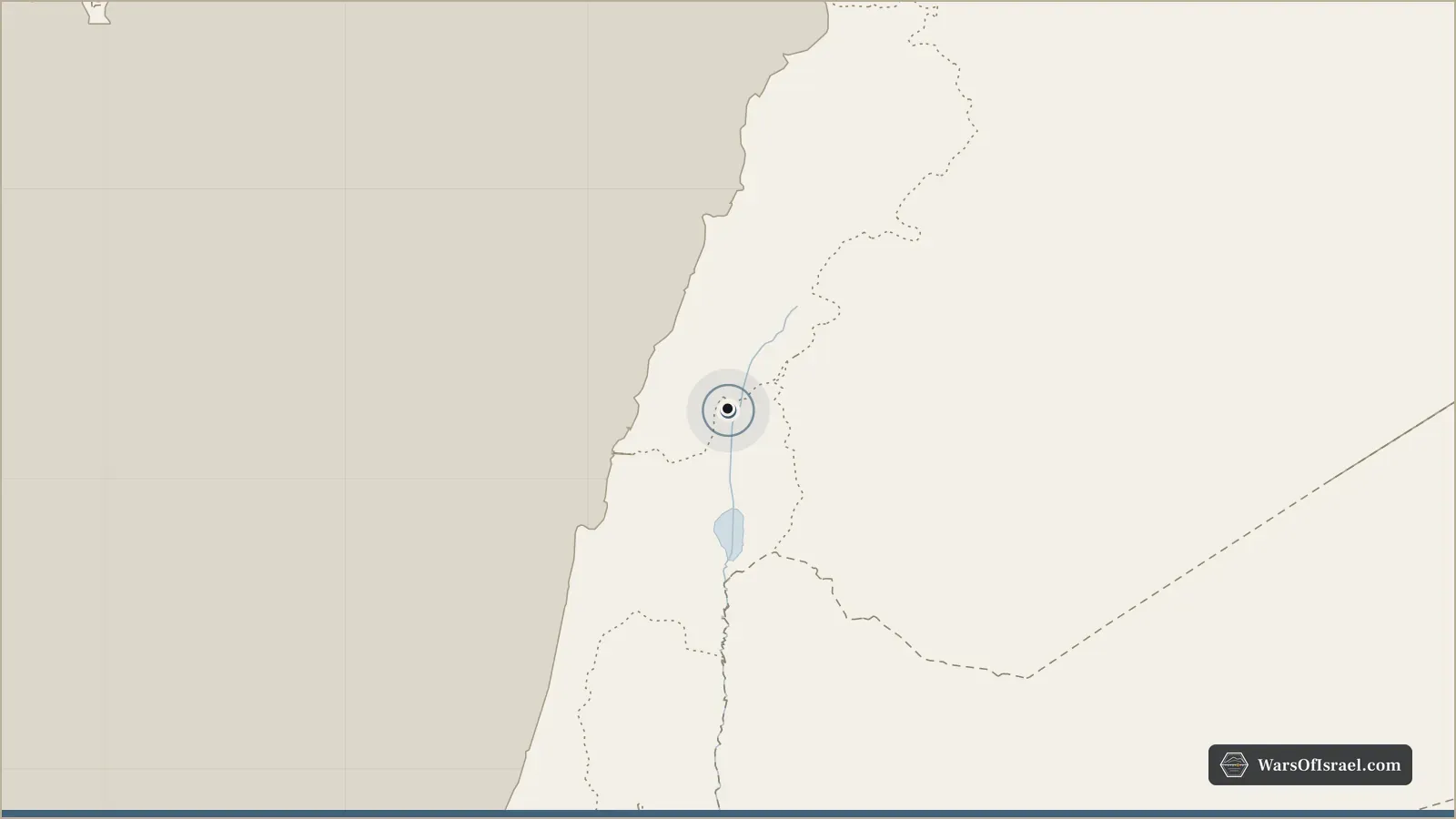
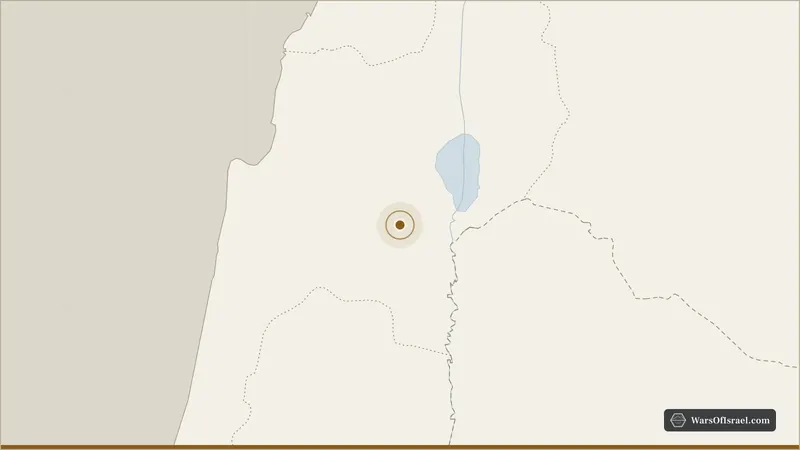
On March 1, 1920, an armed confrontation at Tel Hai, a small Jewish farmstead in the far north of the Upper Galilee, left six Jewish defenders and five Arab attackers dead. Among the Jewish dead was Joseph Trumpeldor, a one-armed veteran of the Russian army who had come north to organize the defense of the area's isolated settlements. Within days the settlers abandoned Tel Hai and neighboring Kfar Giladi. As a military event the clash was small and, in the short term, a defeat. As a story it became one of the most powerful in modern Hebrew culture.
A frontier with no government
At the end of the First World War the Upper Galilee was a contested borderland. The British had conquered Palestine in the Sinai and Palestine campaign, but under their agreements with France the northern finger of the Galilee fell inside the zone administered by French forces from the coast of Lebanon. Inland, the Arab government in Damascus under Faisal, which proclaimed the Arab Kingdom of Syria on March 8, 1920, claimed the same area, and armed bands opposed to the French operated freely. Neither the French nor the British exercised real control.
Four small Jewish settlements stood in this strip: Metula, Kfar Giladi, Tel Hai and Hamra. Tel Hai had begun in 1905 as a farm courtyard for a handful of workers and was taken over in 1918 by members of Hashomer, the Jewish guard organization, as an outpost and small commune. Kfar Giladi, a short walk away, had been founded by Hashomer members in 1916.
The Jewish residents tried to stay out of the war between the French and the Arab nationalists. Their neighbors, mostly Shiite villagers from Jabal Amil in southern Lebanon and Bedouin of the Hula valley, suspected them of sheltering French soldiers. Through the winter of 1919 to 1920 the settlements were repeatedly raided, often on the pretext of searching for Frenchmen. In January 1920 two Jews were killed in an attack on Tel Hai. They are counted among the eight dead the site commemorates.
Hold or withdraw: the debate in the Yishuv
The question of whether to defend the northern settlements divided the leadership of the Jewish community. Ze'ev Jabotinsky, among others, argued that the settlements lay in an area the Zionist movement could not protect and that their residents should be withdrawn until the borders were settled. Leaders of the labor movement, whose members lived in the settlements, insisted that abandoning them would weaken the Jewish claim to the Galilee when the frontier was drawn. A small number of reinforcements and limited supplies were sent north. Historians including Anita Shapira and Tom Segev describe the debate as an early confrontation between caution and the settlers' ethos that no point of settlement should be given up.
Trumpeldor, then about 39, was an unusual figure. He had lost his left arm at Port Arthur in the Russo-Japanese War, had been decorated by the Russian army, and in 1915 had served as deputy commander of the Zion Mule Corps at Gallipoli. He returned to Palestine in late 1919 and reached Tel Hai at the end of December 1919 to coordinate the defense of the area.
The forces at Tel Hai
The two sides were very unequal in size and very unclear in intent. On the Jewish side, Tel Hai and Kfar Giladi together held a few dozen people, men and women, with a modest supply of rifles and pistols. On the morning of March 1, Trumpeldor commanded about ten men from Kfar Giladi who came to reinforce the farmstead.
On the other side stood several hundred armed men, Shiite villagers from Jabal Amil together with Bedouin from al-Khalisa, the Arab village on the site of today's Kiryat Shmona. Their leader in the talks that followed was Kamel Effendi of al-Khalisa, a figure also recorded as Kamel al-Hussein. Their stated aim was not to destroy the settlement but to search it for French soldiers.
The confrontation of March 1, 1920
The day began with negotiation, not combat. When the large group approached, a warning shot was fired and reinforcements came from Kfar Giladi. Trumpeldor negotiated with the Arab leaders and agreed to let Kamel Effendi and a few men enter the courtyard to search it.
What happened next is described differently in different accounts, and certainty is not possible. In the most widely accepted version, a struggle broke out inside the building where several of the women were staying, a shot was fired and a general exchange of fire followed. Trumpeldor was hit in the hand and the abdomen. After some hours both sides agreed to a ceasefire, but firing resumed briefly during the Arab withdrawal.
By evening five Jewish defenders had been killed at Tel Hai. Two of them were women, and the dead also included two volunteers from the United States who had served in the Jewish Legion. Trumpeldor died that evening while being carried to Kfar Giladi. Five of the attackers were killed. The six who died on March 1, together with the two killed in January, are the eight remembered at Tel Hai.
Abandonment, return and the border
In the first days of March the defenders concluded they could not hold out. Tel Hai was abandoned and burned, and on March 3, after a large attack on Kfar Giladi, its residents too left, walking through the Shiite village of Taibe to Ayelet HaShahar, which lay under British control. For a time the northern settlements were empty.
The wider situation then changed quickly. The French defeated the forces of the Arab Kingdom of Syria at Maysalun in July 1920 and occupied Damascus. Britain and France then negotiated the line between their mandates, and the agreement they reached placed the Jewish settlements of the Upper Galilee inside Palestine; the boundary was finalized in the following years. Tel Hai was resettled in 1921 and absorbed into Kibbutz Kfar Giladi in 1926.
Whether the Jewish stand at Tel Hai influenced that outcome is debated. Some Zionist accounts credit it with keeping the Galilee panhandle in Palestine. Many historians regard the border mainly as the product of Anglo-French bargaining, in which Zionist lobbying in London and Paris counted for more than the events at the farmstead. Scholars also differ on how to classify the clash itself: as an episode of the Franco-Syrian War, in which the settlers were caught between armies, or as the opening of the armed conflict between Jews and Arabs in Mandatory Palestine.
A battle that became a myth
Few events of the period have been commemorated as intensely. The eight were buried in a common grave at Kfar Giladi, where Avraham Melnikov's statue of a roaring lion stands over them. The town later built on the land of al-Khalisa was named Kiryat Shmona, "the town of the eight." Each year on 11 Adar, the Hebrew date of the battle, a state memorial ceremony is held at the site, and generations of Israeli schoolchildren have visited it. Jabotinsky, despite his opposition to holding the settlements, named his youth movement Betar after Trumpeldor.
Trumpeldor's dying words became part of the legend. Zionist tradition records them as "It does not matter, it is good to die for our country" (in Hebrew, "Ein davar, tov lamut be'ad artzenu"). The wording is attested only by those around him, and a theory raised in the 1990s argued that he had in fact uttered a Russian curse. Neither version can be proved.
The sociologist Yael Zerubavel has shown how Tel Hai was transformed into a national myth of heroic defense and attachment to the land, how the labor movement and the Revisionists each claimed it, and how later generations of Israelis came to question and even mock it. The same themes reappear across later Israeli history, from the 1920 riots in Jerusalem a month later to the debates about commemoration discussed in the guide commemoration and memorial days.
What can be said with confidence is narrower than the myth and more interesting. A small, poorly armed group in an ungoverned borderland tried to keep out of a war that was not theirs, negotiated in good faith, and was drawn into a fight that neither side seems to have planned. Their deaths did not hold the settlement, but they gave the Zionist movement a story about staying put that it would draw on for decades.
Timeline
- 1905: A farm courtyard for a few Jewish workers is established at the site later called Tel Hai.
- 1916: Members of Hashomer found Kfar Giladi nearby.
- 1918: Hashomer members take over Tel Hai as an outpost and commune.
- December 1919: Joseph Trumpeldor arrives at Tel Hai to organize the defense of the northern settlements.
- January 1920: Two Jews are killed in an attack on Tel Hai.
- March 1, 1920: The confrontation at Tel Hai; six Jewish defenders, including Trumpeldor, and five Arab attackers are killed.
- March 1920: The settlers abandon Tel Hai and Kfar Giladi and withdraw to Ayelet HaShahar.
- July 1920: French forces defeat the Arab Kingdom of Syria at Maysalun.
- 1921: Tel Hai is resettled.
- 1926: Tel Hai is absorbed into Kibbutz Kfar Giladi.