The Sinai and Palestine campaign and the Jewish Legion (1915 to 1918)
How four years of war between the British and Ottoman empires ended four centuries of Ottoman rule and set the stage for the Mandate, and where the Jewish volunteers and the Yishuv fit in.
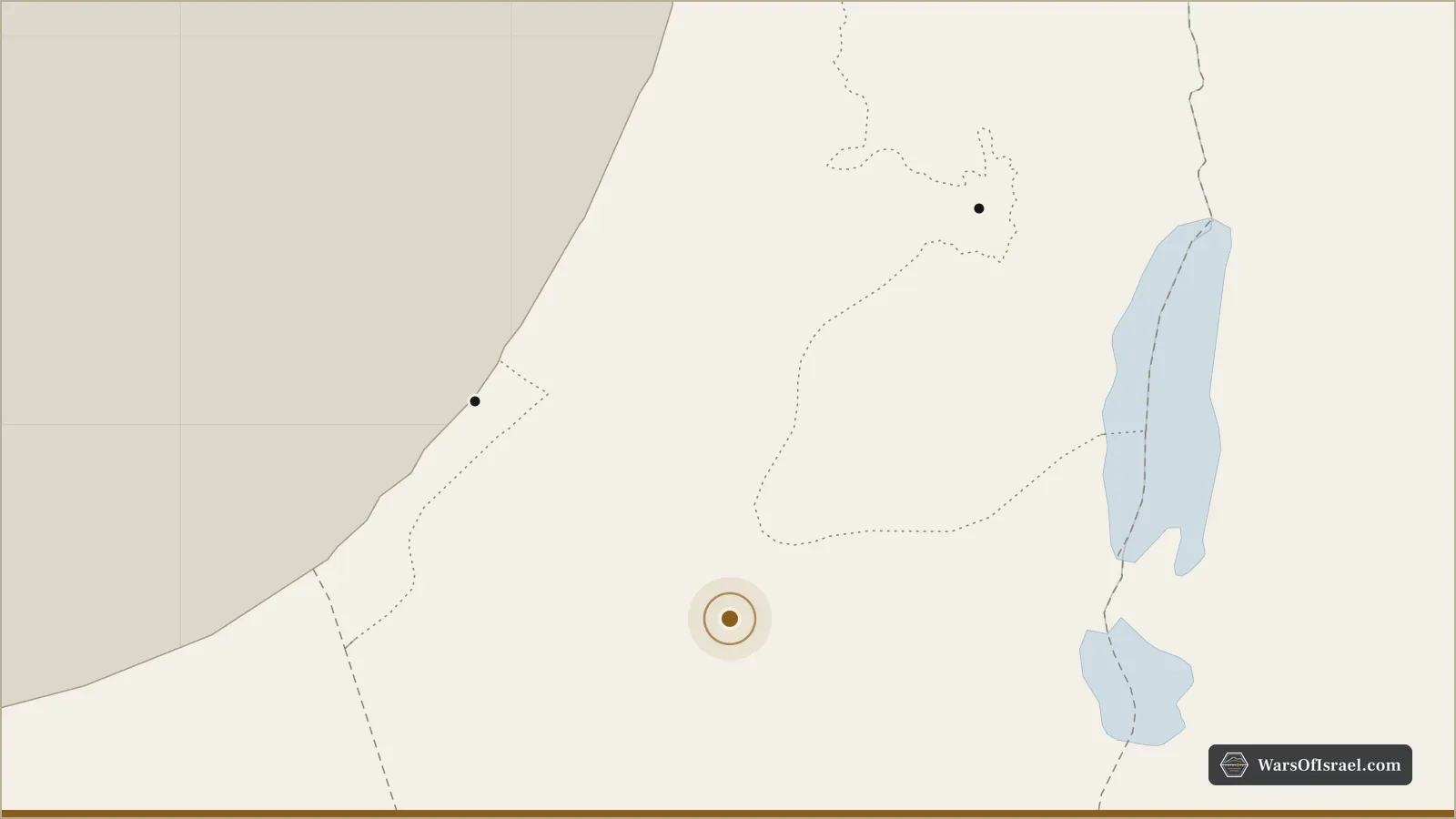
The Sinai and Palestine campaign was the long war between the British Empire and the Ottoman Empire, backed by Germany, for control of the Suez Canal, the Sinai Peninsula and the Land of Israel during the First World War. It opened with Ottoman attacks on the canal in late January and early February 1915 and ended with the Armistice of Mudros at the end of October 1918, by which time British imperial forces held Gaza, Jerusalem, Haifa and Damascus. The campaign ended four centuries of Ottoman rule over the country, brought the Balfour Declaration from paper to practice and put Jewish soldiers into battle in the Land of Israel in organized units for the first time in modern history. For the Jewish community there, the Yishuv, it was also a time of hunger, deportation and fear.
An empire at the canal
The Ottoman Empire entered the war on the side of Germany and Austria-Hungary in November 1914. Britain, which had occupied Egypt since 1882 and declared it a protectorate in December 1914, saw the Suez Canal as the artery of its empire, the route that carried troops and supplies from India, Australia and New Zealand. The Ottoman leadership, and its German advisers, saw the canal as a target that could cut that artery and perhaps raise Egypt's Muslims against British rule.
Ahmed Djemal Pasha, one of the three leaders of the ruling Committee of Union and Progress, took command of the Ottoman Fourth Army in Syria and Palestine. His chief of staff for the operations in Sinai was the German officer Friedrich Freiherr Kress von Kressenstein, who would remain the dominant figure on the Ottoman side of the southern front for three years.
Between them lay the Sinai, some 200 kilometers of desert with few wells and no railway. Any army that wanted to cross it needed water, transport and time. That simple fact shaped the whole first half of the campaign.
The forces and parties
The campaign involved a wide range of forces, among them:
- The British Empire's forces in Egypt, organized from March 1916 as the Egyptian Expeditionary Force (EEF), with British, Australian, New Zealand and Indian troops, the Egyptian Labour Corps and the Camel Transport Corps, and later French and Italian detachments and the Jewish battalions of the Royal Fusiliers.
- The Ottoman Fourth Army and, from 1917, the Yildirim Army Group, with Turkish and Arab soldiers, under Djemal Pasha, Kress von Kressenstein, Erich von Falkenhayn and, from early 1918, Otto Liman von Sanders.
- German and Austro-Hungarian units supporting the Ottomans, including aircraft, artillery and machine-gun detachments.
- The Arab forces of the Hashemite revolt, which began in the Hejaz in June 1916 and fought on the eastern flank, east of the Jordan, in 1917 and 1918.
The British commanders were General Sir Archibald Murray until June 1917 and then General Sir Edmund Allenby, whose arrival transformed the campaign.
From the canal to the borders of Palestine (1915 to 1916)
The attack on the canal
The first Ottoman expedition crossed the Sinai in January 1915 in a feat of logistics, with water carried by camels. Secondary attacks were made on January 26 and 27, and the main attempt to cross the canal near Ismailia came on February 3 and 4, 1915. A few small parties reached the western bank, but British and Indian troops, supported by warships in the canal, beat back the attack. The Ottoman force withdrew in good order. The canal was never seriously threatened again, but the attack kept large British forces tied down in Egypt.
Romani and the advance across Sinai
Through 1915 the Sinai was a no man's land. In 1916 the British shifted from defending the canal to defending it from the east. Engineers began to build a standard-gauge railway and a water pipeline across northern Sinai, and the army advanced only as fast as they did.
Kress von Kressenstein attempted to stop the advance at Romani, east of the canal, from August 3 to 5, 1916. The attack failed, largely against the Australian and New Zealand mounted troops, and the Ottomans withdrew east. British mounted forces then captured Magdhaba on December 23, 1916 and Rafa, on the old frontier between Egypt and Ottoman Palestine, on January 9, 1917. The Sinai was in British hands.
Gaza, Beersheba and Jerusalem (1917)
Two failures at Gaza
The Ottomans fortified a line from Gaza on the coast to Beersheba in the northern Negev. Murray attacked Gaza on March 26, 1917 and came close to taking it before his commanders, worried about water and the approach of Ottoman reinforcements, called off the attack. A second, larger assault from April 17 to 19, 1917, this time against prepared defenses and supported by a few tanks and by gas shells, failed with heavy British losses. Murray was recalled.
Allenby and Beersheba
Allenby took command at the end of June 1917 with instructions from the British prime minister, David Lloyd George, to take Jerusalem by Christmas. He moved his headquarters closer to the front, received reinforcements and planned a new kind of attack. Instead of a third frontal assault on Gaza, the main blow would fall on Beersheba, at the other end of the line, with its precious wells.
On October 31, 1917, after a day of fighting around the town, the Australian 4th Light Horse Brigade charged on horseback across open ground toward the defenses and broke into Beersheba before its wells could be destroyed. The charge became one of the best-known episodes of Australian military history. With Beersheba lost, the Ottoman line was outflanked. After renewed attacks on Gaza, the Ottomans abandoned it, and British troops entered the town on November 7, 1917.
The pursuit up the coastal plain followed. Jaffa was occupied in mid-November 1917, and British forces turned east into the Judean hills, where they fought hard battles at Nebi Samwil and on the approaches to Jerusalem in late November and early December.
The surrender of Jerusalem
On December 9, 1917, after the Ottoman forces withdrew, the city's mayor, Hussein Salim al-Husseini, delivered a letter of surrender to British troops. Two days later, on December 11, Allenby entered the Old City on foot through the Jaffa Gate, a gesture meant to contrast with the German emperor's mounted entry in 1898. A proclamation of martial law promised to protect the holy places of all three faiths.
The fall of Jerusalem came five weeks after the Balfour Declaration of November 2, 1917, in which the British government stated its support for "the establishment in Palestine of a national home for the Jewish people." For the first time, the power that had made that promise was in control of the city at the center of it.
The Yishuv between the armies
For the roughly 85,000 Jews who had lived in the Land of Israel before the war, according to common historical estimates, the campaign was above all a catastrophe of hunger and fear. Many were foreign nationals, especially Russian subjects, and the Ottoman authorities treated them as enemy aliens. Thousands left or were expelled in the first years of the war, many to Egypt. A locust plague in 1915, requisitioning and the collapse of trade and remittances brought famine, and disease killed many more. Most historians estimate that the Jewish population fell to roughly 55,000 or 60,000 by the end of the war.
Djemal Pasha suspected the Zionists of disloyalty and suppressed their institutions. In April 1917, as the front approached, he ordered the civilian population of Jaffa and Tel Aviv to evacuate. Several thousand Jews were forced to leave, mostly for the Galilee and the Samaria colonies, and many did not survive the following months.
Within the Yishuv, the war produced a bitter debate about loyalty. Hashomer and most of the community's leaders sought to remain loyal to the Ottomans, or at least neutral, to avoid reprisals. A small group led by the agronomist Aaron Aaronsohn and his sister Sarah, from Zikhron Ya'akov, chose the opposite course and founded Nili, a spy network that passed military information to British intelligence in Egypt from 1915. In the autumn of 1917 the network was exposed. Sarah Aaronsohn died after being tortured by the Ottoman police in October 1917, and two of its members, Yosef Lishansky and Na'aman Belkind, were hanged in Damascus in December 1917. The memory of Nili remained disputed for decades, between those who saw its members as heroes and those who blamed them for endangering the whole community.
The Jewish battalions
The Zion Mule Corps at Gallipoli
The first Jewish unit of the war was born among the refugees who had been deported or had fled from Palestine to Alexandria. In 1915 Ze'ev Jabotinsky and Joseph Trumpeldor, a one-armed veteran of the Russian army, proposed that they fight for Britain. The British would not accept a fighting unit for Palestine, but in the spring of 1915 they formed the Zion Mule Corps, a transport unit of several hundred men under the Irish officer John Henry Patterson, with Trumpeldor as his deputy. It carried supplies to the front lines at Gallipoli and was disbanded after the failure of that campaign.
The 38th, 39th and 40th Royal Fusiliers
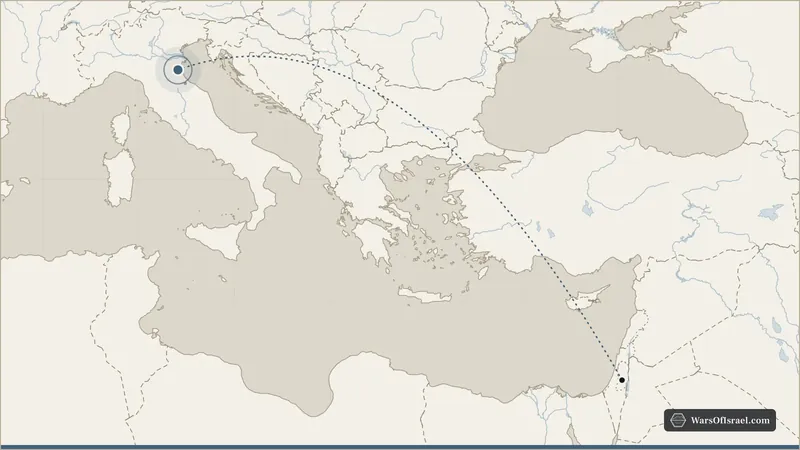
Jabotinsky spent the next two years lobbying in London for a Jewish fighting force. In August 1917 the formation of a Jewish regiment was announced. It took shape as three battalions of the Royal Fusiliers:
- The 38th Battalion, mostly Jews from London, under Patterson, which marched through the East End of London in February 1918 before leaving for Egypt.
- The 39th Battalion, recruited mainly from volunteers in the United States and Canada, under Eliezer Margolin. David Ben-Gurion and Yitzhak Ben-Zvi, who had been expelled from Palestine during the war, helped recruit in America and themselves enlisted in the Jewish battalions.
- The 40th Battalion, formed in 1918 from volunteers of the Yishuv itself after the British conquest of the south of the country.
The soldiers wore a menorah badge with the Hebrew word "Kadima" ("Forward"). About 5,000 men served in the battalions, according to most accounts, though many reached the Middle East only after the fighting ended.
The 38th Battalion reached the front in the hills of Ephraim in June 1918 and moved to the Jordan Valley in August, followed by the 39th. In the final offensive in September 1918, soldiers of the battalions captured the crossing at Umm al-Shert on the Jordan, on September 22, as part of the operations east of the river. Their military role was modest, but the political significance was large: Jewish soldiers in uniform, fighting under their own symbol for the land the Balfour Declaration had promised.
Megiddo and the end of Ottoman rule (1918)
The spring of 1918 brought a pause. Allenby lost many of his best troops to the Western Front after the German offensive of March 1918, and two raids across the Jordan toward Amman and Es Salt in the spring failed. Through the summer the front ran from the coast north of Jaffa to the Jordan Valley. The army was rebuilt with Indian divisions.
The final offensive, known as the Battle of Megiddo, began on September 19, 1918. After a short, intense bombardment, infantry broke through the Ottoman lines on the coastal plain, and the mounted divisions of the Desert Mounted Corps poured through the gap, rode north and turned inland through the passes of the Carmel ridge into the Jezreel Valley, behind the Ottoman armies. Aircraft bombed the retreating columns. Within days the Ottoman Seventh and Eighth Armies had been destroyed as fighting forces. Haifa was taken on September 23 and Damascus on October 1. British accounts put the number of Ottoman soldiers captured by the fall of Damascus at about 75,000.
The Armistice of Mudros, signed on October 30, 1918, ended the fighting with the Ottoman Empire the next day. By then British forces had reached Aleppo.
Outcome and consequences
The campaign had cost tens of thousands of lives on both sides, and the casualty figures cited for it vary widely according to the source and what they include; deaths from disease were often greater than deaths in battle. Its political consequences were more lasting than any military gain.
The conquered territory was placed under the Occupied Enemy Territory Administration, a military government. The wartime agreements between Britain and France, the Sykes-Picot agreement of 1916, and the promises made to the Hashemites and in the Balfour Declaration all pointed in different directions. The tension between them shaped the next three years: the struggle of Tel Hai in the contested north, the riots in Jerusalem during Nebi Musa in April 1920, and the San Remo conference that same month, which assigned the mandate for Palestine to Britain. The new borders of the country, as described in the guide how Israel's borders changed, were drawn in this period.
For the Yishuv, the war left a shrunken and impoverished community, but also a new political horizon. The Jewish battalions were reduced after the armistice, and most of their soldiers returned home. The 38th and 39th battalions were disbanded by the spring of 1920, and the remnant of the Palestinian battalion, renamed the First Judaeans, was dissolved by the British in 1921. Veterans of the battalions, together with former members of Hashomer, became the core of the Haganah. The memory of the Jewish Legion was revived in the Second World War, when Jewish volunteers from the Land of Israel served in the British army and eventually in the Jewish Brigade. That line of continuity is traced in the guide from Hashomer to the IDF.
Timeline
- November 1914: The Ottoman Empire enters the First World War.
- February 3, 1915: The main Ottoman attack on the Suez Canal begins and is repulsed.
- Spring 1915: The Zion Mule Corps is formed in Egypt and serves at Gallipoli.
- August 3 to 5, 1916: The Ottoman attack at Romani fails.
- January 9, 1917: British forces capture Rafa and complete the conquest of Sinai.
- March 26, 1917: The first British attack on Gaza fails.
- April 1917: Djemal Pasha orders the evacuation of Jaffa and Tel Aviv.
- October 31, 1917: The British capture Beersheba.
- November 2, 1917: Britain issues the Balfour Declaration.
- December 9, 1917: Jerusalem surrenders; Allenby enters the city on December 11.
- September 19, 1918: The Battle of Megiddo begins.
- October 30, 1918: The Armistice of Mudros is signed, ending the fighting the next day.