Riots and disturbancesBritish Mandate
The 1920 Jerusalem riots (Nebi Musa)
How a religious festival in Jerusalem turned into four days of violence that reshaped British rule, Arab politics and Jewish self-defense.
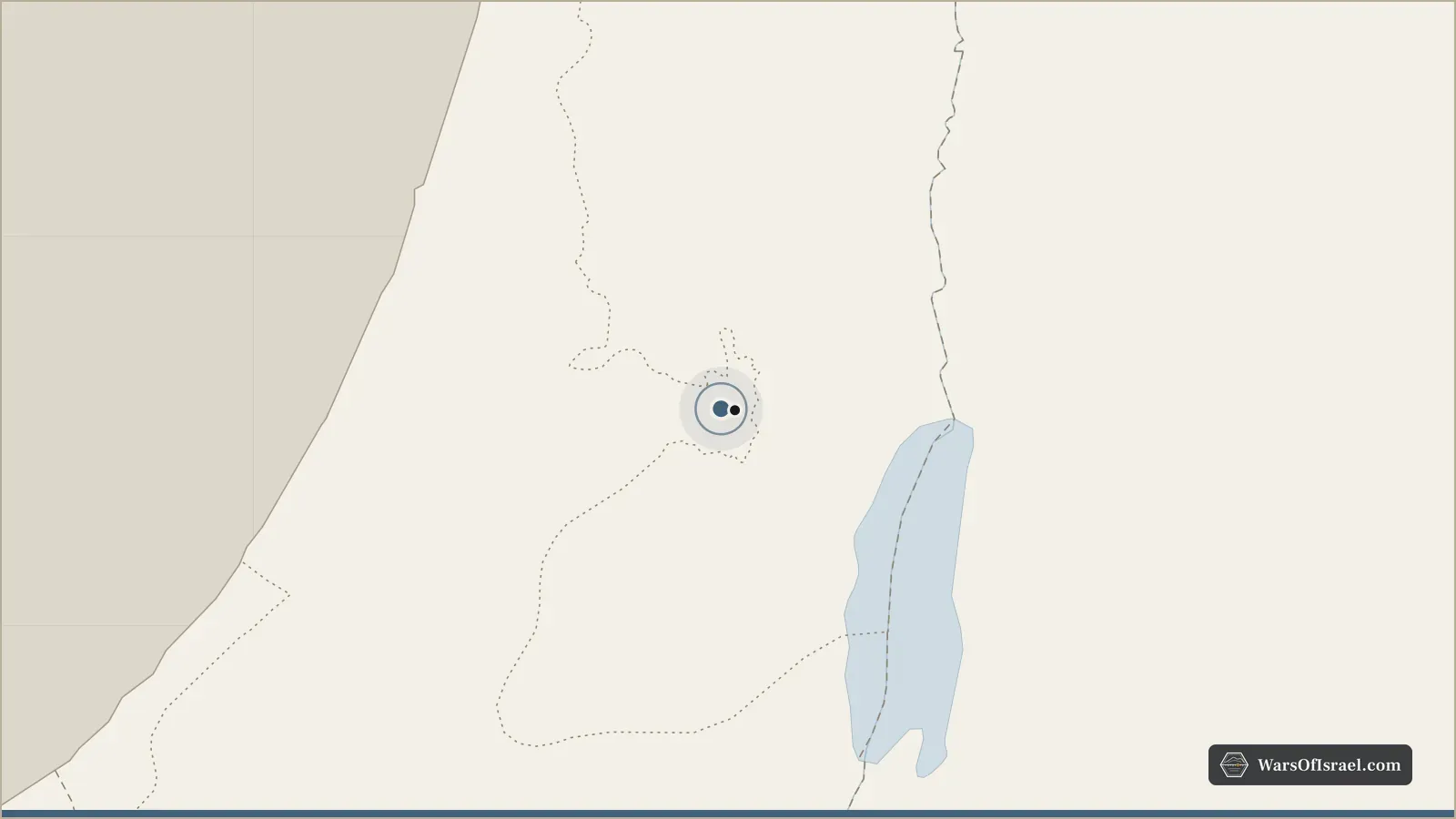
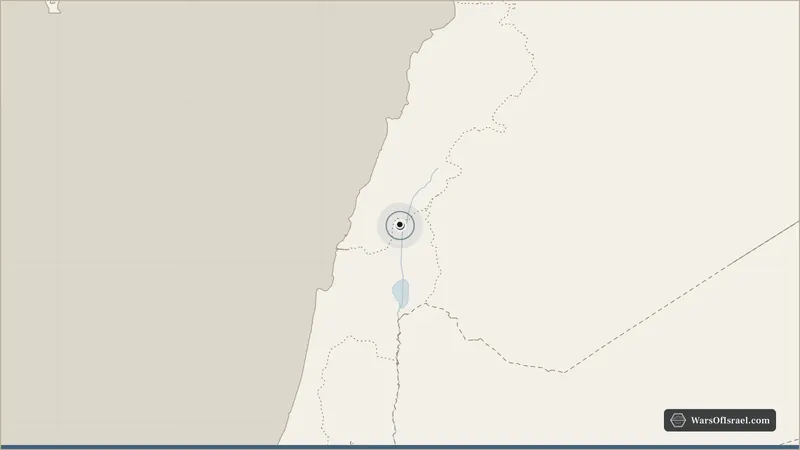
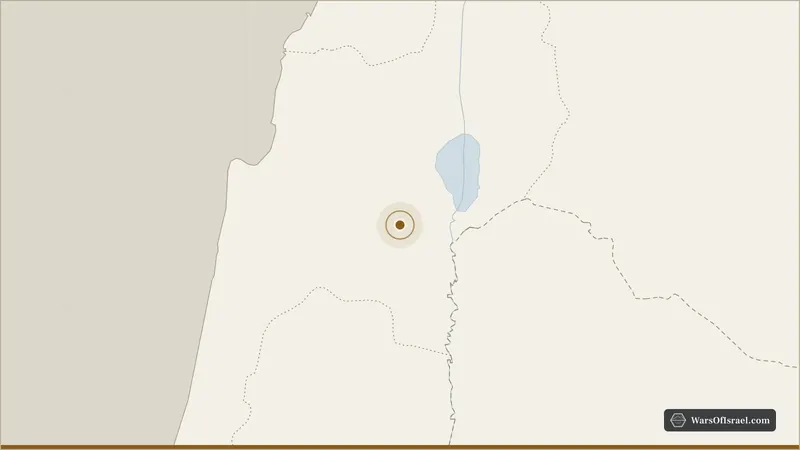
For four days in April 1920, from Sunday, April 4 to Wednesday, April 7, Jerusalem saw the first large outbreak of violence between Arabs and Jews under British rule. It began during the Nebi Musa festival, when tens of thousands of Muslim pilgrims filled the city, and centered on the Jewish Quarter of the Old City. Five Jews and four Arabs were killed and more than two hundred people were injured, most of them Jews. The riots ended the illusion, on several sides, that the British military administration could hold the country together on goodwill, and they pushed the Zionist labor movement to create the Haganah two months later.
Jerusalem under military rule
When British forces took Jerusalem in December 1917, at the end of the Sinai and Palestine campaign, they set up a military government known as the Occupied Enemy Territory Administration. Its officers were instructed to maintain the status quo of Ottoman law and administration until the peace conference decided the country's future. In practice they governed a city where every community was waiting for that decision with growing anxiety.
The Balfour Declaration of November 2, 1917, in which Britain promised to favor "the establishment in Palestine of a national home for the Jewish people," had been made public but not yet written into any international instrument. A Zionist Commission headed by Chaim Weizmann had arrived in 1918 to represent Jewish interests, and its demands irritated many British officers. Arab notables, for their part, saw the declaration as a threat to the majority population's future and looked to Damascus, where Faisal's Arab government proclaimed the Arab Kingdom of Syria on March 8, 1920, with a claim to Palestine as its southern part.
The military governor of Jerusalem, Ronald Storrs, presided over a city of rival elites. The mayor, Musa Kazim al-Husseini, belonged to one of the city's leading Muslim families. Younger activists, among them the journalist Aref al-Aref and Haj Amin al-Husseini, then in his twenties, were organizing political clubs that called for unity with Syria and an end to Zionist immigration.
The festival and the political crisis
The Nebi Musa festival was an annual Muslim pilgrimage to the shrine near Jericho that tradition identifies as the tomb of Moses. Processions from Hebron, Nablus and the villages gathered in Jerusalem before setting out, and the festival had long been timed around the Christian Easter season. In 1920 it fell on Easter Sunday and overlapped with Passover, so the Old City was crowded with Muslims, Christians and Jews at the same time.
Political tension was unusually high. Demonstrations against Zionism had taken place in Jerusalem in February and March 1920, and news of the proclamation in Damascus and of the fighting at Tel Hai in the Upper Galilee had spread through the country. Warnings that the festival might turn violent reached the administration from several directions. Jewish leaders asked for protection; according to the account later given to the inquiry, Storrs deployed 188 policemen for the occasion.
Ze'ev Jabotinsky, a veteran of the Jewish Legion, and Pinhas Rutenberg had organized several hundred volunteers into a Jewish self-defense group in the preceding weeks. They trained openly, and the authorities knew of them. Their existence would become a central issue after the riots.
The forces and parties
The people involved fell into a few clearly distinguishable groups:
- The British military administration of Palestine, with the Jerusalem governorate under Ronald Storrs, its police and the British and Indian troops in and around the city.
- The Arab political leadership of Jerusalem, including the mayor Musa Kazim al-Husseini, the activists of the Arab Club and the Literary Club, and the speakers who addressed the crowds, among them Aref al-Aref and Haj Amin al-Husseini.
- The crowds of pilgrims and residents who took part in the attacks, and the Jewish residents of the Old City, many of them elderly, religious and without any means of defense.
- The Jewish self-defense group organized by Jabotinsky and Rutenberg, most of whose members were outside the walls when the violence began.
Four days in April
Sunday, April 4
On the morning of April 4 the processions converged near the Jaffa Gate. Speakers addressed the crowd, praising Faisal as king and denouncing Zionism. Accounts of the speeches differ, but the inquiry later concluded that inflammatory language had been used. Soon afterward groups of men entered the Old City and began attacking Jews and Jewish property. Shops were looted, passers-by were beaten and stabbed, and the Torat Chaim yeshiva in the Muslim Quarter was broken into and its books set alight.
British troops were brought into the Old City that afternoon and the gates were closed. The Jewish self-defense volunteers were mostly kept outside the walls, where they protected Jewish neighborhoods in the new city.
Monday, April 5 to Wednesday, April 7
On Monday morning the troops were withdrawn from the Old City, and the attacks resumed. The inquiry later described that withdrawal as an error of judgment. Martial law was declared later on April 5 and soldiers returned, but order was only restored gradually over the following days. By Wednesday the violence had largely ended, though the city remained under heavy guard.
The British arrested people on both sides. Among those arrested were Jabotinsky and a group of members of the self-defense organization, charged with possessing weapons.
The human cost
Casualty figures for the riots vary slightly from source to source, and the main versions are these:
| Group | Killed | Injured |
|---|---|---|
| Jews | 5 | 216, of whom 18 critically |
| Arabs | 4 | 23, of whom 1 critically |
Source: figures as given by historian Tom Segev. The Survey of Palestine prepared by the Mandate government in 1946 gives 211 Jews and 21 Arabs injured.
Most of the Jewish victims were residents of the Old City, among them elderly people and students of religious schools. The violence was the largest attack on Jerusalem's Jews in living memory, and it fell on a community that had been largely detached from Zionist politics.
Trials, inquiry and responsibility
Military courts tried dozens of people. Aref al-Aref and Haj Amin al-Husseini, accused of incitement, had been released on bail and fled the country; each was sentenced in absentia to ten years' imprisonment. Jabotinsky was convicted, mainly for possession of a pistol, and sentenced to fifteen years. The heavy sentence caused an outcry in Britain and among Jews worldwide. It was soon reduced, and Jabotinsky was freed later in 1920 under the amnesty described below.
Storrs removed Musa Kazim al-Husseini from the office of mayor because of his role in the demonstrations and replaced him with Ragheb al-Nashashibi, from a rival family. The appointment deepened a rivalry between the Husseini and Nashashibi camps that ran through Palestinian Arab politics for the rest of the Mandate.
In May 1920 the British government appointed a military court of inquiry headed by Major General Sir Philip Palin. It sat for some 50 days, heard 152 witnesses in eight languages, and completed its report at Port Said on July 1, 1920. The report was never published; its gist was conveyed privately to the Zionist leadership, and its full text became available to the public only decades later, through the British archives. Its main conclusions were these:
- The cause of the violence lay in Arab disappointment at unfulfilled promises of independence, in the difficulty of reconciling self-determination with the Balfour Declaration, and in fear of Jewish immigration and domination, fed by propaganda from Damascus.
- The Zionist Commission and Zionist officials, through impatience and indiscretion, bore considerable responsibility for the atmosphere that preceded the riots.
- The administration's preparations for the festival were inadequate, and the withdrawal of troops on the morning of April 5 was an error of judgment.
Zionist leaders accused some British officers of having encouraged the agitation. Chaim Weizmann and Richard Meinertzhagen, the chief political officer, alleged that Colonel Bertie Harry Waters-Taylor, Allenby's chief of staff, had urged Haj Amin al-Husseini to provoke disturbances. That claim has never been substantiated. Arab leaders, for their part, presented the riots as a spontaneous popular protest against a policy imposed without the consent of the country's majority. Historians such as Benny Morris and Tom Segev generally see the outbreak as the product of real political grievances, deliberate incitement by some leaders and a security failure by the authorities, rather than of any single cause.
Consequences
The riots came only weeks before a decision that changed the country's status. At the San Remo conference, held from April 19 to 26, 1920, the Allied powers assigned the mandate for Palestine to Britain, with the Balfour Declaration as part of its terms. On July 1, 1920 the military government was replaced by a civil administration under Herbert Samuel as High Commissioner. Samuel, himself Jewish, declared an amnesty that covered many of those convicted in April, though not the two men considered the main inciters.
Arab politics also took a more organized form. In December 1920 the Third Palestine Arab Congress, meeting in Haifa, elected an Arab Executive Committee headed by Musa Kazim al-Husseini, the mayor Storrs had dismissed. For the next decade and more, that body led Arab opposition to the Mandate's Zionist provisions through petitions, delegations to London and protests, while more militant voices grew in the background.
The calm that followed the riots did not last. On November 2, 1921, the fourth anniversary of the Balfour Declaration, violence broke out again in the Jewish Quarter of the Old City. Five Jews and three Arabs were killed. This time Jewish defenders were present inside the walls, and the episode was shorter, but it showed that the questions of April 1920 had not been resolved.
Haj Amin al-Husseini was later pardoned, and in 1921 Samuel appointed him Mufti of Jerusalem. The decision placed a man convicted in the riots at the head of the Muslim religious establishment, and it is still debated whether Samuel was seeking to co-opt him or simply underestimated him.
For the Yishuv, the deepest consequence was a loss of faith in British protection. The labor movement concluded that it could not rely on the authorities, nor on a closed fraternity like Hashomer, and in June 1920 founded the Haganah, a defense organization answerable to the Yishuv's own institutions. Within a year that new body was tested in the Jaffa riots of May 1921, and the pattern of protest, violence, inquiry and policy review seen in Jerusalem was repeated, on a larger scale, in the riots of 1929.
How the riots are remembered
In Hebrew the riots are known as מאורעות תר"פ, after the Hebrew year 5680, and they are usually remembered as the first of a series of attacks that culminated in 1929 and in the Arab Revolt of 1936 to 1939. In Arab historiography they are often called the Nebi Musa uprising and presented as an early popular revolt against British and Zionist policy.
The episode also left a personal mark on two men who shaped the decades that followed. Jabotinsky's imprisonment made him a public hero and fed his conviction that only a Jewish armed force could secure the national home. Haj Amin al-Husseini's path from a convicted inciter to Mufti made him the most powerful Palestinian Arab leader of the Mandate period. Both trajectories began in the narrow streets of the Old City during four days of April 1920.
Timeline
- November 2, 1917: Britain issues the Balfour Declaration.
- December 9, 1917: Jerusalem surrenders to British forces.
- March 8, 1920: The Arab Kingdom of Syria is proclaimed in Damascus.
- April 4, 1920: Violence breaks out in the Old City during the Nebi Musa festival.
- April 5, 1920: Troops are withdrawn from the Old City in the morning; martial law is declared.
- April 7, 1920: The violence largely subsides.
- April 19 to 26, 1920: The San Remo conference assigns the Palestine mandate to Britain.
- June 1920: The Haganah is founded.
- July 1, 1920: The Palin Commission completes its report; a civil administration under Herbert Samuel replaces military rule.