ConflictLate Ottoman periodReference entry
Hashomer and the defense of Jewish settlements (1909 to 1920)
How a few dozen young immigrants turned the guarding of farm colonies into a political idea that outlived their organization.
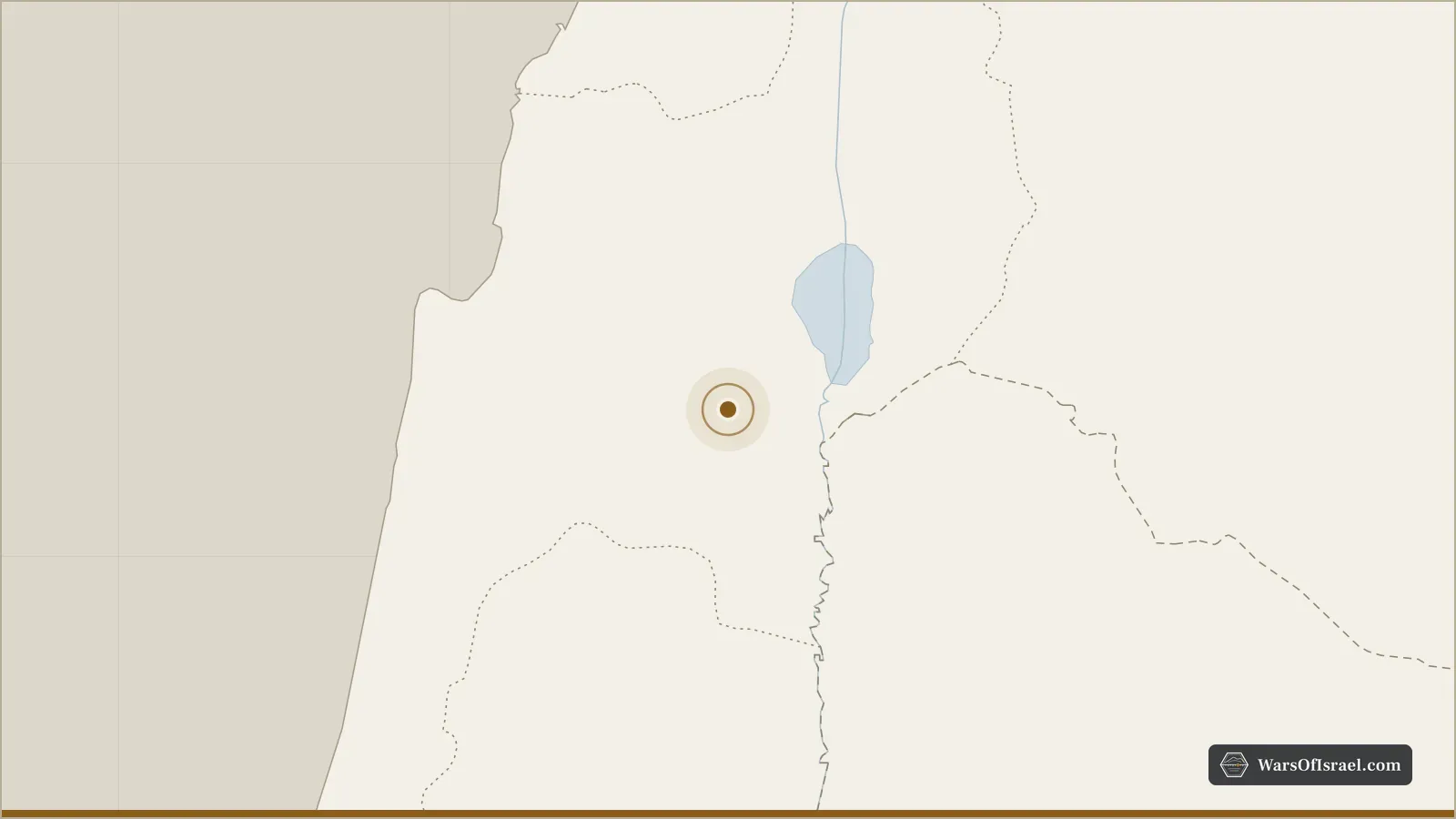
Hashomer (The Watchman) was the first organized Jewish guard force in the Land of Israel under Ottoman rule. Founded by a few dozen young immigrants of the Second Aliyah at Kfar Tavor on April 12, 1909, it set out to replace the Arab and Circassian watchmen whom Jewish farm colonies had hired until then. It never had more than about a hundred members over its lifetime, yet its insistence that Jews should guard Jewish land became a founding idea of the later Haganah and, through it, of the Israel Defense Forces.
Background: colonies, watchmen and a secret society
By the first decade of the twentieth century, the Jewish colonies founded since the 1880s in Judea, the Sharon and the Galilee depended on local watchmen to protect fields, orchards and livestock from theft. Hiring a guard from a neighboring village or clan was the normal arrangement in the Ottoman countryside, and it often worked. To the socialist pioneers of the Second Aliyah, however, it looked like a contradiction: a national revival that relied on others to defend it.
In 1907 a small group of these immigrants, among them Israel Shochat, Alexander Zaïd and Yehezkel Henkin, formed a secret society in Jaffa called Bar-Giora, named after a commander of the Great Revolt against Rome. Its members trained at Sejera in the Lower Galilee, where a labor commune was experimenting with Jewish farm work, and gradually took over the guarding of Sejera and nearby colonies. Bar-Giora was conspiratorial by design. Its leaders soon concluded that a broader, open body was needed.
What Hashomer did
At a meeting in Kfar Tavor on April 12, 1909, the Bar-Giora core decided to found Hashomer. It was led by a three-member committee: Israel Shochat, Israel Giladi and Mendel Portugali. Manya Shochat, Yitzhak Ben-Zvi and Rachel Yanait were among its originators. Members rode horses, wore a mix of Bedouin and Circassian dress and learned Arabic, partly from admiration for the people they had replaced.
The organization signed guarding contracts with individual colonies. In 1910 it guarded six Galilee colonies and Hadera; by 1912 it was responsible for fourteen Jewish settlements. Membership was small and selective, with at most about a hundred members over roughly ten years, 23 of them women. Hashomer also founded settlements of its own, among them Tel Adashim and later Kfar Giladi, which members established in 1916.
The work brought friction. Arab watchmen who lost their positions resented the newcomers, and clashes with thieves sometimes escalated into disputes with whole villages, including revenge raids. Some colony farmers also objected to Hashomer's terms and its political ambitions. Historians such as Anita Shapira and Benny Morris describe how Hashomer cultivated a new image of the armed Jewish worker, and how that image sometimes sharpened local tensions rather than calming them.
Outcome and significance
The outbreak of the First World War in 1914 ended Hashomer's period of expansion. Many members were Russian nationals, and the Ottoman authorities exiled a number of them to Anatolia. The organization opposed the pro-British Nili spy network, fearing reprisals against the whole Jewish community, a dispute described in the article on the Sinai and Palestine campaign.
Former members later served in the Jewish Legion and defended Jewish settlements in the turbulent years after the war, including at the battle of Tel Hai in 1920. In June 1920 Hashomer ceased to exist as a separate body when the labor movement created the Haganah, a broader militia meant to answer to the elected institutions of the Yishuv rather than to a closed fraternity. That shift, from a small elite of watchmen to a public defense organization, is traced in the guide from Hashomer to the IDF.
Hashomer's military weight was modest. Its lasting effect lay in ideas and people: the principle of Jewish self-reliance in defense, the link between settlement and security, and a generation of leaders, Yitzhak Ben-Zvi among them, who went on to shape the institutions of the future state.