Fedayeen raids and the retribution operations (1951 to 1956)
The story of the border war between the 1949 armistice and the Sinai campaign: who crossed the lines, why Israel answered with force, and what the raids changed.
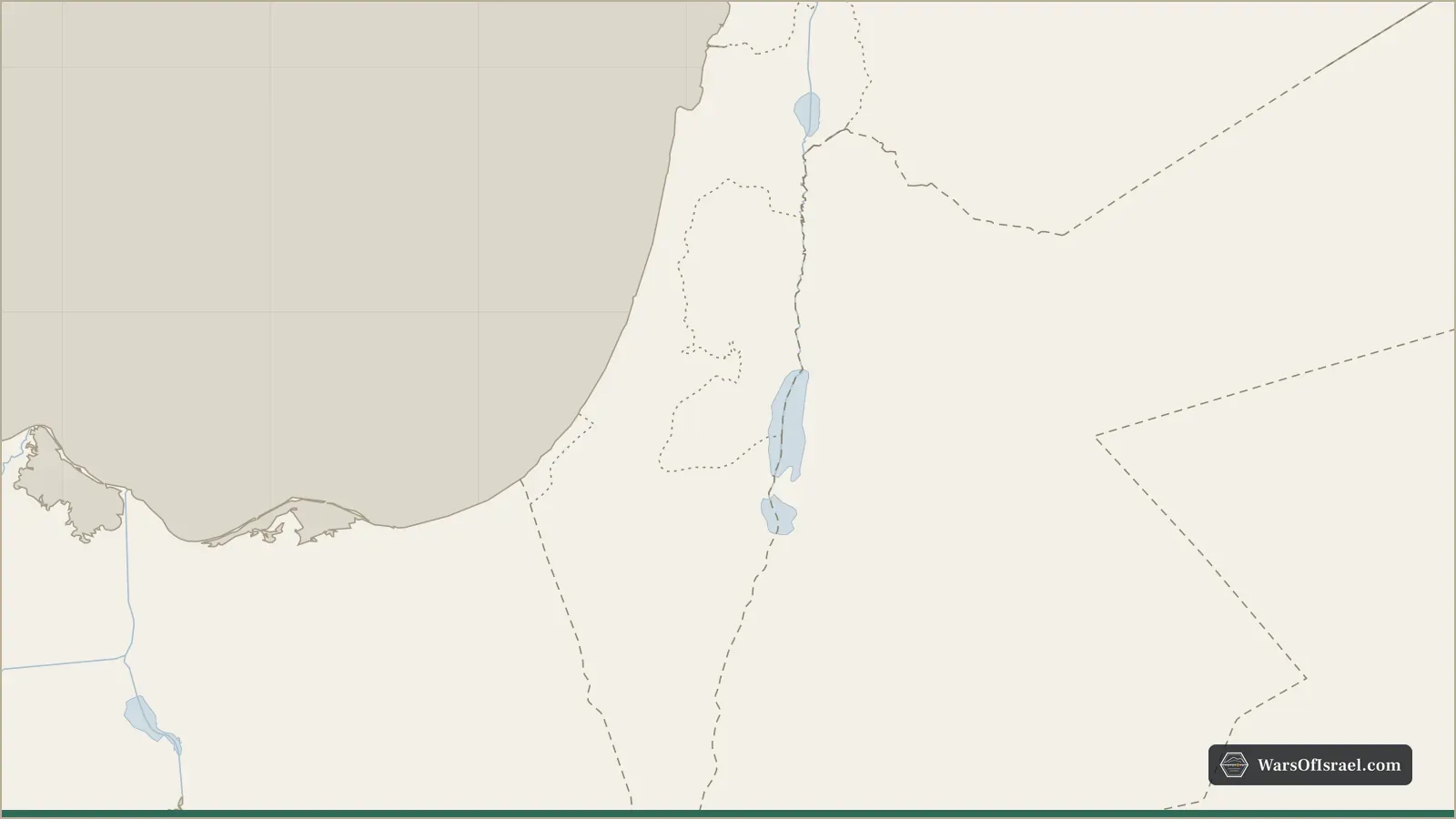
The armistice agreements of 1949 ended the fighting of the War of Independence, but they did not bring quiet to the new borders. For the next seven years, thousands of people crossed the lines from Jordan, the Egyptian-held Gaza Strip, Syria and Lebanon, and Israel answered the most deadly of those crossings with military raids into neighboring territory. Hebrew calls them pe'ulot ha-tagmul, the retribution or reprisal operations. They began as a response to a security problem along hundreds of kilometers of unfenced line and ended as something larger: a test of strength between Israel and the Arab states that helped carry the region into the Sinai campaign of 1956.
A border that could not be sealed
The 1949 lines were drawn where the armies had stopped, not where communities lived. Villages in the West Bank found themselves cut off from their fields, which now lay on the Israeli side. Hundreds of thousands of Palestinian Arab refugees lived within sight of the homes and land they had left or been driven from in 1948. The new frontier ran through orchards, wadis and open desert, with almost no fences and few patrols.
Most of those who crossed in the first years were not fighters. Historian Benny Morris, whose study of the period remains the standard work, concludes that the great majority of infiltrators in 1949 to 1951 were refugees returning to harvest crops, recover property, smuggle goods or visit relatives. A minority came to steal livestock and irrigation pipes, and a smaller number came to kill. The difference mattered little to the Israeli villages on the receiving end, many of them new immigrant settlements of people who had arrived from Iraq, Yemen, Morocco or the camps of postwar Europe and now lived in isolated moshavim along the line.
The human cost on both sides was heavy. Morris estimates that infiltrators killed about 200 Israelis between 1949 and 1956, most of them civilians, and that a similar number of Israeli soldiers died in border clashes and raids. He estimates that Israeli forces killed between 2,700 and 5,000 infiltrators in the same years, most of them unarmed and most of them before 1952, when Israeli troops shot at almost anyone crossing at night. Those figures are estimates built from incomplete records on both sides, and Morris presents them as such.
From police problem to military doctrine
In the early 1950s Israel tried several approaches at once: ambushes along the line, mining of crossing routes, the expulsion of people caught inside the country, and small punitive raids against villages believed to shelter infiltrators. The early raids were often failures. Units lost their way, retreated under fire or hit the wrong houses, and the General Staff concluded that the regular infantry of the time was not trained for night operations across the border.
The answer was a new kind of unit. In August 1953, on the orders of Prime Minister David Ben-Gurion, the army created Unit 101, a small volunteer commando of about 50 men under a young major named Ariel Sharon. It existed for only five months, but its methods, night marches, small teams and an insistence that a mission was completed whatever the cost, shaped the IDF's fighting culture for decades. In January 1954 the new Chief of Staff, Moshe Dayan, merged it into the 890th Paratroop Battalion, with Sharon in command. The paratroopers, later the 202nd Brigade, carried out nearly every major reprisal raid that followed.
The reasoning behind the raids was stated openly by Ben-Gurion and Dayan. Arab governments, they argued, could stop infiltration if they chose to, and would choose to only when the price of tolerating it became too high. The raids were meant to raise that price, to restore the confidence of frightened border settlements and to show the army's own soldiers that it could strike at night deep beyond the line. The policy had determined critics inside the Israeli government, above all Moshe Sharett, foreign minister and from early 1954 to late 1955 prime minister, who believed the raids cost Israel more in international standing than they gained in security. Their argument, conducted partly in cabinet and partly in Sharett's diary, is one of the best documented debates in early Israeli history.
The parties along the line
Each frontier had its own character:
- Jordan: the longest and most porous line, across the West Bank and into the Jerusalem area. The Arab Legion, Jordan's British-commanded army under General John Bagot Glubb, often tried to curb infiltration, and Israeli raids frequently ended in clashes with Legion troops and the West Bank National Guard.
- Egypt: the Gaza Strip, crowded with refugees, faced the young settlements of the northern Negev. Until 1955 Egyptian authorities largely tolerated the crossings rather than organizing them. After that, Egyptian military intelligence formed and directed fedayeen units of Palestinian volunteers.
- Syria: the demilitarized zones near the Sea of Galilee and the Hula valley produced a different conflict, over cultivation, fishing and water rather than infiltration, with Syrian positions on the heights overlooking Israeli farmland.
- The United Nations: the Mixed Armistice Commissions and the UN Truce Supervision Organization investigated incidents and issued condemnations, and the Security Council passed a series of resolutions censuring Israeli raids.
The course of the border war
Qibya and its shadow, 1953 to 1954
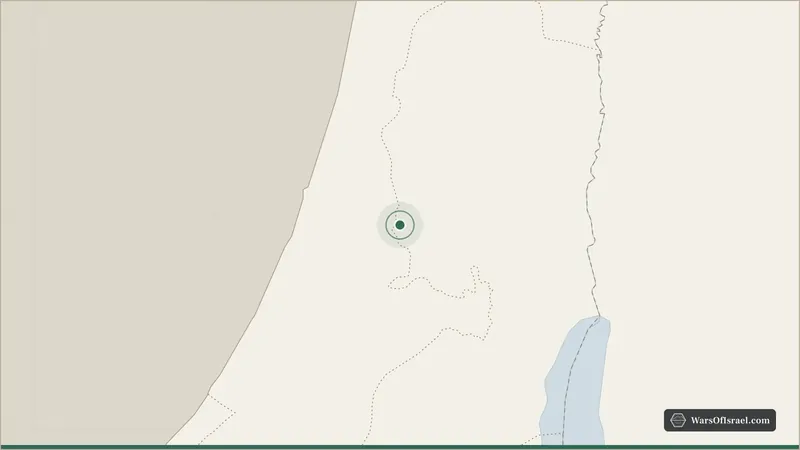
The raid that changed the policy came in October 1953. On the night of October 12, a grenade thrown into a house in the town of Yehud killed a mother, Suzanne Kinyas, and her two small children. Two nights later, on October 14, Unit 101 and paratroopers under Sharon crossed into the Jordanian-held village of Qibya and blew up some 45 houses. At least 69 villagers were killed, about two thirds of them women and children, many of them inside the buildings. The full story is told in the entry on the Qibya raid.
The international response was severe. The UN Security Council condemned Israel in resolution 101 of November 24, 1953, and the United States briefly deferred economic aid. On October 19, Ben-Gurion told the nation on the radio that the attack had been carried out by angry Israeli border residents, not by the army, an account that was not believed then and is not accepted by any historian now. Inside the army the lesson drawn was narrower: after Qibya, the raids were directed mainly at military and police targets rather than at villages.
The pattern of attack and reply continued. On the night of March 16 to 17, 1954, gunmen ambushed a bus at the Scorpion Pass (Ma'ale Akrabim) in the Negev and killed 11 passengers. The perpetrators were never firmly identified, the Mixed Armistice Commission declined to blame Jordan for lack of evidence, and Israel withdrew from the commission in protest. Late that month an Israeli force struck the West Bank village of Nahalin.
Gaza and the turn to Egypt, 1955
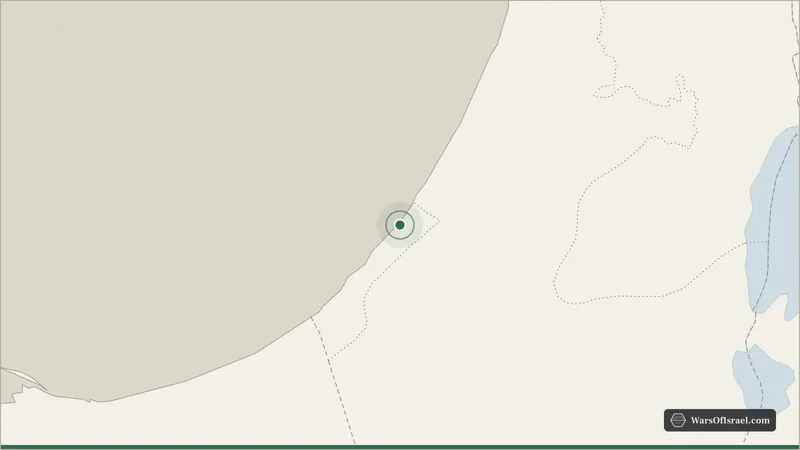
In February 1955 Ben-Gurion returned from retirement as defense minister, and within days the focus of the border war moved south. After infiltrators linked to Egyptian military intelligence stole documents near Rishon LeZion and killed a civilian near Rehovot, paratroopers attacked the Egyptian army base near Gaza's railway station on the night of February 28. Operation Black Arrow killed 37 or 38 Egyptian soldiers and civilians, according to different counts, and eight Israeli soldiers. It was the bloodiest clash between Israel and Egypt since 1949.
What followed is the subject of a long historical argument. Gamal Abdel Nasser later described the Gaza raid as a turning point that convinced him Egypt needed modern weapons. Egyptian intelligence organized fedayeen units in Gaza under Lieutenant Colonel Mustafa Hafez, and their raids deep into Israel in the summer of 1955 brought the toll of Israelis killed on that border to 48 that year, according to Morris, against seven or eight a year in 1951 to 1954. In September 1955 Nasser announced the Czechoslovak arms deal, which promised Egypt Soviet-bloc tanks and jet aircraft on a scale Israel could not match. Some historians, Avi Shlaim among them, see Black Arrow as a mistake that pushed Nasser toward confrontation. Others argue that Egyptian policy was already moving in that direction and the raid only accelerated it.
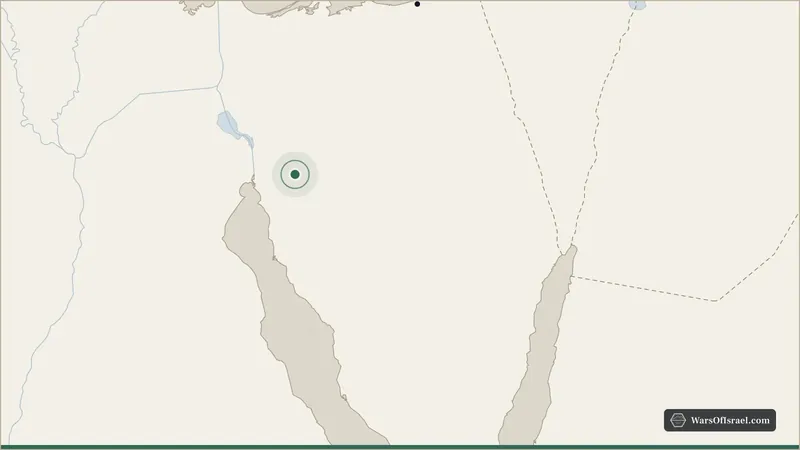
Israel's raids grew larger in turn. Operation Elkayam struck Egyptian police positions at Khan Yunis on August 31, 1955. In Operation Volcano, on November 2, 1955, paratroopers and infantry overran Egyptian positions in the Nitzana demilitarized zone, killing 81 Egyptian soldiers and capturing 55, according to Israeli figures, for the loss of seven Israeli soldiers.
The Sea of Galilee, December 1955
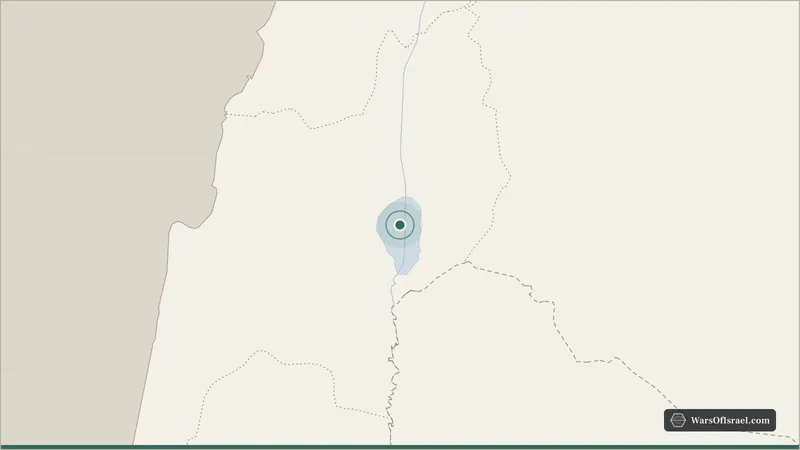
On the Syrian front the dispute was about fishing and the use of the Sea of Galilee, all of which lay inside Israel under the armistice lines. Syrian positions on the northeastern shore fired on Israeli fishing and police boats. On the night of December 11, 1955, paratroopers and infantry, with naval craft, attacked the Syrian posts in Operation Olive Leaves. According to Israeli figures, 54 Syrian soldiers were killed and 30 captured, for six Israeli dead. The raid came while Sharett was in Washington seeking American arms, and he regarded its timing as a deliberate blow to his diplomacy. The Security Council condemned Israel in resolution 111 of January 19, 1956.
The last raids, 1956
The year 1956 brought more fedayeen attacks from Gaza and Jordan and more raids in reply. In April, Roi Rutenberg, a young security officer of Kibbutz Nahal Oz, was killed near the Gaza line, and Dayan's short eulogy for him, which spoke of the anger of the refugees across the fence as well as of Israeli resolve, became one of the most quoted speeches in Israeli history. In July 1956, Mustafa Hafez was killed by a parcel bomb in Gaza, an operation widely attributed to Israeli military intelligence.
The final and costliest reprisal struck the British-built police fortress at Qalqilya on the night of October 10, 1956. The fighting went badly, a relief force had to be sent in, and 18 Israeli soldiers were killed, while Jordanian losses are put at between 70 and about 100, according to different accounts. Britain, bound by a defense treaty with Jordan, warned that it might intervene. Less than three weeks later, Israel went to war, not against Jordan but against Egypt, and in secret coordination with Britain and France.
Outcome and consequences
The Sinai campaign, which began on October 29, 1956, ended the first phase of the border war. The Israeli capture of the Gaza Strip broke up the fedayeen bases there, and after the Israeli withdrawal in March 1957, the presence of the UN Emergency Force along the Gaza line kept that border mostly quiet for a decade. The Jordanian and Syrian fronts calmed for a time but never fully, and the pattern of cross-border attack and Israeli reprisal returned in the 1960s, culminating in raids such as the Samu raid of 1966.
Whether the reprisal policy worked is still argued. Its supporters point to the decline of infiltration from Jordan after 1954, which they attribute at least partly to Jordanian fear of Israeli raids, and to the transformation of the IDF into an army capable of offensive operations at night. Its critics, then and since, point to Qibya, to the diplomatic isolation that followed several raids, and to evidence that the raids on Gaza helped turn a largely tolerated problem into an Egyptian policy of organized attack. Morris's own conclusion is that the raids both suppressed and provoked violence, depending on the front and the year.
Legacy and memory
In Israeli memory the period is remembered first through the paratroopers: the mythology of Unit 101, the commanders it produced, among them Sharon, Rafael Eitan, Meir Har-Zion and Aharon Davidi, and the code of personal example and leading from the front. A memorial to the paratroopers' operations stands near Kibbutz Mefalsim, facing Gaza. In Palestinian and Jordanian memory, Qibya and the other attacked villages are remembered as massacres of civilians, and the fedayeen as the first expression of armed Palestinian resistance after 1948. Both memories draw on the same events, and serious history has to hold them together.
Timeline
- August 1953: Unit 101 is formed under Ariel Sharon on Ben-Gurion's orders.
- October 12, 1953: A grenade attack in Yehud kills Suzanne Kinyas and her two children.
- October 14, 1953: The Qibya raid; at least 69 villagers are killed.
- January 1954: Unit 101 is merged into the 890th Paratroop Battalion.
- March 17, 1954: Eleven bus passengers are killed in the Scorpion Pass ambush.
- February 28, 1955: Operation Black Arrow strikes the Egyptian base near Gaza.
- September 27, 1955: Nasser announces the Czechoslovak arms deal.
- November 2, 1955: Operation Volcano in the Nitzana demilitarized zone.
- December 11, 1955: Operation Olive Leaves against Syrian posts on the Sea of Galilee.
- October 10, 1956: The raid on the Qalqilya police fortress, the last major reprisal before the war.
- October 29, 1956: The Sinai campaign begins.
Battles and operations in this war
- October 14, 1953 to October 15, 1953The Qibya raid (1953)Military operation
- February 28, 1955 to March 1, 1955Operation Black Arrow in Gaza (1955)Military operation
- December 11, 1955 to December 12, 1955Operation Olive Leaves on the Sea of Galilee (1955)Military operation