Military operationEarly statehoodReference entry
Operation Olive Leaves on the Sea of Galilee (1955)
A night raid on Syrian gun positions above the Sea of Galilee was a military success that cost Israel an American arms deal and opened a rift between Ben-Gurion and Sharett.
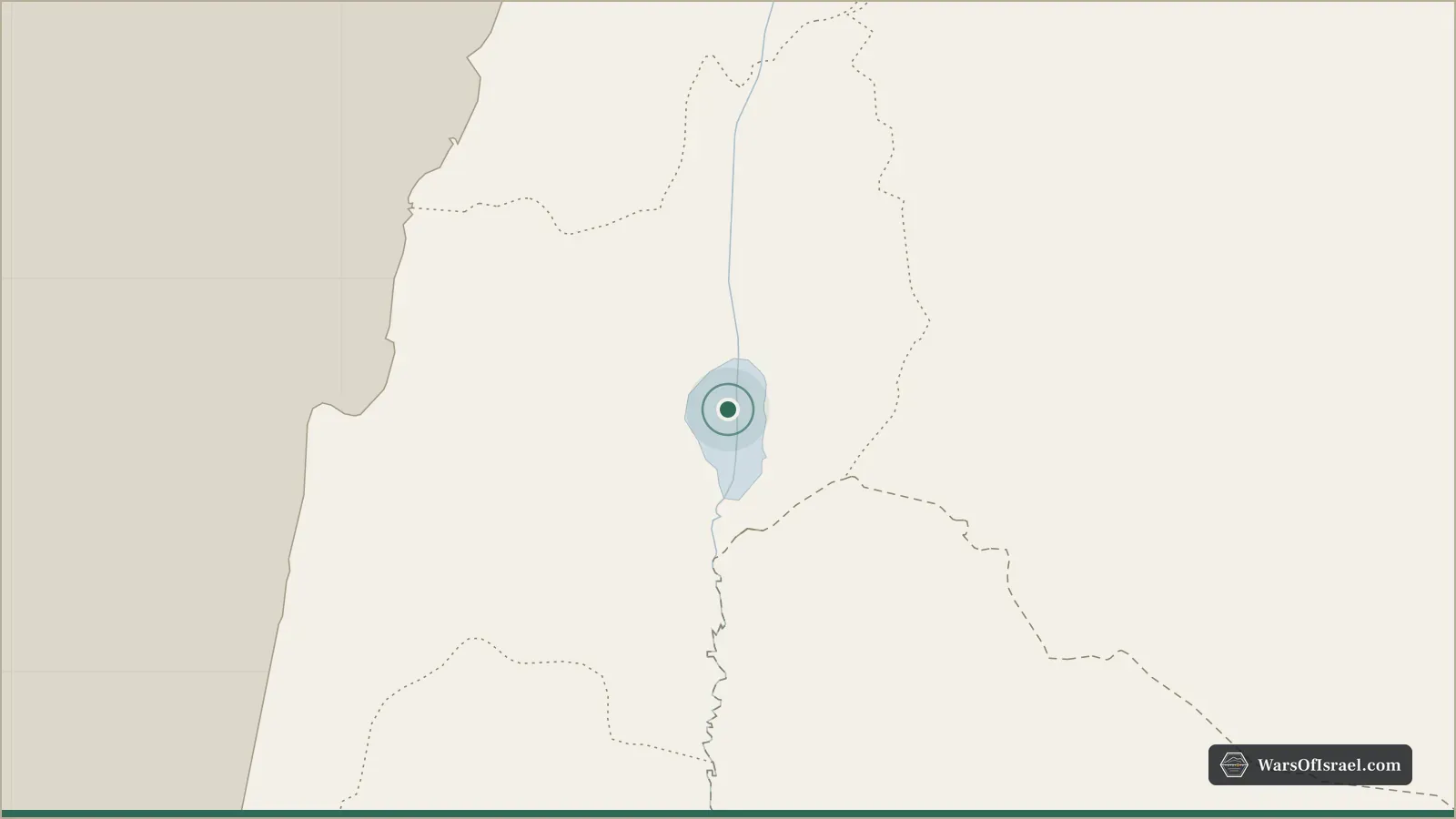
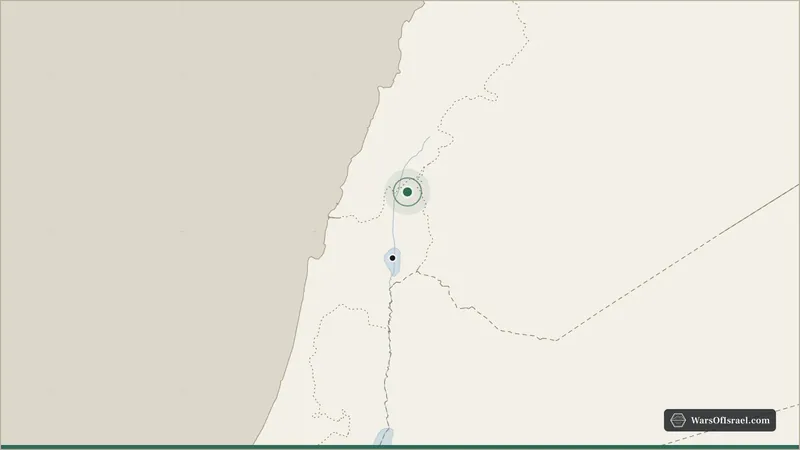
On the night of December 11, 1955, Israeli paratroopers and infantry, supported by naval craft, attacked Syrian army positions along the northeastern shore of the Sea of Galilee, between the area north of Kibbutz Ein Gev and the mouth of the Jordan River. Operation Olive Leaves (Mivtza Alei Zayit), also called Operation Kinneret, destroyed the Syrian posts in a few hours. According to Israeli figures, 54 Syrian soldiers were killed and 30 taken prisoner, for the loss of six Israeli soldiers. It was the largest Israeli action against Syria in the period of the retribution operations, and its political consequences outweighed its military ones.
A lake divided by a narrow strip
The 1949 armistice line with Syria placed the whole Sea of Galilee inside Israel, but on the northeastern side the border ran only ten meters from the water's edge. Syrian army positions on the shore and on the slopes above it overlooked the lake. Through 1954 and 1955 the dispute on this front was not about infiltration but about fishing and sovereignty. Syrian fishermen and farmers used the shore and the water, Israeli police boats patrolled to assert Israeli control, and Syrian posts fired on Israeli boats that came close to the eastern shore. Israel also wanted Syrian prisoners to exchange for four Israeli soldiers then held in Syria.
The trigger was thin. The day before the raid, an Israeli police boat sailed close to the Syrian shore and drew fire. Benny Morris, who studied the Israeli documents, concludes that the operation had been planned and rehearsed in advance and that the incident was used to justify it.
The night attack
The operation was commanded by Ariel Sharon and carried out mainly by the Paratroop Brigade, with Nahal and Givati forces. Units were led by Rafael Eitan and Aharon Davidi, and part of the force landed from boats on the eastern shore. Attacking at night along the coastline, the force overran the Syrian positions one by one and blew them up. Six Israeli soldiers were killed and about ten wounded. The Syrian losses, as given in Israeli accounts, were 54 killed and 30 captured, a ratio that underlined how unprepared the Syrian garrison had been.
The political storm
The timing could hardly have been worse for Moshe Sharett, now foreign minister again after Ben-Gurion's return to the premiership in November 1955. Sharett was in Washington, seeking American arms to answer Egypt's Czechoslovak deal, and believed he was close to success. The raid ended those hopes. Sharett sent Ben-Gurion an angry cable, and on his return he said, in a phrase widely quoted afterward, that "Satan himself could not have chosen a worse timing." He suspected that the raid had been designed to undermine his diplomacy. Several ministers protested the raid's scale and demanded that future operations of this kind come before the full cabinet. Ben-Gurion later remarked that the operation may have been "too successful."
The UN Security Council condemned the raid in resolution 111 of January 19, 1956, and warned that further violations of the armistice could lead to measures under the UN Charter. The text of resolution 111 (opens in a new tab) describes the attack as a flagrant violation of the ceasefire and armistice provisions. The four Israeli prisoners in Syria were returned in a prisoner exchange on March 29, 1956.
Significance
Olive Leaves showed that Israel's reprisal policy had moved from answering specific attacks to asserting control over contested ground. It deepened the split between Ben-Gurion and Sharett, which ended with Sharett's forced resignation from the government in June 1956. Some historians link the raid's demonstration of Syrian weakness to Syria's decision to stay out of the Sinai campaign less than a year later. The underlying dispute over the lake, the demilitarized zones and the Jordan waters was not resolved, and it returned in the 1960s as the war over water.