Gush Etzion in 1948: the siege, the fall and the Kfar Etzion massacre
Why a small bloc of settlements in the Hebron hills was defended at all, how it fell on the eve of independence, and how its loss shaped Israeli memory.
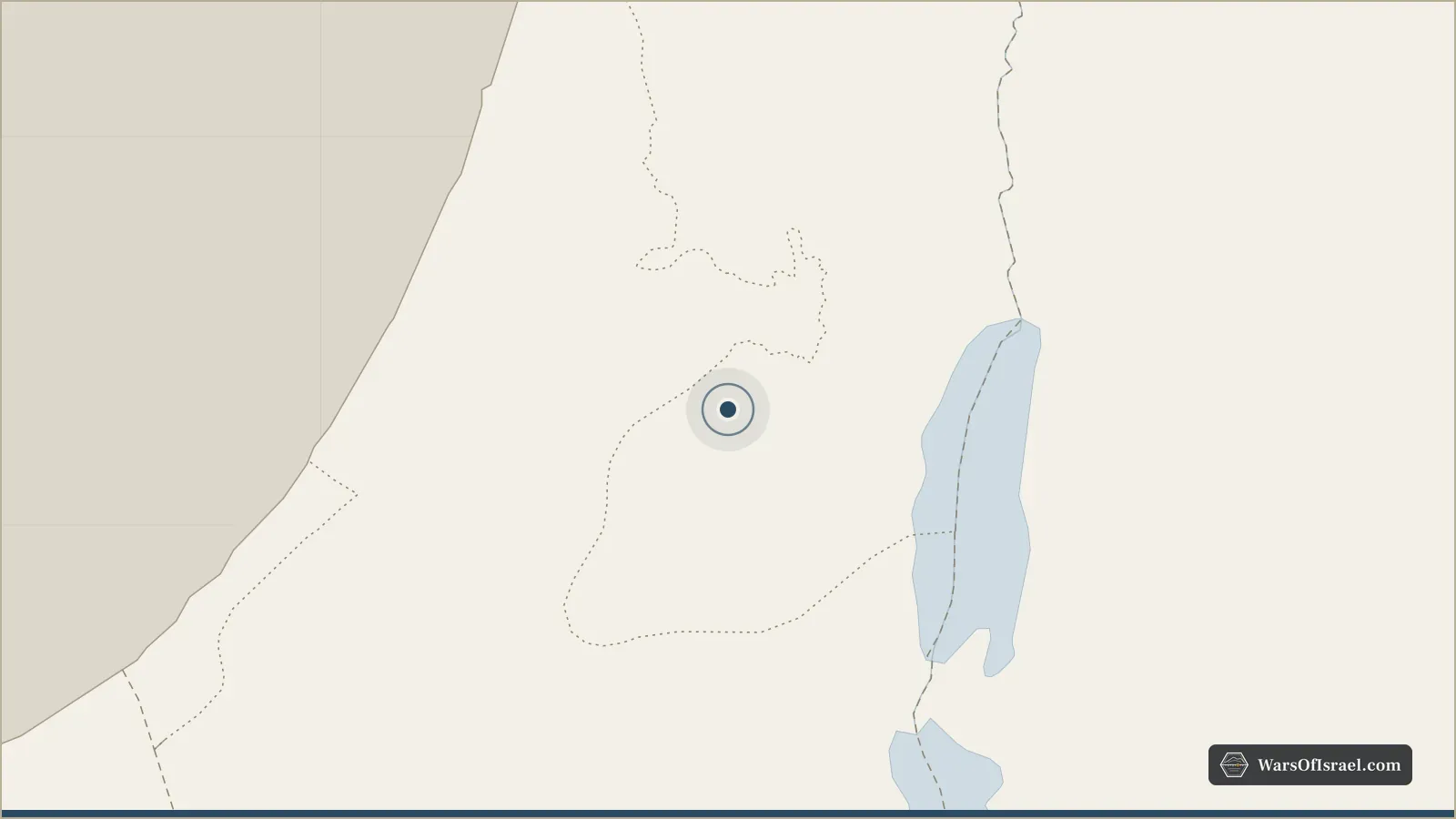
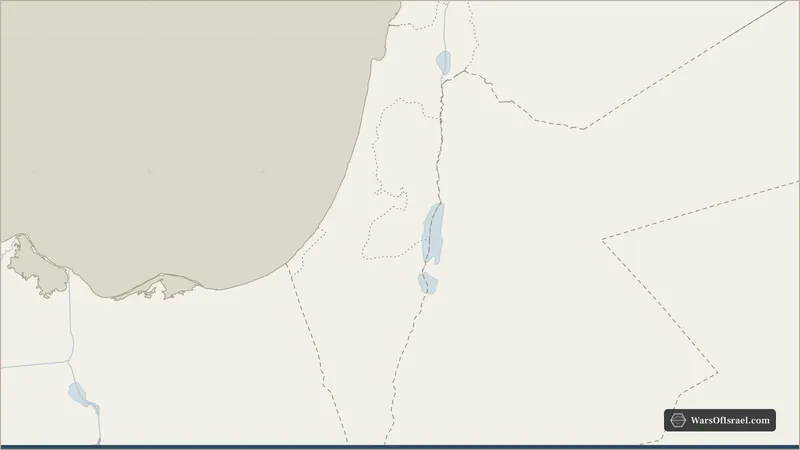
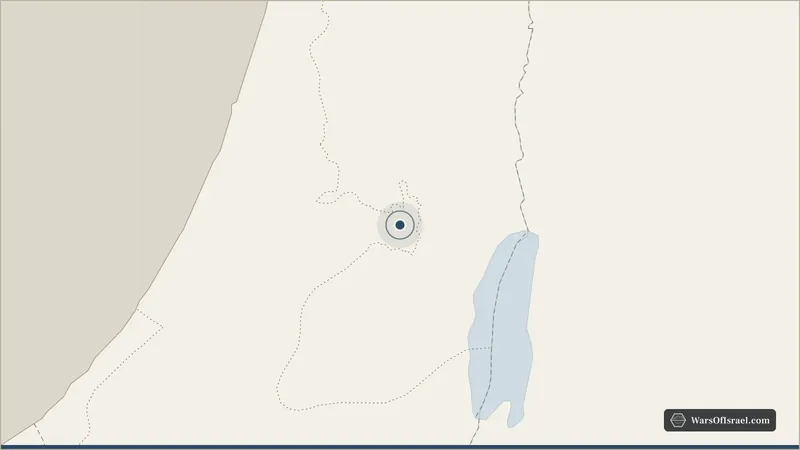
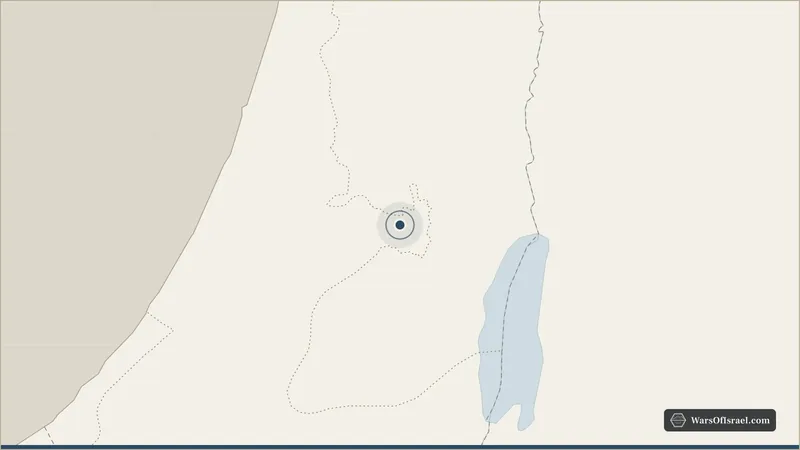
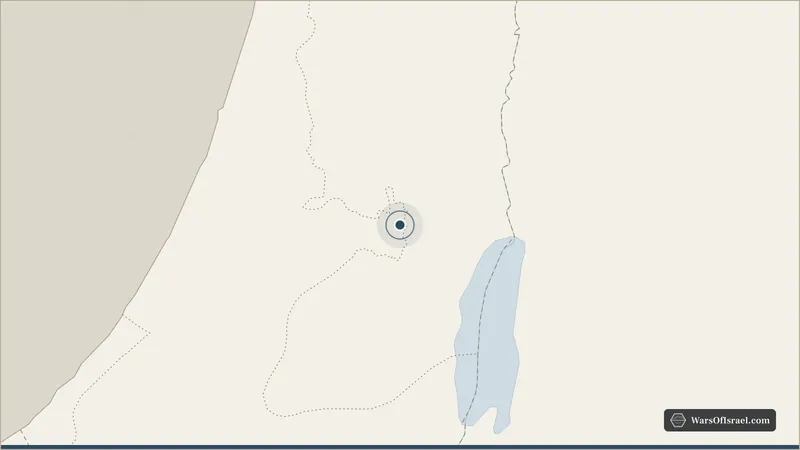
Gush Etzion, the Etzion bloc, was four kibbutzim on a ridge between Bethlehem and Hebron, with about 450 residents and no Jewish neighbors for miles. Besieged from December 1947, it held out for five months, cost the Haganah some of its best fighters on the way in, and fell on May 13, 1948, one day before Israel declared independence. At Kfar Etzion, the largest of the four, most of the defenders were killed in the final battle and in the massacre that followed. The next day the other three kibbutzim surrendered to the Arab Legion, and their people went into captivity in Transjordan.
A bloc built in the hills of Hebron
Jewish settlement in these hills had failed twice before. A small settlement called Migdal Eder was abandoned during the riots of 1929, and an earlier Kfar Etzion, founded in the 1930s, was abandoned during the Arab revolt that began in 1936. The bloc that existed in 1948 was built in the 1940s: Kfar Etzion in 1943, Massuot Yitzhak in 1945, Ein Tzurim in 1946 and Revadim in 1947. Three were religious kibbutzim; Revadim belonged to the secular Hashomer Hatzair movement.
The UN partition plan placed the bloc inside the proposed Arab state. Its leaders and the Haganah nevertheless decided to stay. The settlements sat close to the main road from Jerusalem to Hebron, and the Haganah saw them as a southern outpost of Jerusalem and a card for any future negotiation. Whether that decision was wise was debated even at the time. Some Haganah officers argued that a bloc that could not be supplied by road could not be held for long, and that its fighters would be more useful in Jerusalem itself. The settlers, many of them religious pioneers who had spent years clearing the stony hillsides, did not want to leave, and the political leadership did not order them to.
The siege, December 1947 to April 1948
The road to Jerusalem was cut almost at once. In mid-December 1947 a convoy from Jerusalem was ambushed near Bethlehem and ten of its passengers and escorts were killed. On January 5, 1948, the children and some of the women were evacuated with British help to Jerusalem. On January 14 a large Arab force attacked the bloc and was driven off.
The cost of keeping the bloc alive was paid on the roads. Thirty-five Palmach and Haganah fighters, commanded by Danny Mass, set out on foot from Hartuv on the night of January 15 to bring reinforcements and supplies. They were discovered near the villages of Jaba and Surif and killed in a battle that lasted most of January 16. The Convoy of 35, known in Hebrew as the Lamed Heh, became one of the most remembered episodes of the war. Its dead, many of them students of the Hebrew University and young Palmach fighters, were brought for burial in the bloc and later reinterred on Mount Herzl. Their story was retold in Israeli schools, poems and street names for decades, and in the bloc itself it confirmed what everyone already suspected: that help from outside would come only at a very high price.
On March 27 a large motorized convoy reached the bloc but was ambushed on its way back at Nebi Daniel, south of Bethlehem. Between 13 and 15 fighters were killed, according to different sources, and the survivors were rescued by the British only after giving up their vehicles and weapons. It was the last convoy. From then on the bloc was effectively cut off by land, and its people knew that no large relief force could reach them before the British left. The Haganah command in Jerusalem, itself under siege and short of everything, had nothing to send.
Ambushes and the turn toward battle
The bloc's defenders did not only wait. Its fighters attacked traffic on the Jerusalem to Hebron road, including, on April 12 and in early May, convoys of the Arab Legion moving north. According to Benny Morris, these attacks helped persuade the Legion's command to deal with the bloc before the British Mandate ended. A first attack in early May, by the Legion and irregulars, was repulsed.
The final assault began on May 12. Parts of two Legion companies, with armored cars and artillery, and several hundred irregulars from the surrounding villages attacked from the north. The Russian Orthodox monastery on the approach to Kfar Etzion, held as a forward position, fell the same day; most of its defenders were killed. By the morning of May 13 Kfar Etzion's perimeter had been broken and the defenders were pushed back toward the center of the kibbutz.
The fall of Kfar Etzion and the massacre, May 13, 1948
What happened in the last hours at Kfar Etzion is known mainly from the four survivors, from Arab Legion accounts and from the later work of historians, and the accounts differ on important points.
According to the Israeli accounts, which rest on the testimony of survivors, the remaining defenders laid down their arms and were assembled in an open area of the kibbutz, where they were fired on and killed. Arab Legion accounts say that the Legion arrived too late to stop irregulars from the nearby villages, some of whom said they were avenging Deir Yassin. Benny Morris, drawing on a Legion officer's account, writes that no formal surrender took place, that some defenders were still shooting, and that irregulars killed prisoners in spite of attempts by some Legion soldiers to stop them. All accounts agree that most of the defenders were killed after resistance had effectively ended.
Historian Martin Gilbert puts the number of dead at Kfar Etzion in the last battle and its aftermath at 127, among them 21 women. Four people survived: three men of the kibbutz and a young woman of the Palmach, who was protected by a Legion officer. Other accounts give somewhat different totals, and the overall death toll of the Etzion bloc during the war is usually put at about 150 or more.
Surrender and captivity
On May 14, 1948, hours before David Ben-Gurion read the declaration of independence in Tel Aviv, Massuot Yitzhak, Ein Tzurim and Revadim surrendered. This time the Arab Legion took charge of the prisoners and protected them from the crowds. About 320 people were taken to a prisoner-of-war camp at Mafraq in Transjordan and held there until they were released under the armistice in the spring of 1949. The settlements were looted and destroyed, and the area remained under Jordanian rule.
Outcome and significance
Militarily, the bloc's fall removed the last Jewish presence south of Jerusalem. Its defenders had tied down Arab forces and attacked Legion traffic during the decisive weeks of May, and Israeli historiography long credited them with slowing the Legion's advance on Jerusalem, a claim that later historians treat with more caution.
In memory, Gush Etzion grew far larger than its size. Kfar Etzion fell on the Hebrew date 4 Iyar, the date on which Israel later fixed its Memorial Day for fallen soldiers. For nineteen years survivors and the children of the dead gathered at the armistice line to look across at a lone oak tree that marked the site of the bloc. After the Six-Day War, Kfar Etzion was resettled in September 1967, in part by children of its original members, making it one of the first Israeli settlements in the West Bank. The memory of 1948 thus became part of a political debate that continues to this day.
The Etzion bloc belongs to the wider struggle for Jerusalem and its approaches in the 1947 to 1949 war. Its massacre and the killings at Deir Yassin a month earlier were, for each side, the defining atrocities of the war's first half.
Timeline
- December 1947: A convoy to the bloc is ambushed near Bethlehem, and ten of its passengers and escorts are killed.
- January 5, 1948: Children and some women are evacuated to Jerusalem.
- January 14, 1948: A large Arab attack on the bloc is repulsed.
- January 16, 1948: The Convoy of 35 is wiped out near Surif.
- March 27, 1948: The Nebi Daniel convoy is ambushed on its way back from the bloc.
- May 12, 1948: The Arab Legion and irregulars open the final assault; the Russian Orthodox monastery falls.
- May 13, 1948: Kfar Etzion falls, and most of its defenders are killed.
- May 14, 1948: Massuot Yitzhak, Ein Tzurim and Revadim surrender.
- September 1967: Kfar Etzion is resettled after the Six-Day War.