AttackWar of IndependenceReference entry
The Hadassah medical convoy massacre (1948)
The facts of the ambush on the Hadassah convoy, the hours-long failure to rescue it, and how the attack cut off Mount Scopus for nineteen years.
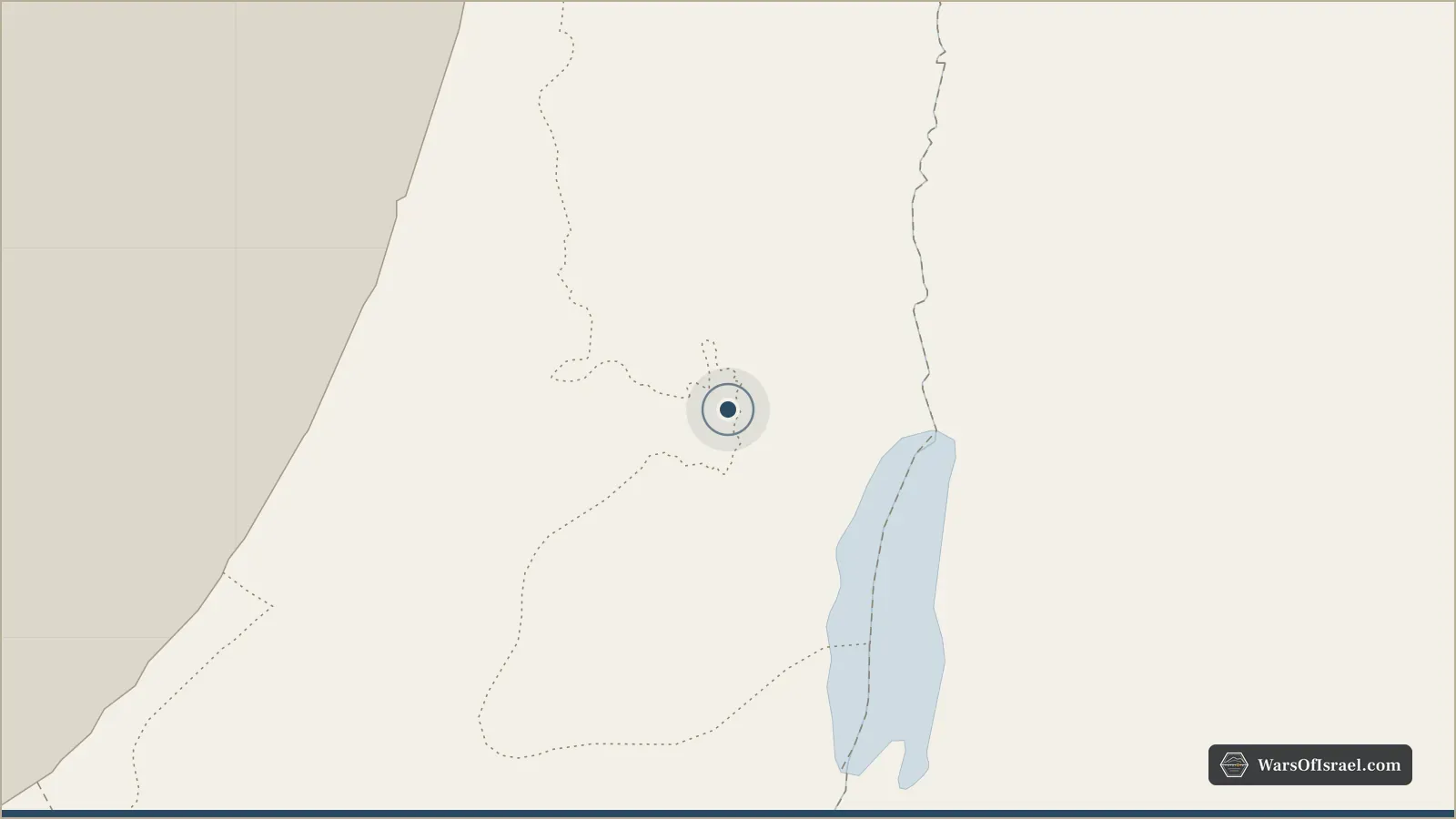
On the morning of April 13, 1948, a convoy carrying doctors, nurses, medical students, patients and supplies to Hadassah Hospital and the Hebrew University on Mount Scopus was ambushed in the Arab neighborhood of Sheikh Jarrah in Jerusalem. The attack went on for about seven hours, within sight of British troops who did not intervene in force until the afternoon. Seventy-eight Jews were killed, according to most sources, most of them medical staff, along with one British soldier. The massacre was one of the defining moments of the battle for Jerusalem, and it left Mount Scopus cut off from the Jewish city until 1967.
Background
Hadassah Hospital on Mount Scopus, opened in 1939, was the largest and most modern hospital in the country, serving Jews and Arabs alike. It stood beside the Hebrew University on a ridge northeast of the Old City. The only road to it from Jewish Jerusalem ran for about two and a half kilometers through Sheikh Jarrah.
From December 1947 the road came under regular attack, and the hospital was supplied by convoys escorted by Haganah armored cars. The convoys carried medical staff and patients, and also, as the Jewish side later acknowledged, supplies and reinforcements for the Haganah guard on the mountain. Arab forces regarded the convoys as military targets; the Jewish Agency regarded them as medical transport protected by the laws of war. The British authorities had given assurances that the road would be safe.
The attack came four days after the Deir Yassin massacre and five days after the death of Abd al-Qadir al-Husayni at al-Qastal. Arab fighters later cited both as motives.
What happened
The convoy of ten vehicles, among them two ambulances, three buses, supply trucks and two Haganah armored cars, left at about 9:30 in the morning with about 105 people aboard. Near the bend in the road below the Nashashibi houses in Sheikh Jarrah, a roadside mine exploded in front of the lead armored car, and Arab fighters opened fire from the surrounding houses and slopes. Several vehicles turned back; the buses and ambulances at the center were trapped.
For hours the passengers were pinned down while the attacking force grew as fighters arrived from across the city. A small British unit was posted nearby, and British officers, among them Major Jack Churchill, came to the scene, but heavy British intervention came only in the afternoon, after the two buses had been set on fire. Haganah attempts to reach the convoy were blocked. The director of the hospital, Dr. Chaim Yassky, was mortally wounded in an ambulance in the early afternoon. According to the most common count, 78 Jews were killed, among them doctors, nurses, students, patients and Haganah escorts, and some sources count 79. Many of the dead could not be identified and were buried together.
British conduct during the attack was criticized sharply by the Jewish Agency and has been debated by historians since. The British said that their forces were stretched and that they had been fired on as well; Jewish accounts held that they could have stopped the attack much earlier.
Outcome and significance
The massacre ended normal access to Mount Scopus. The hospital was evacuated in May, and Hadassah moved its work to buildings in west Jerusalem. Under arrangements made in July 1948 and confirmed in the armistice with Jordan, Mount Scopus became a demilitarized Israeli enclave guarded by a small police detachment and reached by a fortnightly convoy through Jordanian territory. The hospital and the university did not return to the mountain until after the Six-Day War.
In Israeli memory the Hadassah convoy stands with Gush Etzion and the convoys to Jerusalem as one of the heaviest blows to the city's civilians in the 1947 to 1949 war. A memorial stands beside the road in Sheikh Jarrah where the convoy was trapped.