AttackBritish MandateReference entry
The 1929 Hebron massacre
On August 24, 1929, Arab rioters killed 67 Jews in Hebron, and a community that had lived in the city for centuries came to an end.
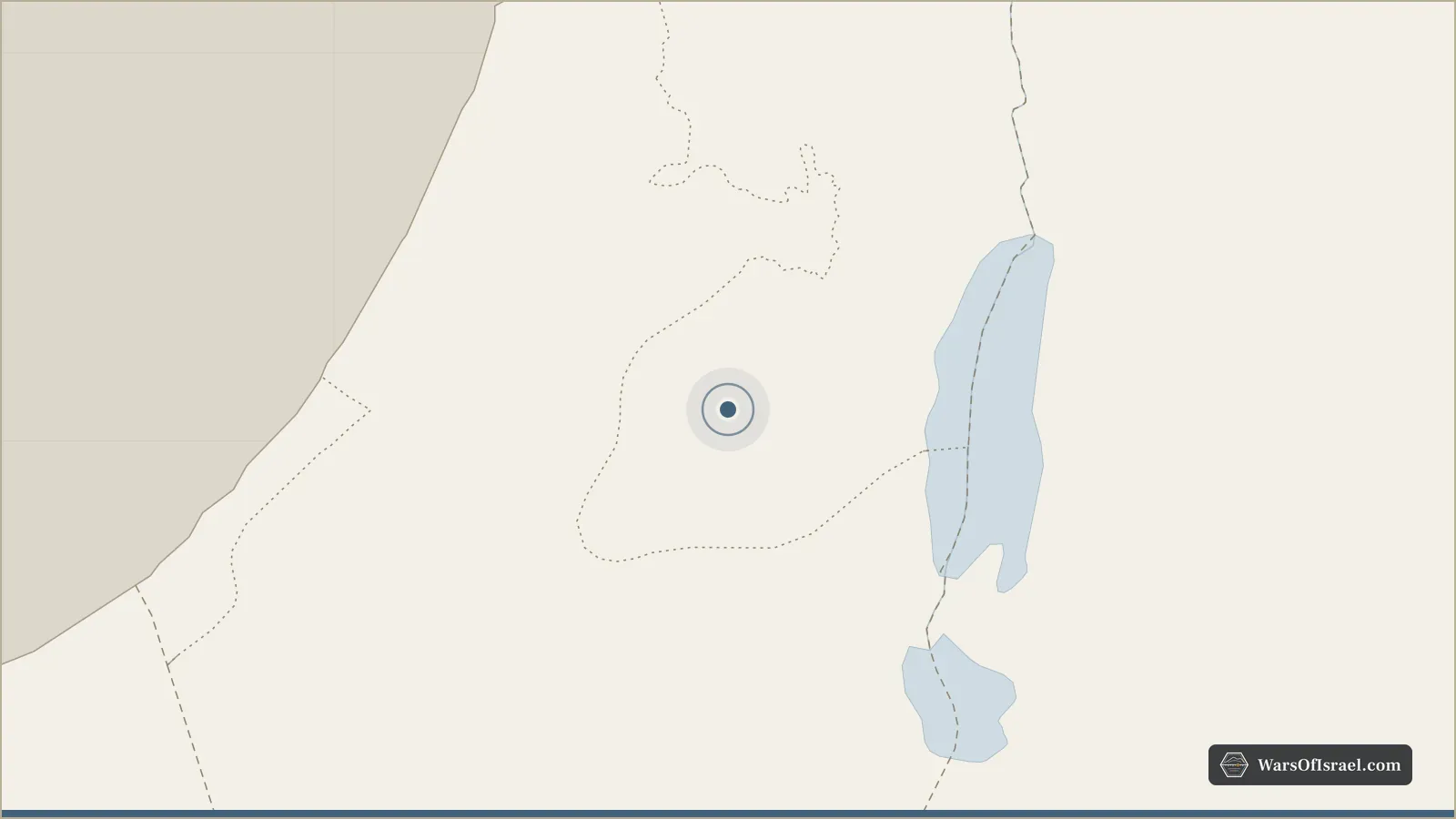
On Saturday, August 24, 1929, Arab rioters attacked the Jewish community of Hebron and killed 67 people, according to the figures most historians accept. It was the deadliest single attack of the 1929 riots. Hundreds of Jews survived, many because Arab neighbors hid them in their homes and others because of the British-led police, but the survivors were moved to Jerusalem, and a Jewish presence in the city of the Patriarchs that had lasted for centuries effectively ended.
A small community in an old city
Hebron is sacred to Jews and Muslims alike as the burial place of Abraham, Isaac and Jacob, at the Cave of the Patriarchs. By 1929 about 700 Jews lived there, among an Arab population of many thousands. The core of the community was Sephardi, families rooted in Hebron for generations who spoke Arabic and had close ties with Arab neighbors. Ashkenazi Jews had settled there since the nineteenth century, and in the mid-1920s a well-known Lithuanian yeshiva, from Slabodka, had moved to Hebron, bringing students from Europe and the United States. A clinic run by Hadassah, the American women's Zionist organization, operated in the town.
The community was not part of the Zionist settlement project, and its leaders believed their good relations with the town's notables would protect them. When the Haganah offered to send defenders on August 20, as tension over the Western Wall spread, the community's leaders declined.
August 23 and 24
As rumors spread that Jews intended to attack al-Aqsa in Jerusalem, crowds gathered in Hebron on Friday, August 23. That afternoon a yeshiva student, Shmuel Rosenholtz, who had gone alone to the yeshiva building, was killed there. The police officer in charge of the town, Raymond Cafferata, the only British officer in Hebron, had about 40 policemen under him, almost all of them Arab, and asked for reinforcements.
The next morning crowds armed with clubs, knives and axes broke into Jewish houses. Victims included yeshiva students, women, children and elderly people; families were killed in their homes. Eliezer Dan Slonim, a member of the town council and a director of the local branch of the Anglo-Palestine Bank, was killed together with his wife and young son in his house, where many Jews had taken shelter. The Hadassah pharmacist, Gershon Ben-Zion, was killed with members of his family. Cafferata and his men opened fire on the attackers; he later testified that he had shot attackers himself.
Of those killed, 59 died during the attack and eight later of their wounds, according to historian Tom Segev. Most of the dead were Ashkenazi; twelve were Sephardi, and two dozen were yeshiva students. Dozens more were wounded. The Shaw Commission, the British inquiry into the riots, reported that more than 60 Jews had been killed and more than 50 wounded in Hebron.
Survivors and rescuers
About 435 Jews, around two thirds of the community, survived. Several hundred were hidden by Arab families; accounts name between nineteen and twenty-eight households that sheltered neighbors, and survivors' testimonies preserve the names of some of those who did so. Others escaped by hiding or found shelter in the police station at Beit Romano. Historians differ on the balance: some emphasize the role of the Arab rescuers, while Benny Morris has argued that most of the survivors owed their lives above all to the intervention of the police.
The end of a community
The survivors were taken to Jerusalem within days. A group of about 160 Jews returned in 1931, but at the outbreak of the Arab revolt of 1936 to 1939 the British evacuated them, and the city was left without a Jewish community. A collective fine was imposed on the town's Arab residents, and a small number of men were convicted of murder According to the British government's annual report for 1930, the three Arabs hanged in Acre on June 17, 1930, had been convicted of murders committed in Safed and Hebron.
Significance
The massacre became a defining memory for the Jewish community in Palestine and later for Israel. It ended the hope of the old religious communities that they could live apart from the national struggle, and it hardened the conviction, which shaped the Haganah, that Jewish safety could depend neither on neighbors nor on British protection. After 1967, when Israel took control of Hebron in the Six-Day War, Israeli settlers returned to the city, and the memory of 1929 became part of a political dispute that continues. For historians, Hebron also stands as evidence of how differently individuals behaved on the same day: those who killed, and those who hid their neighbors at risk to themselves.