The 1936 to 1939 Arab revolt in Mandatory Palestine
A general strike that became a three-year rural rebellion, and the British response that reshaped the politics of Mandatory Palestine before the Second World War.
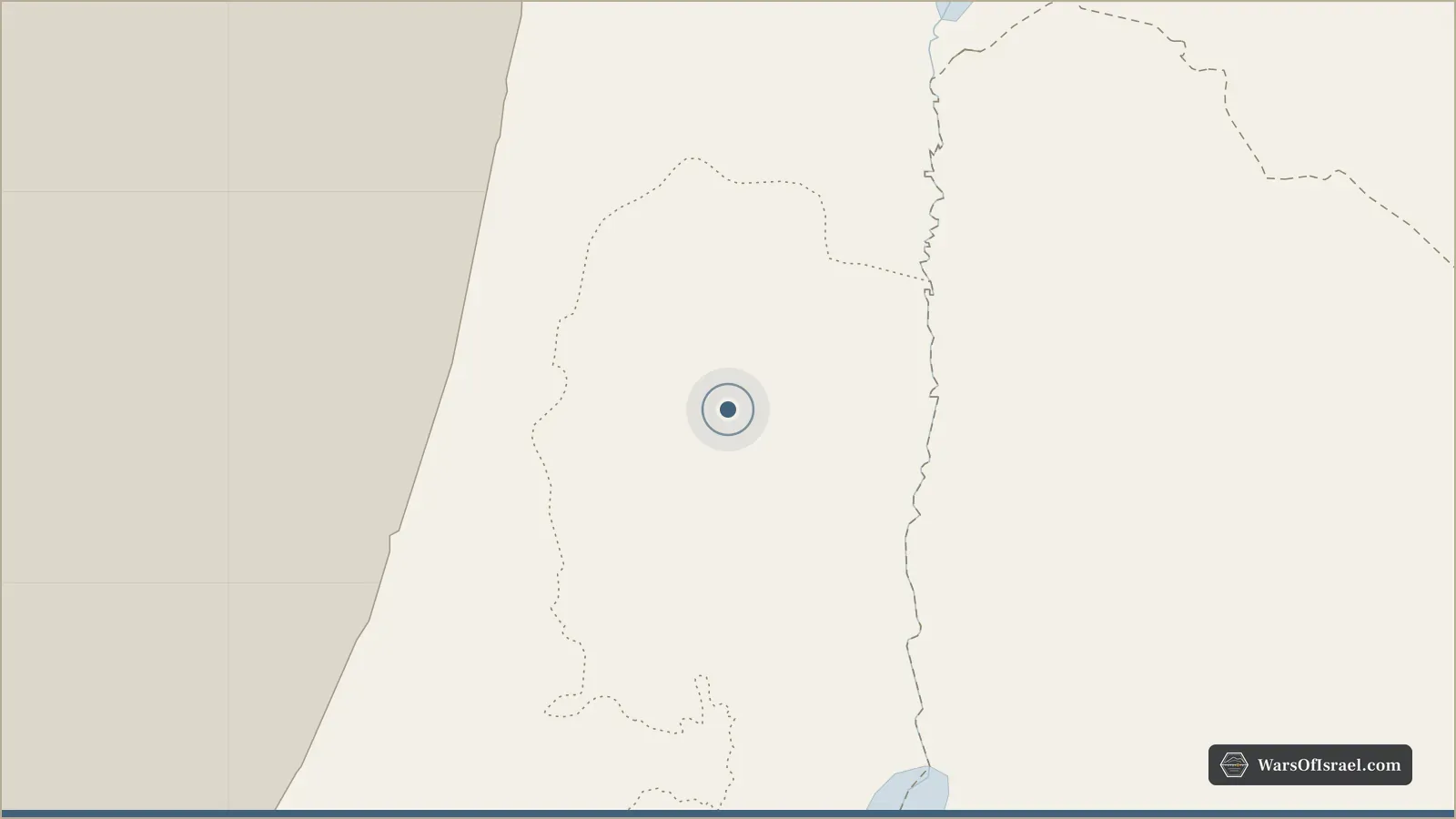
The Arab revolt of 1936 to 1939 was the largest and longest uprising of the British Mandate in Palestine. It began in April 1936 as a national general strike against Jewish immigration and British rule, turned into an armed rebellion in the hill country, reached its height in the summer of 1938 and was crushed by the British army in 1939. The rebels lost on the battlefield, yet the revolt pushed London first toward partition and then, in the White Paper of May 1939, toward sharp limits on Jewish immigration. For the Jewish community, the Yishuv, it was a three-year school of defense that produced many of the commanders, units and habits of the force that would fight in 1948.
Background: immigration, land and a frustrated national movement
By the mid-1930s the Mandate was under strain from every direction. Jewish immigration rose steeply after the Nazi seizure of power in Germany in 1933, and the Jewish population of Palestine grew fast enough that Arab leaders feared becoming a minority in a country they regarded as their own. Land purchases by Jewish bodies, the displacement of some tenant farmers and an economic slump in the Arab countryside sharpened the grievance. The Arab political leadership, divided between the camp of the Mufti of Jerusalem, Haj Amin al-Husseini, and its rivals, had failed to win from Britain either a representative government or a halt to immigration.
Violence had erupted before, most bloodily in the riots of 1929. In the early 1930s a more radical current appeared. The preacher Izz ad-Din al-Qassam organized a clandestine armed group in the north, and his death in a clash with British police in November 1935 turned him into a symbol (see al-Qassam's armed group). Several of the men who started the revolt in 1936 came from his circle.
How the revolt began: the strike of 1936
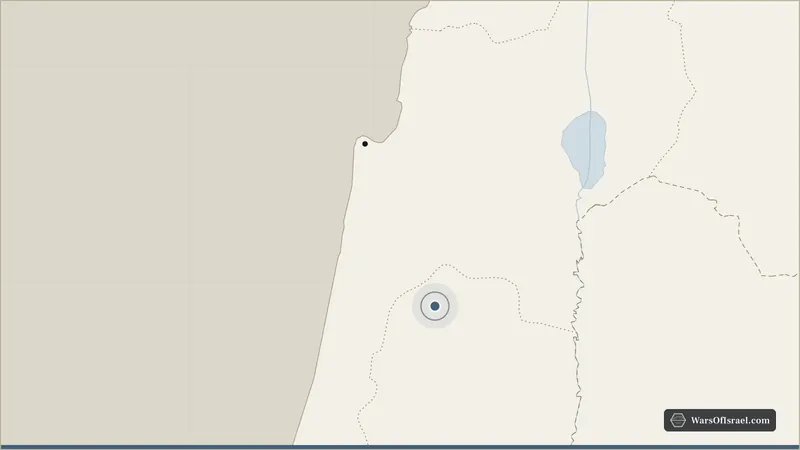
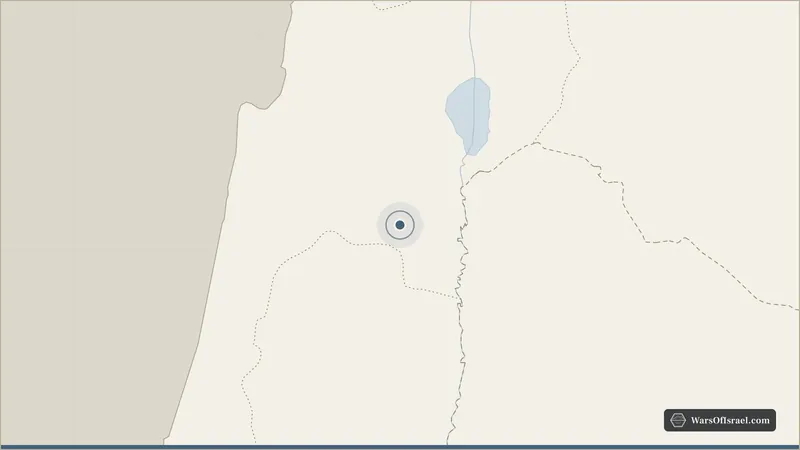
The trigger came on April 15, 1936, when an armed band stopped vehicles on the road near Anabta, between Tulkarm and Nablus, and shot Jewish passengers. Revenge killings of Arabs followed, and on April 19 rioting broke out in Jaffa, where Jews were killed in the streets of the mixed city. According to Hebrew historiography, nine Jews were killed in Jaffa that day. National committees sprang up in the Arab towns and declared a general strike, and on April 25 the leaders of the Arab parties formed the Arab Higher Committee, chaired by Haj Amin al-Husseini.
The strike had three demands: an end to Jewish immigration, a ban on land sales to Jews and a national government elected by the majority. Shops, transport and much of the Arab economy shut down. Bands of armed men, many of them villagers, began attacking British troops, Jewish settlements, roads and the oil pipeline from Iraq to Haifa. Britain poured in reinforcements, and by the end of September 1936 some 20,000 British troops were in the country. The strike was called off on October 11, 1936, after appeals by the rulers of neighboring Arab states and in exchange for a royal commission of inquiry.
The Peel Commission and the return to arms
The Palestine Royal Commission, chaired by Lord Peel, arrived in November 1936 and published its report on July 7, 1937. Its central conclusion was that the Mandate could not work. It proposed partition: a small Jewish state in the coastal plain, the Jezreel Valley and the Galilee, a larger Arab area to be joined to Transjordan, and a British enclave around Jerusalem with a corridor to the sea. It also proposed the transfer of population, in the last resort compulsory, involving up to about 225,000 Arabs and 1,250 Jews.
The Zionist Congress in August 1937 rejected the proposed borders but authorized its leaders to negotiate on the principle of partition. The Arab leadership rejected partition outright, and a pan-Arab conference at Bludan in Syria on September 8, 1937 backed that stand. On September 26, 1937 gunmen killed Lewis Andrews, the British district commissioner for the Galilee, in Nazareth. The British response was immediate: the Arab Higher Committee was dissolved, several of its leaders were deported to the Seychelles and Haj Amin escaped to Lebanon, from where he continued to direct the struggle.
The forces and the parties
The revolt was never a single army. Its fighting strength lay in bands of a few dozen men, organized by region and largely drawn from the villages of the hills around Nablus, Jenin, Tulkarm, Hebron and the Galilee. The most prominent field commanders were Abd al-Rahim al-Hajj Muhammad in the Tulkarm and Nablus area and Arif Abd al-Raziq further south. A Central Committee of National Jihad in Damascus tried to coordinate them. Alongside the war against the British and the Jews ran a violent internal struggle: rebels killed Arabs they accused of collaboration, of selling land or of loyalty to rival families such as the Nashashibis, who in turn armed "peace bands" with British backing.
The British side combined the army, the Palestine Police and auxiliary forces. Over the course of the revolt Britain committed tens of thousands of soldiers; the figure at the peak in late 1938 is usually put between 25,000 and 50,000. Emergency regulations allowed collective punishment, the demolition of houses, curfews, detention without trial and military courts that could impose the death penalty. Historian Matthew Hughes, in his study of the British pacification, documents the systematic use of these measures in the countryside and the abuses that accompanied them.
The Yishuv responded with its own organizations:
- The Haganah, the main underground defense force linked to the Jewish Agency, which grew rapidly and moved from static defense toward mobile units, notably the field companies (FOSH) led by Yitzhak Sadeh.
- The Jewish Settlement Police and other supernumerary police, Jews armed and paid by the Mandate government, who gave the Haganah legal cover and weapons.
- The Irgun (Etzel), which rejected the official policy of restraint and from 1937 carried out reprisal attacks on Arab civilians.
The course of the revolt
Restraint and its limits, 1936 to 1937
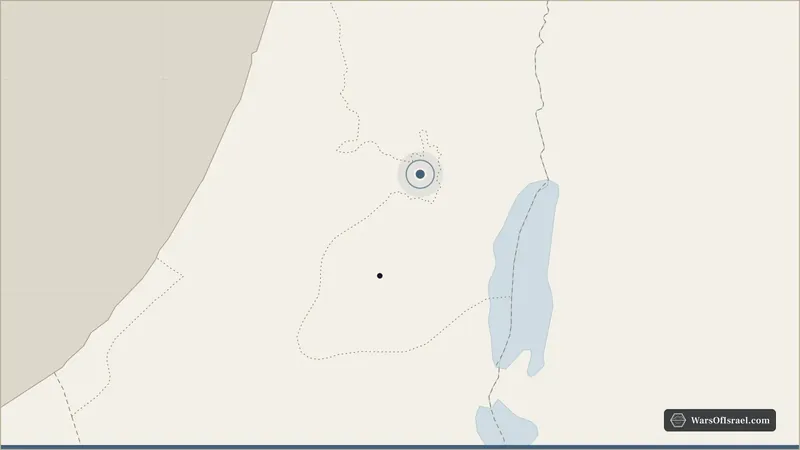
The leadership of the Yishuv, headed by David Ben-Gurion at the Jewish Agency, adopted a policy known as havlagah, restraint: defending settlements firmly but avoiding reprisals against Arab civilians. The policy had a political logic, since it presented the Jewish community to Britain as a partner in keeping order, and it allowed the Haganah to expand under official cover. It also built new facts on the ground. The "tower and stockade" method, in which a fortified settlement was put up in a single day, allowed dozens of new communities to be established in contested areas during the revolt, among them Hanita on the Lebanese border in 1938.
The Irgun broke with restraint in late 1937 and, especially in 1938, planted bombs in Arab markets and on buses in Haifa, Jerusalem and Jaffa, killing many civilians. On June 29, 1938, the British hanged Shlomo Ben-Yosef, a member of Betar who had fired at an Arab bus near Rosh Pina in April, the first Jew executed by the Mandate authorities.
The height of the rebellion, 1938
In the summer of 1938 the revolt reached its peak. Rebel bands controlled much of the hill country and many of the roads, ran their own courts and imposed the keffiyeh on townsmen in place of the urban fez. In some districts the civil administration of the Mandate almost ceased to function. In October 1938 rebels took over the Old City of Jerusalem, and British troops reoccupied it later that month.
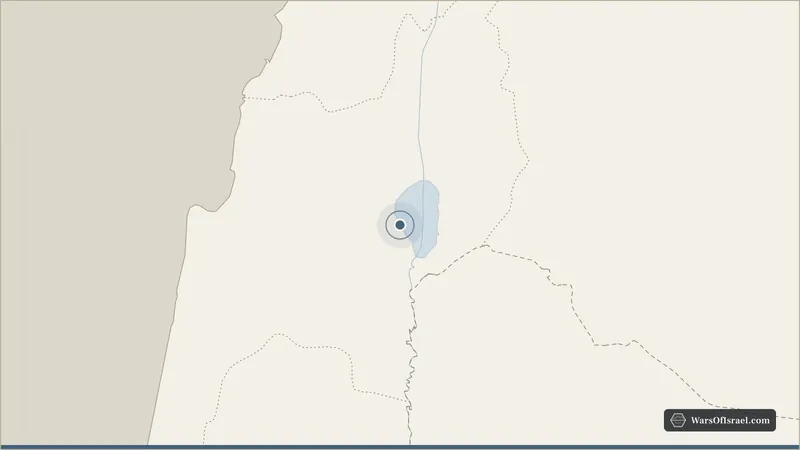
The violence against Jews also reached its peak that autumn. On October 2, 1938, an armed band attacked the Jewish neighborhood of Kiryat Shmuel in Tiberias and killed 19 Jews, 11 of them children, in the Tiberias massacre. In the north, Captain Orde Wingate, a British intelligence officer, formed the Special Night Squads, mixed British and Jewish units that hunted rebel bands at night along the oil pipeline. Their methods, which included reprisals against villages, are still debated by historians.
Defeat of the rebel bands, 1938 to 1939
After the Munich agreement of September 1938 freed troops from Europe, Britain reinforced Palestine and went on the offensive. Under new commanders, the army reoccupied the towns, encircled villages, built a network of fortified police stations designed by Sir Charles Tegart and a fence along the northern border to cut the bands off from Syria and Lebanon. The rebels, worn down by losses, by the internal killings and by the peace bands, lost the initiative. Abd al-Rahim al-Hajj Muhammad was killed in a clash with British forces near Sanur in late March 1939, and by the summer of 1939 the organized revolt had largely ended.
The political outcome: from partition to the White Paper
The military defeat of the revolt did not translate into a political defeat for its aims. A technical commission under Sir John Woodhead, which reported on November 9, 1938, concluded that partition was impracticable, and the British government shelved it. A conference in London at St James's Palace in February and March 1939, at which Arab delegates refused to sit with the Jewish delegation, failed. In May 1939 Britain issued the White Paper of 1939 (opens in a new tab), which the House of Commons approved on May 23. It limited Jewish immigration to 75,000 over five years, after which further immigration would depend on Arab consent, restricted land purchases by Jews and promised an independent Palestinian state within ten years.
For the Yishuv, on the eve of the Holocaust, the White Paper was a betrayal; the Jewish Agency denounced it, and it became the target of illegal immigration and, later, of the armed struggle against British rule. The Arab leadership also rejected it, considering its concessions insufficient.
The human cost
Casualty figures for the revolt vary widely, and every number depends on its source and on what it counts:
- British official figures record more than 2,000 Arabs killed in combat by the army and police, 108 hanged and 961 killed in what the authorities called "gang and terrorist activities".
- An analysis of British statistics published by historian Walid Khalidi puts total Arab casualties at 19,792, of whom 5,032 were killed (3,832 by the British and about 1,200 in internal violence) and 14,760 wounded.
- Jewish deaths are generally estimated at several hundred; Israeli accounts commonly put the number at over 400.
- British security force deaths are usually given as about 260 killed, with several hundred wounded.
The figures above come from the sources named in each line; no single tally is accepted by all historians.
Consequences and legacy
The revolt shaped the decade that followed. On the Arab side, the leadership was in exile, the armed bands had been destroyed, thousands had been killed, detained or had fled, and the internal score-settling left deep scars. Many historians, among them Benny Morris, argue that this weakness was one reason Palestinian Arab society was poorly prepared for the war of 1947 to 1949. In Palestinian memory the revolt is remembered as the great rebellion, a formative chapter of national resistance.
On the Jewish side, the Haganah came out larger, better armed and more experienced. Officers who fought with the field companies or the Special Night Squads, among them Yigal Allon and Moshe Dayan, later led the forces of the 1947 to 1949 war. The dispute over restraint also deepened the rift between the Haganah and the Irgun. In Britain, the revolt and the coming war with Germany persuaded the government to secure Arab goodwill, a choice that set it on a collision course with the Zionist movement after 1945.
Timeline
- April 15, 1936: An armed band kills Jewish passengers on the road near Anabta, between Tulkarm and Nablus.
- April 19, 1936: Rioting in Jaffa; the general strike begins.
- April 25, 1936: The Arab Higher Committee is formed under Haj Amin al-Husseini.
- October 11, 1936: The general strike is called off.
- July 7, 1937: The Peel Commission publishes its report recommending partition.
- September 26, 1937: District commissioner Lewis Andrews is assassinated in Nazareth; the revolt resumes.
- June 29, 1938: Shlomo Ben-Yosef is hanged at Acre Prison.
- October 2, 1938: The Tiberias massacre kills 19 Jews.
- November 9, 1938: The Woodhead Commission reports that partition is impracticable.
- May 23, 1939: The House of Commons approves the White Paper of 1939.