Riots and disturbancesBritish Mandate
The 1929 riots: Jerusalem, Hebron and Safed
A week of violence in August 1929, born of a quarrel over prayer at the Western Wall, killed 133 Jews and 116 Arabs and reshaped Jewish defense and British policy in Palestine.
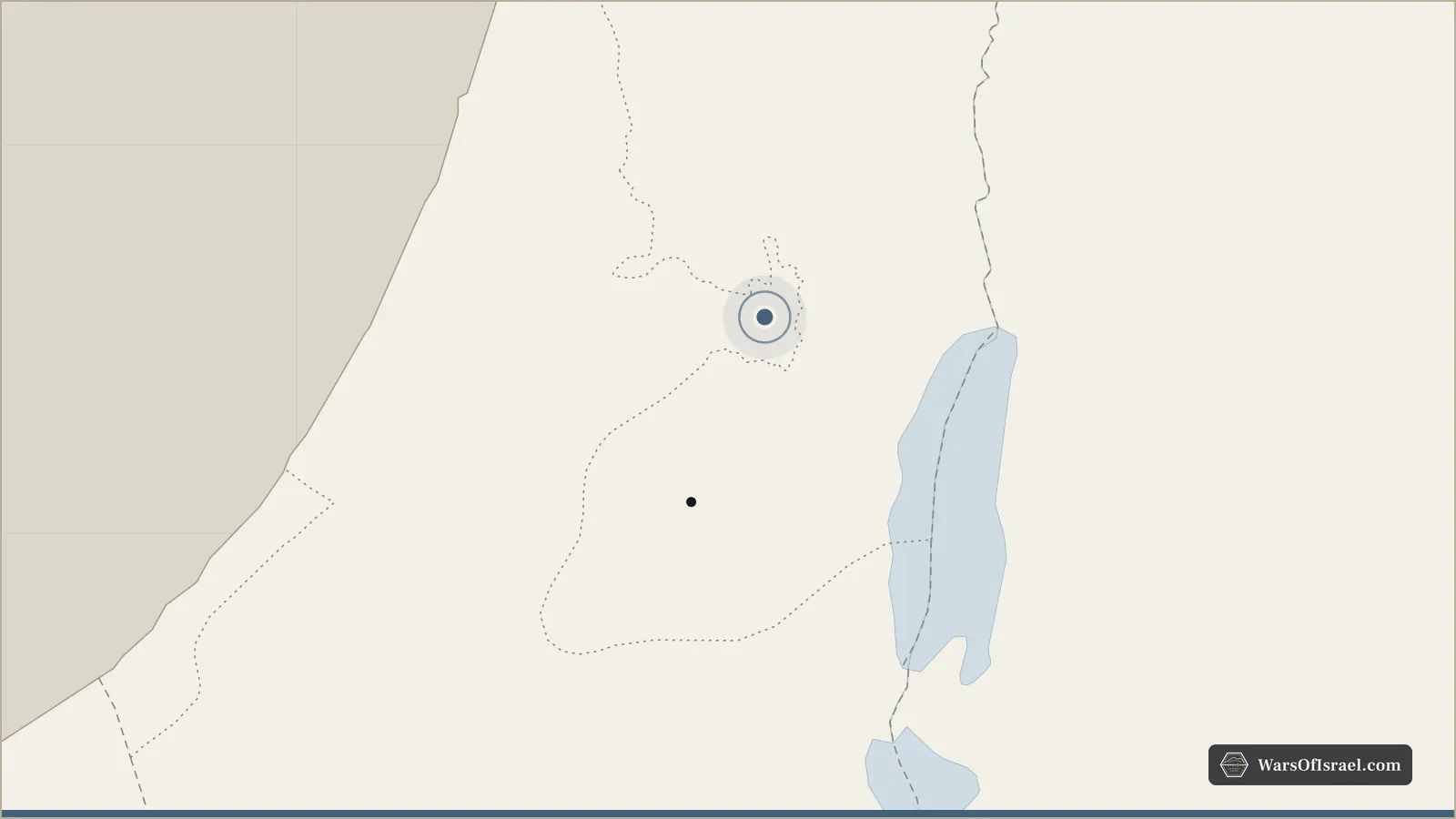
For one week at the end of August 1929, Mandatory Palestine came apart. Between Friday, August 23, and Thursday, August 29, crowds of Arab rioters attacked Jews in Jerusalem, massacred the old Jewish community of Hebron, fell on the Jewish quarter of Safed and assaulted dozens of farming settlements across the country. According to the British commission of inquiry that investigated the events, 133 Jews and 116 Arabs were killed. Most of the Jewish dead were killed by Arab attackers; most of the Arab dead were killed by British police and troops trying to stop the violence, and some by Jews, a number of them in revenge attacks. The trigger was a dispute over Jewish prayer at the Western Wall. The deeper cause, the commission concluded, was the clash between Zionist immigration and Arab national fears. In Hebrew memory the week is known as מאורעות תרפ"ט, the events of the year 5689, and many historians treat it as the moment the conflict between the two peoples took its modern shape.
A quarrel over a wall
The Western Wall, the last standing retaining wall of the Second Temple compound, was the holiest place of Jewish prayer. It was also the western edge of the Haram al-Sharif, the compound of the al-Aqsa Mosque, and the narrow pavement in front of it belonged to a Muslim religious endowment (waqf) and adjoined the homes of the Moroccan Quarter. Under Ottoman practice, and then under the British, Jews could pray at the Wall but could not change the arrangements there. Every bench, lamp or screen became a question of sovereignty.
On the eve of Yom Kippur in September 1928, worshippers set up a cloth screen to separate men and women. The British district commissioner ordered it removed, and on the Day of Atonement itself police took it down after a scuffle with worshippers. Jewish organizations protested to London and to the League of Nations. The Supreme Muslim Council, headed by the Mufti of Jerusalem, Hajj Amin al-Husseini, treated the episode as proof that the Zionists intended to take over the Wall and, in time, the Haram itself. Over the following months it ordered building work next to the Wall, a muezzin was installed nearby, and the pavement was turned into a thoroughfare, with animals driven through the place of prayer.
The tension rose through the summer of 1929. On August 14, a large protest in Tel Aviv objected to the restrictions at the Wall. The next day, Tisha B'Av, several hundred young Jews, many from the Revisionist movement's youth wing, marched to the Wall, raised the Zionist flag and declared that the Wall was theirs. The Shaw Commission later found the march largely orderly but judged it the incident that contributed most to the outbreak. On Friday, August 16, after the noon prayers, a Muslim counter-demonstration of about 2,000 people marched to the Wall, drove off the worshippers and burned prayer books and the notes left in the stones. On August 17, a Jewish youth, Avraham Mizrahi, was stabbed during a quarrel over a football that had rolled into an Arab-owned garden; he died three days later, and his funeral became an angry demonstration. Rumors spread through Arab towns and villages that Jews were about to attack al-Aqsa.
Causes and context
The Wall was the spark; the fuel had been gathering for a decade. The British had promised in the 1917 Balfour Declaration to support a Jewish national home in Palestine, and the Mandate gave that promise legal force. Jewish immigration and land purchases grew through the 1920s, and with them Arab fears of dispossession and of becoming a minority in their own country. Earlier outbreaks, the 1920 Jerusalem riots during the Nebi Musa festival and the 1921 Jaffa riots, had already shown how fast local friction could become deadly violence.
The late 1920s seemed calmer. Immigration had fallen during an economic crisis, and London had reduced its garrison in Palestine to a small force. The Palestine Police was mostly Arab, with a thin layer of British officers, and the Jewish self-defense organization, the Haganah, was poorly armed and loosely organized. In August 1929 the British had very few troops in the country, and the high commissioner, Sir John Chancellor, was in Europe; his deputy, Harry Luke, was in charge when the violence began.
Historians still debate how far the outbreak was planned. The Shaw Commission found that it was not premeditated and that the Mufti, while sharing responsibility for the agitation, had not intended the disorder. A member of the commission, the Labour politician Henry Snell, dissented in a note of reservations, placing more blame on the Mufti and the Arab leadership. Zionist leaders at the time saw organized incitement; many Palestinian accounts present the week as a popular defense of al-Aqsa.
The parties
The violence was not a war between two organized forces. On one side were Arab crowds drawn from towns and villages, sometimes led by local notables and preachers, sometimes acting with no visible leadership. On the other were Jewish communities of very different kinds: the old, largely religious communities of Jerusalem, Hebron and Safed, many of whose members had lived beside Arab neighbors for generations, and the newer Zionist settlements and urban neighborhoods.
The Haganah, founded in 1920 after the Jerusalem riots, had volunteers and some hidden weapons, but no central command able to send help across the country. Its members defended several neighborhoods and settlements; its offers of protection to the communities of Motza and Hebron were declined. The British authorities were responsible for order, but their forces were too few. Reinforcements had to be brought in from Transjordan and Egypt, and for the first days the police, many of them Arab, were often outnumbered or absent.
The course of the riots
Jerusalem, August 23 to 25
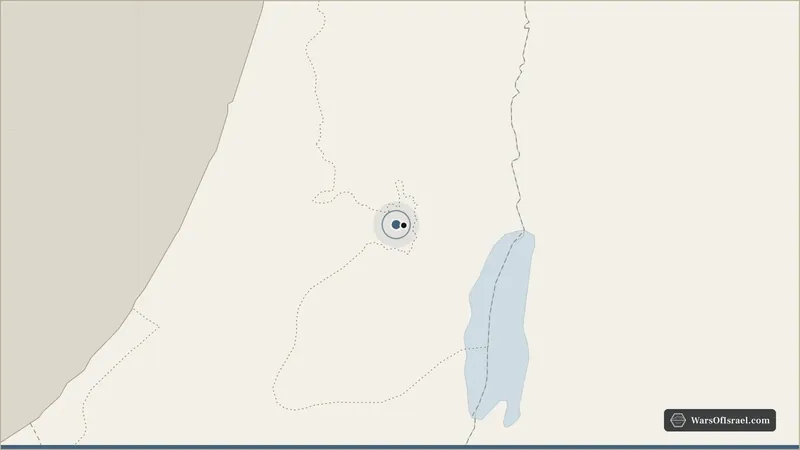
On Friday, August 23, thousands of villagers came to Jerusalem for prayers at al-Aqsa, many carrying clubs and knives. After the sermons, crowds poured out of the Old City and attacked Jews in nearby streets and in mixed neighborhoods. Fighting spread to the edges of the city, to neighborhoods such as Talpiot and Ramat Rachel, where Jewish residents held out with few weapons. The Shaw Commission concluded that the outbreak in Jerusalem was from the beginning an attack by Arabs on Jews. The authorities armed a small number of Jewish special constables and former soldiers that day, then disarmed them again within days.
On August 24, in the hillside settlement of Motza west of the city, attackers from the neighboring village of Qalunya killed most of the Maklef family and two guests in their home. One boy, Mordechai Maklef, escaped; in 1952 he became the third chief of staff of the Israel Defense Forces. Motza was evacuated the same day.
Hebron, August 24
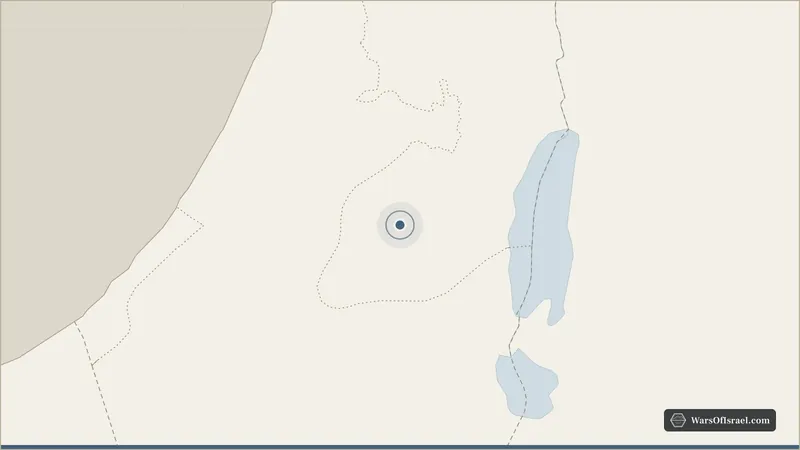
The worst killing took place in Hebron. The town's Jewish community of about 700 people included families who had lived there for centuries and the students of a yeshiva that had moved there from Slabodka in Lithuania a few years earlier. On the afternoon of August 23, a yeshiva student was killed in the yeshiva building. The next morning, Saturday, August 24, crowds broke into Jewish homes. Sixty-seven Jews were killed, according to the figures most historians accept, among them yeshiva students, women and children. The lone British police officer in the town, Raymond Cafferata, had a few dozen men under him. Many Jews survived because Arab neighbors hid them in their homes, and others because of the police and the shelter of the police station. The survivors were moved to Jerusalem, and the community that had lived in the city of the Patriarchs for centuries ceased to exist. The full account is in the article on the Hebron massacre.
The settlements, August 24 to 27
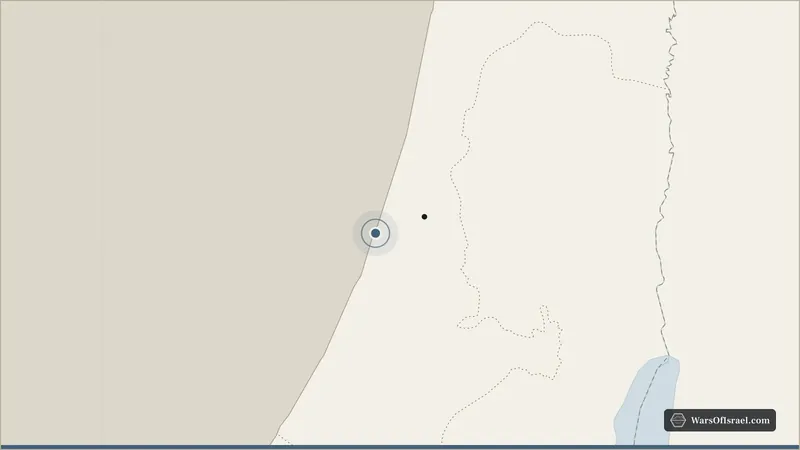
Over the following days the violence moved into the countryside. Be'er Tuvia in the south was attacked and destroyed, and its residents were evacuated. At Hulda, a farm in the Judean foothills, a handful of defenders held out until British troops ordered them to leave; their commander, Ephraim Chizik, was killed in the fighting. Mishmar HaEmek and other settlements in the Jezreel Valley were attacked; several were abandoned for a time. In the Jewish towns along the coast there were clashes on the borders between Tel Aviv and Jaffa and around Haifa.
Jews also carried out killings. In one revenge attack on August 25, Jews broke into the home of the Awn family and killed several of its members; a Jewish policeman, Simcha Hinkis, was later convicted and sentenced to death, and the sentence was commuted on appeal. These acts were fewer than the attacks on Jews, but they were part of the same week and of its memory on both sides.
Safed, August 29
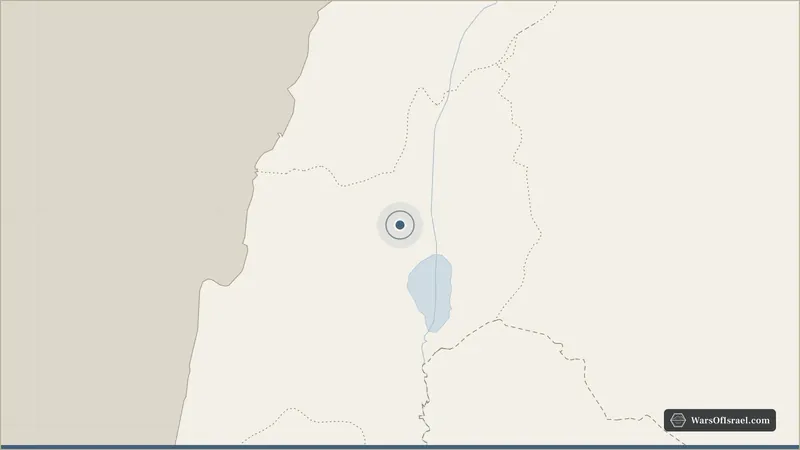
By the last week of August the British had brought in reinforcements and the violence was ebbing. Then, late in the afternoon of August 29, crowds from Safed and the surrounding villages attacked the Jewish quarter of the Galilee town. Houses were looted and set on fire. Contemporary counts put the dead at 18 to 20, with dozens wounded; the Shaw Commission spoke of some 45 Jews killed or wounded. The commission described the Safed massacre as the end of the disturbances. See the article on the Safed massacre.
Casualties, trials and inquiries
The Shaw report listed 133 Jews killed and 339 wounded, including 198 admitted to hospital. Its initial Arab figures were 87 killed and 181 admitted to hospital; a footnote revised the Arab hospital totals to 116 killed or dying in hospital and 232 injured. These figures use different reporting categories, so they should not be treated as a single uniform casualty table. The commission said that most Arab deaths resulted from action by police and troops.
The courts tried hundreds of people. According to the published figures, 26 Arabs and two Jews were sentenced to death. The high commissioner commuted most of the sentences, and the Jewish sentences were commuted as well. Three Arabs convicted of murder in Hebron and Safed, Atta al-Zeer, Mohammad Jamjoum and Fuad Hijazi, were hanged in Acre prison on June 17, 1930. In Palestinian national memory the three became martyrs, and the day of their execution became known as Red Tuesday. Collective fines were imposed on Hebron, Safed and a number of villages, and the money went mostly to compensate victims.
London sent a commission of inquiry under Sir Walter Shaw, which heard witnesses in Jerusalem from October to December 1929 and published its report in March 1930. It found that the riots had been an Arab attack on Jews, that the outbreak was not premeditated, and that the fundamental cause was Arab hostility toward Jews arising from disappointed national aspirations and fear for the economic future. It recommended that the government reconsider its policy on immigration and land sales. The British government's own report to the League of Nations on Palestine for 1929, now available through the United Nations' UNISPAL collection (opens in a new tab), referred readers to the Shaw report for the events and their causes.
Consequences for British policy and the Wall
The Shaw report opened a chain of policy reviews. Sir John Hope Simpson examined land and immigration and reported in October 1930 that there was too little cultivable land to absorb large new immigration. On October 20, 1930, the colonial secretary, Lord Passfield, issued a white paper that proposed to restrict immigration and land purchase. In protest, Chaim Weizmann resigned as president of the Jewish Agency. In February 1931, Prime Minister Ramsay MacDonald sent Weizmann a letter that in practice withdrew the main restrictions; Arab leaders called it the Black Letter.
The question of the Wall went to an international commission of three jurists from Sweden, Switzerland and the Netherlands, approved by the League of Nations. Its report, in December 1930, found that the Wall and the pavement belonged to the Muslim waqf, and that Jews had the right of free access to the Wall for prayer at all times, under conditions: restrictions on the objects they could bring and a ban on blowing the shofar there. The rules took effect in an order in council in June 1931. For the next decades, young Jews defied the shofar ban at the end of Yom Kippur, and were arrested for it.
The Jewish response and the Haganah
For the Jewish community, 1929 overturned assumptions. The old communities of Hebron and, for the time, of Gaza ended; neighborhoods on the edges of Jerusalem were abandoned or fortified. The Zionist leadership concluded that it could not rely on British protection. The Haganah was reorganized and expanded, with more weapons, training and a clearer chain of command, and it placed emphasis on defending every settlement. A dispute over who should control it and how it should respond led a group of commanders, led by Avraham Tehomi, to break away in 1931 and form a separate organization, known as the Irgun Bet; part of it later became the Irgun. The story of that development is told in the guide From Hashomer to the IDF.
On the Arab side, 1929 marked the arrival of religious mobilization in national politics and the rise of figures who believed only armed struggle could stop the Zionist project. One of them, the Haifa preacher Izz ad-Din al-Qassam, began to recruit fighters in the years after the riots; see his armed group. The road from 1929 led, within seven years, to the Arab revolt of 1936 to 1939.
Memory
Israeli memory holds 1929 as the year of Hebron and Safed, the year that taught that the Jewish community had to defend itself. Palestinian memory has largely remembered it as the Buraq Revolt, after the Arabic name for the Western Wall, a revolt to defend al-Aqsa, and has honored the three men hanged in 1930. Historians such as Tom Segev and Hillel Cohen have shown that both accounts leave out parts of the record: the Arab families who sheltered Jewish neighbors in Hebron, the Jewish revenge killings, and the British failures that allowed a week of violence to spread so far.
Timeline
- September 24, 1928: On Yom Kippur, British police remove a screen set up by Jewish worshippers at the Western Wall.
- August 15, 1929: On Tisha B'Av, several hundred young Jews march to the Western Wall.
- August 16, 1929: A Muslim counter-demonstration marches to the Wall after Friday prayers.
- August 23, 1929: Attacks on Jews begin in Jerusalem after Friday prayers.
- August 24, 1929: Sixty-seven Jews are killed in the Hebron massacre; the Maklef family is attacked in Motza.
- August 29, 1929: The attack on the Jewish quarter of Safed marks the end of the disturbances.
- March 1930: The Shaw Commission publishes its report.
- June 17, 1930: Three Arabs convicted of murder in Hebron and Safed are hanged in Acre.
- October 20, 1930: The Passfield White Paper is issued.
- December 1930: The international commission on the Western Wall reports.