AttackLebanon and the first intifadaReference entry
Iraqi Scud missile attacks on Israel in the Gulf War (1991)
Why Saddam Hussein fired ballistic missiles at Israel during the Gulf War, how Israelis lived through the sealed-room weeks, and why Israel held its fire.
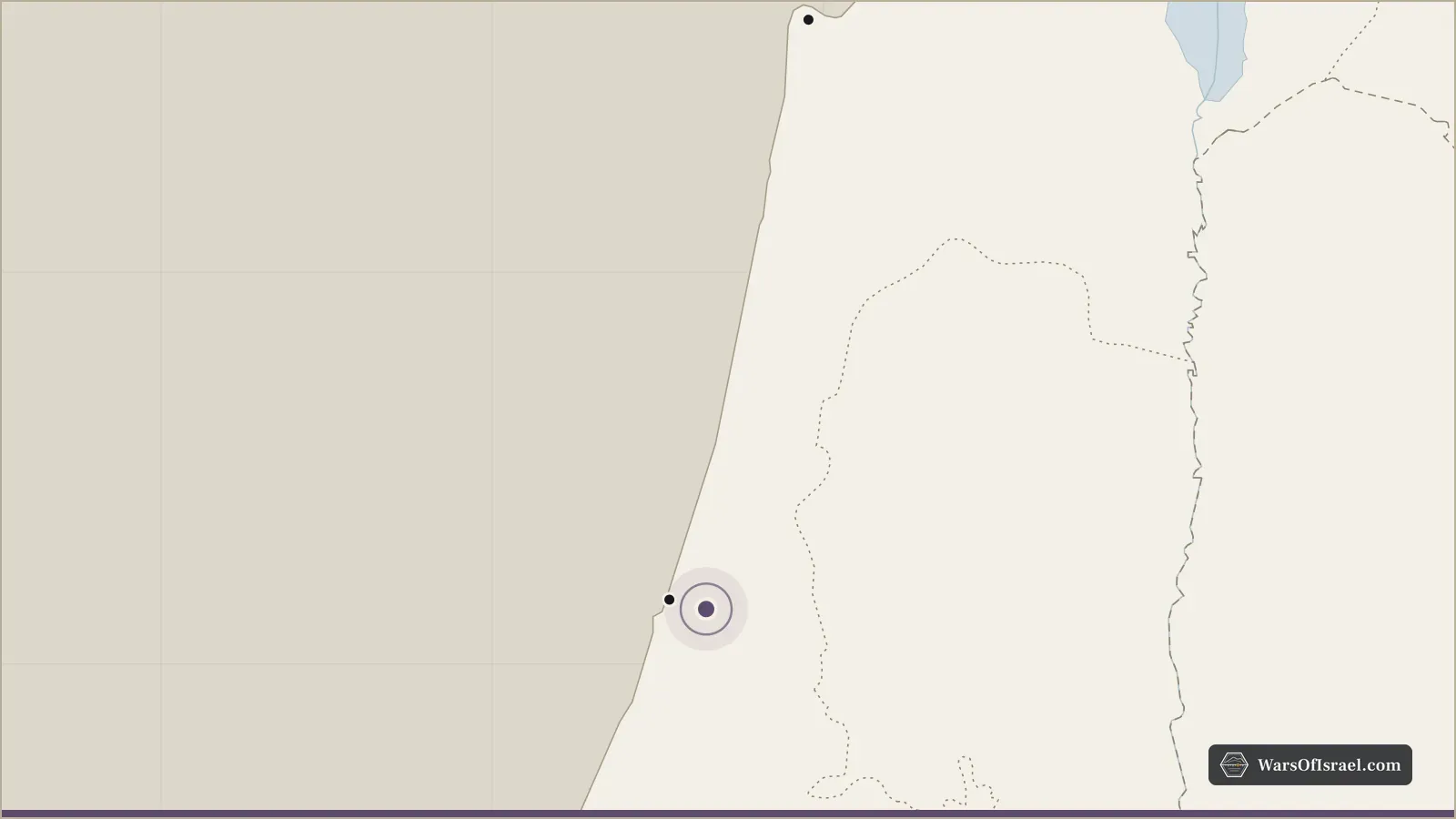
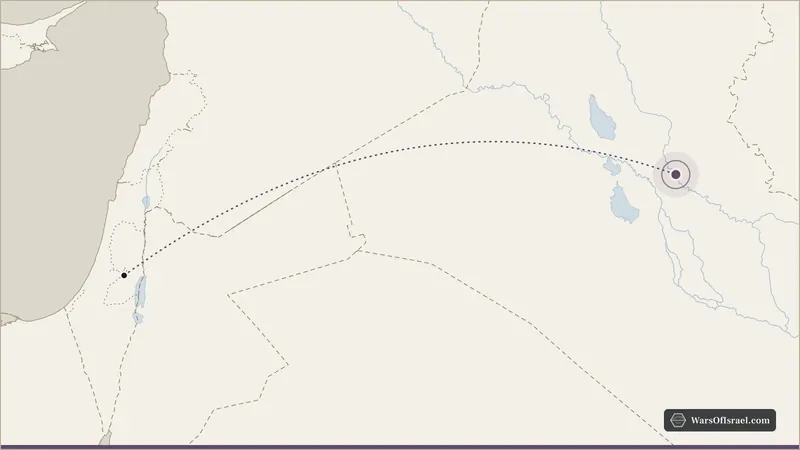
In the early hours of January 18, 1991, a day after the United States and its allies began bombing Iraq, the first Iraqi ballistic missiles fell on Tel Aviv and Haifa. Over the following five and a half weeks Iraq fired dozens of modified Scud missiles at Israel, a country that was not a party to the Gulf War. The missiles killed few people directly but damaged thousands of homes, sent much of the population into sealed rooms wearing gas masks, and confronted Israel with an unprecedented choice: for the first time, its cities were under attack and it did not hit back.
Background: why Iraq fired at Israel
After Iraq invaded Kuwait in August 1990, a broad coalition led by the United States, which included Egypt, Syria and Saudi Arabia, assembled to force it out. Saddam Hussein had threatened Israel even before the invasion. In a speech in April 1990 he said that Iraq would "make fire eat up half of Israel" if Israel acted against it. His calculation, as most historians read it, was that drawing Israel into the war would make it impossible for Arab states to keep fighting alongside it, and would break the coalition apart.
The weapons he used were Iraqi versions of the Soviet Scud: the Al Hussein, whose range had been extended at the cost of a smaller warhead, and the Al Hijarah. Israel feared above all that the warheads would carry chemical agents, which Iraq had used against Iran and against Kurdish civilians in the 1980s. For that reason the IDF distributed gas masks to the entire population before the war, and the Home Front instructions told every household to prepare a sealed room with plastic sheeting and tape.
The attacks
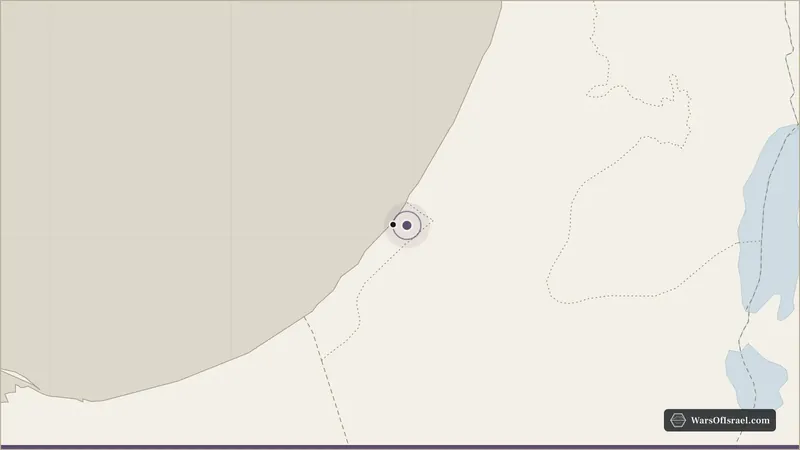
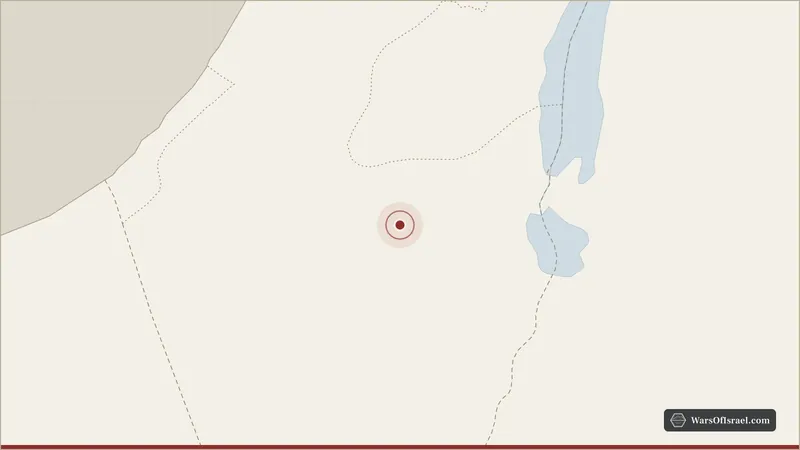
The first salvo fell on the night of January 17 to 18. From the second attack onward, sirens gave a few minutes' warning, based on launch data shared by the United States. Most of the missiles landed in the greater Tel Aviv area, with Ramat Gan hit hardest, and around Haifa. Others fell in the northern West Bank and in the Negev near Dimona.
The count depends on the source. The Israeli Foreign Ministry speaks of about 38 missiles in 19 attacks. A 2002 IDF tally, declassified in 2021 and reported by The Times of Israel, counted 43 missiles in 18 barrages over 39 days; the IDF archive's own summary gives 39. The last attacks came in late February, as the coalition's ground offensive began. The Times of Israel published the IDF's declassified tally and photographs of the Scud weeks (opens in a new tab) on the thirtieth anniversary.
The United States deployed Patriot air defense batteries in Israel to prevent an Israeli response. Their record became a long-running controversy: according to the IDF tally, 54 Patriot interceptors were fired, and later analyses concluded that very few Scuds, if any, were destroyed.
The cost
According to the Israeli Foreign Ministry, two people were killed by direct missile hits. Another four died of heart attacks during the attacks, and seven died through incorrect use of the protective kits. The Foreign Ministry counts 208 injured. The IDF's 2002 tally gives slightly different numbers, 14 dead and 229 injured, and records hundreds of people treated for anxiety or for unnecessary self-injection of atropine.
The material damage was far greater. The Foreign Ministry lists 1,302 houses, 6,142 apartments, 23 public buildings, 200 shops and 50 cars damaged. Many residents of greater Tel Aviv left the city for the duration of the war.
Restraint and its consequences
The question of retaliation dominated Israel's war. Prime Minister Yitzhak Shamir and Defense Minister Moshe Arens were under pressure from the army and from parts of the public to respond, as Israel had done in the past. The administration of President George H. W. Bush pressed Israel not to, arguing that an Israeli strike would play into Saddam Hussein's hands and endanger the coalition. Israel held its fire. According to the IDF archive, it did so following the American president's request that it stay out of the fighting.
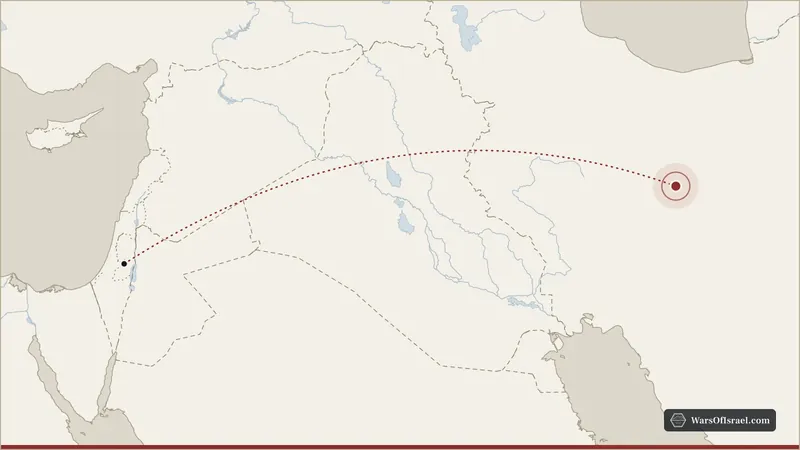
The coalition held, and Iraq was driven out of Kuwait at the end of February. For Israel, the experience left long-term marks. It revealed how exposed Israeli cities were to ballistic missiles, and led to the founding of the IDF Home Front Command and to accelerated Israeli investment in missile defense, from the Arrow program to the later systems that defended Israel from missiles fired by Iran in April 2024 and during the war of June 2025. The weeks of sirens also took place against the background of the first intifada, when Israel imposed a long curfew on the West Bank and Gaza, and many Palestinians openly supported Iraq.