UprisingLebanon and the first intifada
The first intifada (1987 to 1993)
How a road accident in Gaza set off six years of mass Palestinian protest, how Israel tried to suppress it, and why the uprising changed the course of the Israeli-Palestinian conflict.
The first intifada was a mass Palestinian uprising against Israeli rule in the West Bank and the Gaza Strip. It began on December 9, 1987, in the Jabalia refugee camp in Gaza, spread across both territories within days, and lasted, in one form or another, until the signing of the Oslo Declaration of Principles on September 13, 1993. Unlike the wars Israel had fought until then, it was waged mostly by civilians: teenagers throwing stones, shopkeepers on strike, villagers refusing to pay taxes. It cost more than a thousand Palestinian lives and nearly two hundred Israeli lives, filled Israeli detention camps with tens of thousands of prisoners, and forced Israelis, Palestinians and the wider world to think again about what twenty years of occupation had produced.
Twenty years after 1967
When the uprising broke out, Israel had held the West Bank and Gaza since the Six-Day War of June 1967. A generation of Palestinians had grown up under military government. Many of them worked inside Israel, in construction, agriculture and services, crossing back at night to camps and villages where the economy depended on Israeli wages and Israeli permits. Israeli settlements were expanding, especially after the Likud came to power in 1977. Land, water and building permits were under Israeli control, and every aspect of daily life, from a driving license to an export permit, ran through the military administration.
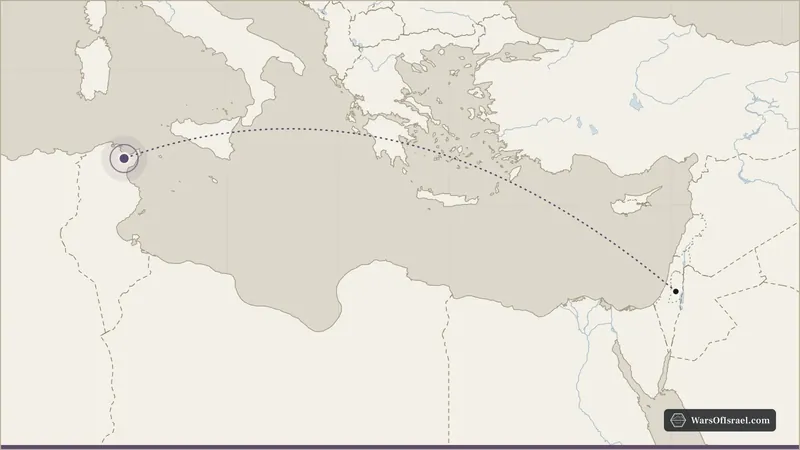
The Palestinian national leadership, meanwhile, was far away. After the 1982 Lebanon War the PLO had been forced out of Beirut and moved its headquarters to Tunis, where Israel struck it in Operation Wooden Leg in 1985. In the territories, a new generation of local activists had grown up in student unions, trade unions, women's committees and prison cells, and many of them felt that neither Tunis nor the Arab states were delivering anything. An Arab League summit in Amman in November 1987 devoted most of its attention to the Iran-Iraq War and very little to the Palestinians.
Tension had been rising through the autumn of 1987. On the night of November 25, a Palestinian gunman from the Popular Front for the Liberation of Palestine, General Command, crossed from Lebanon on a motorized hang glider and killed six Israeli soldiers at an army camp near Kiryat Shmona. Among Palestinians in the territories, the attack was widely celebrated as proof that the army could be beaten.
The spark and the spread
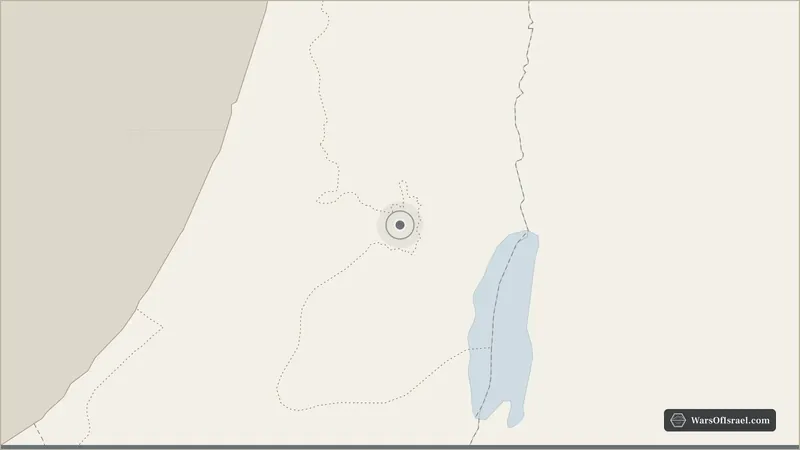
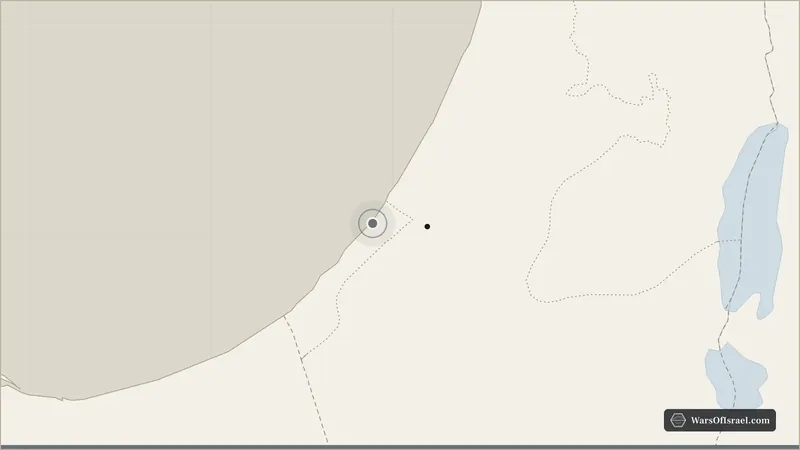
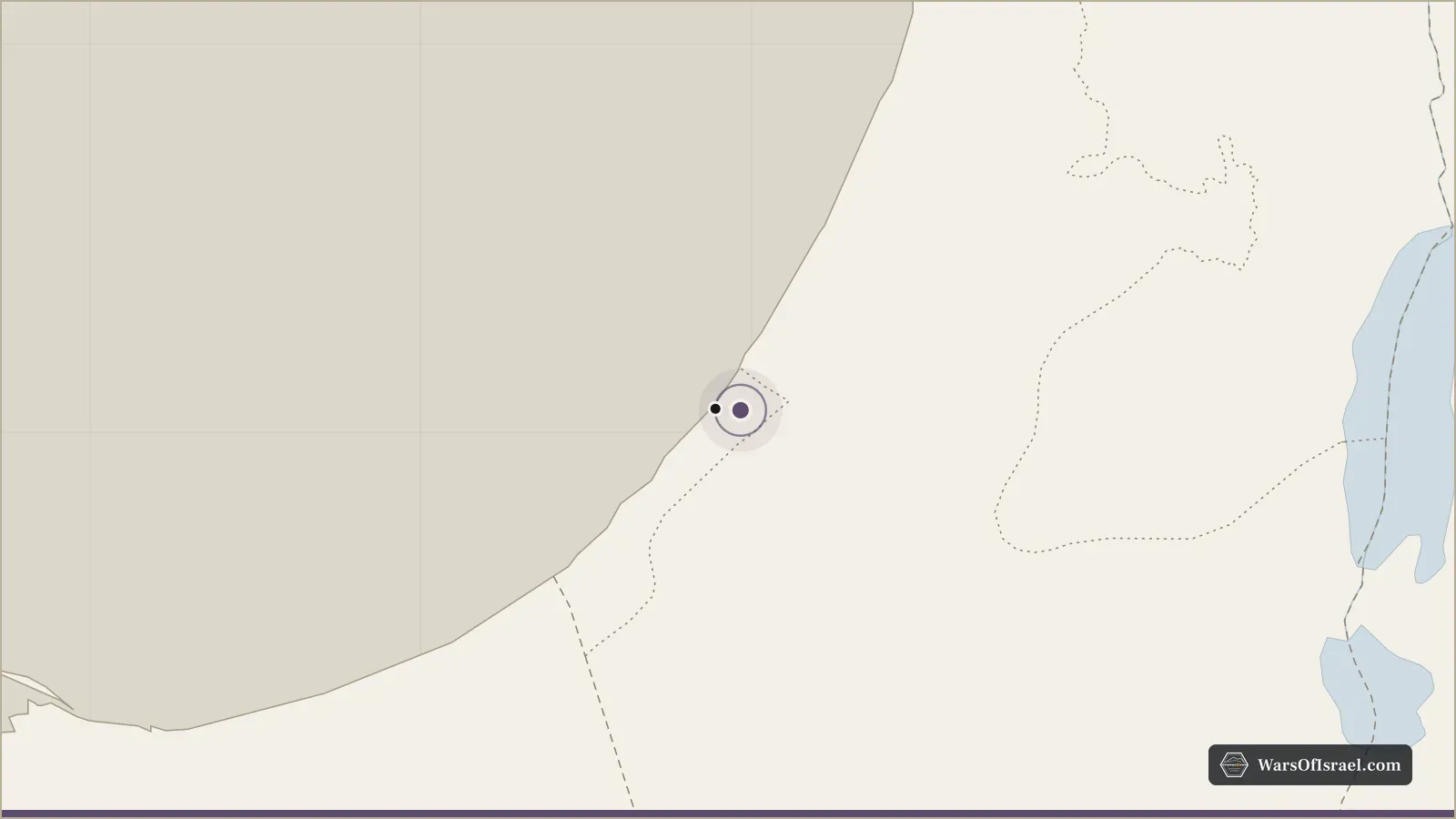
On December 8, 1987, an Israeli truck collided with cars carrying Palestinian laborers near the Erez checkpoint at the northern edge of the Gaza Strip, killing four of them, three from the Jabalia camp. Rumors spread that the collision had been deliberate, revenge for the stabbing of an Israeli in Gaza a few days earlier. There is no evidence that it was, but the rumor was enough. The funerals that night turned into demonstrations, and on December 9 a crowd in Jabalia attacked an army post. Soldiers opened fire and killed a seventeen-year-old. Within days the protests had spread to the other Gaza camps, to Khan Yunis and Rafah, and then to Nablus, Ramallah, the camps around Jerusalem and East Jerusalem itself.
The Israeli security establishment at first read the events as another passing wave of unrest, of the kind it had seen before. It took weeks to recognize that this was different: the protests were not ending, they were becoming organized, and they involved entire communities rather than militant cells.
Who led the uprising
The Unified National Leadership
In January 1988 leaflets began to appear signed by the Unified National Leadership of the Uprising, a clandestine body of local representatives of the main PLO factions: Fatah, the Popular Front for the Liberation of Palestine, the Democratic Front and the Palestinian Communist Party. Its numbered communiqués set the calendar of the uprising: days of general strike, the hours shops could open, boycotts of Israeli goods, calls for resignation from the Israeli-run civil administration and the police, and instructions on which forms of protest to use. Popular committees in neighborhoods and villages organized food distribution, home schooling when the army closed the schools, and guard duty. The leadership kept its members' identities secret and replaced arrested members quickly, which made it hard to decapitate.
The uprising's main weapons were stones, burning tires, roadblocks and later Molotov cocktails, together with mass civil disobedience. Firearms were deliberately used only rarely in the first years, a choice that shaped the uprising's image abroad. In the Christian town of Beit Sahour near Bethlehem, residents organized a tax revolt in 1989 that became one of the best-known acts of civil resistance of the period.
Hamas and Islamic Jihad
A second leadership emerged alongside the first. In December 1987 Sheikh Ahmad Yassin and other leaders of the Muslim Brotherhood in Gaza founded the Islamic Resistance Movement, Hamas. Its charter, published in August 1988, called for the destruction of Israel and an Islamic state in all of Mandatory Palestine, and rejected any negotiated settlement. Hamas issued its own leaflets and its own strike days, competing with the national leadership for control of the street. Palestinian Islamic Jihad, smaller and already active before the uprising, also took part. The rise of the Islamist movements was one of the uprising's most lasting results.
Israel's response
Israel's defense minister for most of the uprising was Yitzhak Rabin of the Labor Party, serving in the national unity government of Prime Minister Yitzhak Shamir. In January 1988 Rabin announced a policy that he described as "might, power and beatings," intended to reduce the use of live fire by using clubs instead. In practice the policy led to widespread beatings of detainees and demonstrators, some of them filmed by foreign television crews. Several cases were later prosecuted in Israeli military courts.
The army and the security services used the full range of tools available under military rule:
- mass arrests and administrative detention without trial, with thousands held at the Ketziot camp in the Negev, opened in 1988;
- long curfews on camps, towns and at times the entire Gaza Strip;
- the closure of schools and universities, some for long periods;
- the deportation of activists, and the demolition and sealing of houses of suspects;
- special undercover units operating in disguise in the towns and camps.
On April 16, 1988, Khalil al-Wazir, known as Abu Jihad, the PLO's military chief and one of the figures it relied on to link Tunis with the uprising, was killed at his home in Tunis. Israel did not acknowledge responsibility for many years; Israeli journalists, including Ronen Bergman, later documented that the operation was carried out by Israeli commandos.
The uprising divided Israeli society. Some reservists refused to serve in the territories, and the protest movement Yesh Gvul supported them. Others argued that any sign of weakness would invite worse violence. The term "shooting and crying," originally coined after the Six-Day War, returned to describe soldiers sent to do police work against stone-throwing teenagers.
Turning points, 1988 to 1991
The uprising quickly had diplomatic consequences. On July 31, 1988, King Hussein of Jordan announced that Jordan was severing its legal and administrative ties with the West Bank, which ended the long-standing Israeli hope of a "Jordanian option." On November 15, 1988, the Palestine National Council, meeting in Algiers, proclaimed a Palestinian state and accepted UN resolutions that implied recognition of Israel. In December 1988, after Yasser Arafat publicly renounced terrorism, the United States opened a dialogue with the PLO.
In the territories, the uprising became longer and harsher. Violence spread inside Israel itself, including a 1989 attack in which a member of Palestinian Islamic Jihad drove the Tel Aviv to Jerusalem bus 405 into a ravine. Hamas abducted and murdered two Israeli soldiers, Avi Sasportas and Ilan Saadon, in 1989. Stone-throwing gave way in many places to knives and firearms. In October 1990 Israeli police shot dead Palestinian protesters on the Temple Mount in Jerusalem, one of the bloodiest single days of the uprising.
Palestinian society was also turning on itself. Hundreds of Palestinians suspected of collaboration with Israel were killed by other Palestinians, often after rough trials by masked activists, and some for reasons that had nothing to do with collaboration. Human Rights Watch counted 822 such killings from 1988 to April 1994.
The Gulf crisis of 1990 to 1991 hurt the Palestinian cause. Arafat's support for Saddam Hussein cost the PLO its financial backers in the Gulf, and as Iraq fired Scud missiles at Israel in 1991, Israel kept the territories under a long curfew. By then the uprising had lost much of its mass character, but it had already changed the political landscape.
From Madrid to Oslo
After the Gulf War, the United States convened the Madrid Peace Conference, which opened on October 30, 1991. Palestinians from the territories attended as part of a joint Jordanian-Palestinian delegation, the first time Israel negotiated openly with Palestinian representatives. Many historians date the end of the uprising's main phase to Madrid. In June 1992 Rabin led the Labor Party back to power, partly on a promise to reach an agreement with the Palestinians.
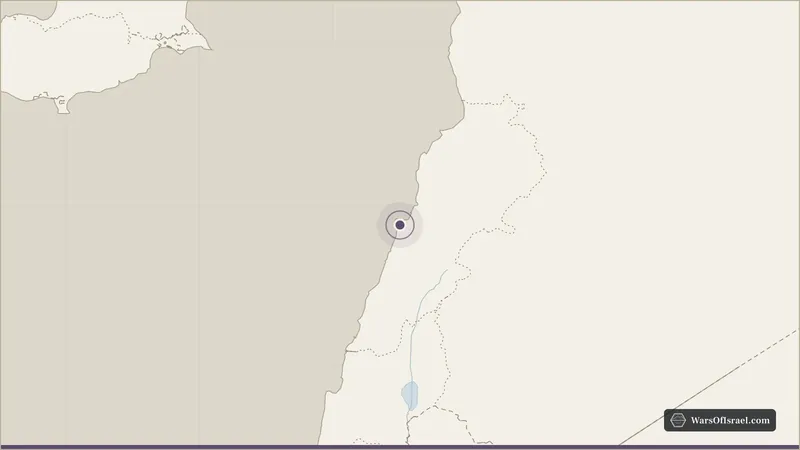
Violence continued. After Hamas kidnapped and murdered the Border Police officer Nissim Toledano in December 1992, the government deported 415 activists of Hamas and Islamic Jihad to southern Lebanon, where they spent most of a year in a tent camp at Marj al-Zuhur before being allowed to return. In parallel, secret talks between Israeli and PLO representatives in Norway produced the Declaration of Principles, signed on the White House lawn on September 13, 1993. The two sides recognized each other, and the PLO committed itself to ending the uprising. That date is usually taken as the end of the first intifada.
What it cost
According to B'Tselem's statistical tables, from December 9, 1987 to September 13, 1993, Israeli security forces killed 1,070 Palestinians in the territories, 237 of them minors, and Israeli civilians killed another 54. The full tables are available in B'Tselem's first intifada statistics (opens in a new tab). B'Tselem counted 179 Israelis killed by Palestinians in the same period; Israeli official figures put the number at 200. These figures do not include the Palestinians killed by other Palestinians. Estimates of the number of Palestinians arrested at some point during the uprising run into the tens of thousands, and figures differ widely between sources.
Behind the numbers lay a deeper shift. The uprising brought the 1967 lines back into the Israeli consciousness: for many Israelis the West Bank and Gaza had become, during the uprising, places where they no longer went. It persuaded part of the Israeli political and military establishment, Rabin above all, that the territories could not be held indefinitely at an acceptable price, and it gave the Palestinians in the territories a political weight they had not had before. At the same time it gave birth to Hamas, which rejected the Oslo agreement and would challenge it with suicide bombings within a few years. Historians still disagree on how much the uprising itself produced Oslo, and how much it was the end of the Cold War, the Gulf War and the weakness of the PLO. Most agree that without the intifada the path to Oslo would have looked very different.
The first intifada also left a legacy of language and memory. The word itself, Arabic for "shaking off," entered Hebrew and English. The second intifada, which broke out in September 2000, was far more lethal and was waged mainly with firearms and suicide bombings, and its memory has to some extent overshadowed the first. For the generation of Israeli soldiers who served in Gaza and Nablus between 1987 and 1993, and for the generation of Palestinians who grew up in the camps during those years, the first intifada remained a defining experience.
Timeline
- November 25, 1987: A PFLP General Command gunman on a hang glider kills six Israeli soldiers near Kiryat Shmona.
- December 8, 1987: An Israeli truck collides with Palestinian laborers' cars near the Erez checkpoint, killing four.
- December 9, 1987: Protests in the Jabalia camp mark the start of the uprising, which spreads within days.
- December 1987: Leaders of the Muslim Brotherhood in Gaza, among them Sheikh Ahmad Yassin, found Hamas.
- April 16, 1988: Khalil al-Wazir (Abu Jihad) is killed in Tunis by Israeli commandos.
- July 31, 1988: King Hussein announces Jordan's disengagement from the West Bank.
- November 15, 1988: The Palestine National Council in Algiers proclaims a Palestinian state.
- October 30, 1991: The Madrid Peace Conference opens.
- December 1992: Israel deports 415 Hamas and Islamic Jihad activists to southern Lebanon.
- September 13, 1993: Israel and the PLO sign the Oslo Declaration of Principles in Washington.