Military operationEarly statehoodReference entry
Operation Black Arrow in Gaza (1955)
A three-hour night raid on an Egyptian base near Gaza became the bloodiest clash between Israel and Egypt since 1949, and historians still argue over what it set in motion.
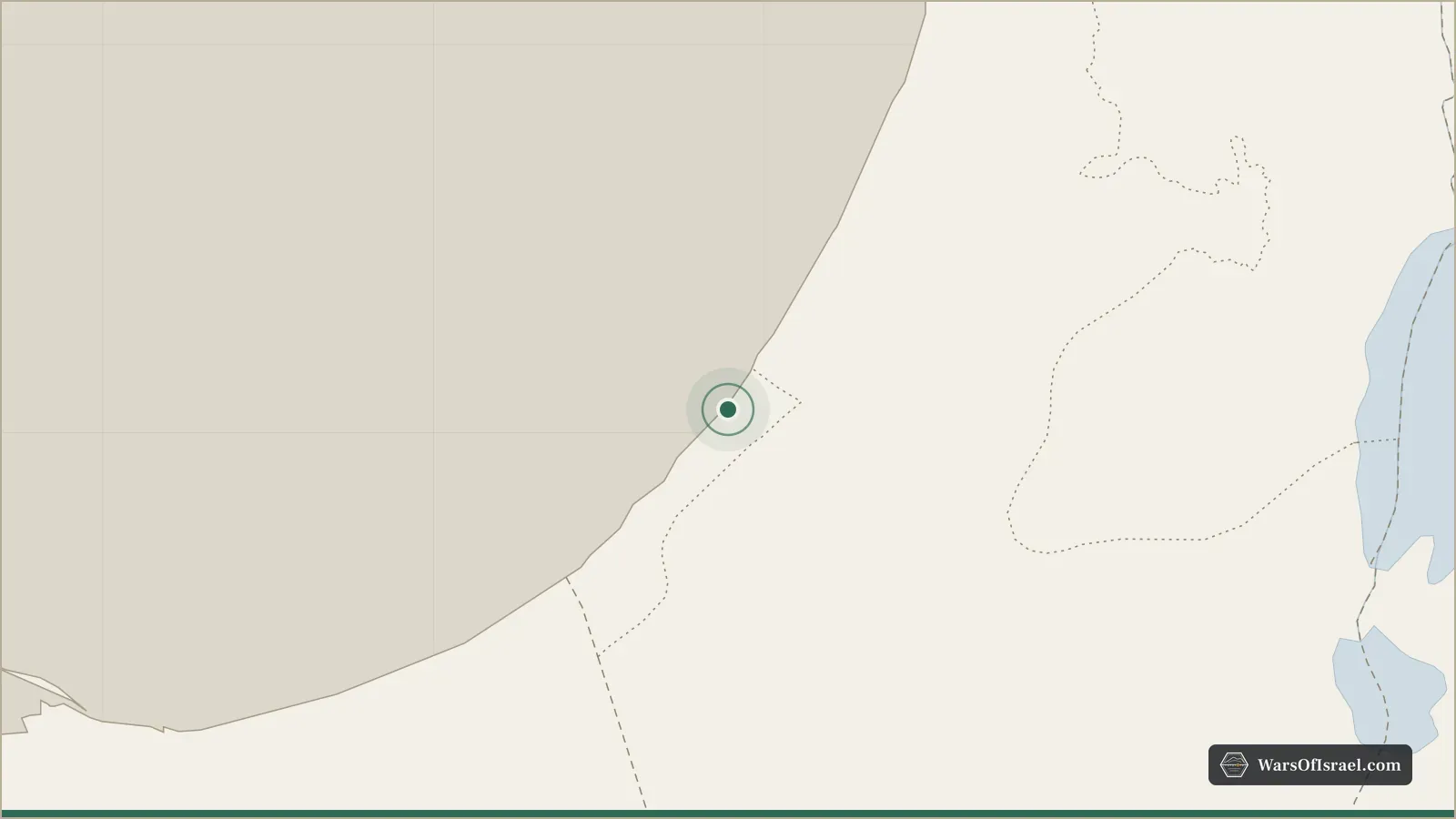
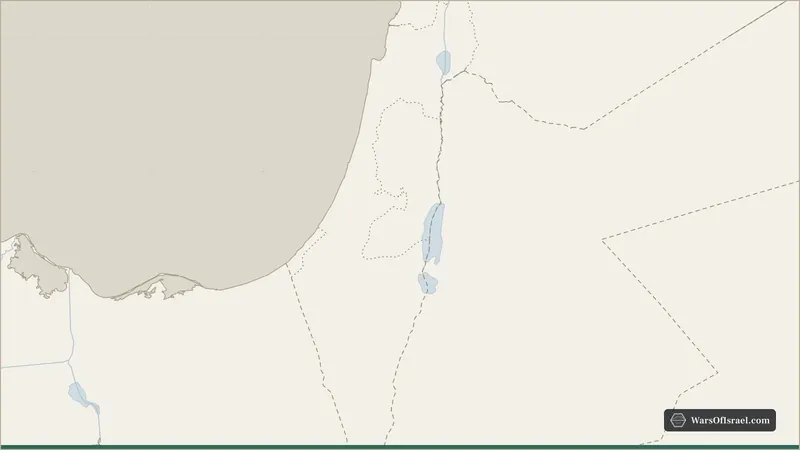
On the night of February 28, 1955, about 150 Israeli paratroopers crossed the armistice line into the Egyptian-held Gaza Strip and attacked an Egyptian army base near Gaza's railway station. In about three hours of fighting they blew up the base's headquarters and ambushed a relief column. Operation Black Arrow (Mivtza Hetz Shahor) killed 37 or 38 Egyptians, according to different counts, and eight Israeli soldiers. It was the most serious clash between Israel and Egypt since the 1949 armistice, and it marks the moment the retribution operations turned from Jordan to Egypt.
Background: a quiet border turns hot
From 1949 to 1954 the Gaza line was not quiet, but it was less deadly than the Jordanian frontier. Benny Morris counts seven or eight Israelis killed by infiltrators from Gaza each year in that period. The Egyptian authorities, by most accounts, tolerated rather than directed the crossings, and in Cairo the new military government of Gamal Abdel Nasser was preoccupied with negotiating the British withdrawal from the Suez Canal zone.
Several things changed in early 1955. In January, Egypt hanged two Egyptian Jews convicted in the failed Israeli sabotage operation known as the Lavon affair, causing anger in Israel. In mid-February, David Ben-Gurion returned from retirement to become defense minister under Prime Minister Moshe Sharett. Days later, on February 23, a group of infiltrators broke into an Israeli government building near Rishon LeZion and stole documents, and on February 25 the same group killed a civilian near Rehovot. One of them, killed by Israeli forces, carried papers that Israeli intelligence said linked the group to Egyptian military intelligence.
The raid
Ben-Gurion and Chief of Staff Moshe Dayan won Sharett's approval for a strike on an Egyptian military target. The operation was carried out by the Paratroop Brigade, under the overall command of Ariel Sharon, with forces led by Aharon Davidi and Danny Matt. The main force attacked the base, a camp of the Egyptian army near the railway station south of Gaza City, and demolished its buildings. A second force ambushed an Egyptian truck convoy rushing reinforcements to the scene, which caused many of the Egyptian casualties.
The casualty figures are close but not identical. Israeli losses were eight soldiers killed. Spencer Tucker's encyclopedia gives 38 Egyptians killed, while the figures of the Mixed Armistice Commission, cited by Israeli researcher Hesi Karmel, are 36 soldiers and 2 civilians killed and 29 soldiers and 2 civilians wounded. The raid was larger and bloodier than Sharett had expected, and he recorded his dismay in his diary.
Consequences and the debate
The UN Security Council unanimously condemned the attack in resolution 106 of March 29, 1955, a text introduced by the United States, Britain and France. The text of resolution 106 (opens in a new tab) condemns the raid as a violation of the ceasefire provisions of resolution 54 (1948) and warns that deliberate violations threaten the armistice agreement.
The larger question is what the raid caused. Nasser later presented it as a turning point that showed him Egypt's weakness and drove him to seek modern weapons; in September 1955 he announced the Czechoslovak arms deal. Egyptian military intelligence also organized fedayeen units in Gaza, whose raids in the summer of 1955 raised the toll of Israelis killed from Gaza to 48 that year, according to Morris. Historians such as Avi Shlaim see Black Arrow as a pivotal mistake that radicalized Egyptian policy. Others argue that Nasser was already seeking arms and a regional role, and that the raid gave him an argument more than a reason.
What is not in dispute is the escalation that followed. Israeli raids on Khan Yunis in August 1955 and at Nitzana in November were larger still, and the cycle on the Egyptian border led, a year and a half after Black Arrow, to the Sinai campaign of 1956. A memorial to the paratroopers' operations, Black Arrow among them, stands near Kibbutz Mefalsim, facing Gaza.