Military operationWar of Independence
Operation Yoav (1948)
The October 1948 offensive that cut through the Egyptian army's east and west wings, opened the road to the Negev settlements and captured Beersheba.
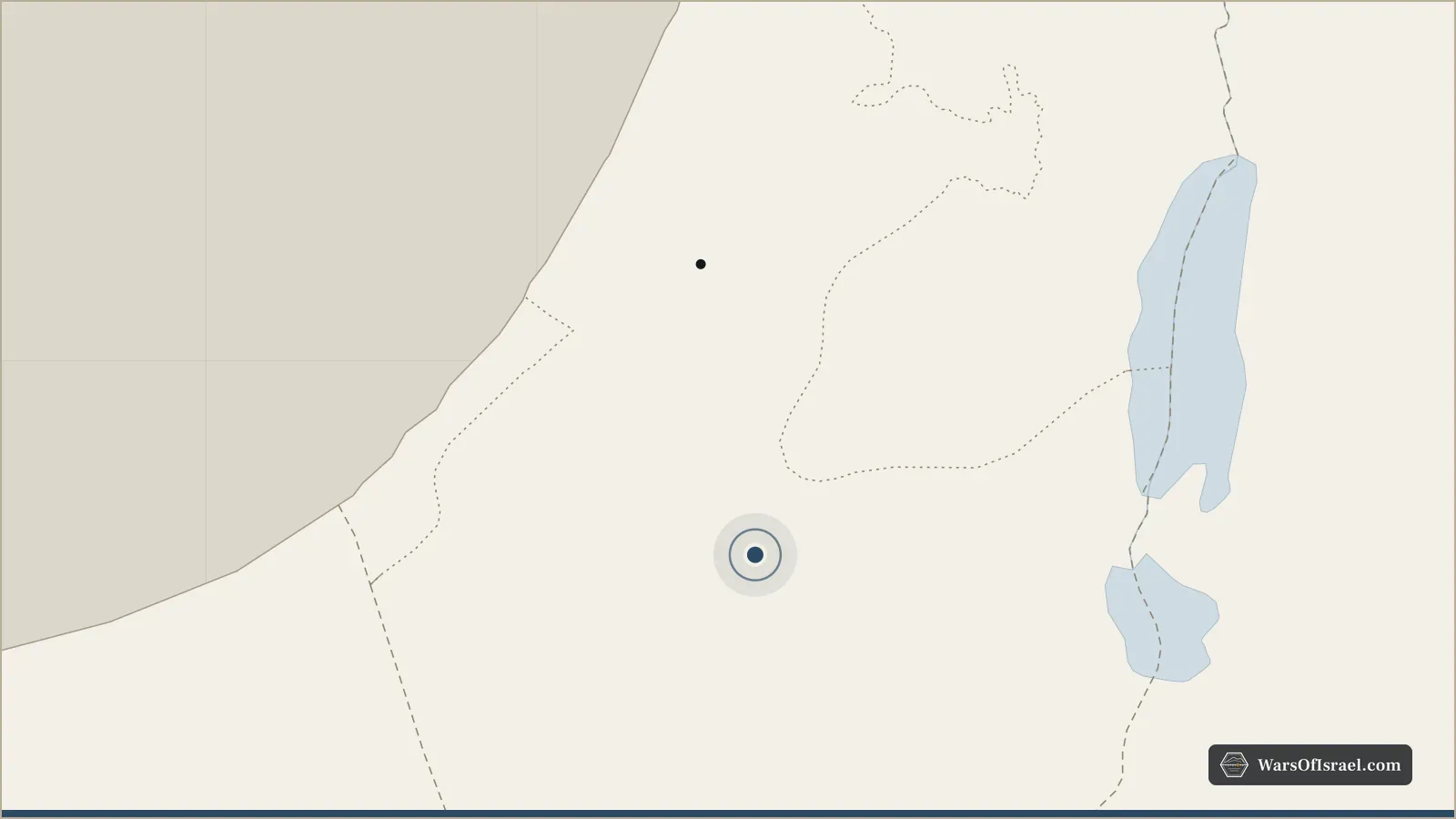
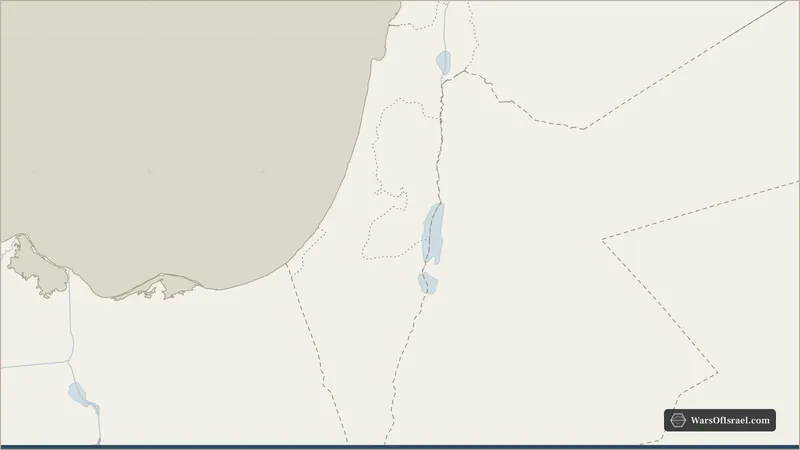
Operation Yoav was the offensive with which Israel broke the Egyptian army's hold on the northern Negev. It began on October 15, 1948 and ran officially until a UN ceasefire at 15:00 on October 22, with fighting on the coast continuing into early November. In that week, forces under Yigal Allon cut the Egyptian lines in two, captured the Huleiqat positions that had blocked the road south, took Beersheba on October 21 and left an Egyptian brigade of about 4,000 men surrounded at Faluja. The operation decided the war in the south and set the frame for the armistice with Egypt in 1949.
The Negev cut off
When the Egyptian army entered the country on May 15, 1948, it advanced along two axes: up the coast through Gaza toward Ashdod, and inland through Beersheba and Hebron toward Bethlehem. Over the summer it also dug in along an east to west line from Majdal on the coast through Iraq Suwaydan and Faluja to Beit Guvrin. That line separated the Israeli center from the two dozen Jewish settlements of the Negev, among them Negba, which had held out against Egyptian assaults in May and July. Battles such as Yad Mordechai and Nitzanim had shown how exposed the southern settlements were.
The truce terms allowed Israeli convoys to pass through the Egyptian lines to supply the Negev, but the Egyptians repeatedly blocked them. Supplies went by air instead, on a small scale. Meanwhile the UN mediator, Count Folke Bernadotte, proposed in September that the Negev be given to the Arab side. The Israeli leadership concluded that only a military decision would keep the Negev, and the Cabinet approved an offensive, at first code-named "Ten Plagues", on October 6.
The operation's final name honored Yitzhak Dubno, a Palmach officer known by the code name "Yoav", who planned the defense of Negba and Yad Mordechai and was killed in an air raid on Negba.
Forces and plan
Allon, now commander of the Southern Front, had the largest force yet assembled by the Israel Defense Forces in one theater: - the Givati Brigade; - the Yiftach Brigade, brought south after Operation Danny; - the Negev Brigade, already inside the Negev pocket; - an armored battalion of the 8th Brigade, a large artillery group and the air force; - from October 18, the Oded Brigade as reinforcement.
On the other side stood the Egyptian expeditionary force, several brigades strong, with its weight on the coast and in the Faluja area. The plan was to drive a wedge between the Egyptian coastal and inland wings, open a corridor to the Negev settlements, and then destroy the separated forces piece by piece.
The course of the offensive
The convoy and the air strikes
On October 15, a supply convoy was sent toward the Negev and came under fire as it passed the Egyptian positions. The incident was the signal. That evening Israeli aircraft bombed Egyptian airfields and bases at Gaza, Majdal, Beersheba and Beit Hanoun. In the following nights, Yiftach units mined the coastal railway and road near Beit Hanoun to threaten the Egyptian line of retreat, while Givati attacked toward the crossroads east of Iraq Suwaydan to cut the road between Faluja and Beit Guvrin.
Huleiqat
The key to the Negev was the Huleiqat ridge, a fortified complex of hills dominating the road to the south. Earlier Israeli attempts to clear the area had not succeeded. On the night of October 19 to 20, Givati attacked it again and, after hard fighting at close quarters, captured it. The corridor to the Negev was open. Israeli losses at Huleiqat were heavy; the exact figure varies between Israeli accounts.
Beersheba
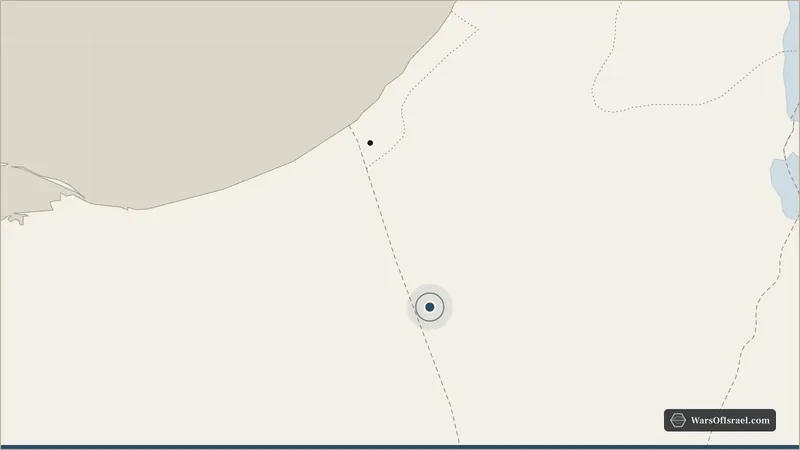
Allon then turned southeast. In Operation Moshe, the opening move of which began at 04:00 on October 21, the Negev Brigade's 7th and 9th battalions and the 89th Battalion of the 8th Brigade attacked Beersheba, held by about 500 Egyptian soldiers, according to Morris. The garrison collapsed within hours and the police station surrendered that morning. Morris records about 120 Egyptian prisoners. Most of the town's civilian residents had already fled toward the Hebron hills.
At sea and on the coast
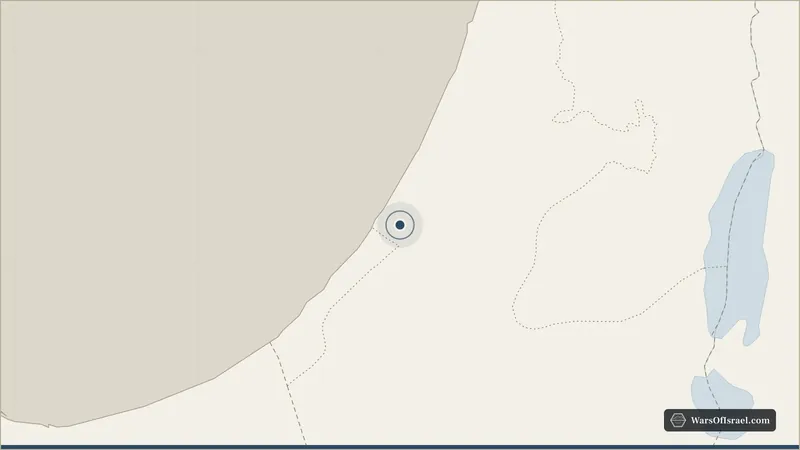
On the evening of October 22, a few hours after the ceasefire came into effect on land, the navy's sabotage unit under Yohai Bin-Nun attacked the Egyptian flagship El Amir Farouq off Gaza with explosive motorboats and sank it. A minesweeper beside it was badly damaged. The fighting on the coast went on after the ceasefire. The Egyptians abandoned Isdud (Ashdod) on October 28 and Majdal on November 4 to 6, after which Israeli troops took the coastal strip down to Yad Mordechai. The police fortress at Iraq Suwaydan, which had beaten off several Israeli attacks, was taken on November 9 and renamed Metzudat Yoav.
The Faluja pocket and the ceasefire
The UN Security Council called for a ceasefire, which took effect on October 22, and on November 4 adopted Resolution 61. It called on the parties to withdraw forces that had advanced beyond the positions held on October 14, a demand Israel did not carry out (the text of Resolution 61 (opens in a new tab) is published by the US Office of the Historian). Ralph Bunche, acting mediator after Bernadotte's assassination in September, noted that the Israeli action could hardly be explained as simple retaliation.
The ceasefire left an Egyptian brigade of about 4,000 soldiers, commanded by the Sudanese-born Brigadier Sayed Taha, surrounded in the "Faluja pocket" around Faluja and Iraq al-Manshiyya. Among its officers was a young major named Gamal Abdel Nasser. The brigade held out through the winter and left with its weapons only under the armistice of February 1949. Nasser later wrote, in The Philosophy of the Revolution (1954), that the months under siege had sharpened his conviction that the real enemy was the government in Cairo that had sent the army into the war unprepared. Four years after Faluja he was among the leaders of the Free Officers' coup of July 1952, which brought down the monarchy.
The operation had a civilian side as well. A UN refugee report recorded the refugee population in the Gaza area rising from about 100,000 to 230,000 after the offensive. On October 29, soldiers of the 8th Brigade killed villagers at al-Dawayima, in the Hebron hills, an event documented by Morris from Israeli records; estimates of the dead range from about 80 to more than 200.
Outcome and significance
Yoav changed the strategic map of the south. The Negev settlements were joined to the rest of Israel, Beersheba became an Israeli town, and the Egyptian army was split between the Gaza coast and the Hebron hills. Militarily, it was also the first time the young army had combined infantry brigades, armor, artillery, air strikes and a naval raid in a single plan on one front, under a single commander, against a regular army rather than irregulars or a token garrison. Allon asked to continue into the Hebron hills and toward Jericho; David Ben-Gurion refused, largely because he feared British intervention under its treaty with Jordan.
The operation also prepared the next round. Two months later, in Operation Horev, Allon set out to finish the Egyptian army in the south, and in March 1949 Operation Uvda carried the Israeli flag to the Red Sea. For the 1947 to 1949 war as a whole, Yoav marked the point where the initiative in the south passed decisively to Israel.
Timeline
- October 6, 1948: The Israeli Cabinet approves the southern offensive.
- October 15, 1948: A convoy comes under fire; Israeli aircraft strike Egyptian bases and the operation begins.
- October 19, 1948: Givati attacks the Huleiqat positions, capturing them by October 20.
- October 21, 1948: Israeli forces capture Beersheba.
- October 22, 1948: A UN ceasefire takes effect at 15:00; that night the navy sinks El Amir Farouq.
- October 28, 1948: Egyptian forces abandon Isdud.
- November 4, 1948: The Security Council adopts Resolution 61.
- November 9, 1948: Israeli forces take the Iraq Suwaydan police fortress.