Military operationLebanon and the first intifada
Operation Litani (1978)
How a retaliation for the Coastal Road massacre became Israel's first large ground operation in Lebanon, produced UNIFIL and left a border zone that shaped the next two decades.
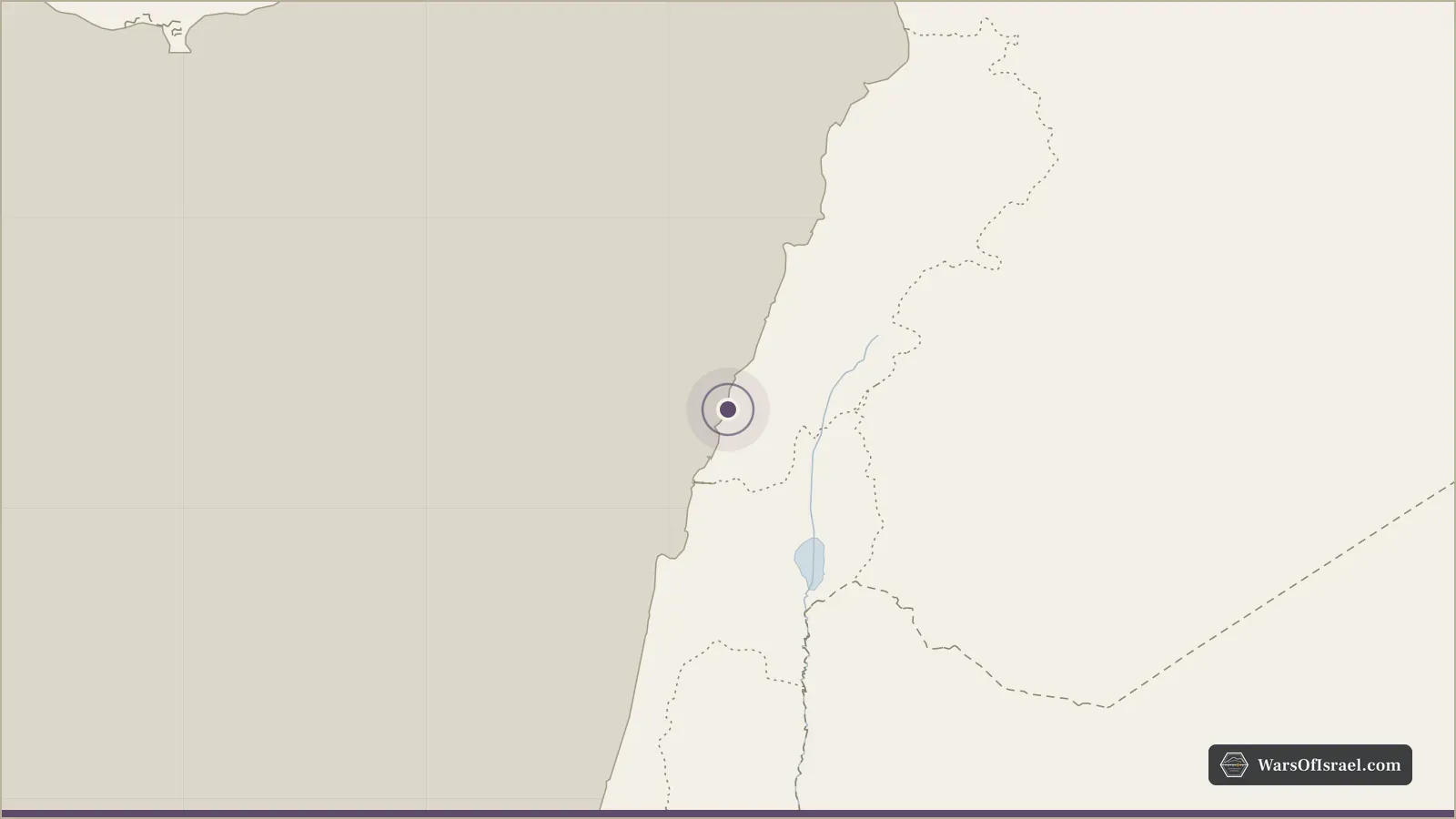
Operation Litani was Israel's first large ground invasion of Lebanon. On the night of March 14 to 15, 1978, three days after the Coastal Road massacre, about 25,000 IDF soldiers crossed the border to drive the forces of the Palestine Liberation Organization away from the frontier. Within a week they held almost all of southern Lebanon up to the Litani River, except the city of Tyre. The operation killed hundreds of PLO fighters and, by most estimates, around a thousand or more civilians, displaced well over 100,000 people and brought the United Nations into southern Lebanon to stay. When the IDF left on June 13, 1978, it handed the border strip not to UN peacekeepers but to the Christian-led militia of Major Saad Haddad, an arrangement that pointed straight toward the 1982 Lebanon War.
Background: the PLO in southern Lebanon
After the PLO was expelled from Jordan in 1970 and 1971, its armed factions rebuilt their main base in Lebanon. The 1969 Cairo Agreement had already given them a measure of freedom to operate from Lebanese soil, and the collapse of the Lebanese state into civil war from 1975 removed almost every restraint. In the south, the area that Israelis called "Fatahland" became a launching ground for rocket fire on Galilee towns and for infiltrations such as the attack at Ma'alot in 1974.
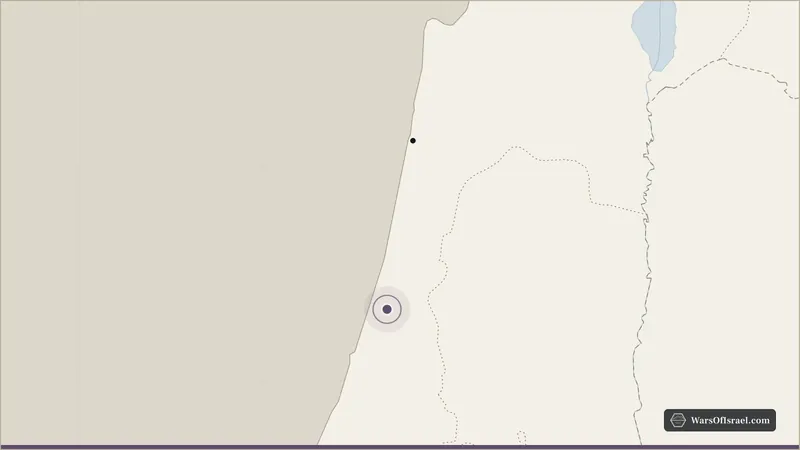
Israel had answered for years with air strikes and short raids, which punished the PLO without removing it from the border. It had also begun, from 1976, to support Christian and other local militias along the border, through a policy known as the "Good Fence." The Coastal Road attack of March 11, 1978, in which 38 Israeli civilians were killed according to the IDF and Defense Establishment Archives, convinced the government of Menachem Begin that a far larger blow was required.
Goals and forces
The declared goal was to destroy the PLO's infrastructure in a security belt along the border and to remove the threat to northern Israel. Defense Minister Ezer Weizman and Chief of Staff Mordechai Gur directed a force of infantry, armor and paratroopers estimated at about 25,000 soldiers, supported by the air force and the navy.
On the other side stood PLO factions, chiefly Fatah but also smaller groups, organized in bases, villages and refugee camps rather than in a front line. Their strength in the south at the time is not reliably documented, and published figures vary. The Lebanese army barely existed as a fighting force in the area, and Syrian troops, deployed in Lebanon since 1976, stayed out of the fighting.
The course of the operation
The first belt
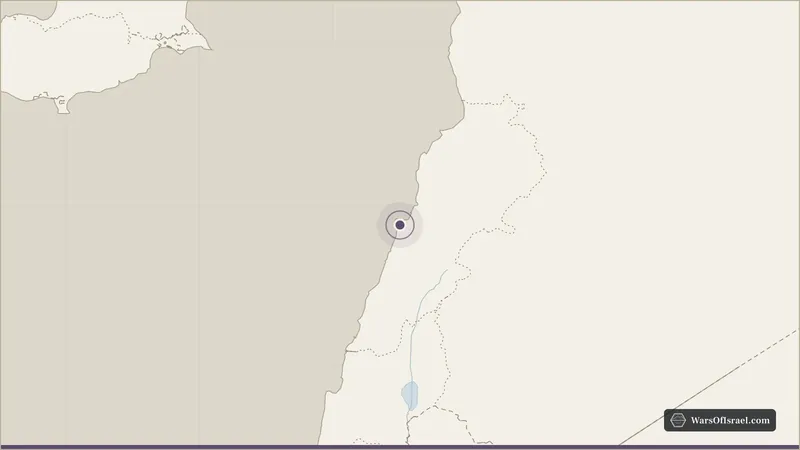
In the first stage, the IDF seized a belt about 10 kilometers deep along the whole border, from the coast near Naqoura to the slopes of Mount Hermon. Many PLO fighters withdrew north rather than fight for fixed positions, and the advance met scattered resistance. Israeli artillery and air strikes hit areas from which fire came and suspected bases, including villages and the outskirts of refugee camps.
To the Litani
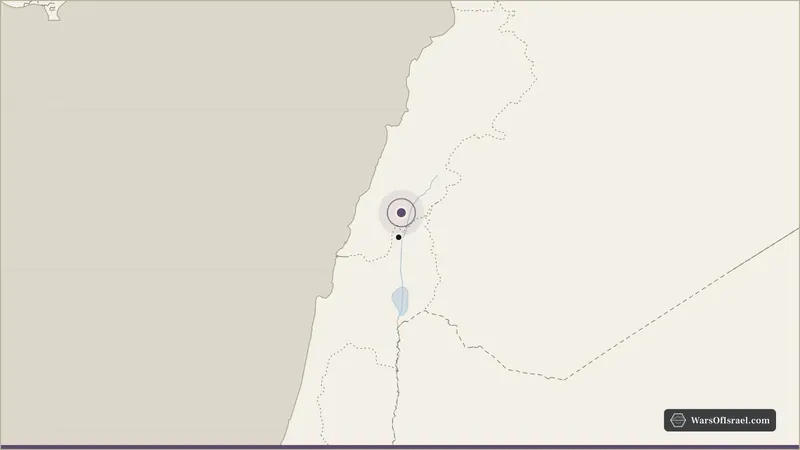
Within days the government decided to widen the operation. Forces pushed north to the Litani River, and paratroopers seized bridges over the river in an effort to cut off retreating fighters. Within about a week Israel controlled almost all of southern Lebanon south of the Litani. Tyre, with its large refugee camps and a strong PLO presence, was left outside the occupied area. Israel then declared a halt, and the PLO leadership ordered its own ceasefire after a meeting on March 28 between UNIFIL's commander, Major General Emmanuel Erskine, and Yasser Arafat.
The human cost
Casualty figures for Operation Litani remain estimates, and sources differ widely:
- Israeli losses are usually given as about 18 to 20 soldiers killed and more than 100 wounded.
- The IDF reported several hundred PLO fighters killed, with figures commonly ranging from about 300 to 550.
- Augustus Richard Norton, a scholar of Lebanon's Shiite community, estimated about 1,100 deaths in total, most of them Lebanese and Palestinian civilians; other writers give figures around 2,000.
- Estimates of the number displaced range from about 100,000 to 250,000, many of them Shiite villagers who fled north toward Beirut.
The destruction hit the Shiite south hardest, and the flight north fed the political awakening of that community, a development that historians such as Norton connect to the later rise of Amal and, after 1982, of Hezbollah.
The operation also produced the best-known disciplinary case of its time in the IDF. A military court convicted an officer, Daniel Pinto, of killing Arab detainees during the fighting, and the later reduction of his sentence by Chief of Staff Rafael Eitan drew sharp public criticism in Israel. The affair became a reference point in Israeli debates on the limits of military conduct and on how commanders treat proven crimes by their own soldiers.
The United Nations and the Haddad zone
On March 19, 1978, the UN Security Council adopted Resolution 425, calling on Israel to cease its military action and withdraw from all Lebanese territory, and Resolution 426, establishing the United Nations Interim Force in Lebanon (UNIFIL). The first peacekeepers arrived on March 23, according to UNIFIL's own account of its origins (opens in a new tab). The United States backed the resolutions, and the Carter administration also objected that Israel had used American-supplied cluster munitions in violation of the terms under which they were provided.
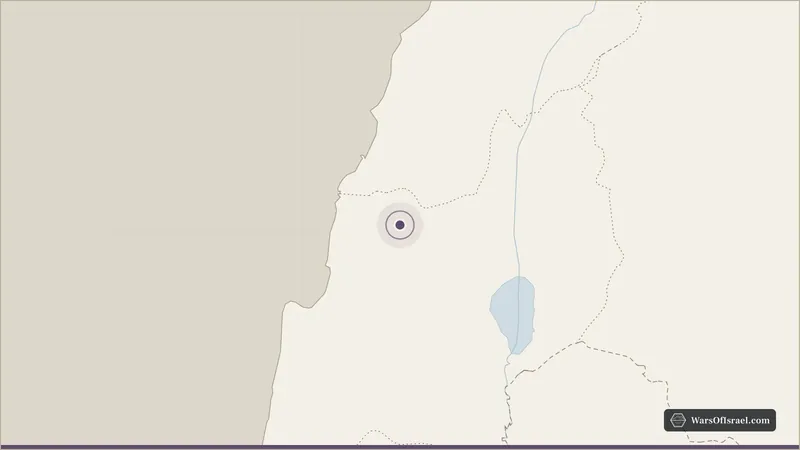
Israel withdrew in stages through April and May. In the final stage, on June 13, 1978, it did not hand the remaining border strip to UNIFIL. According to the report of the UN Secretary-General on UNIFIL's first months, the IDF formally turned over those areas to the Lebanese "de facto forces" led by Major Haddad, whom Israel regarded as a legitimate representative of the Lebanese army. The UN considered this a failure to complete the withdrawal that Resolution 425 required.
Consequences
Militarily, Operation Litani pushed the PLO back for a time but did not break it. Within months its fighters were again active in the area between the Litani and the Haddad enclave, and rocket fire on the Galilee resumed. The operation thus solved neither the problem it was launched to solve nor the political vacuum of southern Lebanon. The Haddad militia, renamed the South Lebanon Army in 1980, became Israel's partner in the border zone, and UNIFIL, intended as an interim force, never left. Its initial strength of 4,000 troops was raised to 6,000 as early as May 1978, and in April 1979 Haddad proclaimed his enclave "Free Lebanon," a sign of how far the border strip had drifted out of the Lebanese state's control.
Politically, the operation tested the new relationship between the Begin government and the Carter administration at the very moment when Washington was pressing Israel and Egypt toward an agreement. Israel's acceptance of Resolution 425 and its staged withdrawal limited the damage, and three months after the last troops left, Israel and Egypt signed the Camp David Accords.
These outcomes framed the decision four years later to go much further, in the 1982 war, and the long period that followed in the security zone. Resolution 425 itself remained the international reference point until Israel's final withdrawal in May 2000, which the UN certified as compliance in June of that year.
Timeline
- March 11, 1978: The Coastal Road massacre: 38 Israeli civilians are killed.
- March 14, 1978: Israeli forces cross into southern Lebanon on the night of March 14 to 15.
- March 19, 1978: The Security Council adopts Resolutions 425 and 426, creating UNIFIL.
- March 23, 1978: The first UNIFIL troops arrive in southern Lebanon.
- March 28, 1978: The PLO leadership orders a ceasefire after Arafat meets UNIFIL's commander in Beirut.
- June 13, 1978: The IDF completes its withdrawal and hands the border strip to Saad Haddad's forces.