The battles of Latrun (1948)
Why a British police fort above the Jerusalem road became the scene of Israel's costliest failures of 1948, and how a dirt track around it saved the city anyway.
Latrun was the place where the new Israeli army kept losing. Between May 24 and July 18, 1948, Israeli forces attacked the hill and its British-built police fort five times, trying to dislodge Jordan's Arab Legion from the point where the road from Tel Aviv climbs into the Judean hills toward Jerusalem. None of the assaults succeeded, and the Legion held Latrun until 1967. According to Benny Morris, the five attacks cost Israel 168 dead. Yet the city they were meant to save was relieved all the same, by a rough track cut through the hills to the south that became known as the Burma Road. Latrun is therefore remembered both as a military defeat and as one of the founding stories of the state, and its memory has been argued over almost as fiercely as its slopes.
The key to the Jerusalem road
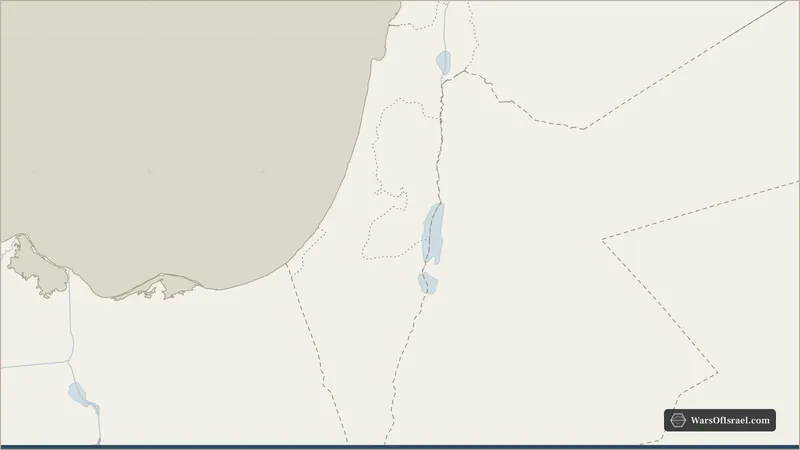
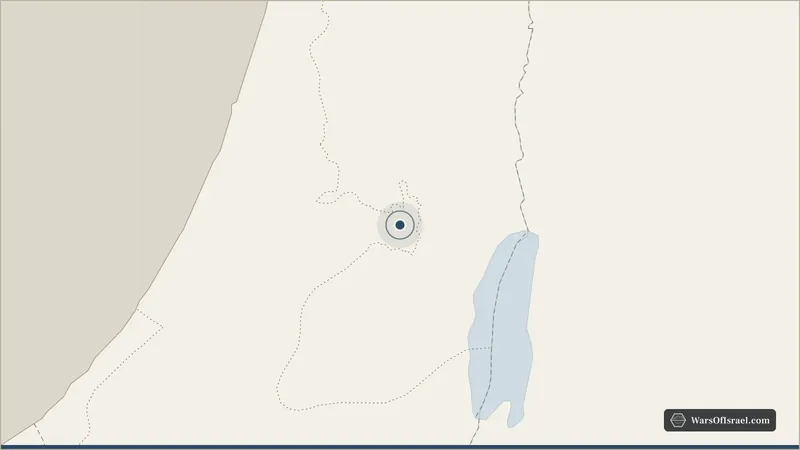
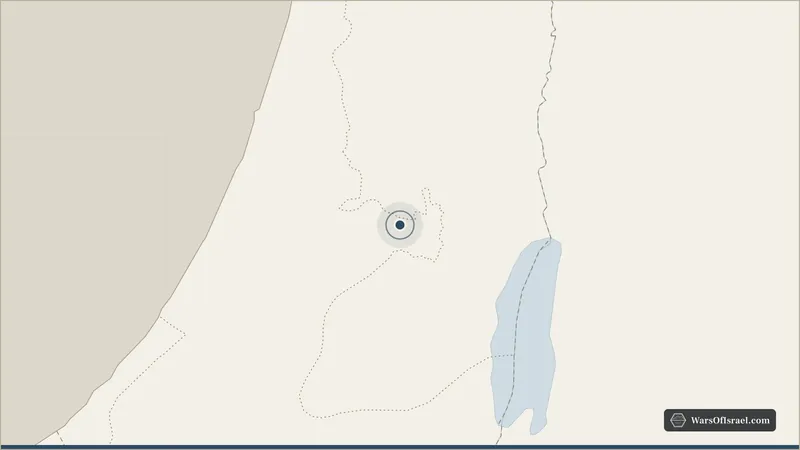
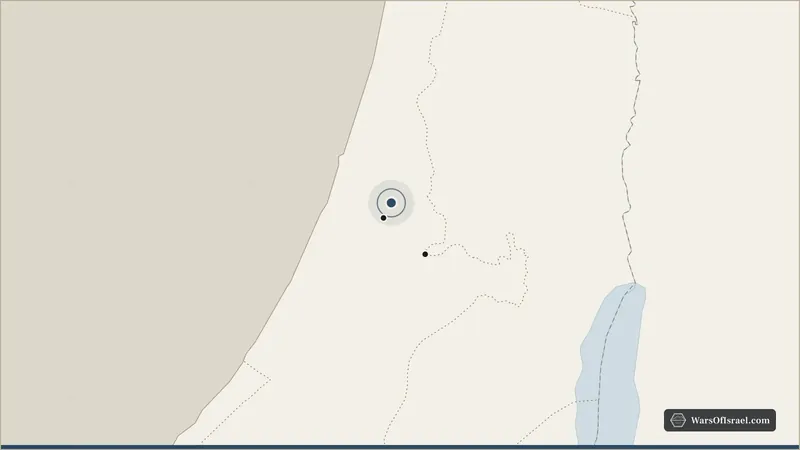
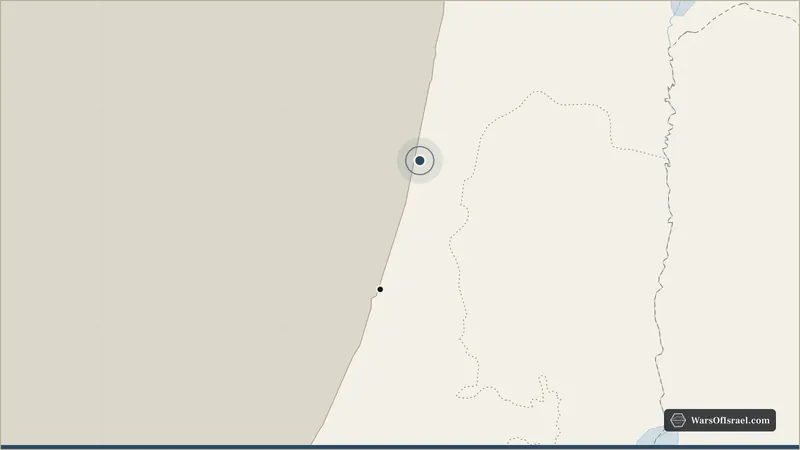
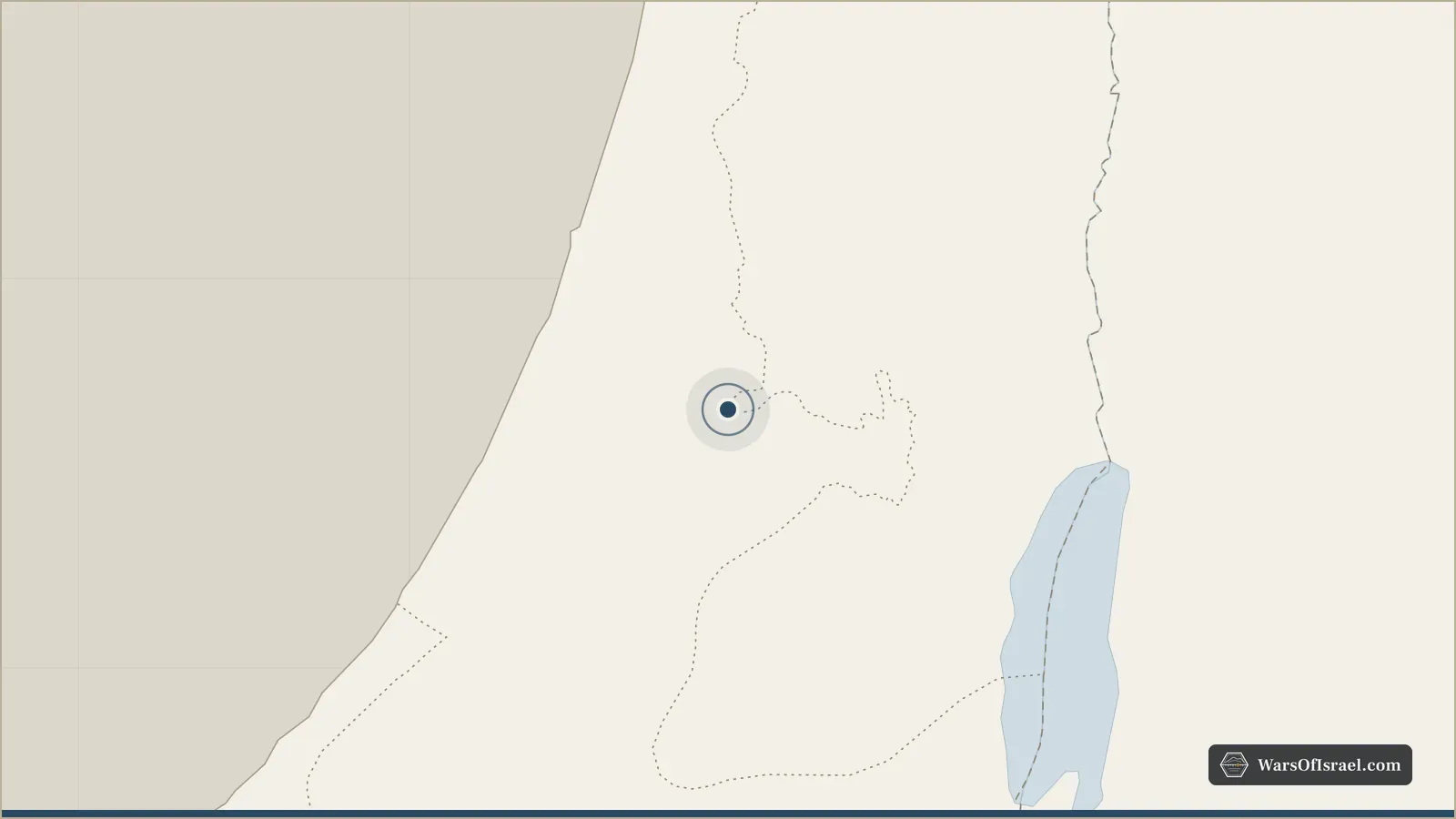
Latrun sits at the mouth of the Ayalon Valley, where the coastal plain meets the hills. The main road to Jerusalem passed directly below it, and whoever held the heights could close the road at will. After the Arab revolt of 1936 to 1939, the British built one of their fortified Tegart police stations there, along with a detention camp where leaders of the Yishuv, among them Moshe Sharett, were held in 1946. A Trappist monastery, founded in 1890, stood on the slope nearby.
By spring 1948 Jewish Jerusalem was under siege. Palestinian Arab forces had cut the road since early in the year, and convoys could pass only at heavy cost. Operation Nachshon in April had pushed several convoys through, but the road closed again. When the British left on May 14, the Arab Liberation Army withdrew from the Latrun area and a small Arab Legion force took over. Givati troops briefly entered the empty fort on May 15 but did not hold it. Within days the Legion's 4th Regiment, under Lieutenant Colonel Habis al-Majali, was dug in on the hill, and the road was blocked again from May 18.
The forces on each side
On the Israeli side, the campaign was fought by formations still being built. The 7th Brigade had been created only in May, under Shlomo Shamir, a veteran of the British Army. Its ranks included many recent immigrants, some of them Holocaust survivors who had arrived weeks or even days earlier. The first assault also used a battalion of the Alexandroni Brigade, and later attacks drew on Givati and on the Palmach's Harel and Yiftach Brigades. From late May, the Jerusalem front was commanded by David (Mickey) Marcus, an American volunteer and West Point graduate whom Ben-Gurion appointed with the rank of aluf and who used the name Stone.
The Arab Legion, commanded by the British officer John Bagot Glubb, was the best-trained Arab army of the war. At Latrun it held prepared positions with artillery support, and after May 23 it reinforced the sector with its 2nd Regiment, eventually committing a full brigade. The Legion's defensive advantage was decisive in every battle that followed.
The decision to attack came from the top. Jerusalem's leaders warned that the city could hold out only for a short time, and David Ben-Gurion ordered Latrun taken despite the objections of Yigael Yadin, the head of operations, who wanted to concentrate on the Egyptian threat in the south.
Five assaults
Bin Nun Alef, May 24 to 25
The first operation was named Bin Nun, after the biblical Joshua son of Nun, who fought in the Ayalon Valley. Planned in haste, it was delayed until after midnight, and the attacking battalions began their approach so late that daylight caught them in the open fields below the Legion's guns. The 32nd Battalion of Alexandroni and the 72nd Battalion of the 7th Brigade were pinned down in the heat, short of water, and retreat was ordered late in the morning of May 25. According to Morris, Israeli losses were 72 killed, 140 wounded and 6 captured. Among the badly wounded was a young platoon commander in the 32nd Battalion, Ariel Sharon.
Bin Nun Bet, May 30 to 31
The second assault was better prepared. The 7th Brigade's 73rd Battalion, an armored infantry unit with improvised armored vehicles and flamethrowers, attacked the police fort itself, and sappers blew in its gate. But the supporting infantry failed to follow through, and the attack collapsed under mortar fire. Morris counts 44 Israeli dead.
Yoram, June 8 to 9
The third attempt, Operation Yoram, was entrusted to the Palmach under Yigal Allon, with units brought from the Galilee. It hit the Legion's positions from the east on the night of June 8 to 9 and failed when the attacking companies lost direction in the dark. Morris records that one Harel battalion alone lost 16 dead and 79 wounded.
The July attacks
After the first truce, Israel tried twice more during Operation Danny. On the night of July 15 to 16, Harel attacked from the east and was repulsed. On July 18, hours before the second truce, two Cromwell tanks led a frontal assault on the fort that was called off that evening. Latrun stayed in Jordanian hands.
The Burma Road
While the battles were being lost, a Palmach patrol found a way around them. In late May soldiers walked a path from Hulda through the hills toward the Harel Brigade's positions, and on the night of May 31 to June 1 jeeps crossed it for the first time. Engineers began to widen it, and porters and mules carried loads over the steepest stretch until vehicles could manage it. Marcus supervised the work. On June 10 the road was opened to vehicles, the day before the first truce took effect, and it was completed on June 14; a water pipeline was later laid alongside it. Ben-Gurion's diary entry for June 10, preserved by the Ben-Gurion Archives (opens in a new tab), shows the other side of the ledger: a further attack on Latrun planned for that night could not go ahead, and he expected the hill to stay in Arab hands once the truce began.
Marcus did not live to see the result. On the night of June 10 to 11 he was shot by mistake by an Israeli sentry near his headquarters at Abu Ghosh.
Memory, myth and numbers
The legacy of Latrun has two layers. The first is military: the battles showed an army still learning to coordinate infantry, armor and artillery, and they confirmed the Legion's quality. At the 1949 armistice talks Israel asked in vain for the Legion to leave Latrun, and the road to Jerusalem had to be rerouted until Israel captured the area in the Six-Day War.
The second layer is memory. In the 1970s and after, a story spread that hundreds or even thousands of untrained Holocaust survivors had been thrown into a hopeless battle straight off the ships. Some accounts claimed up to 2,000 Israeli dead; Jordanian histories spoke of 400 to 800. Historian Anita Shapira, in her 1996 study of the battle's historiography, traced how this account grew and showed that immigrants were indeed present but that the larger figures had no basis in the record. Morris's total of 168 dead in all five assaults is the figure now most widely cited.
After 1967 the police fort became Yad La-Shiryon, the memorial and museum of the Armored Corps, a short drive from the battlefields of Jerusalem and part of the landscape of Israel's War of Independence.
Timeline
- May 14 to 15, 1948: The Arab Liberation Army withdraws from Latrun and an Arab Legion detachment takes over.
- May 18, 1948: The Legion's 4th Regiment blocks the road to Jerusalem.
- May 25, 1948: Operation Bin Nun Alef ends in retreat, with 72 Israeli dead according to Benny Morris.
- May 31, 1948: Operation Bin Nun Bet fails at the police fort.
- June 1, 1948: Jeeps first cross the route of the future Burma Road.
- June 9, 1948: Operation Yoram fails.
- June 10, 1948: The Burma Road opens to vehicles; that night Mickey Marcus is killed.
- June 11, 1948: The first truce takes effect.
- July 18, 1948: The last wartime attack on Latrun is called off.