ConflictEarly statehoodReference entry
The war over water (1964 to 1967)
Why a dispute over pipelines, canals and bulldozers on the Golan slopes became one of the fuses of the 1967 war.
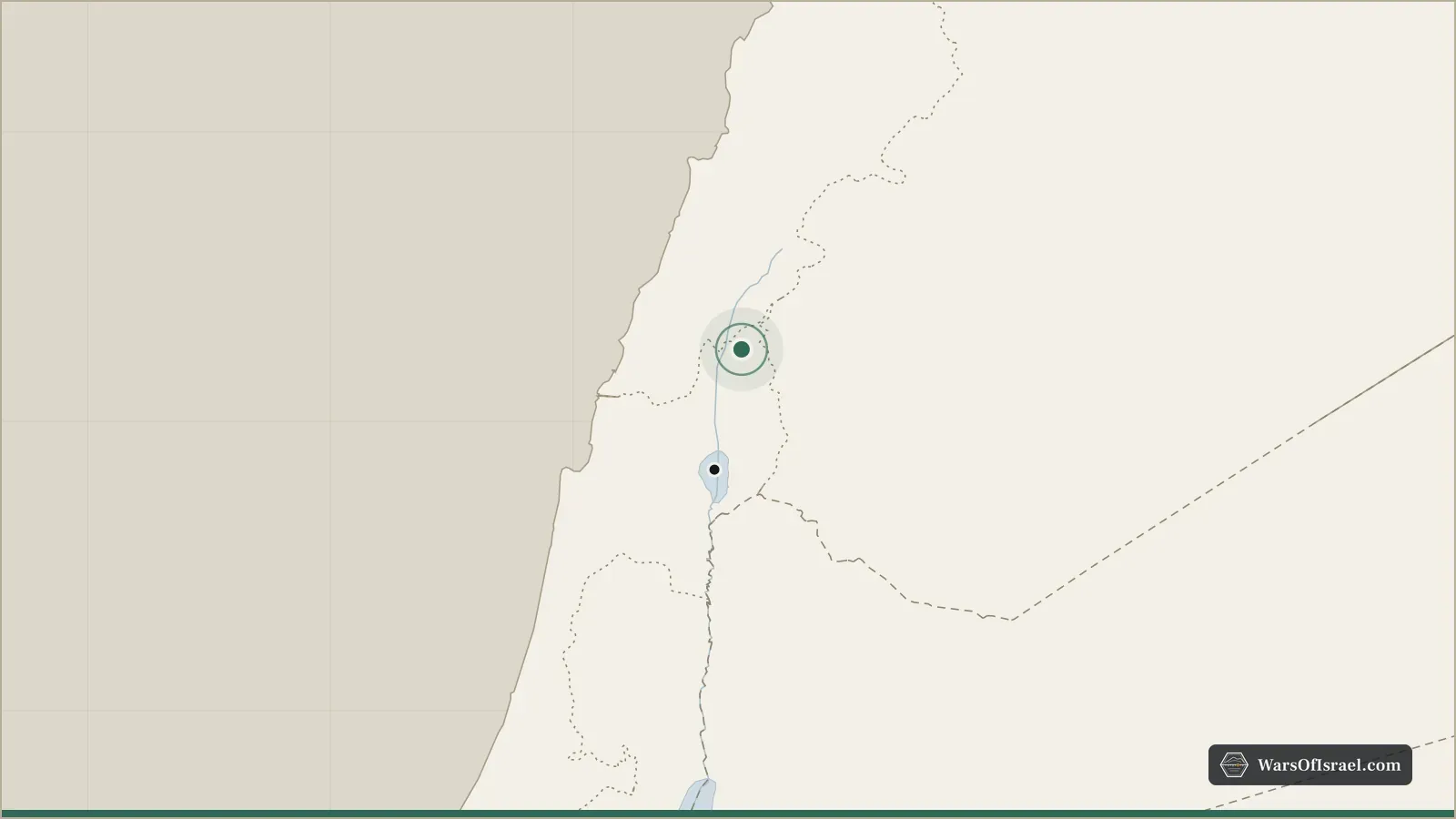
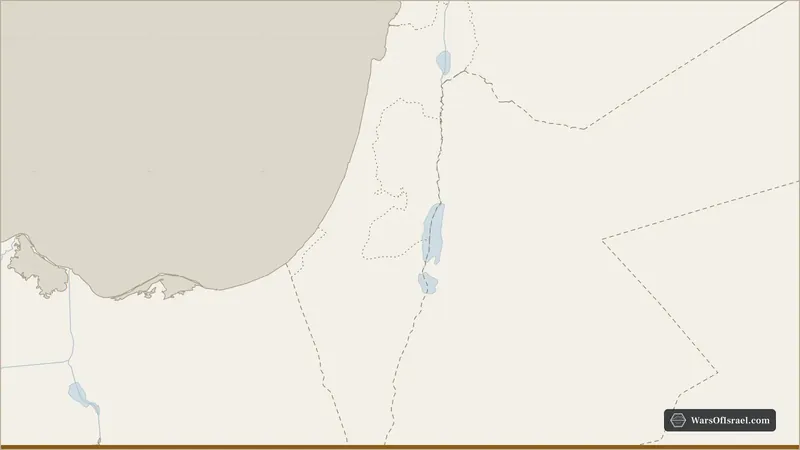
The war over water was a series of armed clashes between Israel and Syria from late 1964 to the spring of 1967, fought over the waters of the Jordan River. Israel had just completed its National Water Carrier, which pumped water from the Sea of Galilee to the center and south of the country. The Arab League answered with a plan to divert two of the Jordan's sources, the Hasbani and the Banias, before they reached Israel. Israel's response was to destroy the diversion works with tank fire, artillery and finally air strikes. The project was abandoned, but the confrontation on the Syrian border did not end, and it became one of the paths that led to the Six-Day War.
Background: one river, many claims
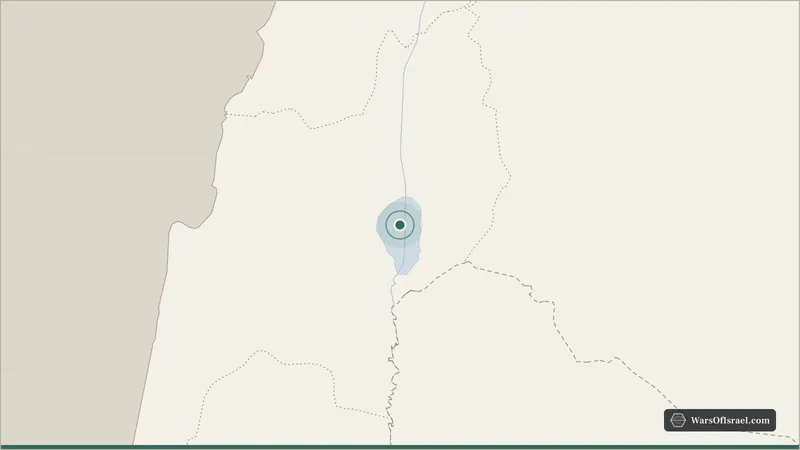
Its three main sources, the Dan rising inside Israel, the Hasbani flowing from Lebanon and the Banias from the Syrian-held Golan, join in the Hula valley and flow into the Sea of Galilee. In 1955 the American envoy Eric Johnston brokered a plan to share the waters among Israel, Jordan, Syria and Lebanon. Technical committees on both sides accepted it, but on October 11, 1955, the Arab League Council decided not to ratify it, unwilling to sign an agreement that implied recognition of Israel.
Israel's National Water Carrier, about 130 kilometers of canals, tunnels and pipelines, was designed to take Israel's share from the Sea of Galilee. Pumping began in June 1964. Arab governments saw it as a means of strengthening Israel, and stopping it became a test of Arab unity.
The diversion plan and the clashes
The first Arab League summit, held in Cairo on January 13 to 16, 1964, approved a proposal from Gamal Abdel Nasser to divert the Hasbani and the Banias, a step chosen over the immediate war that Syria demanded.
Work on the diversion canals began in Syria and Lebanon in 1965. Israel's leaders, Prime Minister Levi Eshkol and Chief of Staff Yitzhak Rabin, decided that the works must be stopped before they could take a significant share of the water, but they wanted to avoid a full war. The method chosen was precise long-range fire. Again and again, a dispute over Israeli patrols or farming near the border or the demilitarized zones drew Syrian fire, and Israeli tanks, firing across the line from long range, destroyed the Syrian tanks and the earth-moving equipment at the diversion sites. The first serious clash came in November 1964, near Tel Dan, and major incidents followed in March, May and August 1965. Syria moved the works farther east, out of tank range.
In July 1966 the Israeli Air Force struck the diversion works directly and shot down a Syrian MiG-21. Worn down by cost and repeated destruction, the Arab project was effectively abandoned. The Israeli Defense Ministry's archives describe the Syrian government's decision to thwart the carrier as one of the main causes of the escalation, in an online exhibition on the background to the Six-Day War (opens in a new tab).
From water to war
The water clashes overlapped with a second front. On the night of January 2, 1965, a squad of Fatah's military wing, al-Asifa, crossed into Israel and planted an explosive charge beside the National Water Carrier; it was found and defused before it went off. Fatah counts this as its first operation. In the following two years, Fatah raids from Syria and through Jordan and Lebanon grew more frequent, with the support of the radical Ba'ath regime that seized power in Damascus in February 1966. Israel answered both with raids, such as the Samu raid of 1966 in Jordan, and with pressure on Syria.
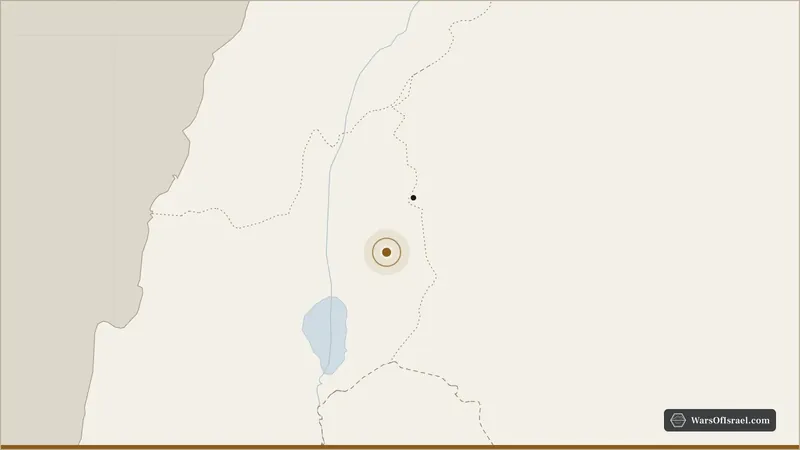
The confrontation peaked on April 7, 1967. Syrian positions opened fire on Israeli tractors working disputed land in the demilitarized zone, the exchange escalated to tanks and artillery, and Israeli Mirage jets shot down six Syrian MiG fighters, some of them over the outskirts of Damascus, according to Israeli figures. Syria acknowledged fewer losses. It humiliated Damascus. In May 1967, Soviet reports to Egypt that Israel was massing forces on the Syrian border, reports that proved false, helped prompt Nasser's moves in Sinai that led to war.
Outcome and significance
Israel achieved its immediate aim: the headwater diversion was never completed, and the carrier kept operating. The cost was a steady militarization of the northern border, where kibbutzim and moshavim in the Hula valley lived under the Syrian guns on the Golan slopes. The water war also shaped Israeli thinking about the Golan Heights. In the battles on the Golan Heights in June 1967, Israel captured the Banias springs and the plateau from which Syria had shelled the valley, and the control of water sources remained a factor in every later negotiation with Syria.