News
High Court asks for a return timetable for West Bank refugee camps, and the government answers that the army will stay
A clash between Israel's top court and its government over the northern West Bank camps emptied in 2025, set against a violent olive harvest.
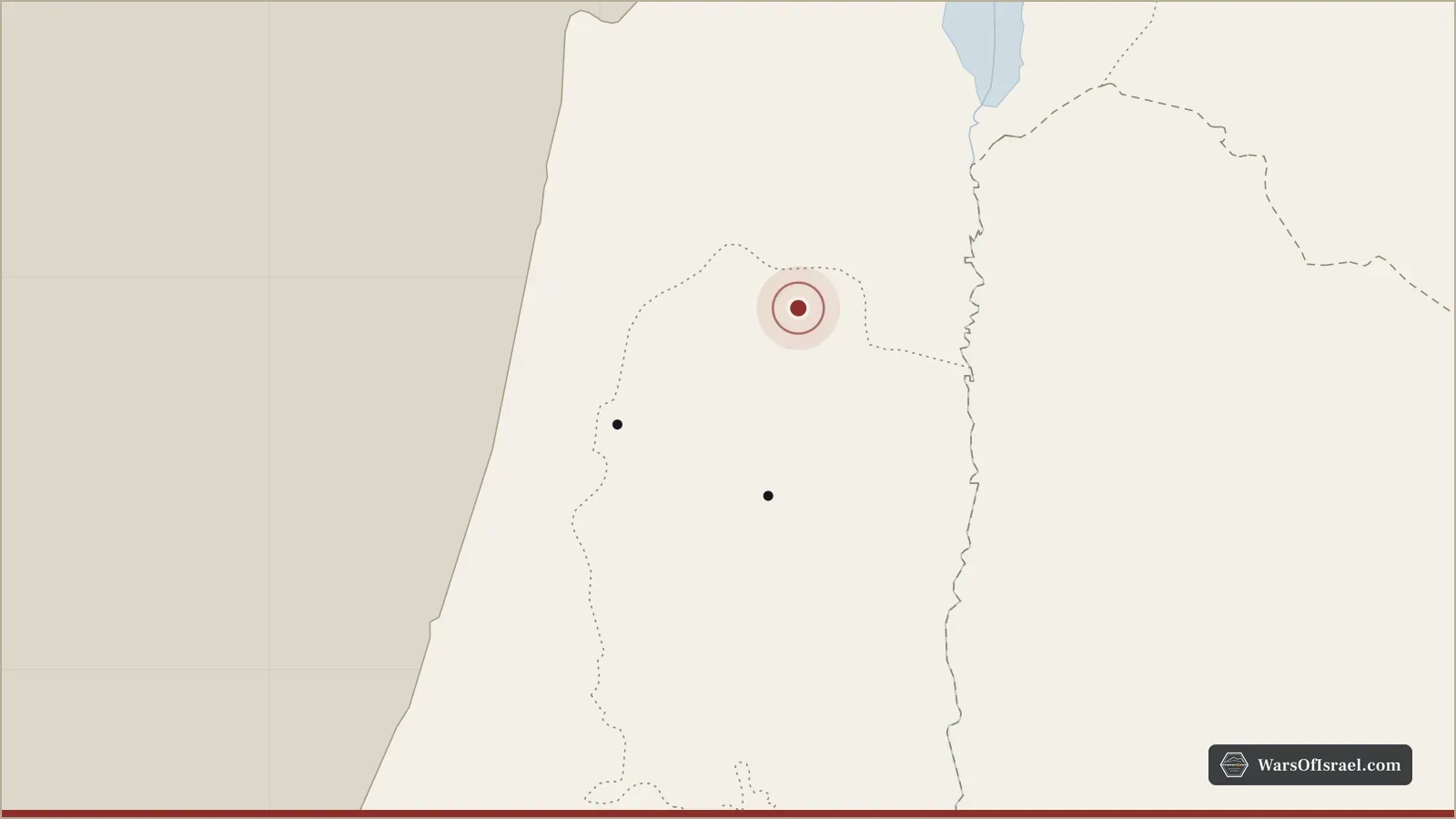
The three refugee camps of the northern West Bank that the Israel Defense Forces (IDF) emptied in early 2025 have become the subject of an open dispute between Israel's High Court of Justice and its government. On October 12, 2026, a three-justice panel ordered the state to present a timetable for the steps needed to let displaced residents return to the Jenin, Tulkarm and Nur Shams camps, while accepting that security conditions are not yet ripe for a return. The same evening Defense Minister Israel Katz called the army's presence in the camps "permanent" and said it was "not the High Court's business to intervene." As of October 18, 2026, the state's reply is due by November 23.
What the court decided
The facts of the ruling are reported consistently by Haaretz, the Times of Israel, VINnews and HNGN. The panel, made up of Supreme Court President Isaac Amit and Justices Alex Stein and Khaled Kabub, was ruling on petitions by camp residents and the Association for Civil Rights in Israel. It did not order an immediate return or a withdrawal of forces. It directed the Defense Ministry and the army to set out when the required measures could be completed, whether the process could be accelerated, and how humanitarian assistance is being provided to the displaced, in a supplementary update due on November 23, 2026.
The number of displaced people is an estimate, and the figures differ. Haaretz and HNGN cite about 33,000; Katz himself put the number at about 40,000, according to VINnews. HNGN reported that Palestinian and Israeli rights groups estimate 33,000 to 40,000.
The government's response
The political reaction was immediate. Finance Minister Bezalel Smotrich urged Prime Minister Benjamin Netanyahu and Katz to instruct the army not to cooperate with the court, according to the Times of Israel and HNGN. Katz, speaking on the evening of October 12, said the camps had become "terrorist strongholds," that the government had moved from repeated short raids to a sustained presence, and that he would not back down "even if it requires special legislative procedures in the Knesset," according to VINnews and HNGN. He also claimed that terrorism in the West Bank had fallen by 80 percent, to its lowest level ever; that figure is his claim and has not been independently verified.
On October 13, speaking at the seam line near Tulkarm in a video released by his office, Netanyahu said of the displaced: "These are not residents, these are terrorists," and that the army would remain in control, according to HNGN. The comments came two weeks before Israel's general election on October 27, 2026.
The operation behind the dispute
The camps were emptied during the IDF operation launched in the northern West Bank in January 2025, known as Operation Iron Wall, which followed the years of raids covered in the record on West Bank operations from 2022 to 2025. According to the military, its aim was to dismantle armed networks in the camps, which had become centers of armed activity since the Second Intifada and again in the years before the Israel-Hamas war. HNGN describes it as the largest operation in the area in two decades. Residents have not been allowed to return while the army remains.
The olive harvest and settler violence
The ruling came during an olive harvest marked by repeated attacks by Israeli settlers on Palestinians, journalists and foreign visitors. The human rights group Yesh Din documented 109 harvest-related settler incidents in 75 communities between September 27 and October 6, 2026, according to Al Jazeera. On October 16, AFP reported that American photojournalist Heidi Levine was attacked by settlers near Abu Falah while photographing the harvest and needed hand surgery; on October 17, European diplomats were attacked by settlers in the Taybeh area, according to Army Radio footage cited by the Times of Israel. Israel's ambassador to the United States said on October 16 that the prime minister had promised "emphatically" to curb settler violence, the Times of Israel reported.
The analysis of Wars of Israel is that the camps dispute tests a principle that Israeli governments have long left implicit: whether a military presence justified as temporary can be declared permanent without a formal decision. The court has framed the question as one of timing and humanitarian duty; the government has framed it as a matter of security outside judicial review. As of October 18, 2026, neither side has moved, and the November 23 deadline falls after the election.