News
Five embassies urge Lebanese parties to back state control of arms and war decisions
A November 5 statement seeks public commitments from parliamentarians and parties, placing political responsibility alongside the question of disarmament.
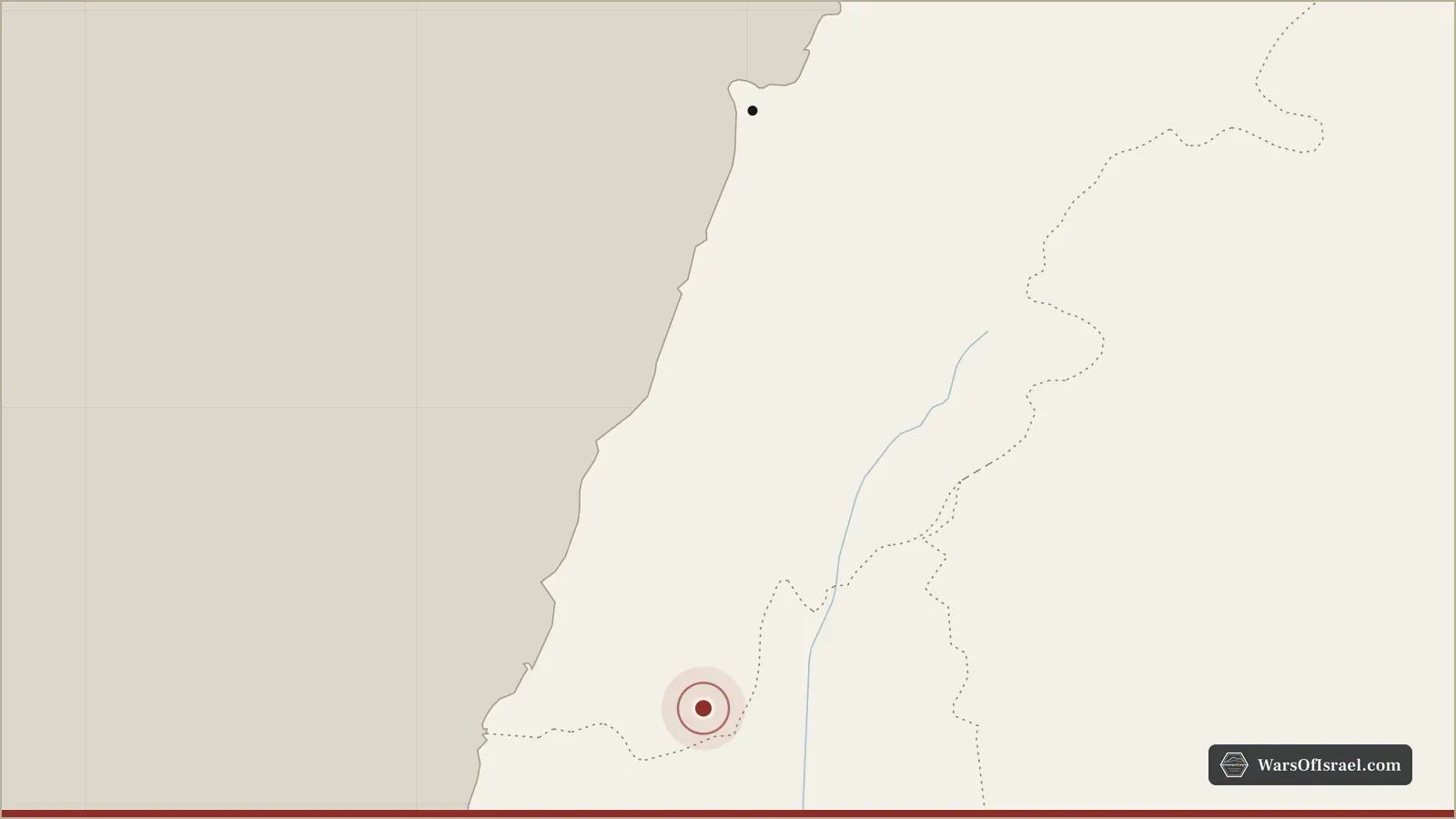
Five governments, Britain, the United States, Australia, Canada and Japan, issued a joint embassy statement on November 5, 2026 pressing Lebanon's lawmakers and political factions to go on record backing exclusive state control of weapons and of decisions to go to war; the call remained unanswered when this report was filed on November 6. The statement adds a concrete political ask to the ongoing argument over who holds armed authority inside Lebanon. The text backs the government's position, but it stops short of announcing any disarmament operation, setting a deadline for enforcement or spelling out a new arrangement with Israel.
Five embassies ask for a public commitment
Beirut's US embassy put the statement into circulation, and both MTV Lebanon and Akhbar Al-Yawm went on to publish its full wording. The text supports the Lebanese government's push to put weapons under state control. It calls on every MP and every party to line up publicly behind the stance taken by the president and the prime minister, namely that the decision to go to war belongs to the state alone.
The wording matters. A commitment by individual parliamentarians and parties would place their positions on the public record. It would not, on its own, transfer weapons, dismantle an armed organization or establish government control in a particular village. The request concerns political responsibility as well as the physical possession of arms.
The document also touches on the Dahr al-Baydar case. It credits the measures the Lebanese authorities have already taken and asks that the courts handle the matter swiftly and without outside political pressure. It names no defendant, lays out no evidence and announces no ruling. Raising the question of accountability here is not the same as finding any person or group guilty.
The demand has a longer security history
The embassies' call echoes a principle in UN Security Council Resolution 1701 (opens in a new tab): extending Lebanese government authority throughout the country, with no weapons held without its consent and no competing authority. Adopted in 2006, the resolution also calls for disarmament of armed groups and for an area between the Blue Line and Litani River free of armed personnel and weapons other than those of the Lebanese government and UNIFIL.
That framework contains obligations beyond disarmament. It calls for a cessation of hostilities, respect for the Blue Line, Lebanese army and UNIFIL deployment, and parallel Israeli withdrawal as that deployment begins. The site's history of the Second Lebanon War explains the conflict from which the resolution emerged.
The November 5 embassy text does not replace that framework. Its immediate addition is a request that Lebanon's elected representatives and parties make their support explicit. The diplomatic question is therefore connected to an older military one: whether the Lebanese state can exercise the authority that international statements repeatedly assign to it.
Weapons discoveries keep implementation in focus
The statement was issued on the same date as a new IDF account of weapons discoveries in southern Lebanon. The army said troops of the 188th Brigade found more than 340 weapons and items of ordnance around the Beaufort ridge and Litani River, including anti-tank weapons, mortar rounds and small arms. It also reported an underground shaft in a civilian house.
Those are Israeli military claims about particular searches. They are relevant to the enforcement problem, but they are not a complete inventory of Hezbollah's arsenal or an independent measurement of Lebanese state control. The detailed discoveries were covered in the site's November 5 Beaufort and Litani report.
The broader setting remains unsettled. Britain's Foreign Office travel advice, current when checked on November 6, describes continuing fighting and airstrikes, particularly in southern Lebanon, despite a cessation of hostilities announced in June 2026. It also records a continuing Israeli military presence. That official assessment supplies context for the embassy appeal without establishing the circumstances of every individual clash.
Political support is one step toward enforcement
The statement does not name Hezbollah. Its demand nevertheless addresses the underlying question of armed power outside the state, central to the site's account of the 2026 Israel-Hezbollah war. The text's reach is national: it seeks effective Lebanese sovereignty across all Lebanese territory, rather than limiting its language to the border strip.
What remains to be demonstrated is implementation. A public endorsement, a judicial proceeding and a transfer of weapons are separate developments. Evidence of one cannot substitute for evidence of the others. The five embassies have made their political expectation clear, but the statement does not record compliance by every party or verify that the government's monopoly on arms has been achieved.
For Israeli border communities, the substantive issue is whether commitments produce durable security arrangements on the ground. For Lebanon, the same statement links sovereign authority to domestic political accountability. Its importance lies in that explicit demand for public responsibility; its limitation is that diplomatic support alone supplies no account of how, or when, contested armed authority will change.