The Israel and Hezbollah war (2023 to 2024)
How a front that Hezbollah opened the day after October 7 became a year of attrition, then a two-month offensive that reshaped Lebanon and northern Israel.
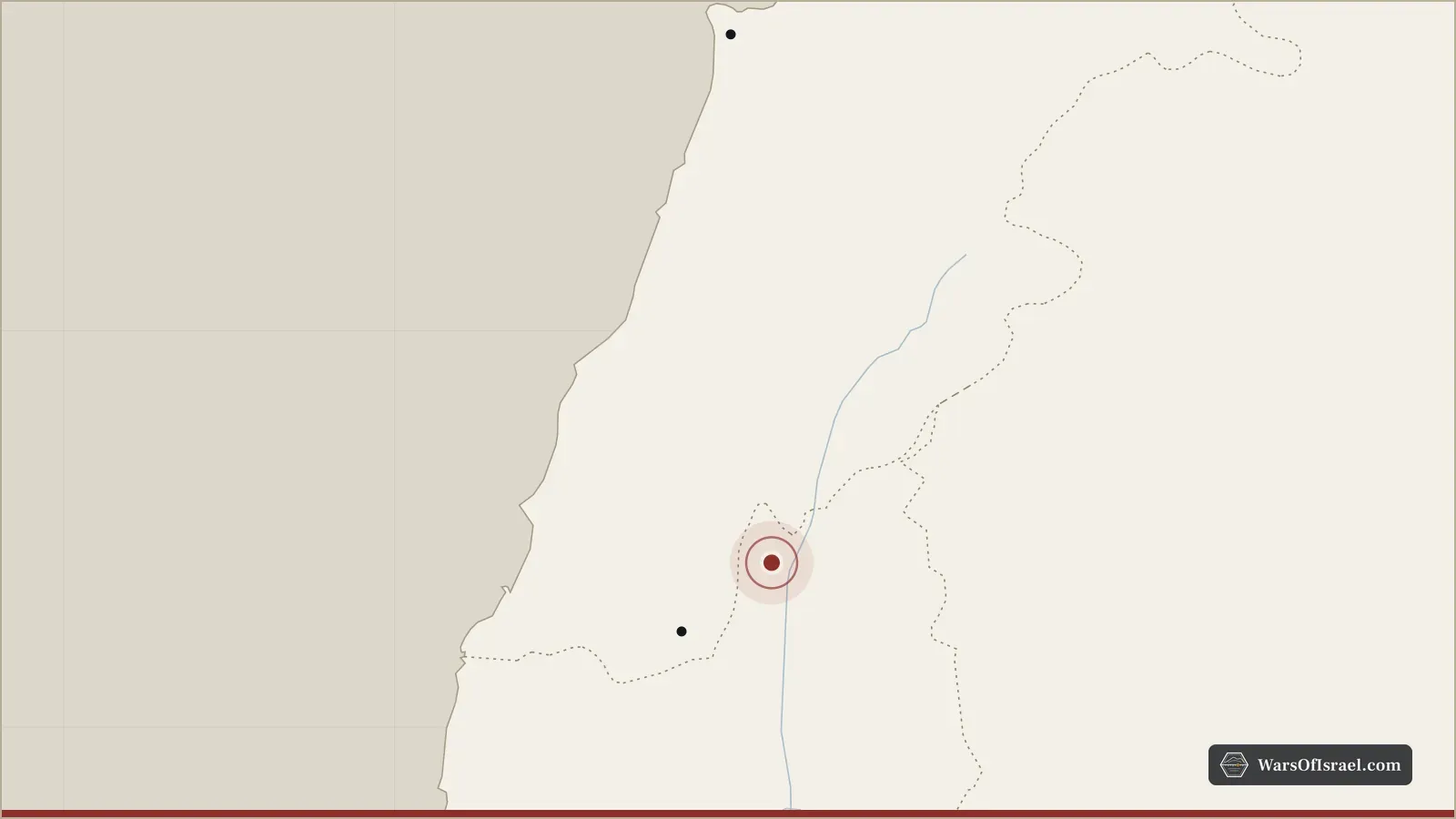
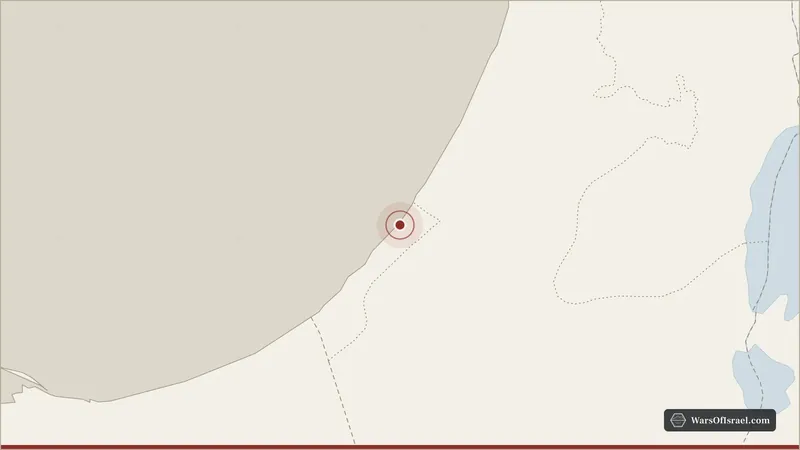
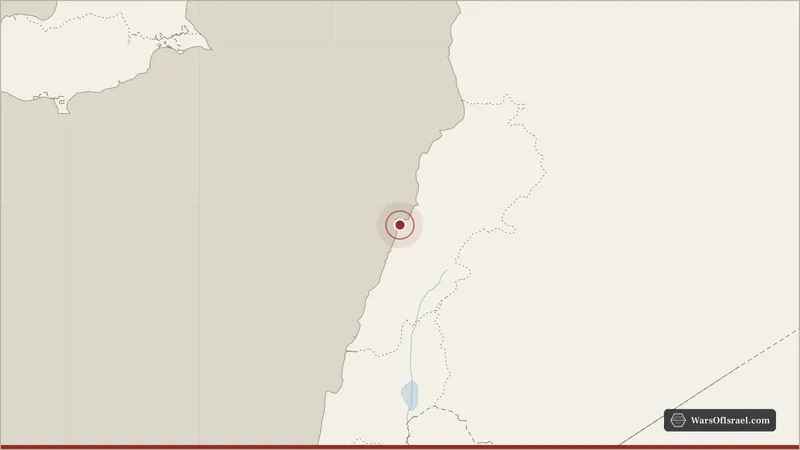
On the morning of October 8, 2023, less than a day after Hamas's attack on southern Israel, Hezbollah fired rockets and artillery shells at Israeli positions in the Shebaa Farms area and declared that it was acting in solidarity with Gaza. That salvo opened a war on Israel's northern border that lasted 14 months. For almost a year it was a war of attrition fought along a narrow strip on both sides of the Blue Line. In September 2024 Israel turned it into an offensive: an attack on Hezbollah's communications devices, the killing of most of its senior command including Secretary-General Hassan Nasrallah, a wave of air strikes across Lebanon and, from October 1, 2024, a ground operation in the villages of southern Lebanon. A ceasefire took effect on November 27, 2024. It ended the war in name but not the confrontation, which flared again in March 2026.
A border that never quite went quiet
The roots of the war lie in the long confrontation between Israel and Hezbollah, the Shiite movement and militia founded in Lebanon in the early 1980s with Iranian backing during the 1982 Lebanon War. Through the years of the Israeli security zone in southern Lebanon, which ended with the Israeli withdrawal in May 2000, Hezbollah built its identity around fighting Israel. Six years later, the cross-border raid of July 12, 2006 set off the Second Lebanon War, which ended with UN Security Council Resolution 1701. That resolution called for an area between the Blue Line and the Litani River free of any armed personnel and weapons other than those of the Lebanese state and the UN force, UNIFIL.
In practice the clause was never enforced. Over the following 17 years Hezbollah rebuilt and expanded its arsenal with Iranian support, and Israeli intelligence assessments, repeated publicly by Israeli officials, put it in the range of 150,000 rockets and missiles before 2023. Hezbollah also prepared its elite Radwan Force for a ground incursion into the Galilee. In 2018 and 2019 Israel exposed and destroyed cross-border attack tunnels in Operation Northern Shield. In the background, Israel struck Iranian and Hezbollah targets in Syria in what it called the campaign between the wars.
Why Hezbollah opened a second front
Hezbollah presented its entry into the war as a "support front" for Hamas, designed to tie down Israeli forces in the north and to make the war in Gaza more costly. Its leaders said repeatedly that the fire would stop when the fighting in Gaza stopped. That linkage defined the first year of the conflict: Hezbollah calibrated its attacks to avoid all-out war, and Israel, focused on Gaza, mostly answered in kind.
For Israel the threat was not abstract. The October 7 attack showed what a surprise ground assault on border communities could do, and the Radwan Force had trained for exactly such an operation in the Galilee. In October 2023 the Israeli government ordered the evacuation of communities close to the Lebanese border, among them Kiryat Shmona and Metula. Israeli officials put the number of evacuees at about 60,000. Lebanese villages on the other side of the border emptied as well. The return of residents to their homes in the north became a stated goal of the war: on September 16 to 17, 2024, Israel's security cabinet formally added it to the list of war aims.
The forces and the battlefield
On one side stood the Israel Defense Forces, whose Northern Command reinforced the border with regular and reserve units in the first days of the war, and the Israeli Air Force, which carried out most of the strikes in Lebanon. Air defense relied on the Iron Dome system against rockets, on David's Sling against heavier missiles, and on fighter jets and other systems against drones, which proved the hardest threat to stop.
On the other side stood Hezbollah, with its military wing, its Radwan Force and its rocket, missile and drone units, and a political and social network that runs deep in the Shiite south of Lebanon, the Bekaa Valley and Beirut's southern suburbs, known as the Dahieh. Smaller groups also fired from Lebanon, among them Hamas's branch in Lebanon and Palestinian Islamic Jihad. The Lebanese Armed Forces and UNIFIL were present in the south but did not fight. The Lebanese state, then in a long political vacuum without an elected president, had no say over the decision to go to war.
The course of the war
A war of attrition, October 2023 to July 2024
For ten months the fighting followed a recognizable pattern. Hezbollah fired anti-tank missiles at border positions and homes, launched rockets at communities in the Galilee and the Golan Heights, and increasingly sent explosive drones. Israel answered with artillery and air strikes on launch sites, observation posts and commanders, gradually reaching deeper into Lebanon. On January 2, 2024, an explosion in Beirut's southern suburbs killed Saleh al-Arouri, deputy head of Hamas's political bureau. Israel did not officially claim the strike.
The border communities on both sides absorbed the damage. Homes in Metula, Shlomi, Kiryat Shmona and the kibbutzim of the Upper Galilee were hit, and wildfires repeatedly burned across the hills. In southern Lebanon whole villages near the border were heavily damaged by Israeli strikes.
The escalation, July to September 2024
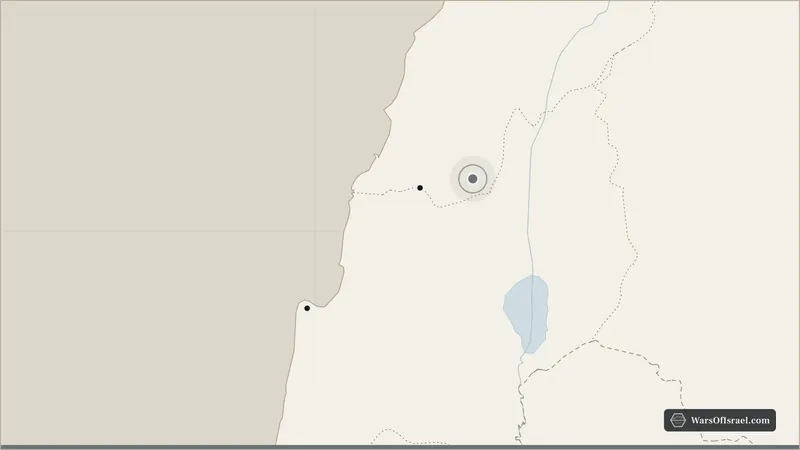
On July 27, 2024, a rocket struck a football field in Majdal Shams, a Druze town in the Golan Heights, and killed 12 children and teenagers. Israel and the United States attributed the rocket to Hezbollah, which denied responsibility. Three days later, on July 30, an Israeli strike in Beirut's southern suburbs killed Fuad Shukr, Hezbollah's most senior military commander. The next morning Hamas political leader Ismail Haniyeh was killed in Tehran, an act Iran blamed on Israel.
Hezbollah's promised retaliation for Shukr came on August 25, 2024. That morning Israel carried out what it described as a preemptive strike on launchers in southern Lebanon, and Hezbollah then fired a barrage of rockets and drones at northern Israel. Both sides stepped back after that day, but the pattern had changed: each round was larger than the last.
The offensive, September to November 2024
The decisive phase began with an attack few had imagined. On September 17 and 18, 2024, thousands of pagers and hundreds of walkie-talkies used by Hezbollah members exploded across Lebanon. According to the Lebanese government, the two waves killed 42 people, among them children, and wounded thousands. Israeli Prime Minister Benjamin Netanyahu acknowledged on November 10, 2024 that he had approved the operation. The pager and radio explosions are covered in their own entry.
On September 20 an Israeli strike on a building in Beirut's southern suburbs killed Ibrahim Aqil, commander of the Radwan Force, along with other senior commanders. On September 23 Israel launched the air campaign it called Operation Northern Arrows, striking what the IDF said were some 1,300 Hezbollah targets on the first day. The Lebanese Health Ministry reported 558 people killed that day, among them 50 children, the deadliest single day in Lebanon in decades. Hundreds of thousands of people fled north.
On the evening of September 27, 2024, Israeli aircraft dropped dozens of heavy bombs on Hezbollah's underground headquarters beneath residential buildings in Haret Hreik, in the Dahieh. Hassan Nasrallah, who had led Hezbollah since 1992, was killed together with Ali Karaki, commander of its Southern Front, and Abbas Nilforoushan, a senior commander of Iran's Revolutionary Guards. Hezbollah confirmed Nasrallah's death on September 28. His expected successor, Hashem Safieddine, was killed in an Israeli strike in early October, and on October 29 Hezbollah named Naim Qassem as secretary-general.
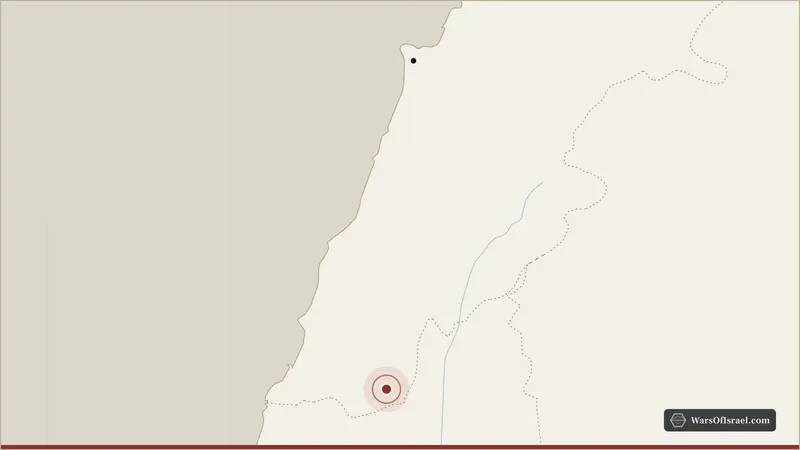
On October 1, 2024, Israeli forces crossed into southern Lebanon in what the IDF called a limited, localized and targeted ground operation. That same night Iran fired some 200 ballistic missiles at Israel. The ground campaign, described in the entry on Operation Northern Arrows and the ground operation, began with the 98th and 36th Divisions and expanded to further divisions along the entire border. The IDF said its troops found tunnels, weapons stores and plans for an invasion of the Galilee in villages close to the border. The fighting was costly: on October 2, six soldiers of the Egoz unit were killed in a single engagement, and Israel later reported 56 soldiers killed during the ground operation. Hezbollah kept firing rockets and drones as far as Haifa and central Israel. On October 13 a drone struck a Golani Brigade training base near Binyamina and killed four soldiers.
The ceasefire of November 27, 2024
On November 26, 2024, US President Joe Biden and French President Emmanuel Macron announced an agreement between Israel and Lebanon. The ceasefire took effect at 4:00 a.m. on November 27. Its main terms, based on Resolution 1701, were:
- a 60-day period in which Israeli forces would withdraw from southern Lebanon in stages;
- the deployment of the Lebanese Armed Forces in the south, with Hezbollah's fighters and weapons removed from the area south of the Litani River;
- a monitoring mechanism chaired by the United States, with France, Lebanon, Israel and UNIFIL;
- Israel's stated right, which it said was backed by a US side letter, to act against immediate threats.
The figures for the war are partial and disputed. According to the Lebanese Health Ministry, 4,047 people were killed and 16,593 wounded in Lebanon between October 8, 2023 and the figures it published on December 4, 2024, among them 790 women and 316 children. The ministry does not distinguish between civilians and fighters. The IDF estimated at the time of the ceasefire that about 3,800 Hezbollah fighters had been killed. Naim Qassem later said that about 5,000 Hezbollah fighters had been killed. On the Israeli side, figures from Israeli official sources, including the Shin Bet, put the number killed on the northern front at 46 civilians and 87 members of the security forces, including those who fell in Lebanon. Lebanese authorities said more than a million people had been displaced at the height of the fighting. The site's guide to casualty figures explains why such counts differ.
A ceasefire under constant strain, 2025 to 2026
The 60-day deadline passed on January 26, 2025 without a full Israeli withdrawal, and it was extended to February 18, 2025. On that date Israel pulled back from the Lebanese villages but kept troops at five hilltop positions inside Lebanon, saying it needed them to protect the northern communities. In Beirut the political map changed: Joseph Aoun was elected president in January 2025 and Nawaf Salam became prime minister. In August 2025 the Lebanese cabinet tasked the army with drawing up a plan to bring all weapons under state control.
Israel continued to strike in Lebanon throughout 2025, saying it was acting against Hezbollah efforts to rebuild. On November 23, 2025, an Israeli strike in Haret Hreik killed Haytham Ali Tabatabai, whom Israel described as Hezbollah's chief of staff. In August 2025 the Security Council extended UNIFIL's mandate for a final time, to December 31, 2026.
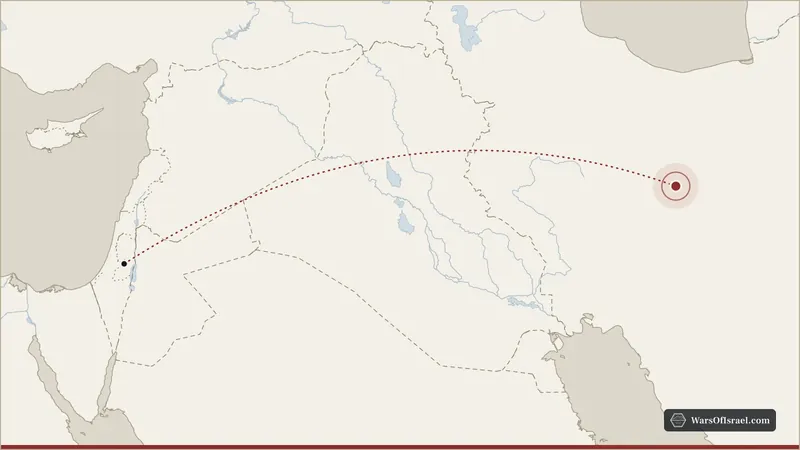
The truce collapsed on March 2, 2026. After the United States and Israel began a war with Iran on February 28, 2026, Hezbollah fired at northern Israel for the first time since the ceasefire. Israel answered with strikes on Beirut and, from March 16, 2026, with a new ground operation that pushed into southern Lebanon. A truce announced by US President Donald Trump took effect on April 16, 2026, and on June 26, 2026 Lebanon, Israel and the United States signed a framework tying a gradual Israeli redeployment to verified disarmament of armed groups. Hezbollah rejected the terms. According to Security Council Report's October 2026 forecast on Lebanon (opens in a new tab), Israeli forces remained in positions up to about 10 kilometers inside Lebanon, hostilities continued in the south, and a further round of Israel and Lebanon talks had been postponed to October 2026. The UN Committee on the Elimination of Racial Discrimination cited, on August 26, 2026, some 4,300 deaths in Lebanon from Israeli military operations since March 2.
The 2023 to 2024 war left a clear military result and an open political one. Hezbollah lost most of its senior command, much of its arsenal and the deterrent image Nasrallah had cultivated since 2006. Israel achieved the return of many northern residents but not a quiet border, and the question that Resolution 1701 had left unanswered in 2006, who holds the weapons in southern Lebanon, remained the core of the conflict two years later.
Timeline
- October 8, 2023: Hezbollah fires at Israeli positions in the Shebaa Farms area, opening the northern front.
- July 27, 2024: A rocket kills 12 children and teenagers in Majdal Shams in the Golan Heights.
- July 30, 2024: An Israeli strike in Beirut kills Hezbollah military commander Fuad Shukr.
- September 17, 2024: Pagers carried by Hezbollah members explode across Lebanon; radios follow on September 18.
- September 23, 2024: Israel launches Operation Northern Arrows, a wide air campaign in Lebanon.
- September 27, 2024: Hassan Nasrallah is killed in an Israeli strike on Hezbollah's headquarters in the Dahieh.
- October 1, 2024: Israeli ground forces enter southern Lebanon.
- November 27, 2024: The Israel and Lebanon ceasefire takes effect at 4:00 a.m.
- February 18, 2025: Israel withdraws from the villages of southern Lebanon but keeps five positions.
- March 2, 2026: Hezbollah resumes fire at Israel after the outbreak of war with Iran.