News
Syrian court gives Liwa al-Quds member life sentence, state media reports
The October 28 announcement concerns an Assad-aligned militia with Iranian ties, while earlier court reporting records the defendant's denial.
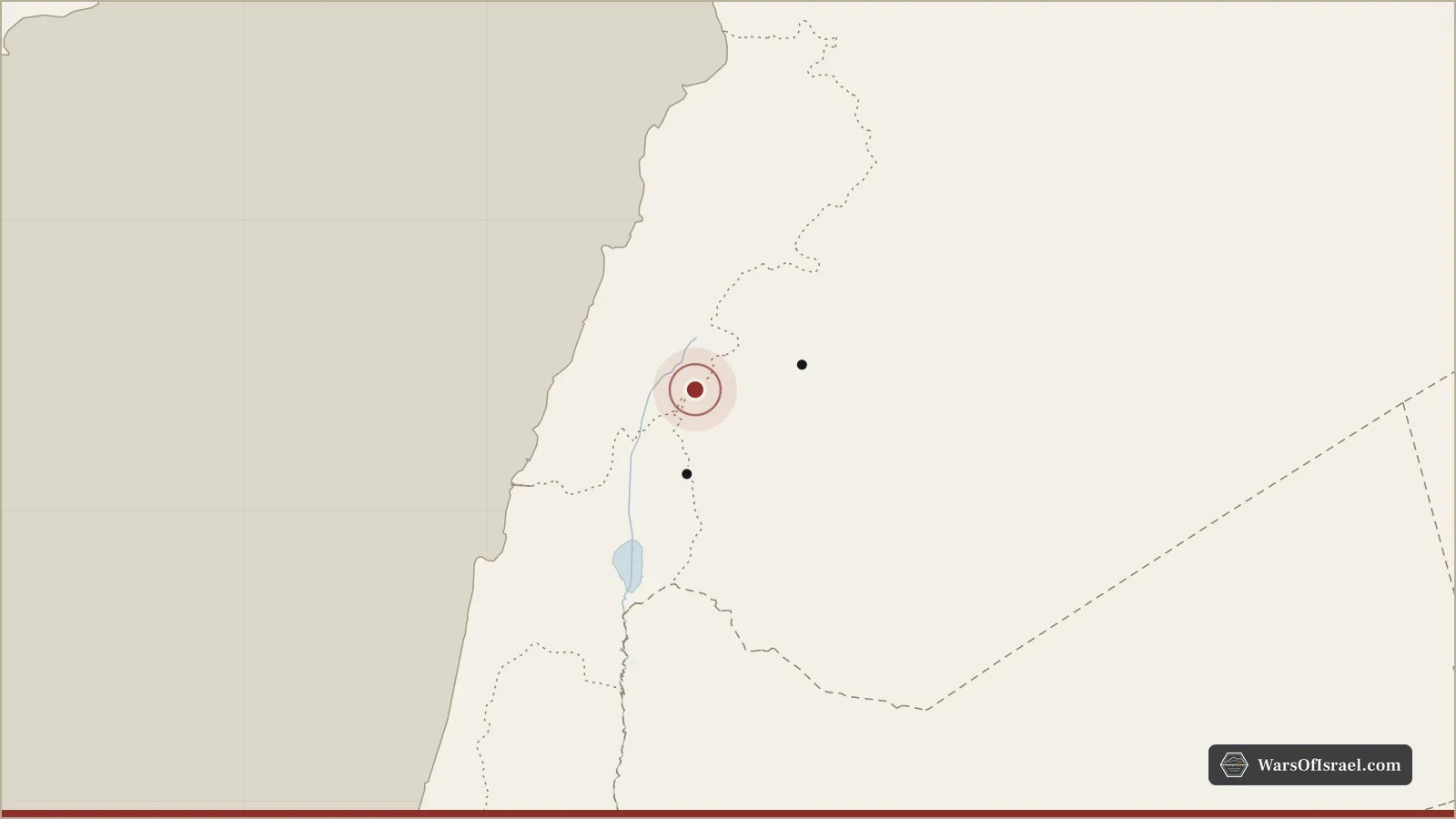
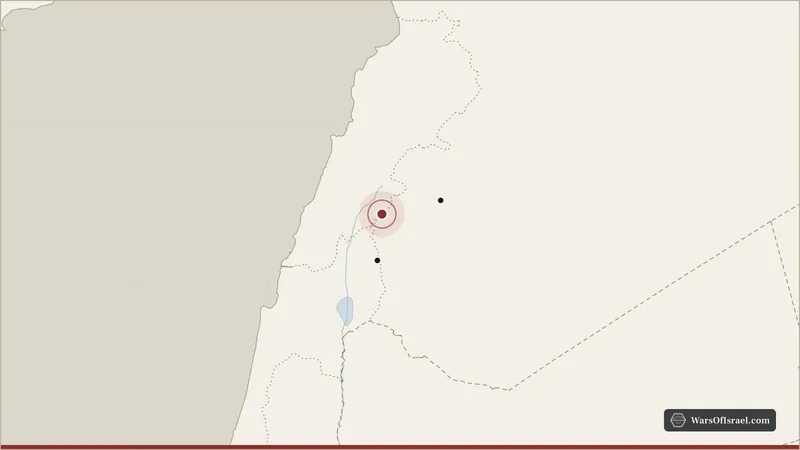
As of October 30, 2026, a Syrian court has sentenced Abdul Jabbar Ghazi Arziq, identified by Syrian state media as a member of Liwa al-Quds, to life imprisonment. SANA reported the ruling on October 28, describing a conviction for joining an armed group formed to foment civil war, sectarian fighting and the seizure of cities. The case concerns a militia that fought for Bashar Assad's regime and has documented links to Iran's Revolutionary Guards.
The announcement brings the militia into Syria's domestic accountability process. It also raises a question that the published reports cannot fully answer: how the court connected this defendant's conduct to the wider crimes of the organization he joined.
Life imprisonment and an amnesty bar
According to SANA's account of the ruling (opens in a new tab), the court classified the conduct as war crimes and crimes against humanity in connection with systematic, widespread offenses under the former regime. It imposed life imprisonment without mitigation and barred Arziq from benefiting from a general or individual amnesty.
The Jerusalem Post's October 29 report also describes those sentencing terms, citing SANA. That is coverage of the official announcement, rather than a separate examination of the court's evidence. Neither report reproduces a complete judgment, a case number or the court's detailed reasoning about individual incidents. The public account establishes what Syrian authorities say the court decided; it is not a substitute for the full judicial record.
An earlier hearing recorded a denial
SANA's October 1 report described an earlier public hearing in Damascus's Fourth Criminal Court. Prosecutors accused Arziq of militia membership and involvement in killing, looting, displacement and sectarian fighting. He denied the charges and withdrew earlier confessions; the court adjourned for prosecution submissions and the defense.
Those earlier allegations should not all be treated as separately proven offenses merely because a sentence was subsequently announced. An indictment sets out what prosecutors seek to prove. To establish which allegations the court accepted, and on what evidence, the judgment itself is needed.
The militia behind the case
Liwa al-Quds, often called the Jerusalem Brigades, is a predominantly Palestinian militia that supported Assad. The Jerusalem Post describes recruitment from Palestinian communities around Aleppo.
A 2023 profile by the Foundation for Defense of Democracies identifies close ties with the Revolutionary Guards and pro-Syrian armed groups. It lists light weapons, mortars and short-range rockets, while leaving funding undisclosed. Those details describe the think tank's assessment at that time, not a verified inventory of weapons remaining with the group in October 2026.
The Syrian arena also formed the setting for Israel's campaign between the wars, directed against Iranian entrenchment and weapons transfers. The historical connection explains why a case involving an Iran-linked militia is relevant to Israel's security record. It does not establish that Arziq personally participated in an attack on Israel.
A separate conviction in the Netherlands
Liwa al-Quds had already appeared in a European criminal judgment. On January 22, 2024, The Hague District Court sentenced a different defendant to 12 years in prison. The court found that the militia functioned as a criminal organization aimed at committing international crimes, including violence, pillage and unlawful detention.
That case also demonstrates the importance of separating organizational responsibility from proof against an individual. The Dutch court convicted the defendant over his role in one civilian's detention and subsequent torture but acquitted him of involvement in the detention of a second man because the necessary personal connection had not been established.
On August 27, 2025, The Hague Court of Appeal imposed a 13-year sentence in that separate case. Its announcement describes a leadership role in Liwa al-Quds and involvement in the unlawful detention and torture of a Syrian civilian. The Dutch proceedings provide independently documented background on the militia; they do not prove the charges against Arziq in Syria.
The ruling's reach and its limits
Radif Mustafa, who heads the National Commission for Transitional Justice's accountability department, told SANA that political change should not erase grave crimes. He said evidence-gathering and work on other cases would continue, emphasizing victims' rights and witness protection.
That process belongs to Syria's institutional reckoning after Assad, alongside a changed security landscape covered in the record of Israeli operations in Syria after the regime's fall. A criminal sentence, however, measures neither the current strength of a militia nor the disappearance of its external connections.
For this case, the remaining questions are concrete: the complete findings, how the court assessed the earlier retraction, and whether an appeal has been filed or decided. The reports reviewed do not resolve those points. The life sentence and amnesty restriction can be reported as the announced outcome without presenting the wider accountability process as complete.