ConflictBritish MandateReference entry
Izz ad-Din al-Qassam's armed group (1930 to 1935)
A Haifa preacher built a clandestine armed network after the 1929 riots, and his death in a gunfight with British police in November 1935 helped set the stage for the Arab revolt.
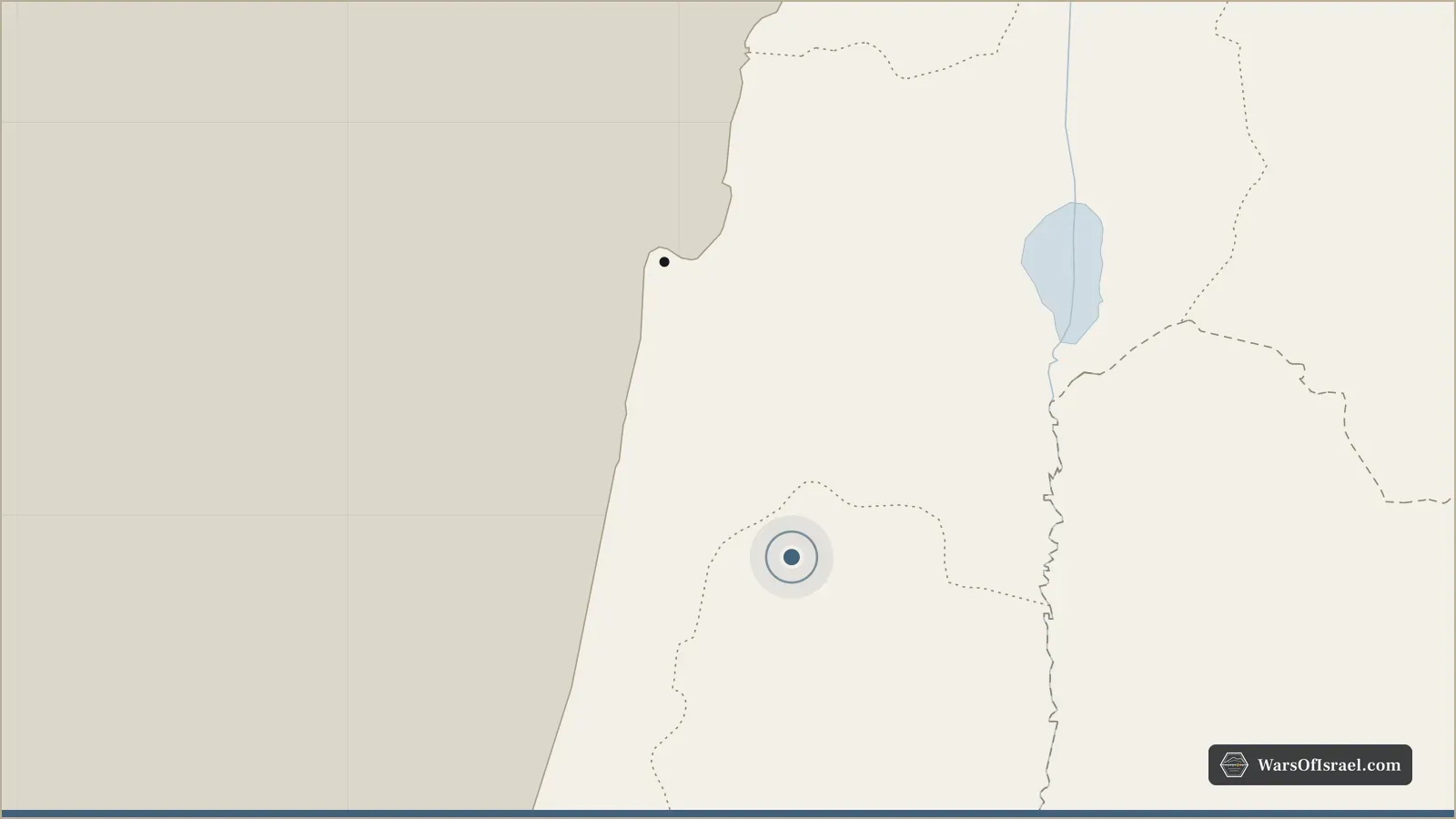
Izz ad-Din al-Qassam was a Syrian-born Muslim preacher who, in the years after the 1929 riots, built a secret armed network in northern Mandatory Palestine. His followers, organized in small cells and known in Jewish and British sources as the Black Hand (al-Kaff al-Aswad), are linked to a series of deadly attacks on Jews between 1931 and 1935, though which attacks they carried out, and on whose orders, is disputed. On November 20, 1935, British police surrounded al-Qassam and a handful of his men in the hills near Ya'bad, southwest of Jenin, and killed him in a gunfight. His death turned him into a symbol, and five months later the Arab revolt of 1936 to 1939 began.
The preacher from Jableh
Al-Qassam was born in Jableh, on the Syrian coast near Latakia, in about 1882, and studied at al-Azhar in Cairo. Back in Syria, he preached and taught, and after the First World War took part in armed resistance to French rule in northern Syria. When the French suppressed it, he fled, and in 1921 he settled in Haifa, a fast-growing port under British rule.
In Haifa he became a preacher at the Istiqlal (Independence) Mosque, a leader of the local branch of the Young Men's Muslim Association, and, from 1929, a marriage registrar at the Islamic religious court, a post that took him to villages across the north. His audience was largely made up of the poor: rural migrants, laborers and villagers pushed off the land. He preached religious revival and, increasingly, the duty of armed struggle against both British rule and Zionist settlement.
The secret cells
After 1929, al-Qassam began recruiting followers into secret circles. They were organized in cells of about five men, and combined religious instruction with training in the use of weapons. Estimates of their number by 1935 range from about 200 to 800 men. Inside the movement there was tension between those who wanted to strike at once and al-Qassam himself, who, according to several accounts, regarded a general revolt as premature.
A series of attacks in the north in the early 1930s has been attributed to the network. On April 11, 1931, three members of Kibbutz Yagur were ambushed and killed. On December 22, 1932, a Jewish father and son were killed in Nahalal when a bomb was thrown into their home. Other attacks and attempted attacks followed, and according to later accounts the group killed at least eight Jews between 1930 and 1935. The attribution is contested: some Arab accounts say a dissident faction led by a man known as Abu Ibrahim acted against al-Qassam's wishes, while historian Shai Lachman, drawing on Jewish investigations of the time, concluded that the attacks came from al-Qassam's circle. Not disputed is that the network existed and was armed.
The final weeks and the death at Ya'bad
In early November 1935, al-Qassam and a small group of followers left Haifa for the hills between Jenin and Nablus, apparently intending to begin an armed uprising. On November 7, a Jewish police sergeant, Moshe Rosenfeld, was killed near Ein Harod; his body was found the next day, and the police believed al-Qassam's men were responsible. British police tracked the group, and on November 20, 1935, they surrounded it near the village of Ya'bad. In the gunfight that followed, al-Qassam and three of his men were killed and several others were captured. One British policeman was killed.
Legacy and significance
Al-Qassam's funeral in Haifa drew at least 3,000 mourners, mostly peasants and workers; the historian Abdullah Schleifer describes it as the largest political gathering Mandatory Palestine had seen. He was buried in the Muslim cemetery of Balad al-Sheikh, today in the town of Nesher. Historian Tom Segev compared him to Joseph Trumpeldor, the Jewish hero of the battle of Tel Hai; the comparison suggests a fighter whose death mattered more than his military record. His surviving followers, the Qassamiyun, took part in the revolt that broke out in April 1936, and the British campaign against the rebels in the north, including the Special Night Squads, was fought partly against men he had trained.
His name has outlived the movement. Hamas named its military wing the Izz ad-Din al-Qassam Brigades, and the rockets fired from Gaza at Israeli towns since the early 2000s are called Qassam rockets. For Israelis, the name is associated with those attacks; for many Palestinians, it stands for the first armed revolt against British rule and Zionism. Historians generally see the significance of al-Qassam less in the size of his network than in the precedent he set: clandestine cells, religious mobilization and armed struggle outside the control of the established Arab leadership.