BattleSix-Day War to Yom KippurReference entry
The battle of Abu Ageila (1967)
How a night attack from several directions broke Egypt's strongest position in Sinai and opened the road across the peninsula.
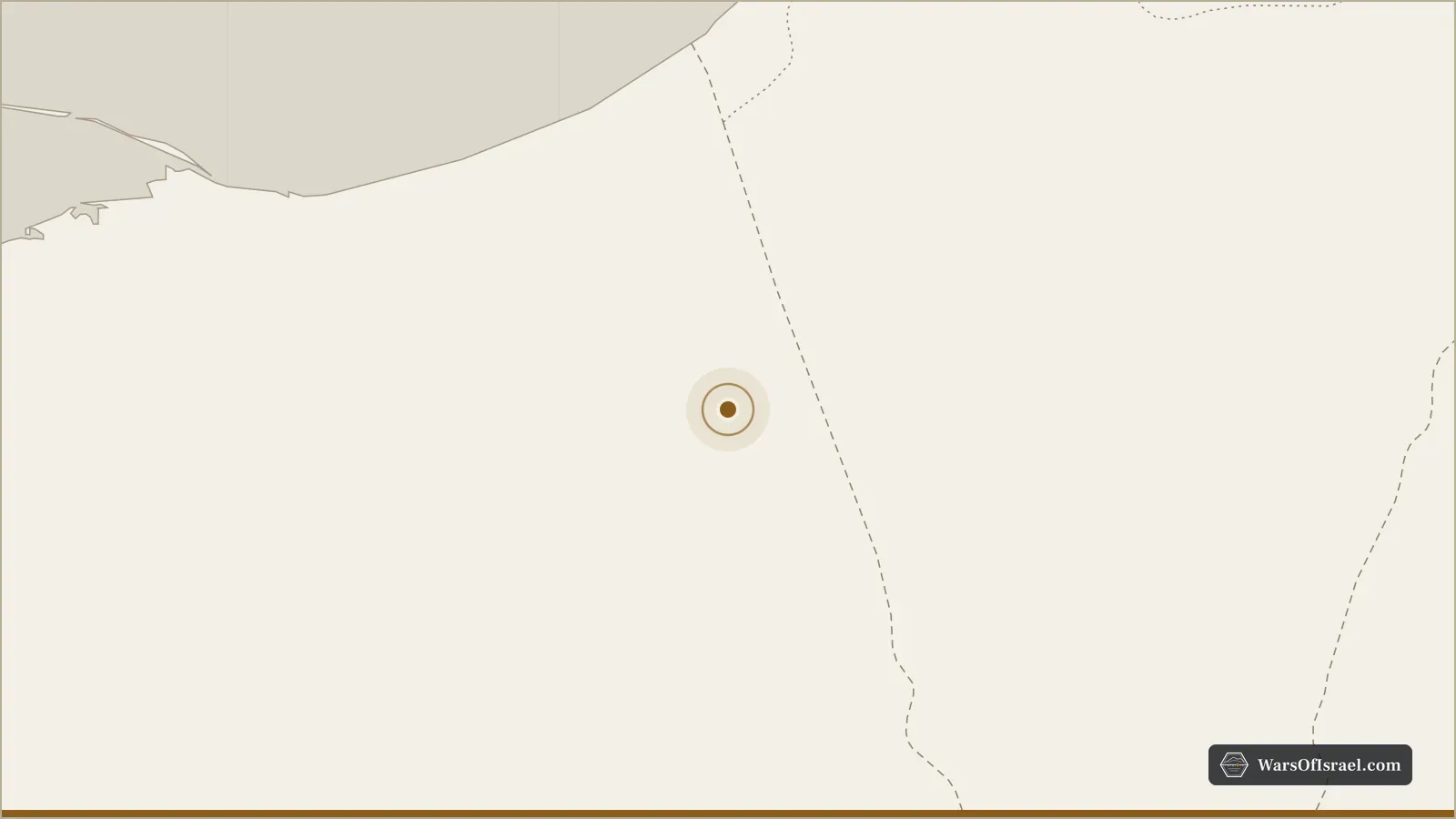
The battle of Abu Ageila, fought on June 5 and 6, 1967, was the IDF's attack on the strongest Egyptian defensive position in central Sinai. In a night operation that combined infantry, paratroopers landed by helicopter, armor and massed artillery, Maj. Gen. Ariel Sharon's 38th Division broke the fortified complex at Umm Katef and opened the main road into the heart of the peninsula. It was one of the decisive ground battles of the Six-Day War, and it is still taught as a model of a combined-arms night attack.
A crossroads Israel knew well
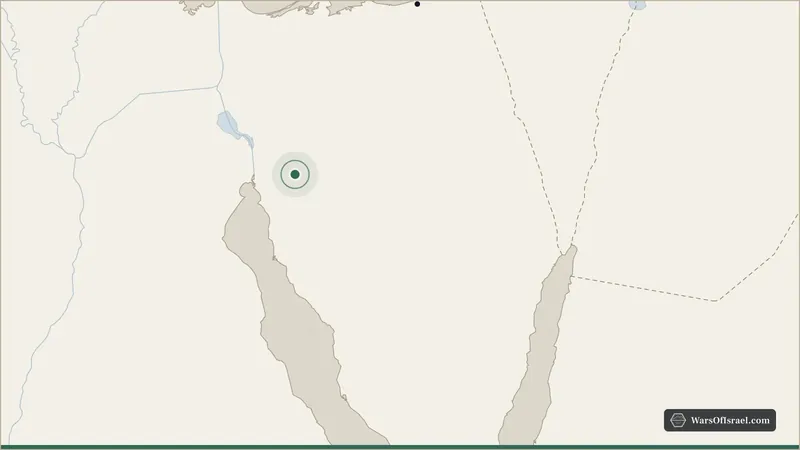
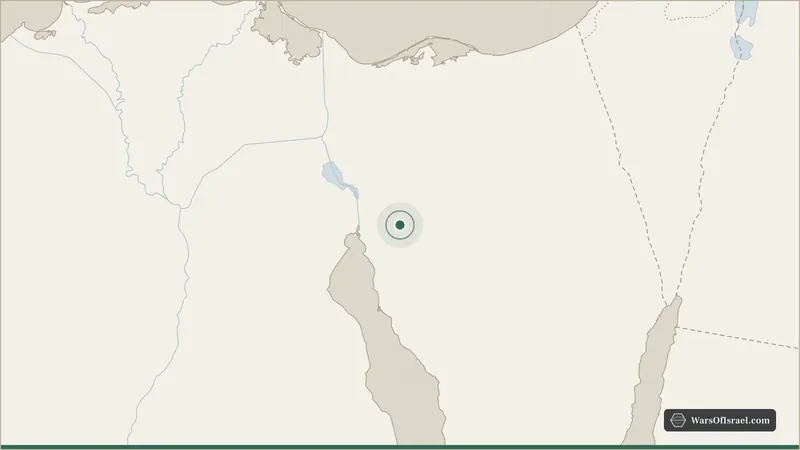
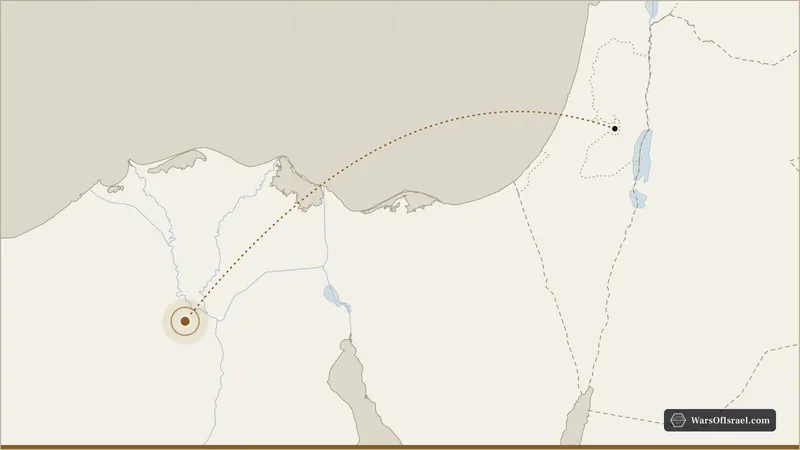
Abu Ageila lies in the northeast of Sinai, about 25 kilometers from the border at Nitzana and about 45 kilometers southeast of El Arish. Here the roads from the Israeli border to Ismailia and to El Arish meet, and whoever holds the crossroads controls the central route across the peninsula. The IDF had fought there twice before: in 1948, during Operation Horev, and in 1956, in the Sinai campaign, when repeated Israeli attacks on the Egyptian positions failed and the defenders withdrew only after the general Egyptian retreat.
After 1956 Egypt rebuilt the complex according to Soviet defensive doctrine. By 1967 the main position at Umm Katef, east of the crossroads, consisted of three parallel lines of trenches several kilometers long, protected by minefields and backed by tanks and dozens of artillery pieces. Its flanks rested on terrain thought to be impassable: soft sand dunes to the north and rugged hills to the south. The position was held by forces of the Egyptian 2nd Infantry Division, with the 12th Infantry Brigade at Umm Katef and armor in support.
The attack
Sharon's division brought together the 99th Infantry Brigade under Col. Yekutiel Adam, the 14th Armored Brigade under Col. Mordechai Tzipori, the 80th Paratroopers Brigade under Lt. Col. Danny Matt, a battalion of Centurion tanks, a reconnaissance battalion, six artillery battalions and engineers. According to accounts drawn from Israeli sources, the division numbered about 14,000 men and about 150 tanks.
Sharon's plan avoided a single frontal assault. On June 5 his forces cleared the Egyptian forward positions and closed on the complex. After dark the attack began from several directions at once:
- the infantry of the 99th Brigade, brought up through the dunes to the north on civilian buses, attacked the trench lines from their northern end and cleared them one after another, marking their progress with colored lights;
- paratroopers from the 80th Brigade were flown by helicopter behind the Egyptian lines to silence the artillery, although only six helicopters were available;
- the reconnaissance battalion and a tank force cut the road behind the position from the north;
- the Centurion battalion attacked from the east as soon as engineers had cleared paths through the minefields.
A heavy artillery bombardment opened the night assault. Through the early hours of June 6 the infantry fought along the trenches while the tanks pushed into the position. By dawn the Egyptian defenses had broken, and by about midday on June 6 the crossroads was in Israeli hands. Further south, forces of Maj. Gen. Avraham Yoffe's division moved through the gap and on toward the interior of Sinai.
Israeli losses were about 40 killed, according to both Yeshayahu Gavish, the commander of Southern Command, and Sharon's biography, which puts the wounded at about 120; Gavish puts the number of Israeli tanks lost at 19. Egyptian losses were much heavier, but no well-documented figure is available; estimates in the literature run into the thousands killed and many tanks destroyed.
Outcome and significance
The fall of Abu Ageila opened the central axis of Sinai at the same time as Maj. Gen. Israel Tal's division was breaking through in the north at Rafah and El Arish. On June 6 Egyptian Field Marshal Abdel Hakim Amer ordered a general withdrawal from Sinai, and the retreat soon turned into a rout. Israeli armored columns raced west toward the Mitla and Gidi passes, where many of the retreating Egyptian forces were cut off.
Historians of the war, among them Kenneth Pollack, see the battle as a model of careful planning and coordination: several forces striking a fortified position from different directions at night, with each attack timed to the others. It made Sharon's reputation as a field commander, and Israeli and foreign military schools have studied it since. It also showed the limits of a static defensive line whose flanks could be turned. The Israeli success depended on air superiority won the same morning in Operation Focus, which kept the Egyptian air force out of the battle.