Military operationWar of Independence
Operation Horev (1948 to 1949)
The last great offensive of the 1948 war, which pushed the Egyptian army out of the Negev and into Sinai and brought Cairo to the negotiating table.
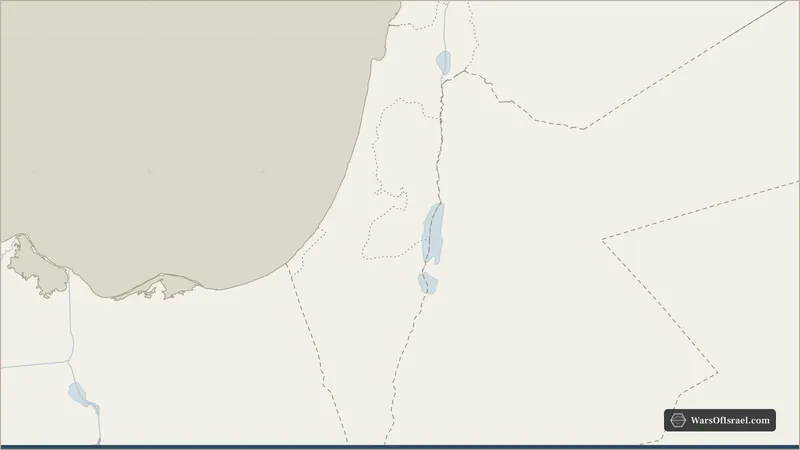
Operation Horev was the offensive that ended Israel's war with Egypt. Between December 22, 1948 and January 7, 1949, Israeli forces under Yigal Allon broke the Egyptian line in the eastern Negev by outflanking it through the desert, captured the border post of Auja al-Hafir, crossed into the Sinai Peninsula as far as the outskirts of El Arish, and then attacked at Rafah to try to cut off the Egyptian army in the Gaza Strip. Under heavy British and American pressure, Israel pulled back from Sinai, and the operation ended with a ceasefire on January 7. Within weeks Egypt was negotiating on Rhodes, where it signed the first of the 1949 armistice agreements. Horev, the biblical name of Mount Sinai, gave the operation its name.
Why the south was still open
Operation Yoav in October had broken the Egyptian line across the northern Negev and taken Beersheba, but it had not ended the war in the south. The Egyptian army still held the coastal strip from Gaza to Rafah, a line of posts on the road from Beersheba to Auja on the border, and the "Faluja pocket", where a brigade of about 4,000 soldiers was surrounded. Two more brigades stood in the Gaza area and one near El Arish. Egypt had refused to negotiate, and in the UN there was talk of a political settlement that could cost Israel the Negev.
The Israeli leadership decided to force a decision. The aim was to destroy or expel the Egyptian forces from the Negev, and, if possible, to trap the Egyptian army in Gaza by cutting it off from its bases in Sinai.
Forces and plan
Allon commanded five brigades: - the 8th Armored Brigade under Yitzhak Sadeh; - the Negev Brigade; - the Golani Brigade; - the Harel Brigade; - the Alexandroni Brigade.
The plan rested on deception and on a forgotten road. A diversionary attack near Gaza would draw Egyptian attention to the coast, while the main force moved south from Beersheba. Instead of attacking the fortified posts along the main road to Auja, it would advance on an ancient Roman road that ran through the desert from Halutza (Elusa) toward Ruheiba and Auja. Israeli engineers surveyed and repaired the road in the nights before the attack, out of Egyptian sight. If it worked, the Egyptian posts on the main road would find themselves facing the wrong way, with the enemy already behind them.
The course of the operation
The diversion at Gaza
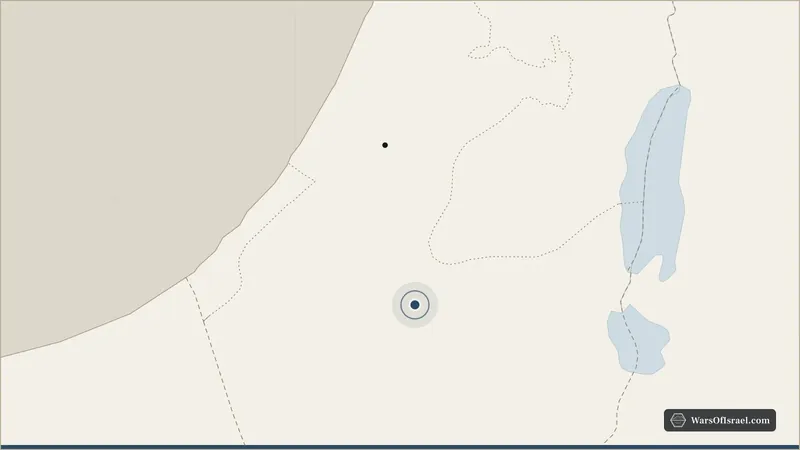
On December 22, a Golani battalion attacked Egyptian positions on Hill 86 near the Gaza to Rafah road. It took the hill but was driven off by a counterattack the next day, losing about 13 killed and 35 wounded. The attack nonetheless served its purpose: the Egyptian command concentrated on Gaza.
Auja
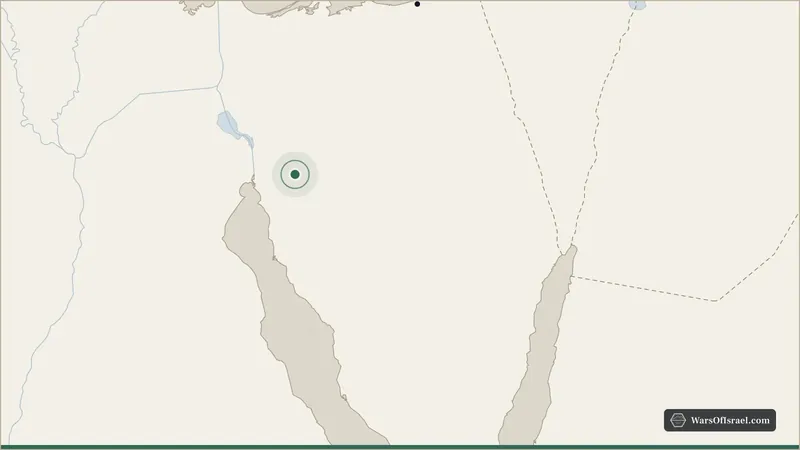
On December 25 and 26, the 8th Brigade and supporting units moved along the Roman road, though parts of the route were unprepared and the vehicles struggled through the sand. On December 26 they attacked Auja al-Hafir, the Egyptian base on the border, from the rear. After about 24 hours of fighting the garrison surrendered on December 27, and the last positions fell on the morning of December 28. Egyptian columns sent to relieve the base from Rafah and from Abu Ageila were intercepted. The Egyptian defense of the eastern Negev collapsed.
Into Sinai
The advance did not stop at the border. On the night of December 28, the 8th Brigade's tanks and the Negev Brigade crossed into Egyptian territory. Abu Ageila was occupied on December 28 to 29, and on December 29 Israeli forces captured the airfield and camp at Bir Lahfan. By December 30 Allon's forward troops were about 8 kilometers south of El Arish, the main Egyptian base in northern Sinai, and a Harel raiding party had pushed deeper into the peninsula.
Cairo under strain
The military collapse came at a moment of deep crisis in Egypt. On December 28, the day the last Egyptian positions at Auja fell, Prime Minister Mahmoud an-Nuqrashi was assassinated in Cairo by a member of the Muslim Brotherhood, which his government had banned weeks earlier. The war that had begun in May with confident promises of a quick advance on Tel Aviv was now being fought on Egyptian soil, and the government that replaced Nuqrashi's had little room to keep it going. The Faluja pocket, meanwhile, still held, a reminder that the Egyptian army had not been destroyed, only outmaneuvered.
The withdrawal
The crossing into Sinai turned a local victory into an international crisis. On December 29 the Security Council adopted Resolution 66, which ordered an immediate ceasefire and the implementation of Resolution 61 (its text (opens in a new tab) is published by the US Office of the Historian). Britain told Israel that it would invoke its 1936 treaty with Egypt if Israeli troops stayed on Egyptian soil, and the United States joined the demand to withdraw. Chief of Staff Yigael Yadin refused Allon permission to attack El Arish, and David Ben-Gurion ordered him to pull back. Allon protested but complied. The withdrawal from Sinai was completed on January 2, 1949.
Rafah
Allon then tried the same goal from the Israeli side of the border. On January 3, Israeli forces attacked the Egyptian defenses around Rafah, aiming to cut the road from Gaza into Sinai. Fighting went on for several days. On January 6, Egypt announced that it was ready to enter armistice negotiations. On January 7, the last day of fighting, Israeli fighters and ground fire shot down five British aircraft, four Spitfires and a Tempest, that were flying reconnaissance over the border area; two British pilots were killed. Britain moved reinforcements to Aqaba. The incident caused a political storm in London, where the government was criticized for risking a clash with Israel on Egypt's behalf. On the same day Israel accepted the ceasefire, despite objections from commanders who believed that Rafah, and with it the encirclement of the Egyptian army in Gaza, was within reach. The Gaza Strip would remain under Egyptian rule until 1967, apart from a few months of Israeli occupation in 1956 and 1957.
Outcome and significance
Horev achieved most of what Israel needed. The Egyptian army was driven out of the Negev except for the Gaza Strip and the besieged Faluja pocket, and Egypt agreed to negotiate. Talks under UN mediator Ralph Bunche opened on the island of Rhodes in January, and the Egyptian-Israeli armistice agreement was signed there on February 24, 1949, the first of the four armistice agreements. Under its terms the Faluja brigade left with its weapons, and the Auja area was made a demilitarized zone, which became the seat of the joint armistice commission.
The operation also left a lasting military pattern. The approach through the open desert, the attack on Auja and Abu Ageila from unexpected directions and the quick crossing into Sinai foreshadowed the routes of later wars. Israeli forces would return to the same crossroads at Abu Ageila in the Sinai campaign of 1956 and the battle of Abu Ageila in 1967.
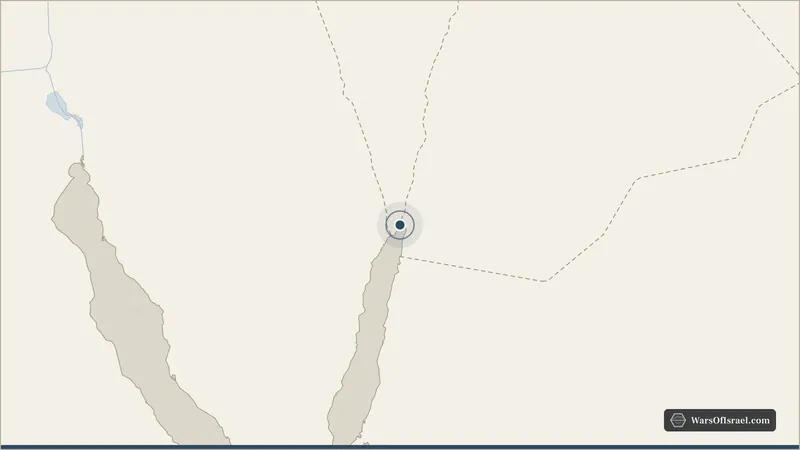
What Horev did not settle was the southern tip of the Negev. With Egypt out of the fight, the area down to the Gulf of Aqaba remained unoccupied, and in March 1949 Operation Uvda moved to secure it before the armistice with Jordan. For the 1947 to 1949 war, Horev closed the Egyptian front.
Timeline
- December 22, 1948: Operation Horev opens with a diversionary Golani attack on Hill 86 near Gaza.
- December 26, 1948: The 8th Brigade attacks Auja al-Hafir from the rear after moving up the Roman road.
- December 27, 1948: The Egyptian garrison at Auja surrenders.
- December 29, 1948: Israeli forces take Bir Lahfan in Sinai; the Security Council adopts Resolution 66.
- January 2, 1949: Israeli forces complete their withdrawal from Sinai.
- January 3, 1949: The attack on the Egyptian positions at Rafah begins.
- January 7, 1949: Five British aircraft are shot down; the ceasefire takes effect and the operation ends.
- February 24, 1949: Egypt and Israel sign the armistice agreement in Rhodes.