Military operationWar of Independence
Operation Danny (1948)
The July 1948 offensive that secured Tel Aviv's eastern flank, emptied Lydda and Ramle of their Arab residents and stalled before Latrun.
Operation Danny was the largest Israeli offensive of the "Ten Days" between the two truces of the 1948 war. Launched on July 9, 1948 under Yigal Allon, it set out to remove the Arab threat to Tel Aviv from the east by taking Lydda and Ramle, and then to open a wide road to besieged Jerusalem by breaking through at Latrun and pushing toward Ramallah. The first half succeeded within four days: the airport, both towns and the railway junction fell. The second half failed against the Arab Legion. In between came the expulsion of some 50,000 to 70,000 Arab residents of Lydda and Ramle, according to historian Benny Morris, an episode that still shapes how the operation is remembered on both sides.
A threat on Tel Aviv's doorstep
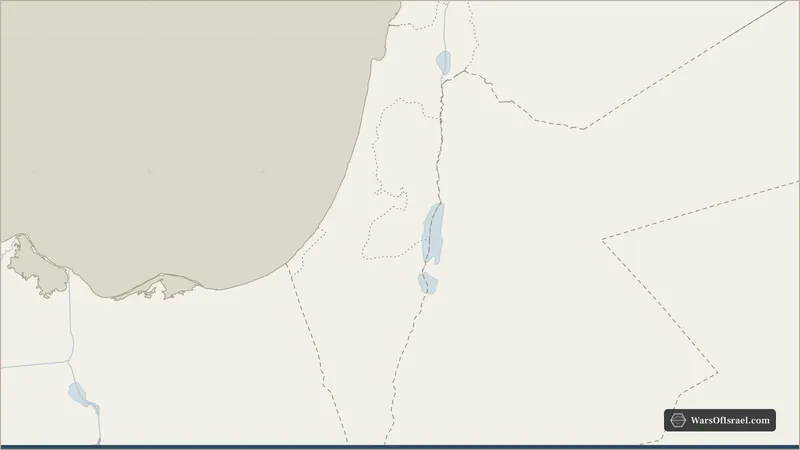
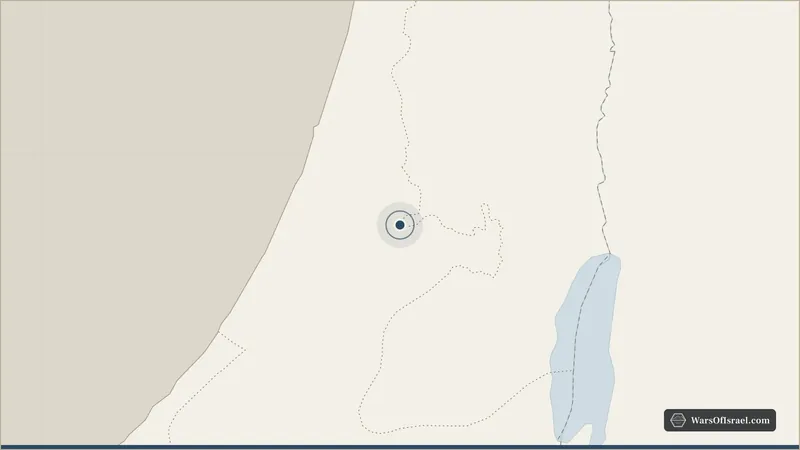
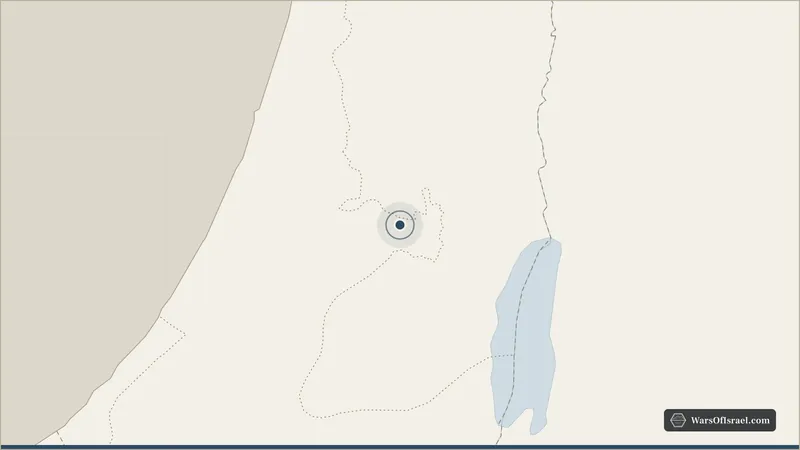
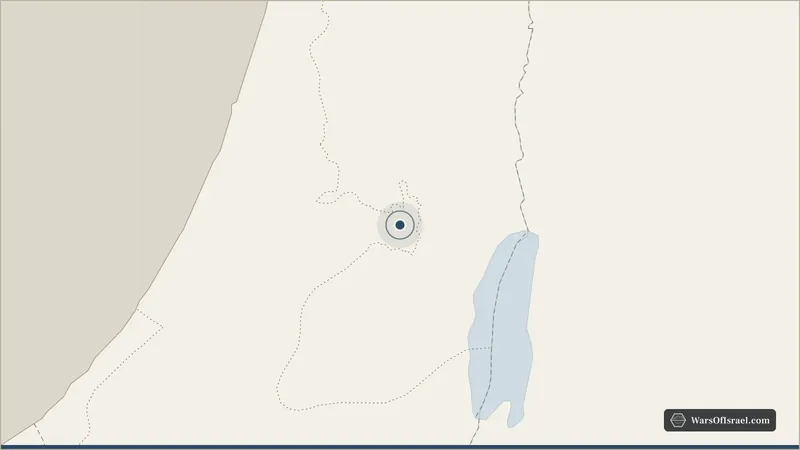
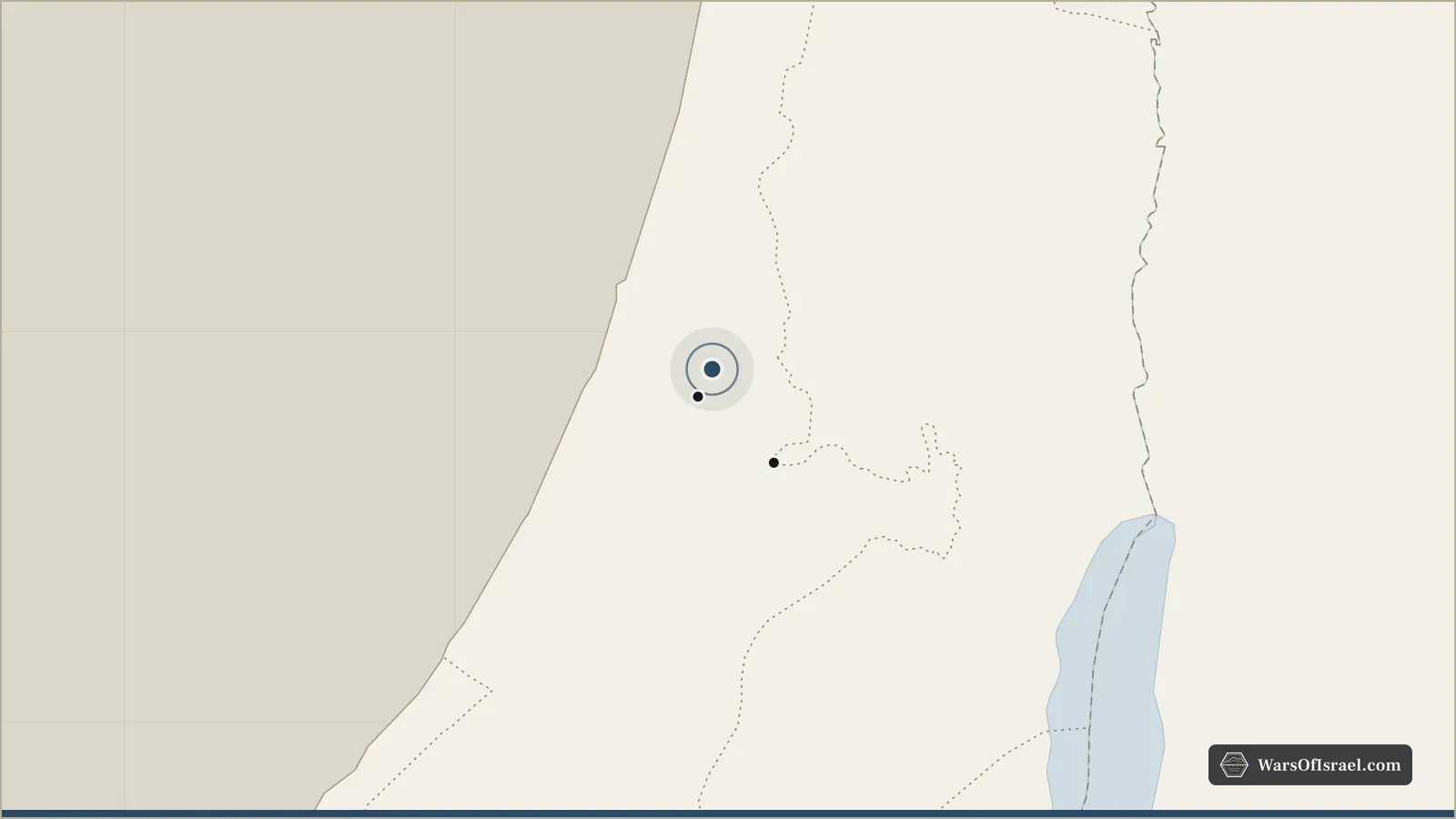
When the first truce of the 1947 to 1949 war began on June 11, 1948, the map of central Israel had an awkward bulge. Lydda and Ramle, two large Arab towns about 15 kilometers southeast of Tel Aviv, sat astride the main road and railway from the coast to Jerusalem. The country's main airport lay beside Lydda. Arab irregulars and a small Arab Legion detachment were based in the area, and Israeli commanders feared that the Legion, the strongest Arab army in the war, could use the towns as a springboard toward the coastal plain.
The other problem was Jerusalem. The road from the coast still passed under the guns of the Latrun police fort, which the Arab Legion had held through two costly Israeli assaults in May and June (see the battles of Latrun). The improvised "Burma Road" kept the city supplied, but only just. A new offensive that took Lydda and Ramle and then swung east to Latrun and Ramallah would, if it worked, solve both problems at once.
The operation was named after Daniel "Dani" Mass, the Palmach officer who commanded the 35 men killed in January 1948 while trying to reach the besieged Etzion bloc.
The forces and the plan
The newly formed Israel Defense Forces gave the operation more strength than any earlier Israeli offensive. Allon, the Palmach's commander, led it, with Yitzhak Rabin as his deputy. The force included: - the Yiftach and Harel brigades of the Palmach; - the new 8th Armored Brigade under Yitzhak Sadeh, with a tank battalion and the 89th commando battalion of jeeps and half-tracks led by Moshe Dayan; - two battalions each from the Kiryati and Alexandroni brigades, plus extra artillery and engineers.
The plan was a pincer. Yiftach would sweep from the south and the 8th Brigade from the north, meeting east of the two towns and cutting them off before any direct assault. The second phase, aimed at Latrun and Ramallah, was to follow at once.
On the other side, the Arab Legion's commander, John Bagot Glubb, was short of men and ammunition after the fighting in Jerusalem and at Latrun. According to Morris, he decided not to commit his limited forces to a serious defense of Lydda and Ramle and to concentrate instead on holding Latrun and the approaches to the hill country. The towns were left with a token Legion presence and local armed volunteers.
The fall of Lydda and Ramle
The pincer closes
The offensive opened on July 9, 1948, the day the truce expired. On July 10 Israeli forces captured the airport and a ring of villages around the towns. On the afternoon of July 11, Dayan's 89th Battalion drove through Lydda and on to the edge of Ramle in a raid lasting under an hour, firing as it went. Morris puts the battalion's own losses at 6 dead and 21 wounded, and Arab deaths in the raid at perhaps as many as 200. That evening Yiftach troops entered Lydda, and on July 12 Ramle surrendered to Kiryati units after a brief engagement.
The shooting of July 12
The calm in Lydda lasted only hours. On the morning of July 12, a few Arab Legion armored cars entered the town, shooting broke out, and the Yiftach soldiers, who believed a counterattack was under way, opened fire across the town. Accounts of the death toll differ sharply. Morris, relying on the Palmach's own history, gives a figure of some 250 Arabs killed. The Palestinian historian Aref al-Aref recorded 426. The killing of detainees inside the Dahmash mosque is the most disputed single episode: Morris writes of dozens of unarmed detainees killed, while Palestinian accounts give much higher numbers.
The expulsion
At 13:30 on July 12, an order signed by Rabin instructed the Yiftach Brigade to expel the residents of Lydda quickly. Ramle's residents were removed in the following days. On July 13 tens of thousands of people began to walk east in the summer heat toward the Arab Legion lines, while others were carried out by bus and truck. By July 14 the IDF reported that almost no Arab residents remained in either town.
Two questions are still argued over. The first is who decided. No written order from David Ben-Gurion exists. In a manuscript of his memoirs, Rabin described a meeting at which Ben-Gurion answered a question about the population with a gesture meaning "drive them out." Israeli censors removed that passage, and The New York Times published it in October 1979. Allon later said he neither sought nor received permission. Historian Yoav Gelber rejects Rabin's account and argues that Ben-Gurion did not give orders by gesture. The second question is how many people died on the road. Morris writes of "a handful and perhaps dozens" dead from heat and exhaustion; al-Aref put the number at about 500. No reliable count exists.
Stalled at Latrun
The second phase began in mid-July and ran into the defenses that had already stopped two Israeli offensives. Yiftach and Harel troops captured hills and villages on the approaches, but repeated attacks failed to take the Latrun fort itself or to open the road to Ramallah. The heaviest single loss came on July 18 at Khirbet Kurikur, where Palmach records list 44 dead. That evening the second truce, imposed by the UN Security Council, took effect, and the attempt was abandoned. In all, the Palmach records the names of 91 of its members killed in the operation.
The road to Jerusalem through Latrun stayed closed. It would remain in Jordanian hands until the Six-Day War in 1967.
Outcome and consequences
Militarily, Operation Danny ended with a mixed result. Israel removed the danger to Tel Aviv, gained the airport that became Ben Gurion International Airport, took the main railway junction and widened the central plain. Herzog described a blow against the Arab Legion as the essence of the operation, and in that sense it did not achieve its larger purpose: the Legion lost two towns it had chosen not to defend but kept its grip on Latrun and the hill country.
The human consequences were larger and longer lasting. Lydda and Ramle, which had been home to tens of thousands of Arab residents, became Israeli towns renamed Lod and Ramla, resettled within months largely by new Jewish immigrants, while only a small Arab population remained. The expulsion became a central case in the historical debate about the creation of the Palestinian refugee problem, studied in detail by Morris and others from the late 1980s. In Palestinian memory it is part of the Nakba; in Israeli historiography, it marked the moment when the question of what to do with a conquered Arab population was decided on the ground, under fire, without a written policy.
For the Israeli army, Danny was a lesson in scale. It was the first time several brigades, armor and artillery were combined under one front command, a model that Allon would apply again in the south in Operation Yoav in October.
Timeline
- June 11, 1948: The first truce begins, leaving Lydda and Ramle under Arab control.
- July 9, 1948: The truce ends and Operation Danny begins.
- July 10, 1948: Israeli forces capture the airport near Lydda.
- July 11, 1948: The 89th Battalion raids through Lydda; Yiftach troops enter the town that evening.
- July 12, 1948: Shooting in Lydda; Ramle surrenders; the expulsion order is issued.
- July 13, 1948: Residents of Lydda begin the march east toward the Arab Legion lines.
- July 18, 1948: Heavy losses at Khirbet Kurikur; the second truce takes effect that evening.
- October 23, 1979: The New York Times publishes the passage censored from Rabin's memoirs.