Military operationLebanon and the first intifada
Operation Entebbe (Operation Thunderbolt, 1976)
How a hijacked airliner, a dictator's protection and a week of deadlines led Israel to stage a rescue raid deep in Africa, and why it still defines the country's idea of itself.
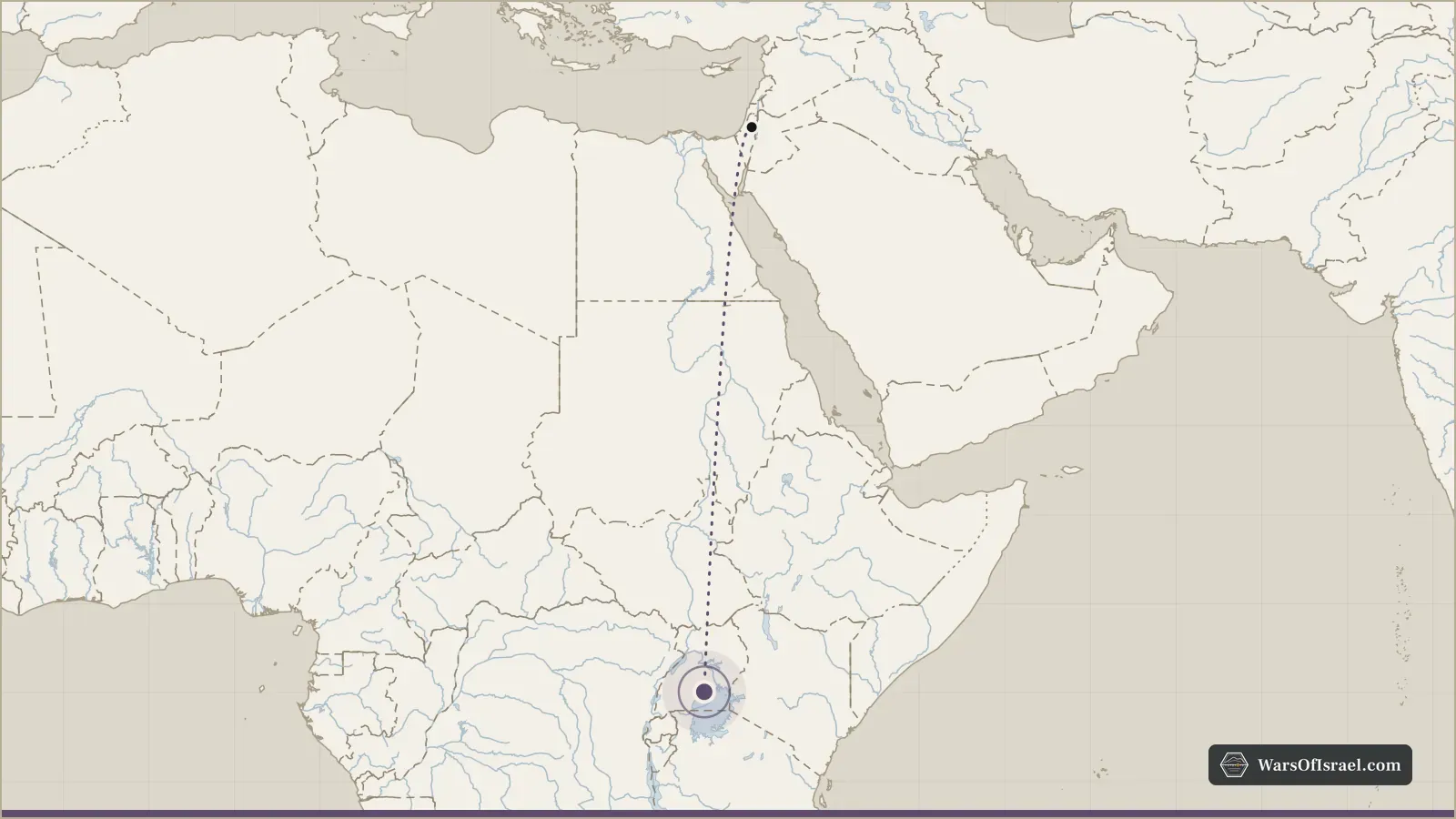
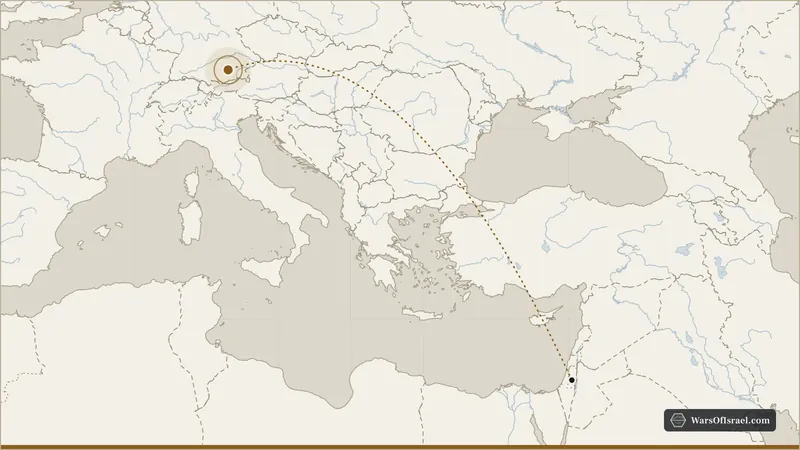
On the night of July 3 to 4, 1976, four Israeli Air Force C-130 Hercules transports landed in darkness at Entebbe airport in Uganda, about 4,000 kilometers from Israel, and Israeli commandos stormed the old terminal where the hostages of Air France Flight 139 had been held for a week. In about an hour on the ground the force killed the hijackers, flew 102 of the 106 hostages home and left behind the wreckage of much of Uganda's air force. The price was the life of Lieutenant Colonel Yonatan Netanyahu, the assault commander, and of three hostages; a fourth, held in a Kampala hospital, was murdered afterward. The operation, officially Operation Thunderbolt and renamed Operation Yonatan in his memory, became one of the defining episodes of Israel's history.
The hijacking of Flight 139
Air France Flight 139, an Airbus A300 flying from Tel Aviv to Paris, was hijacked on June 27, 1976, shortly after taking off from a stopover in Athens, with 246 passengers and 12 crew aboard. The four hijackers who had boarded in Athens were two members of the Popular Front for the Liberation of Palestine, External Operations (PFLP-EO), the faction led by Wadie Haddad, and two West Germans of the Revolutionary Cells, Wilfried Böse and Brigitte Kuhlmann.
The aircraft refueled in Benghazi, Libya, where it stood for about seven hours, and on June 28 it landed at Entebbe. There the ruler of Uganda, Idi Amin, received it. The hijackers were joined by further accomplices, Ugandan soldiers guarded the passengers in the old terminal building, and Amin presented himself as a mediator while in practice protecting the operation.
The hijackers demanded the release of 53 prisoners, 40 of them held in Israel and the rest in Kenya and several European countries, and threatened to begin killing hostages. Then came the act that turned the affair into something more than a bargaining crisis. The captors separated the Israeli and Jewish passengers from the others. On June 30 and July 1 they released 148 non-Israeli hostages, who were flown to Paris. The 106 who remained included 12 members of the Air France crew under Captain Michel Bacos, who chose to stay with their passengers, and roughly 84 Israelis.
Choosing between negotiation and force
In Jerusalem, the government of Prime Minister Yitzhak Rabin faced the dilemma of Ma'alot in 1974 in sharper form. Israel's declared policy was not to yield to hostage-takers, but the cabinet, under pressure from the families, voted to open negotiations, and the deadline was extended to July 4. The extension bought the time that the IDF needed.
Military planners, with Defense Minister Shimon Peres and Chief of Staff Mordechai Gur, drew on two unusual advantages. Released hostages in Paris gave Israeli debriefers detailed descriptions of the terminal and the guards. And the old terminal had been built in part by an Israeli construction company, at a time when Israel and Uganda had close ties, so plans of the building could be found. On the afternoon of July 3, with the aircraft already on their way, the cabinet approved the mission.
The forces and the plan
The ground force, commanded by Brigadier General Dan Shomron, comprised about 100 soldiers, among them a Sayeret Matkal assault unit led by Netanyahu, paratroopers and Golani infantry. Major General Yekutiel Adam flew in a Boeing 707 serving as an airborne command post, and a second Boeing 707 fitted as a field hospital landed in Nairobi. Kenya allowed the Israeli aircraft to refuel there on the way home, a decision that later cost Kenyans dearly in Amin's reprisals.
The plan relied on surprise. The first Hercules would land right behind a scheduled cargo flight, and the assault team would drive toward the terminal in a black Mercedes and Land Rovers, imitating the motorcade of a senior Ugandan officer. The other aircraft would follow with forces to seize the runways, secure the new terminal and destroy the Ugandan MiG fighters that could otherwise pursue the force.
The raid on July 3 to 4
The first aircraft touched down around 11 p.m. Israel time on July 3. Near the terminal, Ugandan sentries challenged the convoy, and the shots fired at them cost the attackers some surprise. Netanyahu was hit outside the building and died of his wounds. The assault teams broke into the hall where the hostages lay on the floor and killed the hijackers inside within minutes.
Three hostages were killed during the rescue: Jean-Jacques Maimoni, Pasco Cohen and Ida Borochovitch. Others were wounded. The hostages were rushed aboard a Hercules while other teams fought Ugandan soldiers in the control tower area and destroyed the MiGs on the ground. The force spent less than an hour at Entebbe before taking off for Nairobi and then home.
How many Ugandan soldiers died is not certain. Most accounts put the number at about 45; the figure of destroyed aircraft is usually given as 11 MiG fighters, with some accounts giving more. All seven hijackers present in the terminal were killed.
The exact circumstances of Netanyahu's death became the subject of a lasting dispute. Muki Betser, a senior Sayeret Matkal officer in the assault, later argued that the decision to open fire on the Ugandan sentries outside the terminal cost the force its surprise and exposed the assault team, while Netanyahu's family and other participants rejected that reading of the night. The disagreement, aired in memoirs and in the Israeli press over decades, does not change the outcome but shows how much of the raid depended on seconds.
Dora Bloch and the international reaction
One hostage was not at the airport. Dora Bloch, 74, a British Israeli, had been taken to a hospital in Kampala after choking on food. After the raid she was dragged from her bed and murdered on the orders of Ugandan officials, a crime confirmed years later when her remains were recovered.
The Organization of African Unity denounced the raid as aggression against Uganda, and the UN Security Council debated it from July 9, 1976. A US and British draft condemning hijacking failed to win the necessary votes, and a draft condemning Israel was not put to a vote. In much of the West the operation was celebrated as a model of a state refusing to abandon its citizens, and it quickly passed into books and films. The rescued hostages landed in Israel on July 4, 1976, the day the United States marked its bicentennial, and were met by crowds at the airport.
In Uganda the raid exposed and humiliated Idi Amin. Beyond the murder of Dora Bloch, his regime turned on Kenyans living in Uganda in retaliation for Nairobi's help, and hundreds were reported killed or forced to flee. Dora Bloch's remains were recovered only in 1979, after Amin's fall, near a sugar plantation outside Kampala.
Legacy
Entebbe restored a measure of confidence to an Israeli military shaken by the Yom Kippur War, and it came three years after Operation Spring of Youth had shown the reach of Israeli special forces. It shaped doctrine on hostage rescue for decades and made Sayeret Matkal a household name. For the Netanyahu family it became a lifelong cause: Yoni's letters were published, and his brother Benjamin, later prime minister, built part of his early public career on the fight against terrorism.
The raid also hardened a lesson Israelis drew from the Munich massacre: that international bodies would rarely protect them, and that a state willing to act alone could sometimes succeed. That lesson would be tested again two years later on the Coastal Road.
Timeline
- June 27, 1976: Air France Flight 139 is hijacked after taking off from Athens and diverted to Benghazi, Libya.
- June 28, 1976: The airliner lands at Entebbe, Uganda, where Idi Amin's regime receives it.
- June 30, 1976: The hijackers release a first group of non-Israeli hostages, who are flown to Paris.
- July 1, 1976: A second group is released; 106 hostages remain, including the Air France crew.
- July 3, 1976: The Israeli cabinet approves the raid; the aircraft land at Entebbe around 11 p.m. Israel time.
- July 4, 1976: The rescued hostages land in Israel after refueling in Nairobi; Dora Bloch is murdered in Kampala.
- July 9, 1976: The UN Security Council opens its debate on the raid.