Military operationLebanon and the first intifadaReference entry
Operation Wooden Leg: the strike in Tunis (1985)
How the Israeli Air Force flew more than 2,000 kilometers to bomb the PLO headquarters at Hammam Chott, and why the raid led to a UN condemnation.
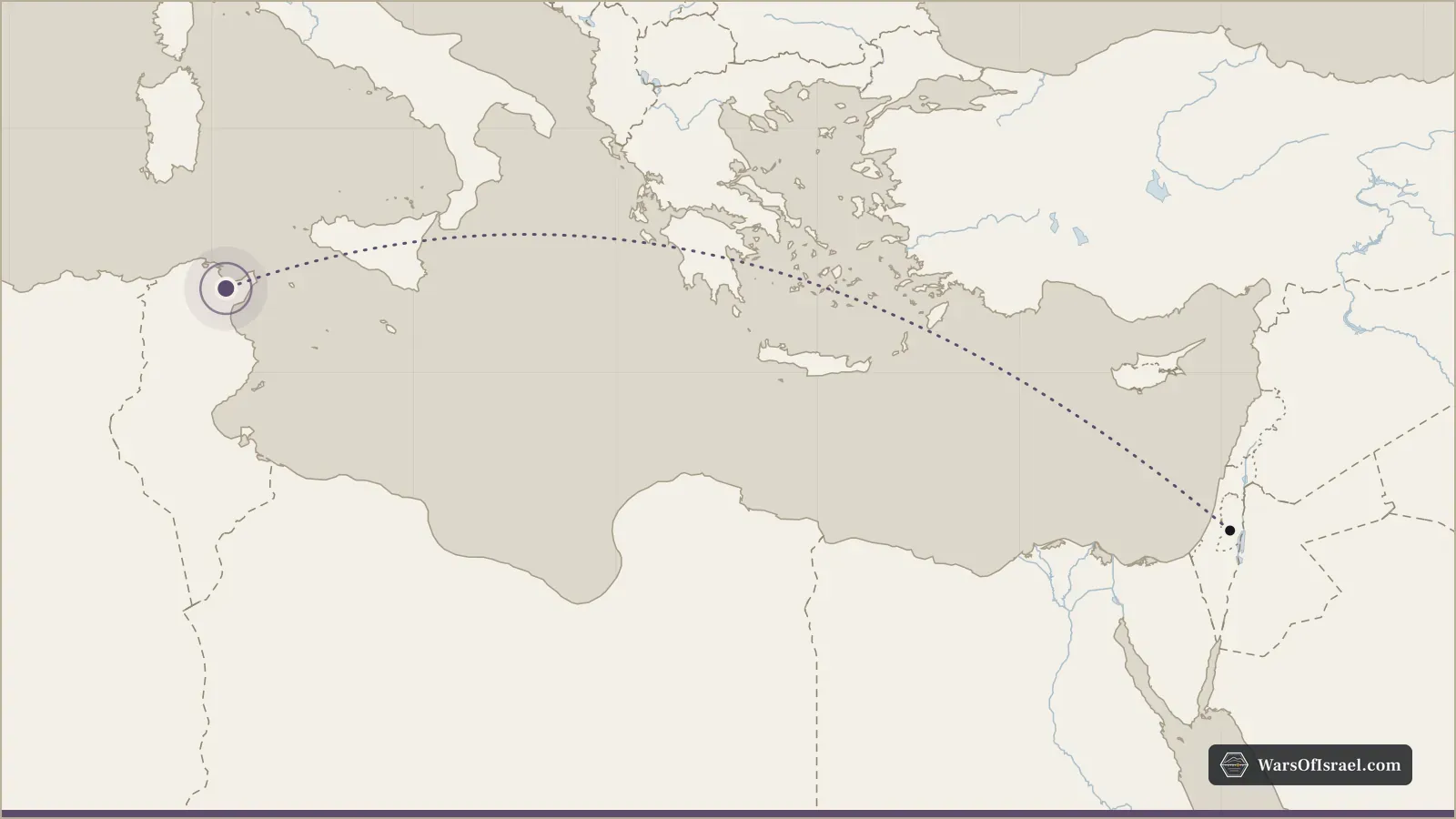
On the morning of October 1, 1985, Israeli Air Force F-15 fighters bombed the headquarters of the Palestine Liberation Organization at Hammam Chott, a seaside town outside Tunis, more than 2,000 kilometers from Israel. The operation, code-named Wooden Leg (in Hebrew, Mivtza Regel Etz), was Israel's answer to the killing of three Israelis on a yacht in Cyprus a week earlier. It destroyed the compound and killed dozens of people, but it missed the man many assumed was its main target, Yasser Arafat, and it brought Israel a rare condemnation by the UN Security Council in which the United States did not use its veto.
Background: the PLO in Tunis and the Larnaca killings
The PLO had moved to Tunisia after its fighters were evacuated from Beirut at the end of the siege of Beirut in the summer of 1982. Distance from Israel did not end its armed activity. Fatah's Force 17, a unit originally formed as Arafat's personal guard, was by then also involved in operations against Israeli targets, and in September 1985 Israel captured several of its senior members at sea.
On September 25, 1985, three gunmen seized a yacht in the marina at Larnaca, Cyprus, and killed the three Israelis on board. Israel blamed Force 17. The PLO denied responsibility. The Israeli cabinet, led by Prime Minister Shimon Peres with Yitzhak Rabin as defense minister, decided on a response that would strike the PLO's leadership itself rather than its bases in Lebanon.
The raid
The strike demanded a flight far beyond the normal range of the Israeli Air Force. A formation of F-15s took off from Israel, accompanied by Boeing 707 aircraft converted into aerial tankers, which refueled the fighters over the Mediterranean on the way out and again on the way back. According to Israel's military archive, as reported by the Associated Press, six to eight F-15s took part and dropped 1,000-pound bombs; the attack itself lasted only a few minutes. No Israeli aircraft was lost.
The bombs hit a group of buildings that Israel said housed the PLO's leadership offices, communications and military facilities. Arafat was not there. According to accounts collected by the Associated Press, he had returned to Tunis and was on his way to Hammam Chott when he was asked to go instead to a meeting in the nearby suburb of La Marsa. Whether his absence was luck or the result of a warning has never been established.
The death toll is disputed. According to Tunisian government figures given to the United Nations at the time, as reported by the Associated Press, 68 people were killed, 50 Palestinians and 18 Tunisians, and more than 100 were wounded. Other accounts put the number of dead between the mid-forties and about seventy. Israeli sources at the time said that the dead were mostly PLO members; Tunisian civilians who lived and worked near the compound were among the casualties.
International reaction
Tunisia, which had taken in the PLO leadership in 1982 and was a friend of the United States, called the raid an act of aggression against its sovereignty. On October 4, 1985, the UN Security Council adopted Resolution 573, which condemned the attack as a flagrant violation of the UN Charter and international law, and stated that Tunisia was entitled to appropriate reparations. The vote was 14 to 0, with the United States abstaining. The Reagan administration's first public reaction had described the strike as a legitimate response to terrorism; within days it retreated from that wording.
The raid was soon overshadowed by another crisis. On October 7, 1985, Palestinian gunmen from the Palestine Liberation Front hijacked the Italian cruise ship Achille Lauro and murdered Leon Klinghoffer, a Jewish American passenger in a wheelchair.
Significance
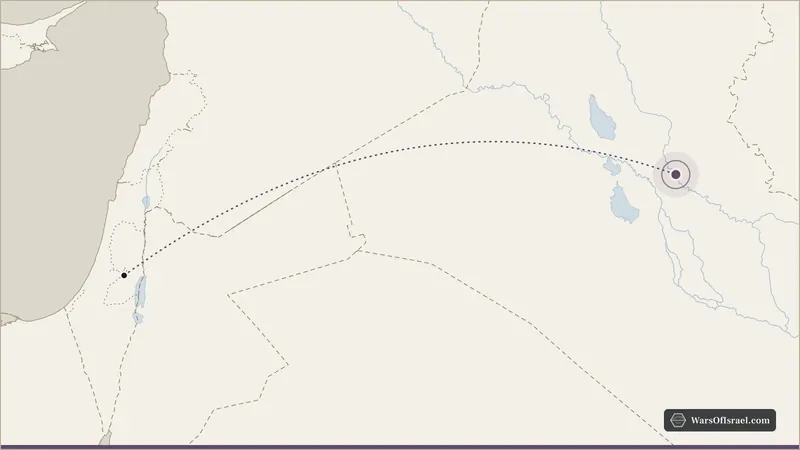
Operation Wooden Leg demonstrated a capability Israel had previously shown only once, in Operation Opera, the 1981 strike on Iraq's nuclear reactor: the ability to hit a target far beyond its borders. In military terms the raid was flown as planned. In political terms its results were mixed. It did not change the PLO's course, it drew sharp international criticism and it increased the PLO's standing among Tunisians, for whom the raid remains a national memory.
The operation also marked a step in a long line of Israeli actions against the PLO's leadership abroad. Two and a half years later, on April 16, 1988, Israeli commandos killed Khalil al-Wazir (Abu Jihad) at his home in Tunis, an operation Israel acknowledged only many years later. Some historians see the two operations as part of a single Israeli effort to strike the organization's command, from Operation Spring of Youth in Beirut in 1973 to the years of the first intifada.