The October 7, 2023 attack on Israel
The deadliest day in Israel's history, reconstructed from official figures and inquiries: how the border collapsed, where the attackers struck and what the investigations found.
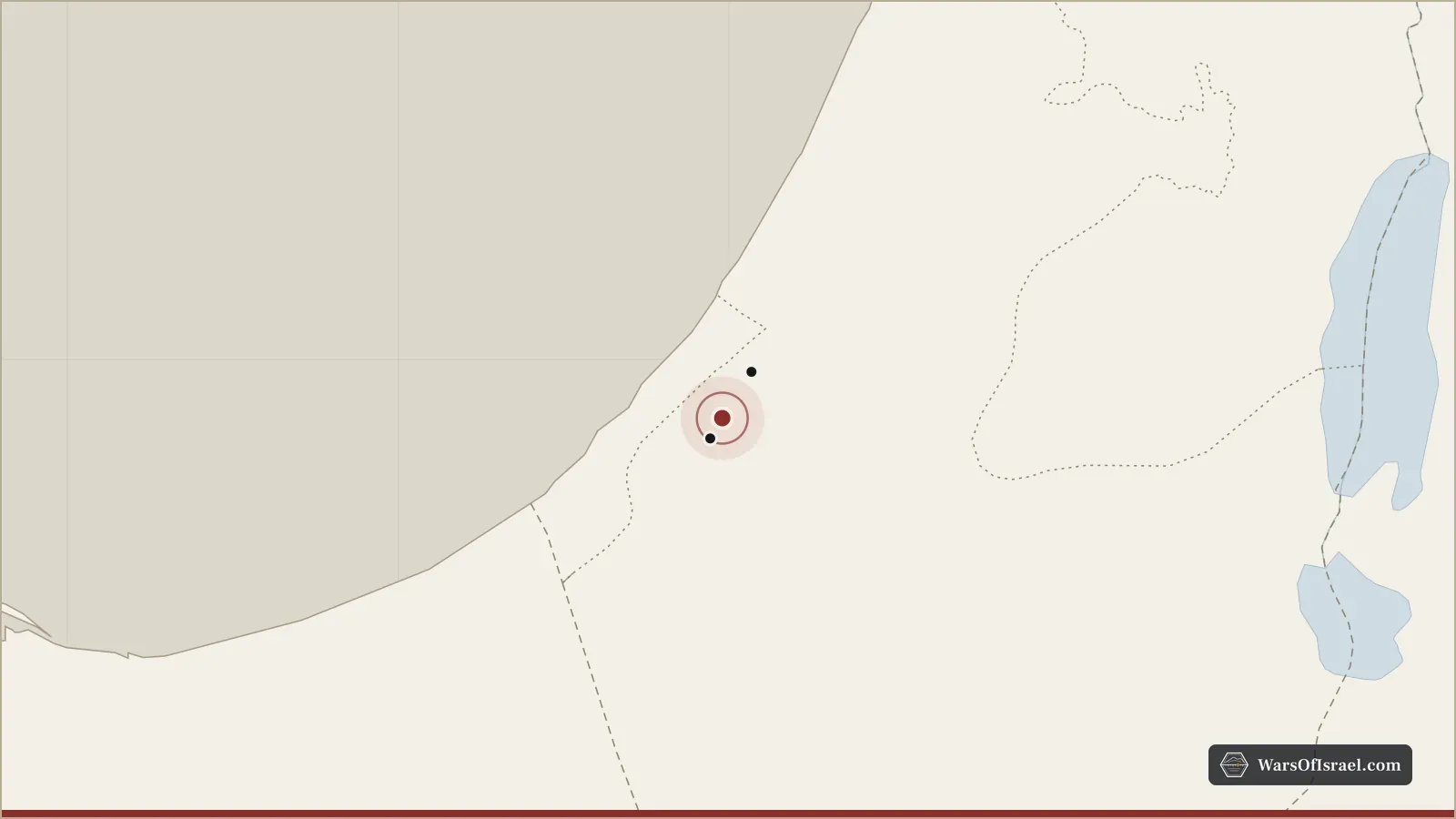
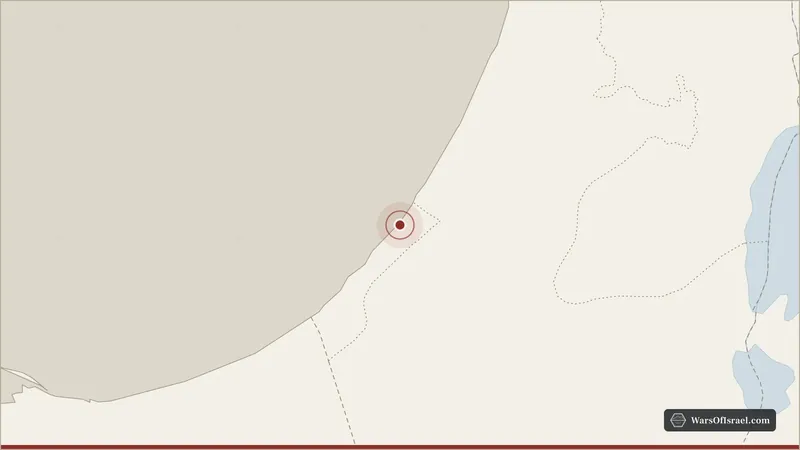
On Saturday, October 7, 2023, the Jewish holiday of Simchat Torah, Hamas led an armed assault out of the Gaza Strip that overran Israeli army posts and more than twenty towns and villages in the western Negev. About 1,200 people were killed, according to Israeli official figures, most of them civilians, and 251 people were taken into Gaza as hostages. It was the deadliest day in the history of the State of Israel, and it opened the Israel and Hamas war, which had not formally ended three years later.
A border built on a conception
Hamas had ruled Gaza since 2007 and had fought several rounds against Israel, described in the armed conflict between Gaza and Israel from 2005. Israel's defense along the border rested on a sensor-laden barrier, completed in 2021, with an underground wall against tunnels, remote-controlled guns and observation posts staffed largely by female surveillance soldiers. Behind it stood the Gaza Division, headquartered at the Re'im base, and a limited number of combat troops, since many units had been moved to the West Bank.
The IDF's investigations, published on February 27, 2025, found that military intelligence had obtained an outline of a Hamas invasion plan years earlier but had treated it as aspirational rather than operational. Warning signs in the night before the attack, including the activation of Israeli SIM cards by Hamas fighters, were discussed at senior levels without raising the alert. The overriding assumption was that Hamas did not want a major war.
The assault
At 6:29 in the morning a barrage of rockets struck Israel; Hamas's military commander Mohammed Deif claimed more than 5,000 were fired in the first twenty minutes. Under its cover, fighters of the Izz ad-Din al-Qassam Brigades, including its Nukhba commando units, breached the barrier at dozens of points with explosives, bulldozers, pickup trucks and motorcycles, while others crossed by paraglider and by sea toward Zikim. Drones disabled observation towers and communications. Members of Palestinian Islamic Jihad and other factions followed, and so did civilians from Gaza. In later estimates the IDF put the total number who crossed at about 6,000.
The attackers struck on three levels at once. They overran army positions on the border, including the Nahal Oz base, where dozens of soldiers were killed and several surveillance soldiers were taken hostage, and they reached the Gaza Division headquarters at Re'im. They entered kibbutzim and moshavim along the border, among them Be'eri, Kfar Aza, Nir Oz, Nahal Oz, Kissufim, Holit, Nir Yitzhak and Netiv HaAsara, going from house to house. And they drove deeper, to the towns of Sderot and Ofakim, where police officers and residents fought them in the streets, and to Route 232, where people in cars and at roadside shelters were shot.
The largest single loss of life came at the Nova music festival near Re'im, where hundreds of young people were killed as they tried to flee, as described in the Nova festival massacre. In Be'eri about one in ten residents was killed, and in Kfar Aza the fighting continued until October 10. At Nir Oz, a kibbutz of about 400 people, more than a hundred residents were killed or taken to Gaza.
The response
The first responders were the communities' own volunteer security squads, police officers and off-duty soldiers and reservists who drove south on their own initiative. In many places they fought for hours alone. The army's response was slowed by the collapse of the Gaza Division's command, by the fall of its forward positions and by the lack of a clear picture of where the attackers were. In Be'eri the first special forces team arrived around 9 a.m., but larger forces came only in the afternoon. The IDF's own investigations described the army's failure to protect the civilians of the border area as a mission failure.
Israeli forces killed more than a thousand of the attackers inside Israel, according to the IDF, and captured others. It took about three days to clear the last fighters from the border area. Tens of thousands of residents of the Gaza border region were evacuated, many of them to hotels at the Dead Sea and in Eilat, and the town of Sderot was largely emptied. For the first time since 1948, enemy forces had held Israeli communities inside the country's sovereign territory, and the shock of that fact shaped every decision Israel made in the weeks that followed.
The dead, the hostages and the evidence
Israeli official figures put the number of people killed at about 1,200, a toll that was revised several times as bodies were identified; most were Israeli civilians, and the dead also included dozens of foreign nationals, among them agricultural workers from Thailand and Nepal, and several hundred soldiers and police officers. Of the 251 hostages, some were already dead when they were taken. They included infants, children, elderly people, soldiers and foreign workers. Their fate shaped the whole war that followed: the last living hostages came home on October 13, 2025, and the IDF announced on January 26, 2026 that it had recovered the body of the last hostage held in Gaza.
Some of the early reports of atrocities that circulated in the first days were later found to be inaccurate, and others were confirmed by forensic work, survivor testimony and the attackers' own videos. In a report published on March 4, 2024, the UN Special Representative on Sexual Violence in Conflict, Pramila Patten, said there were reasonable grounds to believe that conflict-related sexual violence, including rape, had occurred in several locations on October 7, including the Nova festival site and Route 232. Hamas denies that its fighters committed sexual violence or deliberately killed civilians.
Inquiries and responsibility
The head of military intelligence, Major General Aharon Haliva, resigned in April 2024, and Chief of Staff Herzi Halevi announced his resignation in January 2025, both taking responsibility for the failure. The IDF published investigations of individual battles, including Be'eri on July 11, 2024 and Kfar Aza in early 2025, and an overall summary on February 27, 2025. The Shin Bet published its own summary in March 2025, acknowledging its failure to give warning while also pointing to government policy toward Hamas. Prime Minister Benjamin Netanyahu has said he will answer questions after the war. Bereaved families and the opposition have demanded a state commission of inquiry, which became one of the most contested political issues in the country.
Comparison with the surprise of the Yom Kippur War fifty years and one day earlier was immediate, in public debate and in the inquiries themselves. In both cases a firm intelligence conception about the enemy's intentions outweighed the signs on the ground. Then too, on October 6, 1973, Israel was attacked on the morning of a holy day, on two fronts and almost completely by surprise.
Memory
The date is marked in Israel on the Gregorian anniversary and on the Hebrew date of Simchat Torah. Many of the destroyed communities of the border area have been rebuilding while residents decide whether to return. The Nova site near Re'im has become a memorial, and the burned cars collected from the roads were gathered at a site near Tkuma. On October 19, 2025 the government renamed the war that the attack began the War of Revival, a decision critics said blurred responsibility for the failures of October 7.
Timeline
- October 7, 2023, 6:29 a.m.: Rocket fire from Gaza begins as fighters breach the border at dozens of points.
- October 7, 2023: Attackers strike army posts, more than twenty communities, Sderot, Ofakim and the Nova festival; 251 people are abducted.
- October 8, 2023: Israel's security cabinet formally declares war.
- October 10, 2023: The last fighting in Kfar Aza ends.
- March 4, 2024: A UN report finds reasonable grounds to believe sexual violence occurred on October 7.
- July 11, 2024: The IDF publishes its inquiry into the battle of Be'eri.
- February 27, 2025: The IDF publishes the summary of its investigations into October 7.
- October 13, 2025: The last 20 living hostages are released.
- January 26, 2026: The IDF recovers the body of the last hostage held in Gaza.