Military operationSecond intifada to the Gaza operations
Operation Guardian of the Walls (2021)
How a crisis in Jerusalem became a Gaza war and, for the first time in decades, a battle inside Israel's own mixed cities.
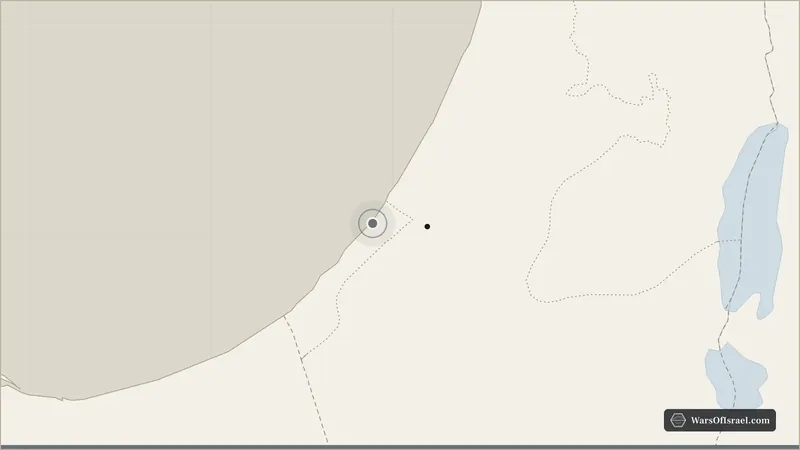
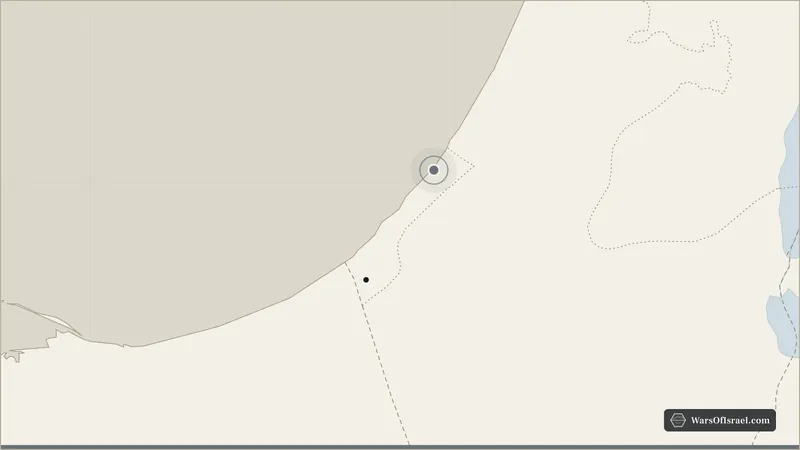
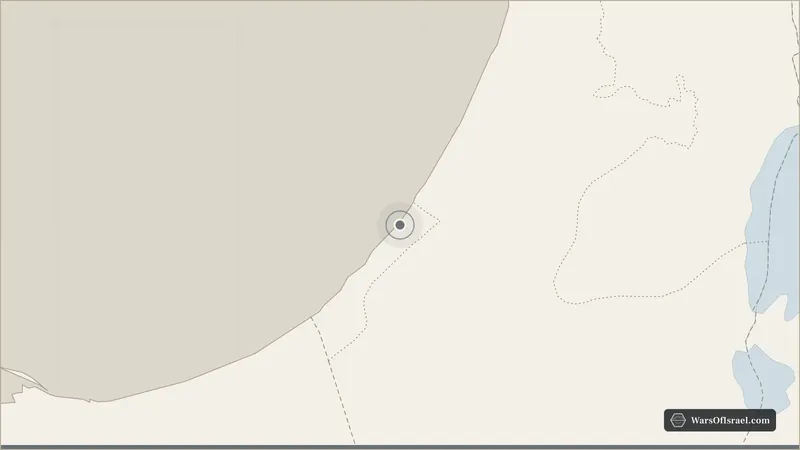
Operation Guardian of the Walls (Shomer HaHomot) was the 11-day round of fighting between Israel and the armed groups in the Gaza Strip, chiefly Hamas and Palestinian Islamic Jihad, from May 10 to May 21, 2021. Unlike earlier Gaza operations, it did not start over the border with Gaza. It started in Jerusalem, over the Sheikh Jarrah eviction cases and clashes at the Al-Aqsa Mosque compound, when Hamas fired rockets at the city and presented itself as Jerusalem's defender. Within hours the war had a second front that Israel had not faced in this form since 1948: riots, arson and killings between Jews and Arabs in Lod, Acre, Ramla, Jaffa and other cities inside Israel. The fighting ended in a ceasefire without terms, but it left a mark on Israeli society and on Hamas's sense of what it could achieve.
Jerusalem in the spring of 2021
The spring brought several flashpoints together at once. The holy month of Ramadan began in mid-April, and police barriers at the Damascus Gate plaza, a traditional gathering place in the evenings, led to nightly confrontations until they were removed. In the Sheikh Jarrah neighborhood of East Jerusalem, a long legal battle over the eviction of several Palestinian families, in favor of Jewish organizations claiming ownership of the land from before 1948, was approaching a Supreme Court hearing. The cases became a rallying symbol for Palestinians and drew international attention.
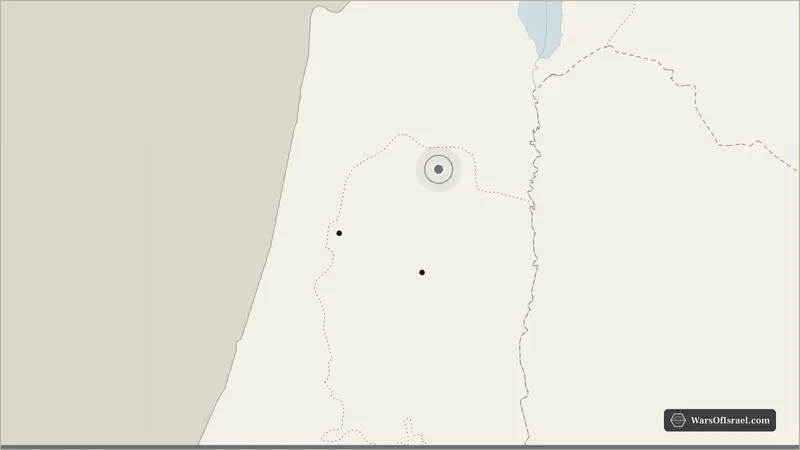
On May 7 and again on the morning of May 10, Israeli police entered the Al-Aqsa compound during clashes with Palestinians who had stockpiled stones, and hundreds were injured. May 10 was also Jerusalem Day, when the traditional Israeli flag march passes through the Old City. The Supreme Court postponed the Sheikh Jarrah hearing and the police changed the route of the march, but by then Hamas had issued an ultimatum: Israel must withdraw its forces from Al-Aqsa and Sheikh Jarrah by 6 p.m. Minutes after the deadline passed, rockets were fired toward Jerusalem and the area of Beit Shemesh.
The political setting added uncertainty. Israel had held its fourth election in two years in March 2021, and Prime Minister Benjamin Netanyahu was leading a caretaker government while his rivals negotiated a coalition. On the Palestinian side, President Mahmoud Abbas had postponed, at the end of April, the first Palestinian legislative elections in fifteen years, in which Hamas had expected to do well.
Forces and strategy
Israel relied mainly on air power, artillery and Iron Dome. Defense Minister Benny Gantz and Chief of Staff Lieutenant General Aviv Kochavi presented the operation as an attempt to inflict deep damage on Hamas's military capabilities, especially its underground network, its rocket production and its commanders, without a large ground incursion. Ground forces were massed on the border but did not enter Gaza.
Hamas's Izz ad-Din al-Qassam Brigades and Islamic Jihad's Al-Quds Brigades fired the bulk of the rockets. They called the round "Sword of Jerusalem," a name that expressed the movement's aim: to link Gaza with Jerusalem and the wider Palestinian public, and to challenge the Palestinian Authority's leadership. The rocket fire was heavier and more concentrated than in Operation Protective Edge, with large salvos aimed at a single area to saturate the defense.
The course of the fighting
The rocket war and the strikes on Gaza
From the evening of May 10 rockets fell on Ashkelon, Ashdod, Sderot and the communities near Gaza, and from May 11 on Tel Aviv and the central region as well. According to the IDF, about 4,360 rockets and mortar shells were fired during the round, and Iron Dome intercepted the large majority of those heading for populated areas. A soldier was killed by an anti-tank missile near the border on May 12, and rockets killed civilians in Ashkelon, Rishon LeZion, Lod, Sderot and elsewhere, including Arab citizens of Israel and foreign workers.
Israel struck thousands of targets. Among them were several high-rise buildings in Gaza City that the IDF said housed Hamas military intelligence or offices; residents were warned to leave before the strikes. On May 15 the IDF destroyed the al-Jalaa building, which held the offices of the Associated Press and Al Jazeera. Israel said Hamas military intelligence used the building; the AP said it had no indication of a Hamas presence and called for evidence, which Israel said it shared with the United States.
On the night of May 13 to 14 the air force carried out its largest strike of the round against the tunnel network that the IDF called the "metro," a system of passages under Gaza used to move fighters and weapons. Before the strike, the IDF made public moves that some outlets interpreted as the start of a ground invasion. Israeli assessments of how many Hamas fighters were killed in the tunnels were later revised downward.
The front inside Israel
The most unexpected part of the war took place far from Gaza. On the evening of May 10, Arab protesters in Lod clashed with police, and a young Arab man, Musa Hassuna, was shot dead, allegedly by Jewish residents; the case against the suspects was later closed on grounds of self-defense. In the following days synagogues, homes and cars were set on fire in Lod, and on May 11 the government declared a state of emergency in the city, the first time since the end of military rule over Arab communities in 1966 that such powers were used over an Arab population. Border Police units were brought in from the West Bank.
Violence spread to Acre, Ramla, Jaffa, Haifa and Bat Yam, where a mob of Jewish rioters beat an Arab driver in a scene broadcast live on television. Yigal Yehoshua, a Jewish resident of Lod, was hit in the head by a brick thrown at his car and died of his injuries. In Acre, a Jewish man was severely beaten and a well-known restaurant and hotel were set on fire. The police later carried out a wave of arrests, most of them of Arab citizens, a fact that drew criticism from Arab leaders. For many Israelis the events were a shock as severe as the rockets themselves.
Ceasefire and casualties
International pressure grew as the days passed, with the United States pressing for an end to the fighting and Egypt and Qatar mediating. On May 20 the Israeli security cabinet approved a mutual and unconditional ceasefire, which took effect at 2:00 a.m. on May 21, 2021. Both sides claimed victory.
According to UN OCHA, 13 people were killed in Israel, including two children. In Gaza, according to the UN human rights office (OHCHR), 261 Palestinians were killed, including 67 children and 41 women. OHCHR classified 130 of the dead as civilians and 64 as members of armed groups, and could not determine the status of the remaining 67. The IDF estimated that about 200 of those killed were militants, while Hamas acknowledged about 80 of its fighters. The IDF also said that some of the dead in Gaza were killed by rockets that fell short inside the Strip. According to OCHA, about 113,000 people were displaced at the peak of the fighting. Human Rights Watch said that both Israeli strikes and Palestinian rocket fire violated the laws of war; Israel said it had acted lawfully against military targets.
The UN figures for the war are summarized in a humanitarian bulletin issued by UN OCHA (opens in a new tab), which also describes the reconstruction needs in Gaza.
Legacy and lessons
On the Israeli side, the operation was presented as a military success that had struck Hamas's capabilities and killed senior commanders. Two years and five months later, the October 7 attack cast this assessment in a different light. Several Israeli analysts later argued that the 2021 round reinforced the belief, among both Israeli decision makers and Hamas, that Hamas preferred limited rounds, while Hamas was in fact preparing a much larger offensive. The next rounds in Gaza, Operation Breaking Dawn in 2022 and Operation Shield and Arrow in 2023, were fought against Islamic Jihad alone, with Hamas standing aside.
Inside Israel, the riots led to inquiries into police preparedness and to debate over Jewish and Arab relations in mixed cities. A month after the ceasefire a new government took office, for the first time with an Arab party, Ra'am, as a member of the coalition. In the West Bank, the war contributed to the rise of new local armed groups in Jenin and Nablus, the background to the Israeli operations in the West Bank from 2022. All of these developments belong to the broader story of the Gaza conflict since 2005.
Timeline
- May 7, 2021: Clashes at the Al-Aqsa compound; police enter the compound.
- May 10, 2021: Hamas's ultimatum expires at 6 p.m. and rockets are fired at Jerusalem; the operation begins.
- May 11, 2021: A state of emergency is declared in Lod; rockets reach the Tel Aviv area.
- May 12, 2021: An IDF soldier is killed by an anti-tank missile on the Gaza border.
- May 14, 2021: The air force strikes the tunnel network inside Gaza.
- May 15, 2021: The al-Jalaa building, home to the AP and Al Jazeera offices, is destroyed.
- May 20, 2021: The Israeli security cabinet approves a ceasefire.
- May 21, 2021: The ceasefire takes effect at 2:00 a.m.