Guides
UN forces along Israel's borders: what UNTSO, UNDOF and UNIFIL can do
Three missions, distinct mandates: a guide to unarmed observers, armed peacekeeping, state responsibilities and UNIFIL's planned departure.

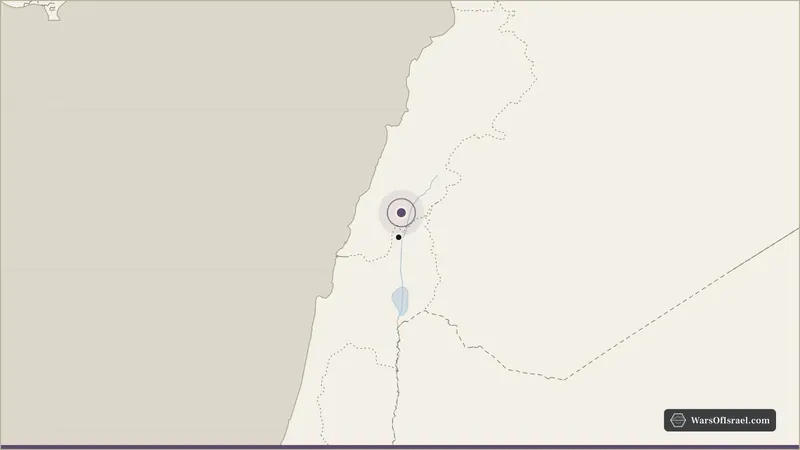
The United Nations missions along Israel's ceasefire lines do different jobs. UNTSO supplies unarmed military observers and regional liaison. UNDOF supervises the Israel-Syria disengagement arrangements on the Golan Heights and includes troops with defensive weapons. UNIFIL operates in southern Lebanon, supporting Lebanese state authority and monitoring a framework that also addresses Hezbollah's weapons. Their names are similar; their powers, geography and histories are not.
The distinction matters whenever a report says that the UN monitored a violation, failed to prevent an attack or is preparing to withdraw. Observation is a function. Enforcing every provision of a political settlement is a much broader task, and no mission gains that power simply because its personnel wear UN insignia.
UNTSO began with a truce in 1948
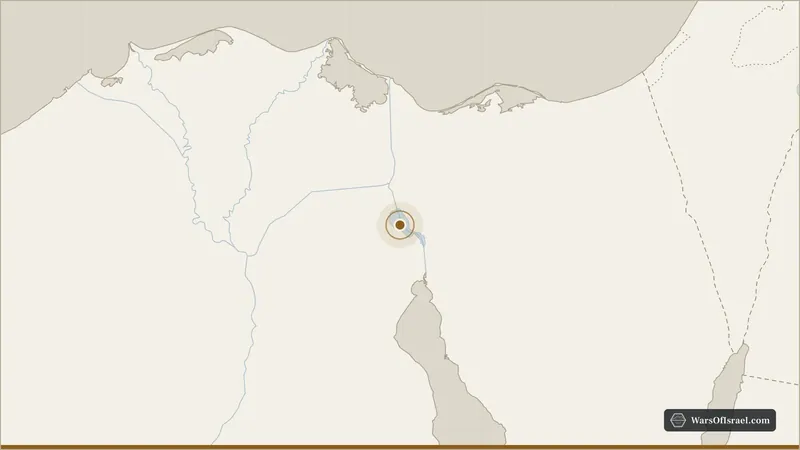
The United Nations Truce Supervision Organization, or UNTSO, grew out of Security Council Resolution 50 of May 29, 1948. The Council called for a cessation of hostilities and assigned military observers to assist the UN mediator in supervising it. This was the beginning of UN peacekeeping, during the war, rather than a mission created after the 1949 armistice agreements were already in place.
Those agreements gave the observers a subsequent framework. UNTSO remained to supervise the armistice arrangements between Israel and its Arab neighbors, adapting its work as later wars changed the ceasefire lines. The mission's history therefore spans several different security arrangements, not one unchanged border-monitoring assignment.
Its military observers are unarmed. Their work includes observing incidents, checking information, reporting violations and maintaining contact with the parties. Regional liaison involves Israel, Egypt, Jordan, Lebanon and Syria. UNTSO observer groups also assist UNDOF on the Golan and UNIFIL in Lebanon.
That overlap can confuse a news report. An unarmed UNTSO observer may be supporting another mission without making that entire mission unarmed. The observer's value is partly the ability to communicate an account of an incident across opposing sides. That can help contain escalation, but it is not a guarantee that an armed party will obey a ceasefire.
UNDOF supervises the Golan disengagement agreement
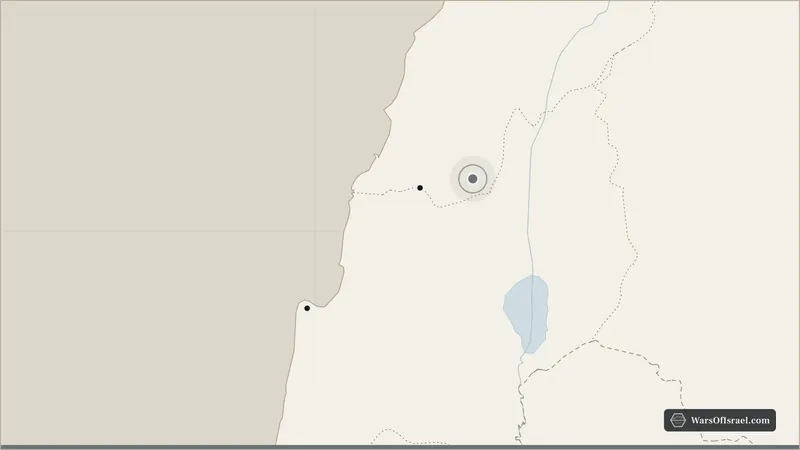
UNDOF, the United Nations Disengagement Observer Force, was established on May 31, 1974, through Resolution 350. Its immediate setting was the Israel-Syria disengagement agreement following the Yom Kippur War. The agreement separated the forces and created areas in which military presence and armaments were restricted.
The mission's central tasks are to maintain the ceasefire and supervise the separation and limitation arrangements. These are specific responsibilities tied to the agreement. They do not make UNDOF a general police force for Syria or give it authority to settle the political dispute over the Golan.
The original protocol makes the armed-status distinction explicit. It provides for personal weapons of a defensive character, to be used in self-defense. It also provides for freedom of movement and communication and regular inspections, with reports to the parties. UNDOF is therefore not an unarmed-observer-only mission, despite the word "Observer" in its name.
UNTSO observers support its work, while UNDOF's contingents perform the force's own duties. Reporting on an incident should identify which personnel were involved and whether they observed a violation, were obstructed or took protective action. Those are different events, with different implications for the mandate.
The latest renewal located for this guide is Resolution 2824, adopted on June 25, 2026, extending UNDOF through December 31, 2026. The resolution reiterates the parties' obligations under the 1974 agreement and stresses liaison to prevent escalation. That renewal date should be used instead of an older date still appearing on some mission background pages.
UNIFIL was created in 1978 and expanded in 2006
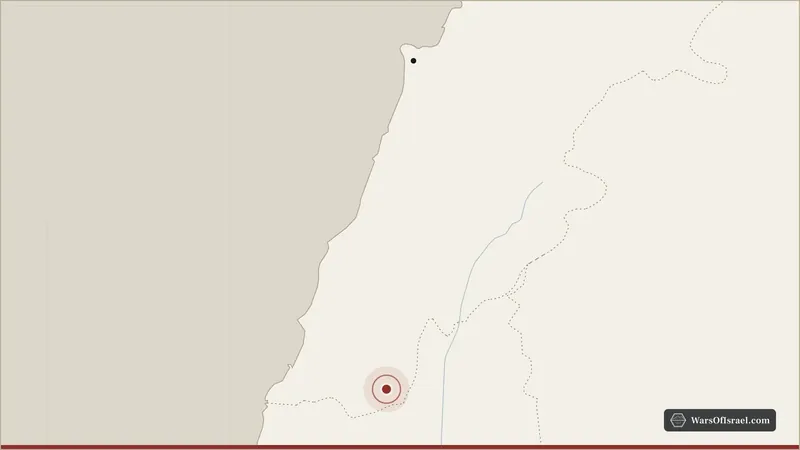
The United Nations Interim Force in Lebanon, or UNIFIL, began after Israel's Operation Litani in 1978. On March 19, the Security Council adopted Resolutions 425 and 426. The first established the force's central purposes: confirm Israeli withdrawal, help restore international peace and security, and assist the Lebanese government in restoring effective authority in the area.
Resolution 426 approved the Secretary-General's implementation report and established the force on that basis for an initial six months, with continuation dependent on the Council. The word "interim" described the intended arrangement; it did not give the mission a fixed, self-executing departure date.
UNIFIL remained through the subsequent conflict and the South Lebanon security zone period. The UN identified the Blue Line in 2000 to verify Israeli withdrawal. It is a withdrawal line, and references to it should not be confused with UNDOF's separate disengagement lines on the Golan.
The Second Lebanon War in 2006 produced a major change. Resolution 1701, adopted on August 11, expanded UNIFIL's role and authorized a force ceiling of 15,000 troops. That was an authorized maximum, not a statement of the number deployed on any later date.
The resolution connected the cessation of hostilities, Israeli withdrawal and Lebanese army deployment. It envisaged an area between the Blue Line and the Litani River without armed personnel, assets or weapons other than those of the Lebanese government and UNIFIL. That objective remains central to arguments about the force's record.
What monitoring allows, and what force is authorized
UNIFIL's responsibilities include monitoring the cessation of hostilities, accompanying and supporting Lebanese army deployment, coordinating relevant activities with both governments, and helping humanitarian access and the safe return of displaced people. It also assists Lebanese forces in steps toward the security arrangements south of the Litani.
The mandate is not limited to taking notes. Paragraph 12 of Resolution 1701 authorizes necessary action, within the mission's capabilities and areas of deployment, to prevent hostile use of its operating area, resist forceful obstruction of its duties, protect UN personnel and facilities, and help protect civilians facing imminent physical violence. The Lebanese government's own responsibilities remain in place.
Those qualifications matter. A permission to act within capabilities is not a promise that personnel can reach every location, defeat every armed group or protect every person. Nor is the presence of weapons in the region evidence that UNIFIL was given unrestricted authority to conduct a nationwide disarmament campaign.
Lebanon's obligations and UNIFIL's supporting role are related but distinct. Resolution 1701 addresses the government's authority, security at borders and entry points, and the wider disarmament framework. The international force does not replace the Lebanese state. A report should therefore ask which institution was responsible for the particular action at issue, rather than attributing every security function to the UN.
Why the mission's record is disputed
Israel's criticism focuses on the gap between the intended security arrangements and Hezbollah's ability to retain and rebuild military infrastructure. In an August 28, 2026 report, JNS described Israeli and American criticism of UNIFIL's record. Israel's UN ambassador Danny Danon told JNS that Israel supported ending the mission and opposed deploying a replacement international force, arguing that another such arrangement could enable Hezbollah to rebuild.
That is an attributable Israeli assessment. It should not be converted into an established finding that every peacekeeper knowingly assisted Hezbollah. Specific allegations of obstruction, concealment or complicity require their own evidence, including what personnel could observe and what action they were authorized and able to take.
UNIFIL's official explanation emphasizes its monitoring, liaison and assistance functions, and the limited circumstances for using force. Resolution 2790 also acknowledged weapons-cache discoveries, patrols and inspections while identifying continuing violations. A record can therefore include useful operational work alongside a failure to achieve the broader security outcome sought by Israel.
The institutional problem extends beyond Lebanon. In Power in Peacekeeping, published by Cambridge University Press, scholar Lise Howard distinguishes the ways peacekeepers influence behavior from the offensive coercion associated with national armies. Communication, deterrence and cooperation can matter without producing complete compliance. Evaluating a mission requires examining both the assigned task and the result, rather than treating troop presence as proof of success or every violation as proof that no useful work occurred.
UNIFIL's mandate expiry and withdrawal are different dates
As checked on November 4, 2026, the adopted timetable located for UNIFIL is Security Council Resolution 2790 (opens in a new tab), passed on August 28, 2025. It extends the mandate for a final time through December 31, 2026, and provides for an orderly withdrawal beginning from that date and completed within one year.
The distinction is practical: the end of ordinary mission operations is not the same as the day the last contingent departs. During withdrawal, the resolution authorizes defined functions including protection of UN personnel and facilities, escorts, extraction of endangered personnel and humanitarian workers, medical support, and a contribution to civilian protection within available capacity.
JNS's August 2026 reporting described planning for a gradual departure and debate over possible successor arrangements. The Secretary-General's June 1, 2026 letter, S/2026/453, set out options for a future UN presence. Neither an options paper nor a diplomat's preferred alternative is evidence that a successor force has been authorized.
The site's earlier report on UNIFIL's approaching exit provides publication continuity. For the formal timetable, the controlling evidence used here is the adopted resolution. No later adopted change was identified in the checks for this guide; that is a dated finding, not a guarantee that the Council cannot change the arrangements.
The transition also needs to be read against the 2026 conflict in Lebanon. The resolution also allows a limited guard capability during the later liquidation phase. A planned withdrawal does not establish that Hezbollah has disarmed, that Lebanese troops control every relevant location or that a political settlement is complete. Those require evidence of their own.
How to read the next report about UN forces
Start with the mission and the place. UNTSO's observer and liaison role spans the region; UNDOF concerns the Golan disengagement arrangements; UNIFIL concerns southern Lebanon. A generic reference to UN observers can conceal which organization actually witnessed an incident.
Then identify the action. Observing a weapons transfer, reporting it, asking another force to intervene and physically stopping it are separate steps. A report should state which occurred, who supplied the account, and whether access restrictions or security conditions affected the response. An official mission statement is valuable evidence of its account, but not automatically an independent investigation of every participant's conduct.
Finally, check the operative document and its date. Founding resolutions explain why a mission exists; later resolutions can expand its tasks, renew it or arrange its departure. A permitted use of force, a force ceiling and a political objective are also different things. Keeping those distinctions visible makes it possible to assess what the UN was supposed to do, what it actually did and where responsibility remained with the states and armed actors on the ground.