Guides
Ceasefires, armistices and peace treaties in Israel's history
Israel's wars have ended in almost every way a war can end except by final victory; this guide explains the kinds of agreement and what each has delivered.
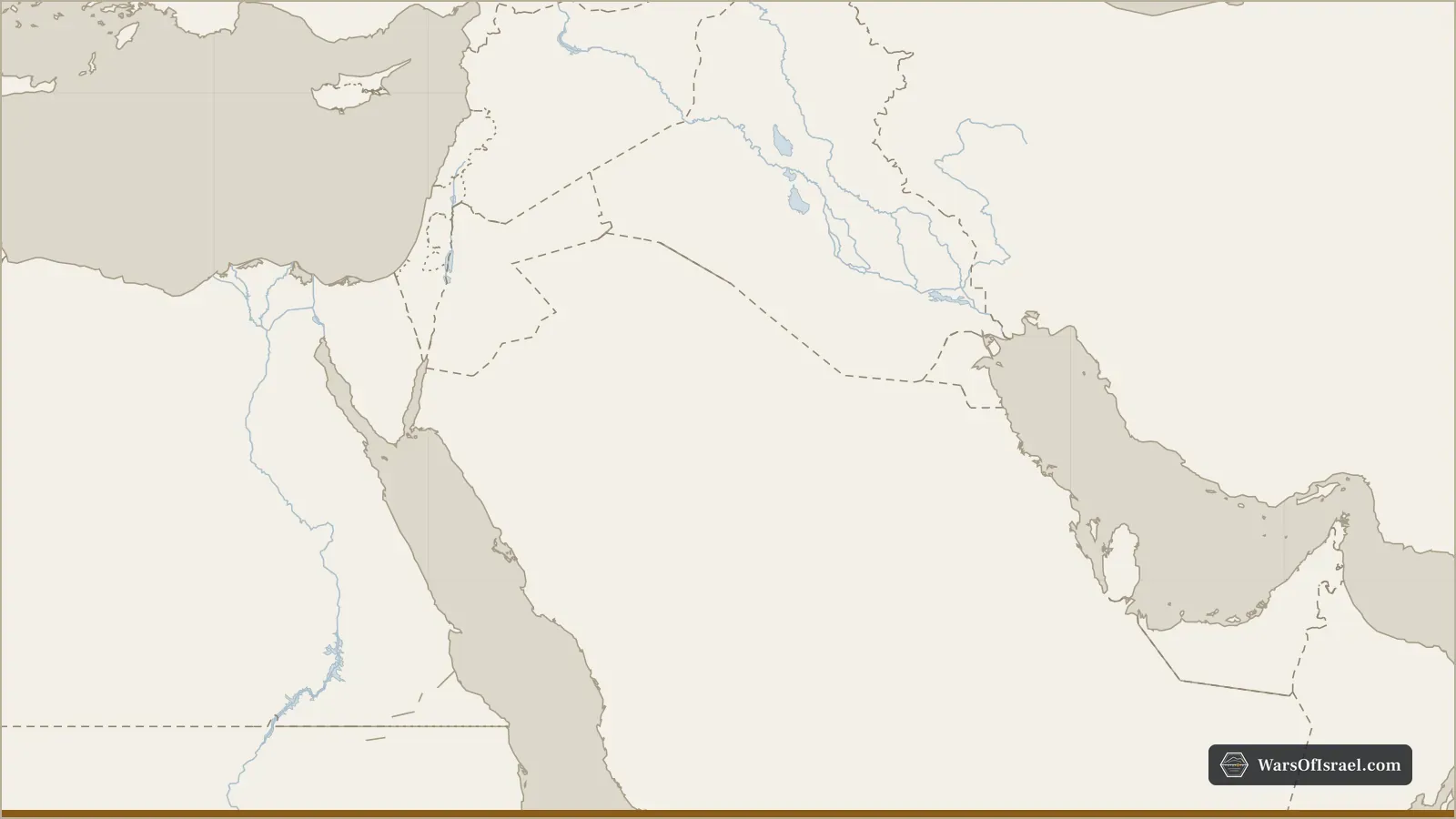
Most of Israel's wars did not end with a peace treaty. They ended with a truce that paused the fighting, a ceasefire that stopped it, an armistice that turned the front into a demarcation line, an unwritten understanding mediated by a third party, or simply with one side stopping. Only two wars led, years later, to full peace treaties, with Egypt in 1979 and Jordan in 1994. The kind of agreement matters, because each one makes a different promise: a ceasefire promises that the shooting stops, an armistice that it will not resume while a settlement is sought, a peace treaty that the war itself is over.
A vocabulary of endings
The terms are often used loosely in the news, but in diplomacy and international law they have distinct meanings. In ascending order of commitment:
- Truce: a temporary suspension of fighting for a set period or purpose, such as the UN truces of 1948 or the humanitarian pause in Gaza in November 2023.
- Ceasefire: an agreement or order to stop firing, usually open-ended, without settling the underlying dispute.
- Disengagement or separation of forces: an agreement that pulls armies apart and sets lines and zones between them, as in 1974.
- Armistice: a formal agreement that ends active hostilities, fixes demarcation lines and creates machinery to supervise them, while leaving a final settlement for later.
- Understanding: an arrangement, often unwritten or unsigned, negotiated through mediators between parties that do not recognize each other.
- Peace treaty: a treaty between states that ends the state of war, recognizes borders and establishes normal relations.
Two Arabic terms also appear in accounts of Israel's conflicts with armed groups: hudna, a truce of a fixed period, and tahdi'a, a "calming," a lesser and looser commitment. Hamas has used both, and neither implies recognition.
The truces and armistices of 1948 and 1949
The war of 1947 to 1949 was interrupted twice by truces ordered by the UN Security Council. The first ran from June 11 to July 8, 1948, and gave both sides time to reorganize and rearm; Israel used it to bring in weapons, despite an embargo, and to train new units. The second began on July 18, 1948, and was broken by major offensives in the autumn and winter. A UN mediator, Count Folke Bernadotte, supervised the truces until he was assassinated by members of Lehi in Jerusalem on September 17, 1948.
His deputy, Ralph Bunche, then negotiated the four General Armistice Agreements of 1949, with Egypt, Lebanon, Jordan and Syria. Bunche received the Nobel Peace Prize in 1950 for the work. The agreements created Mixed Armistice Commissions, with UN observers of the UN Truce Supervision Organization, to deal with complaints. They were meant to be a short step toward peace and became instead the framework of an unstable border for eighteen years, as the guide on how Israel's borders changed explains.
Ceasefires between 1956 and 1973
The Sinai campaign of 1956 ended under a UN General Assembly call for a ceasefire and withdrawal, and Israel withdrew from Sinai and Gaza by March 1957. The Six-Day War ended in a series of Security Council ceasefires accepted by each front in turn, the last with Syria on June 10, 1967. Resolution 242, adopted on November 22, 1967, set out the formula of withdrawal from territories in exchange for peace and recognition that would underpin every later negotiation.
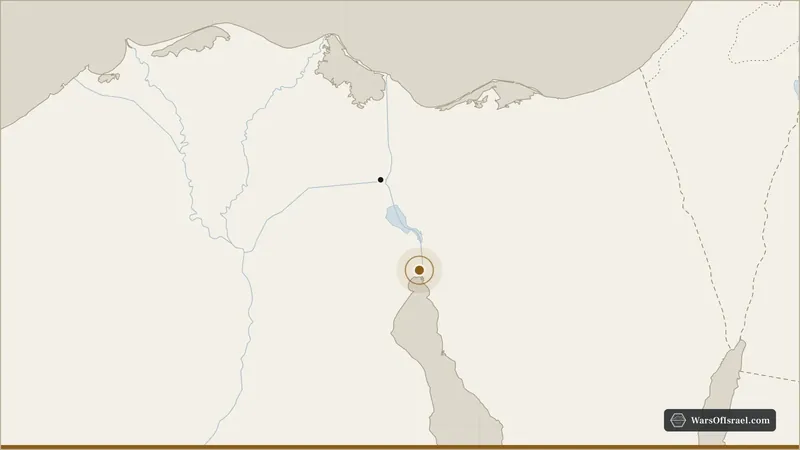
The War of Attrition along the Suez Canal ended with an American-brokered ceasefire that took effect in August 1970. Within hours, Egypt and the Soviet Union began moving surface-to-air missile batteries toward the canal in breach of its standstill terms, a move that would shape the opening days of the next war. The Yom Kippur War ended under Security Council Resolution 338 of October 22, 1973, which called for a ceasefire and for negotiations. Fighting continued for several days on the Egyptian front, until Egypt's Third Army was encircled. The first direct military talks between Israeli and Egyptian officers followed, held in a tent at Kilometer 101 on the Cairo-Suez road, and led to the disengagement agreements of 1974.
From disengagement to peace: Egypt and Jordan
The road from ceasefire to treaty with Egypt took six years. After Egyptian President Anwar Sadat's visit to Jerusalem in November 1977, Israel and Egypt signed the Camp David Accords on September 17, 1978, under the mediation of US President Jimmy Carter, and the peace treaty on March 26, 1979. Israel withdrew from all of Sinai by April 25, 1982, and the two states exchanged ambassadors. The peace has been called cold, with limited trade and tourism, but it has held through every later war, including the wars after October 2023.
With Jordan, decades of secret contacts preceded a public agreement. The Washington Declaration of July 25, 1994, ended the state of war, and the peace treaty was signed in the Arava on October 26, 1994. In between came the first Israeli-Palestinian agreement, the Oslo Declaration of Principles of September 13, 1993, an interim framework rather than a peace treaty, which created the Palestinian Authority but left the core issues for later talks that never concluded.
An agreement with Lebanon was signed on May 17, 1983, after the Lebanon war of 1982, but it was never ratified or put into effect, and the Lebanese government abrogated it in March 1984 under Syrian pressure. It remains an example of how a signature without a durable political base can collapse.
Understandings with armed groups: Lebanon and Gaza
Against non-state armed groups, Israel has relied on understandings and Security Council resolutions rather than treaties. After Operation Grapes of Wrath in April 1996, the April Understanding, negotiated by the United States and France, committed Israel and Hezbollah to avoid targeting civilians and set up a monitoring group. After the Second Lebanon War, Security Council Resolution 1701, adopted on August 11, 2006, led to a ceasefire on August 14, the deployment of the Lebanese army and an enlarged UNIFIL force in the south, and a demand that no armed groups other than the Lebanese state operate south of the Litani River. That demand was not enforced, and Hezbollah rebuilt its forces there.
The Israel-Hezbollah war of 2023 to 2024 ended with a ceasefire that took effect on November 27, 2024, negotiated with Lebanon's government through the United States and France. It provided for a 60-day period in which Israeli forces would withdraw and the Lebanese army would deploy, with a monitoring mechanism chaired by the United States. Israel kept troops at five points beyond the deadline and has continued to carry out strikes it says are aimed at Hezbollah violations.
In Gaza the pattern was a series of rounds, each ending in an understanding brokered by Egypt, often with Qatar and the United States: a unilateral Israeli ceasefire on January 18, 2009, after Operation Cast Lead; a ceasefire on November 21, 2012; an open-ended ceasefire on August 26, 2014, after Protective Edge; and another on May 21, 2021. None addressed the underlying conflict, and each was followed, sooner or later, by the next round.
The ceasefires of the war since October 7, 2023
The war that began on October 7, 2023, produced the most complex agreements of all, because they bound together a ceasefire, a phased withdrawal and the release of hostages and prisoners. The record on the Gaza ceasefires of 2023 to 2025 follows them in detail:
- A truce from November 24 to December 1, 2023, during which, by Israeli and Qatari accounts, 105 hostages were freed in exchange for 240 Palestinian prisoners.
- A three-phase agreement that took effect on January 19, 2025, under which hostages were released in stages; it collapsed when Israel resumed large-scale strikes on March 18, 2025, after talks on the second phase stalled.
- A ceasefire based on a US plan that took effect on October 10, 2025, with the IDF pulling back to an agreed line inside Gaza, the release of the remaining living hostages on October 13, 2025, and the return of the bodies of deceased hostages in the following weeks and months.
Between these, the twelve-day war with Iran in June 2025 ended with a ceasefire announced by US President Donald Trump and in effect from June 24, 2025, with no written agreement between Israel and Iran.
What the record shows
Read together, these agreements suggest a few patterns. Ceasefires with states have tended to last when they were followed by a political process, as with Egypt, and to decay when they were not, as with the armistice lines of 1949. Understandings with armed groups have usually bought time rather than settled anything. And every agreement has depended on its guarantors and its enforcement: UN observers in 1949, the United States in 1974, 1979 and 2024, Egypt and Qatar in Gaza. The question of who enforces a ceasefire, and against whom, is often more important than its text. That is why the records on this site give for every agreement its date, its mediators and what happened next, as of October 18, 2026.